


Valine
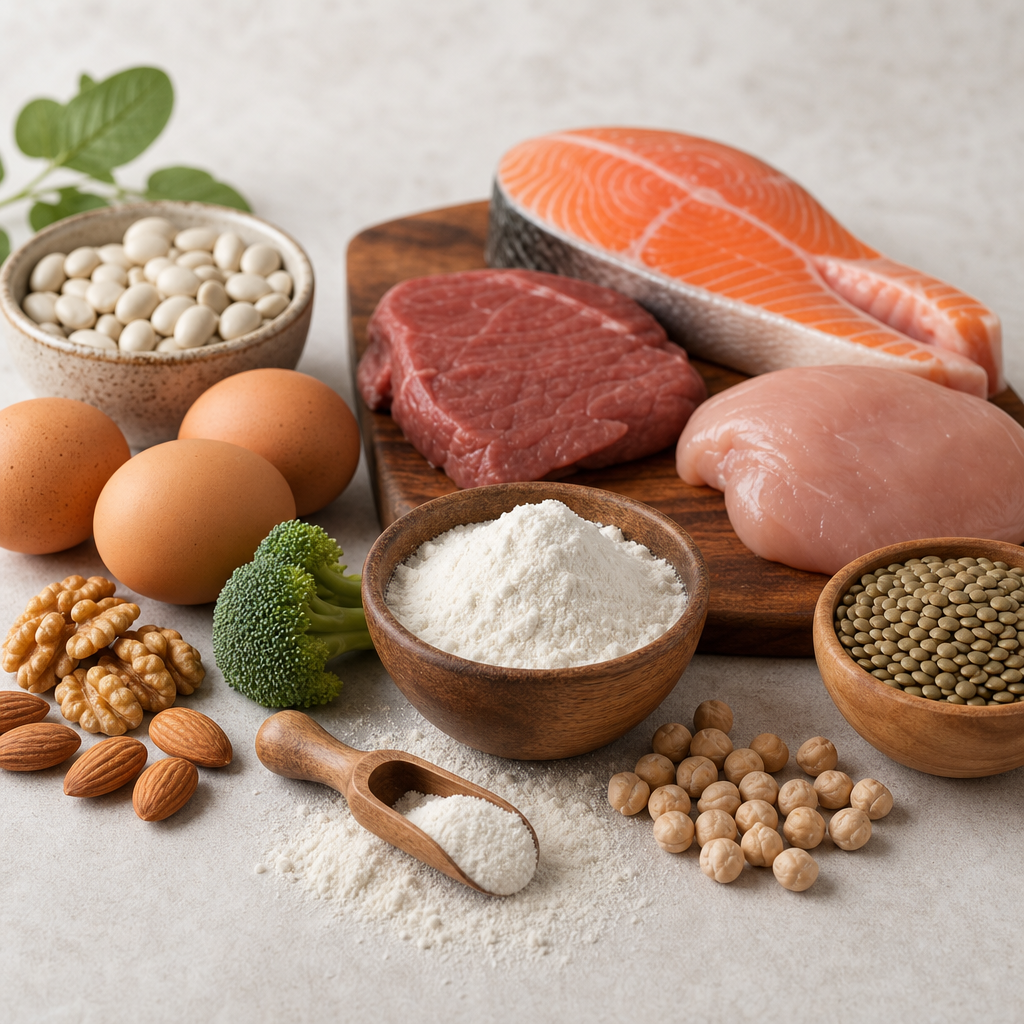
What is L-Valine?
L-Valine is one of the nine essential amino acids—nutrients the body cannot make on its own and must obtain from food. It belongs to the branched-chain amino acids (BCAAs) along with leucine and isoleucine. As a building block of proteins, L-valine is incorporated into muscle, skin, enzymes, and many other tissues. It also serves as a fuel source for muscles during exercise and helps maintain nitrogen balance, which is important for tissue repair and recovery.
Because it is essential, L-valine is both a nutrient and a common dietary supplement. In the diet, it is abundant in protein-rich foods such as meat, fish, eggs, and legumes. As a supplement, it is sold on its own as “L-valine,” but more commonly as part of BCAA or essential amino acid (EAA) blends. While L-valine contributes to exercise performance and recovery, many of its studied effects occur when it is consumed together with other EAAs—especially leucine—or as part of total high-quality protein intake.
Benefits of L-Valine
- Meets essential amino acid needs when dietary protein is low (Strong evidence) Adequate intake of L-valine—primarily from food, or from thoughtfully used supplements—supports the body’s fundamental protein-building processes, including maintenance of muscle, skin, immune proteins, and enzymes. Ensuring sufficient essential amino acids helps preserve lean body mass and normal physiological function, particularly during periods of low appetite, illness, or restricted diets.
- Muscle recovery and reduced soreness with training (as part of BCAA/EAA intake) (Mixed evidence) Several studies report that BCAA or EAA supplementation around workouts can modestly reduce delayed-onset muscle soreness and markers of muscle damage. However, other well-designed trials find little to no benefit when total daily protein is already adequate. L-valine contributes to these effects as a component of BCAAs, but it appears less effective when taken in isolation compared with complete protein or EAA blends.
- Helps maintain lean mass during periods of low energy or protein intake (Moderate evidence) In clinical and sports settings, formulas enriched with EAAs or BCAAs can help support nitrogen balance and attenuate muscle loss during energy deficits, bed rest, or recovery from illness. L-valine is one of the required EAAs in these formulations. Benefits are most consistent when the full spectrum of EAAs is provided rather than L-valine alone.
- Support in chronic liver disease (as part of BCAA therapy) (Moderate evidence) In people with cirrhosis and hepatic encephalopathy, BCAA-enriched medical nutrition can improve neuropsychiatric symptoms and quality of life, although effects on survival are less clear. L-valine is one of the three BCAAs used in these specialized therapies and should be used under medical supervision.
- May reduce central fatigue and perceived exertion during prolonged exercise (Mixed evidence) BCAAs may compete with tryptophan for transport into the brain, potentially influencing neurotransmitters related to fatigue. Some endurance studies report lower perceived exertion with BCAA intake, while others show no meaningful benefit. Any effect appears context-dependent, and L-valine works in concert with leucine and isoleucine rather than as a standalone solution.
- General tissue repair and wound healing as part of adequate protein/EAA intake (Moderate evidence) Adequate essential amino acid intake supports collagen formation, immune function, and tissue remodeling. L-valine contributes to these processes, particularly when total protein needs are increased after surgery or injury. Clinical nutrition protocols typically use balanced EAA or protein formulas rather than isolated L-valine.
Deficiency or Low Levels of L-Valine
- Common signs of low levels: General essential amino acid insufficiency can present as muscle wasting, fatigue, weakness, poor wound healing, brittle hair or skin changes, increased susceptibility to infections, and impaired exercise tolerance. Isolated valine deficiency is uncommon outside of controlled clinical diets, but inadequate total protein intake can drive low circulating valine along with other EAAs.
- Who may be at risk: People with very low protein intake (e.g., restrictive dieting, eating disorders), older adults with low appetite or difficulty chewing, individuals with malabsorption (e.g., inflammatory bowel disease, untreated celiac disease), those recovering from serious illness or injury, and people on medically restricted amino acid diets for certain inborn errors of metabolism. Strict vegetarians or vegans can meet needs with thoughtful planning, but those consuming insufficient total protein are at risk.
- How it is checked: Clinicians may order a plasma amino acid profile (quantitative assay) to assess circulating valine and other EAAs. Additional assessments can include dietary analysis, nitrogen balance, body composition, and functional tests such as handgrip strength. Evaluation and treatment should be guided by a healthcare professional or registered dietitian.
Types or Forms Available
- Free-form L-valine powder or capsules: Provides isolated L-valine. Useful for precise dosing but can be unpalatable on its own and may be less effective than balanced EAA formulas for muscle-related goals.
- BCAA blends (commonly 2:1:1 leucine:isoleucine:valine): The most popular format for sports use. Ratios vary (e.g., 4:1:1 or 8:1:1), but higher-leucine products are not always superior. Quality products disclose exact amounts per serving and avoid unnecessary stimulants.
- Essential amino acid (EAA) blends: Include all nine EAAs, generally more supportive of muscle protein synthesis than BCAAs alone. Often flavored powders designed for intra- or post-workout use.
- “Instantized” or fermented BCAAs: Instantized powders mix more easily. Fermented sources (often from corn or sugarcane) may appeal to those avoiding animal by-products; the L-valine molecule is the same regardless of source.
- Medical nutrition formulas: Clinically formulated EAA/BCAA products for liver disease, recovery from trauma, or specialized metabolic needs. Use only under medical supervision.
How to Use L-Valine
Most people meet L-valine needs through food. Supplement use is optional and context-dependent. If you choose to supplement, prioritize balanced amino acid intake over large doses of a single amino acid.
- Common dosage range: For general sports use, BCAA servings typically provide 5–10 g total BCAAs, which equals about 1.25–2.5 g L-valine in a 2:1:1 blend. Isolated L-valine is often taken at 1–3 g per serving, though balanced EAA formulas are usually more appropriate for muscle protein synthesis. Medical dosing (e.g., for liver disease) varies widely and should be determined by a clinician.
- Best timing: Around workouts (before, during, or after) if your total daily protein is not optimal. If total protein is already adequate, timing is less critical. Clinical protocols may include evening or between-meal dosing.
- How to take it: Mix powders with water or a carbohydrate-containing beverage if preferred. Capsules can be taken with water. Taking amino acids away from large mixed meals may improve absorption, but consistency and total daily intake matter most.
- Consistency: Daily use is unnecessary if dietary protein is adequate. Consider short-term use during periods of low appetite, heavy training, or recovery, and defer to medical guidance for clinical indications.
Food Sources and Supplement Options
L-valine is naturally present in dietary proteins. Most people can meet their needs through balanced meals. Supplements offer a convenient, measurable dose when appetite is low, when training demands are high, or when a clinician recommends targeted intake.
- Animal sources: Beef, chicken, turkey, pork, fish, eggs, milk, yogurt, and cheese.
- Plant sources: Soy foods (tofu, tempeh, edamame), lentils, chickpeas, beans, peanuts, pumpkin seeds, hemp seeds, quinoa, and oats.
- Mixed dishes: Protein powders (whey, casein, soy, pea-rice blends) naturally contain L-valine as part of their amino acid profile.
Whole foods provide additional nutrients such as vitamins, minerals, fiber, and phytonutrients. Supplements can deliver targeted amounts of L-valine or BCAAs/EAA without extra calories, which may be useful in specific training or clinical contexts. For most healthy individuals, a food-first strategy with adequate total protein is the foundation, with supplements as optional tools.
Who May Benefit from L-Valine?
- Athletes or active individuals who struggle to meet total daily protein needs from food alone.
- People in a caloric deficit aiming to preserve lean mass when protein intake is suboptimal.
- Older adults with low appetite who cannot consistently meet protein needs through meals.
- Individuals recovering from injury or surgery, when a clinician recommends EAA/BCAA support.
- People with chronic liver disease under medical care using BCAA-enriched nutrition.
- Those with dietary restrictions or limited access to high-quality protein foods who need a convenient supplemental source.
Side Effects and Considerations
- General tolerance: L-valine is well tolerated at amounts found in food. High supplemental doses may cause gastrointestinal discomfort (nausea, bloating) in some people.
- Medication interactions: Large neutral amino acids (including valine) can compete with certain drugs (e.g., levodopa) for transport. People using Parkinson’s medications should discuss timing and protein/amino acid intake with their clinician.
- Metabolic and glucose concerns: While amino acids can be useful nutritionally, high supplemental BCAA intake has been linked in observational research to insulin resistance. People with diabetes or metabolic syndrome should use caution and prioritize overall dietary quality and total protein targets, consulting a healthcare professional as needed.
- Kidney health: Individuals with chronic kidney disease often require tailored protein and amino acid intake. Avoid unsupervised supplementation and follow guidance from a nephrologist or dietitian.
- Liver disease: Some people with cirrhosis benefit from BCAA formulas, but dosing should be individualized and supervised. Do not self-treat hepatic conditions with amino acids.
- Pregnancy and breastfeeding: Meeting protein needs via food is preferred. Safety data for high-dose isolated amino acid supplements in pregnancy or lactation are limited; consult a healthcare professional.
- Children and adolescents: Growing children need adequate protein, but isolated amino acid supplements should not be used without medical advice.
- Inborn errors of metabolism: People with maple syrup urine disease (MSUD) or other disorders of BCAA metabolism require strict medical management; supplemental valine can be harmful without professional oversight.
- Imbalance risk: Taking high doses of a single BCAA can disrupt the balance of other amino acids due to shared transporters. For most goals, balanced EAA or complete protein sources are preferable.
- Product quality: Choose products with third-party testing, transparent labeling of amino acid amounts, and minimal additives. Some sports formulas include stimulants; check labels to avoid unintended ingredients.
- Surgery timing: As a general precaution, many clinicians advise stopping non-essential supplements 1–2 weeks before surgery. Follow your surgical team’s guidance on protein and amino acid use.
Common Myths About L-Valine
- Myth: “L-valine alone builds muscle as effectively as complete protein.” Muscle protein synthesis requires all nine essential amino acids, with leucine playing a particularly prominent role in triggering the process. L-valine contributes to the building blocks but is not sufficient by itself; balanced EAA intake or high-quality protein is more effective for muscle accretion.
- Myth: “More BCAAs are always better.” There is a limit to the benefits of amino acid supplementation when total protein is already adequate. Very high intakes can cause digestive upset and may negatively affect amino acid balance. Practical dosing aligns with individual protein needs and training demands rather than mega-dosing.
- Myth: “Vegans can’t get enough valine without supplements.” Many plant proteins are good sources of L-valine, including soy, legumes, peanuts, seeds, and whole grains. With sufficient total protein intake and variety, vegans can meet valine needs through food alone.
- Myth: “BCAAs guarantee better endurance performance.” Some studies suggest reduced perceived exertion, while others show no meaningful performance changes. Hydration, carbohydrate availability, training status, and total daily protein have larger effects on endurance outcomes than BCAAs alone.
Conclusion
L-Valine is an essential amino acid that plays a fundamental role in building and repairing body tissues. Most people can meet their needs through balanced, protein-rich meals. Supplements—particularly EAA or BCAA blends—may be useful for individuals with low protein intake, during periods of heavy training or energy restriction, or in specific clinical scenarios such as chronic liver disease under medical supervision. For muscle-related goals, balanced EAA intake or complete protein sources generally outperform isolated L-valine.
Choose quality products with transparent labeling and avoid excessive doses. People who are pregnant or breastfeeding, children, and anyone with kidney, liver, or metabolic disorders—or those taking medications—should consult a healthcare professional before using amino acid supplements. A food-first approach is typically best, with supplements serving as targeted tools when needed.
Want a nutrition plan with recipes adapted to your goals?
Build a personalized plan with meals and recipe ideas that fit your lifestyle, preferences, and nutrition goals.
Create My Nutrition Plan →