


Zinc
What is Zinc?
Zinc is an essential trace mineral that the body needs in small amounts for normal growth, immune function, wound healing, and many enzyme-driven processes. It acts as a cofactor for hundreds of enzymes involved in DNA and protein synthesis, antioxidant defenses, and cellular signaling. Because the body cannot make zinc and has limited stores, regular intake from food or supplements is necessary to maintain healthy levels.
Zinc occurs naturally in many foods—especially shellfish, meat, and dairy—and is also widely available as a dietary supplement. In the context of health and wellness, zinc is classified as an essential nutrient (a mineral), not an herb or botanical extract. It can be consumed through a balanced diet or used in targeted supplement regimens when dietary intake is insufficient or when specific needs arise.
Benefits of Zinc
- Supports healthy immune function (Strong evidence) Zinc is required for the development and function of innate and adaptive immune cells. Inadequate zinc impairs immune defenses and increases susceptibility to infections. Adequate intake helps maintain normal immune surveillance and response, particularly important for older adults and people with marginal intake.
- Wound healing and skin integrity (Moderate evidence) Zinc contributes to collagen formation, cell proliferation, and inflammatory balance—key steps in wound repair. Oral zinc may support healing when intake is low, and topical zinc compounds are used clinically for ulcers and skin irritations. Benefits are most evident when deficiency or insufficiency exists; routine high-dose use without deficiency is not clearly beneficial.
- Shortens duration of common cold when taken as lozenges at symptom onset (Mixed evidence) Several trials suggest zinc acetate or gluconate lozenges started within 24 hours of symptoms can modestly reduce cold duration. Results vary by formulation, dose, and study design, and not all trials show benefit. Lozenges appear more effective than standard tablets, likely due to local effects in the oropharynx.
- Reduces severity and duration of acute diarrhea in children (Strong evidence) In pediatric settings, especially where deficiency is common, zinc supplementation reduces the length and severity of acute diarrhea and supports recovery. This is a standard public health intervention in many countries. Dosing for children should be guided by a healthcare professional.
- Eye health in age-related macular degeneration (as part of a specific formula) (Moderate evidence) In people with intermediate or advanced age-related macular degeneration (AMD), a combination supplement containing zinc with antioxidants has been shown to slow disease progression. Zinc alone is less well supported; benefits relate to the studied combination used under professional guidance.
- Male reproductive health (Limited evidence) Zinc is involved in hormone signaling and sperm development. Small studies link low zinc status to poorer semen parameters, and repletion may help in deficiency. Evidence for benefits in men with adequate zinc status is limited.
- Cardiometabolic and glycemic markers (Mixed evidence) Some analyses suggest supplemental zinc may modestly improve fasting glucose or lipid profiles, particularly in people with low baseline intake. Findings are inconsistent, vary by dose and duration, and should be interpreted cautiously.
Deficiency or Low Levels of Zinc
- Common signs of low levels: Frequent infections, poor wound healing, hair loss, loss of appetite, impaired taste or smell, dermatitis or rash (often around the mouth and on extremities), diarrhea, delayed growth or delayed sexual maturation in children and adolescents, and in severe or inherited cases (e.g., acrodermatitis enteropathica), pronounced skin and gastrointestinal symptoms.
- Who may be at risk: People with malabsorption (celiac disease, inflammatory bowel disease), chronic diarrhea, chronic liver or kidney disease, alcohol use disorder, sickle cell disease, and those on long-term parenteral nutrition; individuals after bariatric surgery; pregnant and breastfeeding people (higher requirements); older adults; strict vegetarians/vegans or those with low intake of animal foods; infants not receiving zinc-rich complementary foods after 6 months; and individuals consuming diets high in phytate (unleavened whole grains/legumes) without food preparation methods that reduce phytates.
- How it is checked: Healthcare professionals may assess dietary intake, clinical signs, and laboratory tests. Serum or plasma zinc can suggest deficiency but is influenced by inflammation, fasting status, and time of day. No single biomarker is perfect; results are interpreted alongside symptoms and medical history. Do not self-diagnose—seek professional evaluation.
Types or Forms Available
- Zinc gluconate: Widely used and generally well tolerated. Common in both tablets and lozenges. Moderate elemental zinc content with decent absorption.
- Zinc citrate: Good bioavailability with relatively gentle gastrointestinal tolerance. Often used in multivitamins and stand-alone supplements.
- Zinc picolinate: A chelated form sometimes marketed for higher absorption. Some small studies suggest good bioavailability, though clear superiority over other well-absorbed forms is not definitive.
- Zinc acetate: Frequently used in cold lozenges; provides readily dissociated zinc ions that may be helpful for oropharyngeal exposure in early colds.
- Zinc sulfate: Effective but may be more likely to cause gastrointestinal upset in some users; contains a higher percentage of elemental zinc by weight.
- Zinc oxide: High elemental zinc percentage but lower solubility; more common in topical products and sunscreens. Oral absorption may be less favorable compared with organic salts.
- Chelated blends (e.g., zinc bisglycinate): Designed for improved tolerability and absorption; evidence is promising but not unequivocally superior to other bioavailable forms when dosed appropriately.
Differences among forms mainly relate to elemental zinc content, solubility, and gastrointestinal tolerance. For most people, a well-absorbed form at an appropriate dose is more important than picking a single “best” form.
How to Use Zinc
- Common dosage range: Typical daily supplemental zinc for adults is 5–15 mg elemental zinc to help meet needs when diet may be marginal. Short-term use of 15–30 mg/day can be considered when correcting insufficiency or during periods of higher need, ideally under professional guidance. The Tolerable Upper Intake Level (UL) for adults is 40 mg/day from supplements and fortified foods. Avoid exceeding the UL long term to reduce the risk of copper deficiency and other adverse effects.
- Best timing: Time of day is flexible. Taking zinc with a meal can reduce nausea. If possible, avoid taking it simultaneously with high-dose iron or calcium supplements, as well as very high-fiber or phytate-rich meals, which can reduce absorption (separate by about 2 hours).
- How to take it: Swallow tablets or capsules with water, preferably with food if you experience stomach upset. For cold symptom protocols, some evidence supports zinc acetate or gluconate lozenges initiated within 24 hours of onset; many study regimens used total daily amounts that exceed the UL, so discuss risks and alternatives with a clinician before attempting.
- Consistency: To maintain status, steady daily intake from food and/or modest supplements works best. High-dose zinc is not intended for continuous use. Reassess need periodically, especially if diet improves.
People who are pregnant, breastfeeding, taking medications, or managing a medical condition should consult a healthcare professional for personalized dosing and to ensure safety.
Food Sources and Supplement Options
Zinc is naturally present in foods and is also available as a supplement. A food-first approach covers zinc needs for most people and provides additional nutrients and bioactive compounds that supplements lack. Supplements can be useful for individuals with low intake, higher needs, or medical conditions affecting absorption.
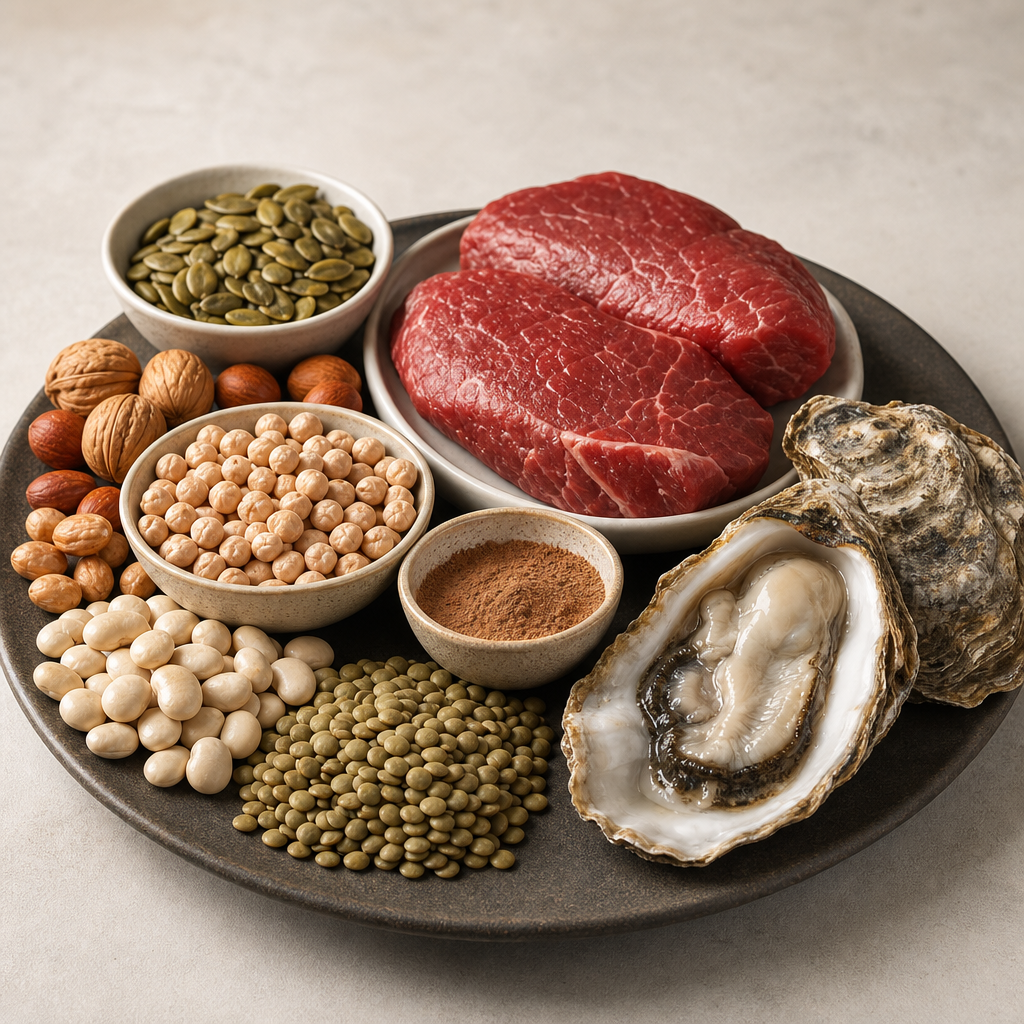
- Oysters and other shellfish (very rich sources)
- Beef, lamb, pork, and poultry
- Dairy products and eggs
- Legumes (beans, lentils, chickpeas) and soy foods
- Nuts and seeds (pumpkin seeds, cashews, hemp, sesame)
- Whole grains and fortified breakfast cereals
Bioavailability is generally higher from animal foods. In plant-based diets, zinc absorption can be reduced by phytates in grains and legumes. Soaking, sprouting, fermenting, and using leavened breads can improve zinc availability. Supplements provide targeted dosing when intake is insufficient or when a healthcare professional recommends additional zinc for specific reasons (e.g., after bariatric surgery or in the context of certain eye-health regimens).
Who May Benefit from Zinc?
- People with low dietary intake (limited animal foods, irregular meals, or highly processed diets)
- Vegetarians and vegans, especially if relying heavily on unsoaked/unsprouted grains and legumes
- Older adults with decreased appetite, reduced absorption, or multiple medications
- Individuals with malabsorption (celiac disease, inflammatory bowel disease), chronic diarrhea, or after bariatric surgery
- Those with frequent skin infections, poor wound healing, or signs suggestive of insufficiency (to be evaluated by a clinician)
- Athletes with high sweat losses and/or restricted diets, and physically active people during periods of high training load
- People considering evidence-based cold strategies who wish to try zinc lozenges at symptom onset
- Individuals at risk for AMD who are advised by an eye-care professional to use a specific antioxidant-plus-zinc formulation
- Children with acute diarrhea under medical guidance and regionally appropriate protocols
Side Effects and Considerations
- Gastrointestinal upset: Nausea, stomach pain, vomiting, or diarrhea can occur, especially on an empty stomach or with higher doses. Taking zinc with food usually helps.
- Long-term high doses can cause copper deficiency: Intakes above the adult UL of 40 mg/day over time may lead to anemia, low white blood cell counts, neuropathy, and changes in cholesterol. Do not exceed recommended doses without medical supervision.
- Medication interactions: Zinc can reduce absorption of certain antibiotics (tetracyclines and fluoroquinolones) and penicillamine; separate dosing by at least 2 hours. High-dose iron or calcium can also compete with zinc.
- Formulation caution: Avoid intranasal zinc products; they have been associated with loss of smell (anosmia).
- Mineral balance: Large amounts of supplemental zinc can lower HDL (“good”) cholesterol in some individuals. Periodic monitoring may be prudent with prolonged use.
- Kidney and liver conditions: People with chronic kidney or liver disease should consult a clinician for individualized dosing and monitoring.
- Pregnancy, breastfeeding, and children: Requirements differ by age and life stage. Use age-appropriate doses and avoid exceeding the UL unless a healthcare professional recommends otherwise.
- Allergies and sensitivities: Though uncommon, excipients in supplements (e.g., flavorings in lozenges) can cause reactions in sensitive individuals. Choose products with clear labeling.
- Quality considerations: Select third-party tested supplements to ensure accurate labeling and to minimize contaminants. Be wary of megadose products or proprietary blends without clear elemental zinc amounts.
Common Myths About Zinc
- Zinc prevents you from catching a cold. Zinc may modestly reduce the duration of a cold if taken as specific lozenges at symptom onset, but it does not reliably prevent colds. Good hygiene, sleep, and overall nutrition remain central to prevention.
- More zinc always means a stronger immune system. Adequate zinc supports immunity, but excessive intake can impair copper status and immune function. Balance is key—meeting needs without chronic megadoses.
- Zinc supplements boost testosterone in everyone. Correcting deficiency can normalize hormone-related functions, but in zinc-replete individuals, extra zinc does not reliably raise testosterone or enhance performance.
- All zinc forms are identical. Different salts and chelates vary in elemental content, solubility, and tolerability. Several forms are well absorbed when dosed appropriately; no single form is best for everyone.
Conclusion
Zinc is an essential mineral with important roles in immunity, skin integrity, growth, and cellular repair. Most people can meet their needs with a varied diet emphasizing zinc-rich foods such as shellfish, meat, dairy, legumes, nuts, seeds, and fortified grains. Supplements can be helpful for individuals with low intake, increased requirements, or conditions affecting absorption, and in specific evidence-based uses like certain eye-health regimens or short-term cold strategies using appropriate lozenges.
If you choose a supplement, select a reputable product that clearly states elemental zinc content and avoid chronic high doses that exceed the adult UL of 40 mg/day. People who are pregnant, breastfeeding, taking medications, or managing medical conditions should consult a healthcare professional before starting zinc. A food-first approach paired with thoughtful, time-limited supplementation when needed offers a safe, effective way to support overall health.
Want a nutrition plan with recipes adapted to your goals?
Build a personalized plan with meals and recipe ideas that fit your lifestyle, preferences, and nutrition goals.
Create My Nutrition Plan →