What is Bee Pollen?
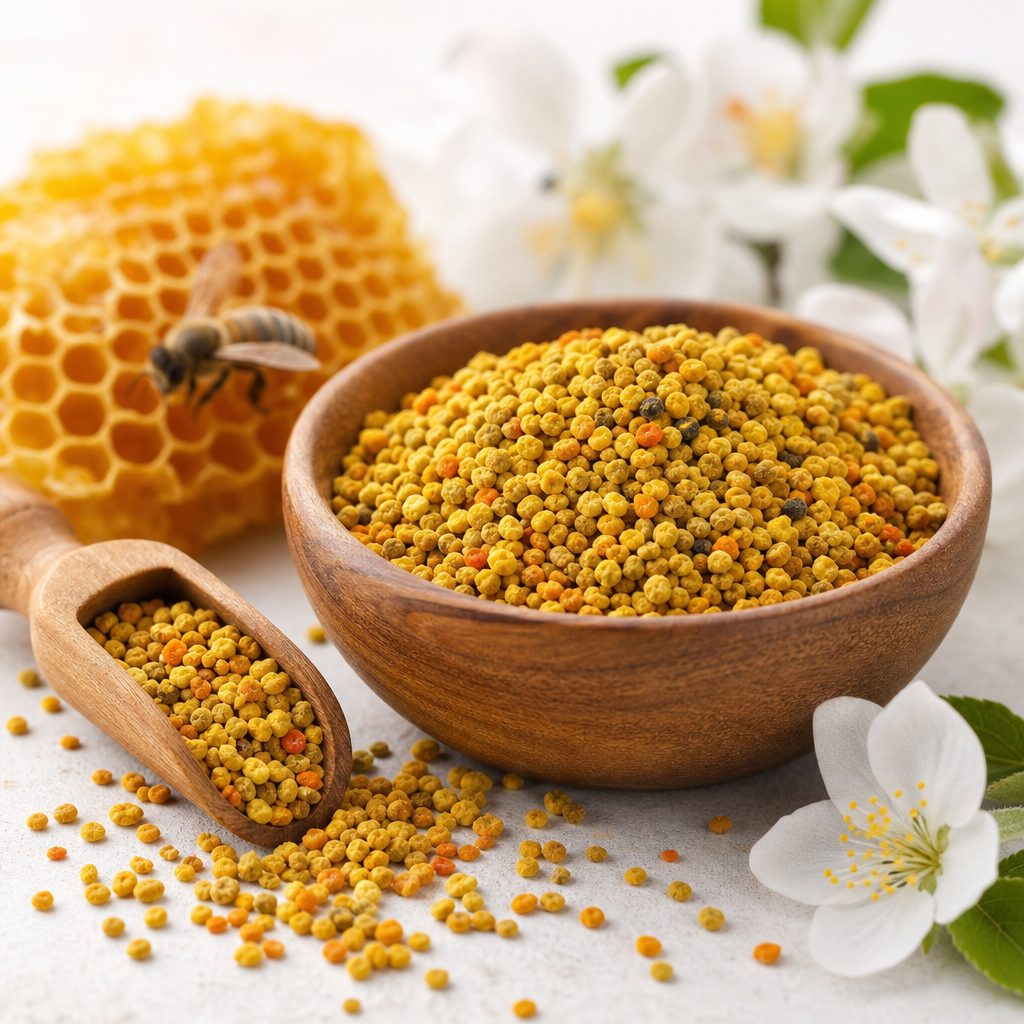
Bee pollen is a food-derived ingredient collected by honeybees from the male part of flowers. Bees mix microscopic pollen grains with a bit of nectar and bee salivary enzymes, forming small pellets that they carry back to the hive on their hind legs. Beekeepers use gentle “pollen traps” at the hive entrance to collect a portion of these pellets without harming the colony. Bee pollen is distinct from other bee products such as honey, royal jelly, propolis, and plant-derived “flower pollen extracts” used in some supplements; each has different compositions and potential effects.
As a human food or supplement, bee pollen is rich in carbohydrates, protein (including essential amino acids), small amounts of fatty acids, and various micronutrients. It also contains polyphenols (such as flavonoids and phenolic acids), carotenoids, and other bioactive compounds that vary widely depending on the plant sources, region, and season. While it can be a concentrated source of nutrients, bee pollen is not an essential nutrient. The body does not require it in the way it requires vitamins, minerals, essential fatty acids, or essential amino acids. Instead, it is best considered a functional food or dietary supplement that may complement an already balanced diet.
Because composition varies significantly from batch to batch, the health effects of bee pollen are not uniform. Research suggests potential antioxidant and anti-inflammatory properties, but high-quality human trials remain limited. Bee pollen should not replace proven medical treatments or a varied diet rich in fruits, vegetables, legumes, whole grains, and other nutrient-dense foods.
Benefits of Bee Pollen
-
Antioxidant support
(Limited evidence)
Bee pollen contains flavonoids, phenolic acids, and carotenoids that can act as antioxidants in laboratory and animal studies. These compounds help neutralize reactive oxygen species and may reduce oxidative damage. A few small human studies and pilot trials suggest modest improvements in antioxidant status markers after short-term intake, but the evidence base is small, heterogeneous, and not yet conclusive for clinical outcomes.
-
Anti-inflammatory effects
(Limited evidence)
Preclinical research indicates bee pollen may modulate inflammatory pathways by influencing cytokine production and enzymes involved in inflammation. Animal studies show reduced swelling and inflammatory marker levels. Human data are scarce and inconsistent, so while the mechanisms are biologically plausible, real-world benefits for inflammatory conditions are not firmly established.
-
Exercise recovery and performance
(Mixed evidence)
Older and small-scale studies in athletes report conflicting results regarding endurance, strength, and recovery markers when supplementing with bee pollen. Some show no meaningful benefit beyond adequate nutrition, while others note small improvements. Variability in study design, dosing, and product composition makes firm conclusions difficult. For trained athletes with optimized diets, performance gains are uncertain.
-
Cholesterol and metabolic markers
(Preliminary evidence)
Animal models demonstrate improvements in lipid profiles and certain metabolic parameters with bee pollen intake, potentially linked to its polyphenols and fiber content. Human evidence is limited to small or uncontrolled studies, so bee pollen should not be considered a therapy for high cholesterol, diabetes, or metabolic syndrome. Diet patterns, physical activity, and medically guided therapies remain primary strategies.
-
Wound healing and skin health
(Preliminary evidence)
In vitro and animal experiments suggest bee pollen may support tissue repair, possibly by supplying amino acids, antioxidants, and anti-inflammatory compounds. Limited topical and oral studies hint at benefits, but robust human clinical trials are lacking. Bee pollen should not replace standard wound care; any topical use must be cautious due to allergy risk.
-
Seasonal allergy symptom relief
(Mixed evidence)
Some people take “local” bee pollen hoping to reduce hay fever by gradual exposure to environmental allergens. Evidence does not consistently support this approach, and there is a real risk of triggering allergic reactions, including severe ones. Formal allergen immunotherapy supervised by a specialist is not equivalent to self-administering bee pollen. Individuals with pollen allergies should be especially cautious and seek medical advice.
Types or Forms Available
-
Raw granules:
The most common form, consisting of small, multicolored pellets. These are typically sprinkled on foods or blended into smoothies. Texture can be crunchy or slightly chewy. Nutrient and polyphenol content depend heavily on the floral sources.
-
Powder:
Ground granules for easier mixing into drinks, yogurts, and batters. Powder improves dispersion but can increase exposure to air and moisture, potentially reducing some heat- or light-sensitive compounds if not stored well.
-
Capsules or tablets:
Encapsulated or compressed powder provides measured servings and convenience for those who dislike the taste. They offer no inherent bioavailability advantage but may improve consistency of dosing.
-
Freeze-dried vs air-dried:
Freeze-drying may better preserve certain heat-sensitive constituents compared with air-drying. Product labels sometimes state the drying method; independent testing is uncommon, so choose reputable brands.
-
Monofloral vs polyfloral:
Pollen sourced predominantly from one plant (monofloral) can differ in flavor, color, and nutrient profile compared with mixed sources (polyfloral). No single type has proven superior for health outcomes.
-
Bee bread (fermented pollen):
Inside the hive, bees ferment stored pollen into “bee bread.” Human-available bee bread products exist and may differ in digestibility and microbial content. Research on bee bread is even more limited than on bee pollen.
How to Use Bee Pollen
Bee pollen is typically used as a culinary add-in or a dietary supplement. Because reactions can occur, a “start low and go slow” approach is prudent for first-time users.
-
Common dosage range:
1 to 3 grams per day (roughly 1/4 to 1 teaspoon) as a starting point, increasing gradually to around 5 grams (about 1 to 2 teaspoons) if well tolerated. Some products suggest higher amounts, but conservative dosing helps minimize side effects. There is no universally accepted therapeutic dose.
-
Best timing:
Timing is flexible. Many people take bee pollen with breakfast or earlier in the day; a few report mild stimulation, so evening use may not suit everyone.
-
How to take it:
Consume with food or in a smoothie, yogurt, or oatmeal to improve tolerance. Chew granules thoroughly or allow them to soften in liquid. Capsules can be taken with water.
-
Consistency:
Daily or near-daily intake is typical for those experimenting with potential benefits. For seasonal purposes (e.g., before allergy season), evidence is mixed; consistency may matter less than overall tolerance and safety.
Food Sources and Supplement Options
Bee pollen is not naturally present in meaningful amounts in common foods; it is primarily obtained as a bee product and consumed directly as granules, powders, or capsules. While trace pollen may exist in raw honey, the amounts are too small and variable to rely on for any nutritional or functional effect.
Supplements or functional-food formats make sense when someone wishes to experiment with a concentrated, measurable intake. Choose products from reputable producers who prioritize quality control. Whole foods remain the foundation of nutrition and often provide fiber, vitamins, minerals, and phytochemicals in balanced matrices that are hard to replicate in a single supplement. Bee pollen can complement—rather than replace—a diet rich in vegetables, fruits, legumes, nuts, seeds, and whole grains.
Who May Benefit from Bee Pollen?
-
Healthy adults who enjoy functional foods and want to add a small, flavorful source of polyphenols and micronutrients to smoothies, yogurt, or oatmeal—provided they have no pollen or bee-related allergies.
-
Recreational athletes interested in cautiously trialing an additional source of antioxidants and amino acids to support overall dietary patterns, recognizing that performance benefits are uncertain and likely modest at best.
-
Individuals seeking variety in plant-derived compounds, especially when seasonal produce options are limited—while still prioritizing a balanced, food-first approach.
-
People who prefer food-like supplements over isolated compounds and want a measured way to include pollen constituents in their routine.
Side Effects and Considerations
-
Allergic reactions:
Bee pollen can trigger symptoms ranging from itching, hives, and swelling to wheezing and anaphylaxis. Risk is higher in people with pollen allergies, hay fever, asthma, or known sensitivity to bee stings or other bee products. Anyone with allergy history should avoid use or seek medical advice before trying even small amounts.
-
Medication interactions:
Vitamin K and other constituents can vary in bee pollen. People taking anticoagulants (e.g., warfarin) or antiplatelet drugs should be cautious and consult a clinician, as supplement changes may affect bleeding risk or INR stability. If approved for use, maintain consistent dosing and monitor as advised.
-
Pregnancy and breastfeeding:
Safety data are insufficient. Because of potential allergenicity and contamination risks, avoidance during pregnancy and lactation is generally recommended unless specifically cleared by a healthcare professional.
-
Children and infants:
Not recommended for infants. For older children, use only with pediatric guidance due to allergy and contamination concerns.
-
Gastrointestinal effects:
Some users experience upset stomach, cramps, or loose stools, especially at higher intakes. Starting with very small amounts and taking with food may reduce discomfort.
-
Quality and contamination:
Composition varies by geography and floral source. Contaminants may include pesticides, heavy metals, molds, bacteria, and plant-derived pyrrolizidine alkaloids (PAs), which can be harmful to the liver. Choose products that undergo third-party testing and provide transparent sourcing.
-
Autoimmune and immune-modulating considerations:
Because bee pollen may influence immune activity, people with autoimmune conditions should consult a clinician before use.
-
Surgery and bleeding risk:
Discontinue bee pollen at least 1–2 weeks before elective surgery due to uncertain effects on coagulation and potential interactions with anesthetic or pain medications.
-
Dietary preferences and ethics:
Bee pollen is an animal-influenced product and is generally not considered vegan. Those with ethical or dietary restrictions may prefer plant-only alternatives.
-
Medical conditions and monitoring:
Individuals with liver or kidney disease, those taking multiple medications, or anyone managing a chronic condition should consult a healthcare professional before starting bee pollen.
As with any supplement, people who are pregnant, breastfeeding, taking medications, or living with a medical condition should seek personalized advice from a qualified healthcare professional.
Common Myths About Bee Pollen
-
Myth: “Local bee pollen cures seasonal allergies.”
Reality: Evidence is mixed and generally not strong. While pollen exposure is central to allergen immunotherapy, medically supervised protocols use standardized allergens and dosing—not over-the-counter bee pollen. Bee pollen can actually provoke allergic reactions, sometimes severe, especially in sensitive individuals.
-
Myth: “Bee pollen contains everything you need, so it can replace meals.”
Reality: Bee pollen is nutrient-dense but not nutritionally complete. It does not reliably provide all essential nutrients in adequate amounts and should not replace balanced meals. Nutrient content varies by plant source and processing.
-
Myth: “Natural means safe—bee pollen has no side effects.”
Reality: Natural products can cause harm. Bee pollen is a known allergen for some people and may be contaminated with pesticides, heavy metals, or plant toxins. Responsible sourcing, careful dosing, and medical guidance when needed are important.
-
Myth: “All pollen supplements are the same—bee pollen, flower pollen extract, propolis, and royal jelly work identically.”
Reality: These are distinct substances with different compositions and research profiles. For example, rye grass flower pollen extracts used for certain urinary symptoms are not the same as bee-collected pollen granules. Do not assume benefits or dosing from one apply to another.
Conclusion
Bee pollen is a food-like supplement made by bees from flower pollen, offering protein, micronutrients, and diverse polyphenols. Early research points to antioxidant and anti-inflammatory potential, with possible applications in exercise recovery and metabolic health, but current human evidence is limited and inconsistent. For most people, it is best viewed as an optional add-on to an already balanced diet—not a replacement for whole foods or medical treatment.
Those with pollen allergies, asthma, or sensitivity to bee products should avoid bee pollen or seek medical advice before trying it. People who are pregnant, breastfeeding, taking medications (especially anticoagulants), or managing chronic conditions should consult a healthcare professional. If you choose to try bee pollen, start with a very small amount, monitor for reactions, and select high-quality products that are transparently sourced and third-party tested. A food-first approach remains the foundation of good nutrition; supplements like bee pollen may provide variety and convenience, but they should complement—not substitute—healthy eating patterns.