What is Elderberry?
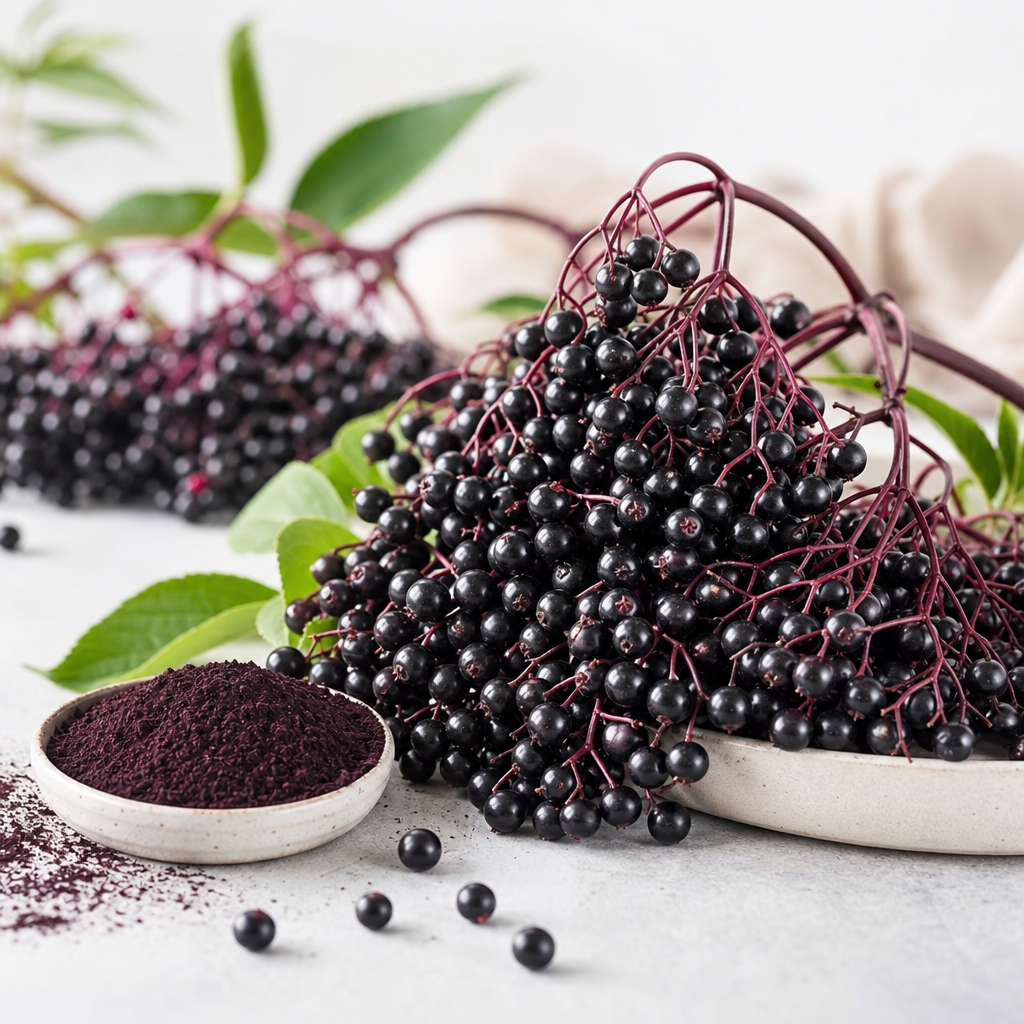
Elderberry refers most commonly to the dark purple berries of Sambucus nigra (European elder), a small tree or shrub native to Europe and parts of Western Asia and now cultivated widely. The ripe berries are rich in pigments called anthocyanins along with other polyphenols, and have a long history of culinary and traditional use in syrups, jams, and cordials after proper cooking. Elderflower (from the same plant) is used for teas and flavoring but is compositionally different from the berries.
Elderberry is a botanical ingredient and dietary supplement, not an essential nutrient. The body does not require elderberry in the way it requires vitamins, minerals, essential fats, or essential amino acids. Interest in elderberry focuses on its polyphenol content—especially anthocyanins—which can act as antioxidants and may help support immune function and upper respiratory comfort. Most research has examined standardized elderberry extracts, syrups, or capsules used short term around the onset of cold or flu-like symptoms.
Benefits of Elderberry
-
Shortens duration and reduces severity of cold/flu-like symptoms
(Moderate evidence)
Several randomized controlled trials using standardized elderberry syrups or extracts report fewer days of symptoms and reduced severity when started early (often within 24–48 hours of onset). Benefits include improvements in nasal congestion, cough, and overall symptom scores compared with placebo. Findings are not universal across all studies, but overall the balance of evidence suggests a modest, clinically meaningful reduction in symptom duration for some individuals.
-
Supports travelers and others with frequent exposure to respiratory viruses
(Limited evidence)
One placebo-controlled study in air travelers found that elderberry supplementation around long-haul flights was associated with reduced duration and symptom severity of colds that did occur. The effect on preventing colds outright is less clear, but elderberry may help shorten illness if infection develops during periods of higher exposure such as travel, large events, or close-contact workplaces.
-
Antiviral activity against influenza and other respiratory viruses (primarily lab-based)
(Preliminary evidence)
In vitro and mechanistic research indicates elderberry polyphenols can bind viral proteins, inhibit viral entry, and influence cytokine signaling. While these data provide biological plausibility, translation to consistent clinical outcomes is limited and depends on formulation, timing, and dose. Human trials to date focus mainly on symptom relief rather than confirmed virologic clearance.
-
Antioxidant support and modulation of inflammatory markers
(Limited evidence)
Elderberries are rich in anthocyanins that exert antioxidant effects in lab and small human studies, with modest improvements in oxidative stress or select inflammatory markers. However, effects vary by extract, dose, and study duration, and clinically meaningful outcomes (e.g., fewer illnesses or faster recovery) remain the more consistently reported benefit in acute settings.
-
Potential support for cardiometabolic markers
(Mixed evidence)
Small studies and pilot trials suggest elderberry may modestly influence lipids or glycemic markers, likely via polyphenol-related mechanisms. Results are inconsistent and not robust enough to recommend elderberry for cardiometabolic management. Any effect, if present, is likely modest and should be considered complementary to diet and lifestyle rather than a primary therapy.
-
Comfort for upper respiratory symptoms (cough, congestion, sore throat)
(Limited evidence)
Syrups and lozenges containing elderberry, sometimes alongside honey or zinc, are commonly used to soothe the throat and may reduce perceived severity of cough and nasal congestion. Because products often combine ingredients, it can be difficult to attribute benefits solely to elderberry.
Types or Forms Available
-
Syrups and liquid concentrates:
The most traditional form, often standardized to a defined anthocyanin content. Liquids are easy to dose at the onset of symptoms. Pay attention to sugar content; some products use honey or added sugars, while others are sugar-free.
-
Capsules and tablets:
Provide a measured dose of elderberry extract (e.g., 5:1–10:1 extracts or standardized to a percentage of anthocyanins by HPLC). Useful for those avoiding sugars or preferring precise dosing.
-
Gummies and chewables:
Popular and palatable, but doses of elderberry extract and added sugars vary widely. Check labels for the actual milligram amount of standardized extract per serving.
-
Lozenges:
Designed for throat comfort and slow dissolution. May include additional ingredients like zinc or vitamin C; look for transparent labeling of elderberry extract content.
-
Powders:
Spray-dried or freeze-dried elderberry powders can be mixed into water, smoothies, or yogurt. Potency depends on standardization; some are whole fruit powders, others concentrated extracts.
-
Teas and infusions:
Elderflower teas are common but differ chemically from berry extracts. Elderberry teas exist but generally deliver lower, less standardized anthocyanin doses compared to extracts.
-
Food products (jams, cordials, cooked berries):
Culinary uses can provide polyphenols but are not standardized. Always use properly cooked, ripe berries; raw or unripe parts of the plant are unsafe.
How to Use Elderberry
Most people use elderberry acutely at the first sign of cold or flu-like symptoms, or during higher-risk times such as travel. Follow product-specific directions, as potency varies by brand and standardization.
-
Common dosage range:
Many studies used 10–15 mL of standardized syrup 2–4 times daily for 3–5 days during acute illness. For capsules, typical intakes are about 300–600 mg of standardized elderberry extract daily; some protocols use 600–900 mg in divided doses for short-term acute support. Gummies and lozenges vary widely—choose products that disclose extract milligrams and follow the label. Avoid excessive or prolonged high dosing.
-
Best timing:
Start as early as possible, ideally within 24–48 hours of symptom onset, or begin 1–2 days before and continue through periods of higher exposure (e.g., travel). Spreading doses across the day may help maintain consistent levels.
-
How to take it:
Can be taken with or without food. Those with sensitive stomachs may prefer taking syrups or capsules with a small meal. Drink water with capsules and tablets. If using syrup, measure doses accurately.
-
Consistency:
Typically used short term. Daily year-round use is not generally necessary; consider periodic or seasonal use based on exposure and personal preference. If you plan long-term daily use, discuss with a healthcare professional.
Food Sources and Supplement Options
Elderberry is a botanical ingredient derived from the ripe, cooked berries of Sambucus nigra and related species (e.g., S. canadensis). It is available as both food and supplements. In foods, elderberries appear as cooked berries, jams, syrups, or cordials. Supplements provide more targeted and standardized dosing via extracts in syrups, capsules, gummies, lozenges, or powders.
-
Natural source: Ripe, properly cooked elderberries from Sambucus nigra (European elder). Do not consume raw berries, leaves, bark, or unripe fruit.
-
Related plant parts: Elderflower is used for teas and flavoring but differs from elderberry in composition and effects.
Food-first approaches offer additional nutrients and phytonutrients from whole berries and recipes, but doses and anthocyanin content vary. Supplementation may make sense for short-term, standardized support at the onset of upper respiratory symptoms or during travel, when consistent dosing is important. Quality varies widely—look for brands that state extract equivalence and anthocyanin standardization, and consider third-party testing.
Who May Benefit from Elderberry?
-
Adults seeking short-term support to reduce the duration or severity of cold/flu-like symptoms, especially when started early.
-
Frequent travelers, teachers, childcare workers, retail or healthcare staff, and others with higher exposure to respiratory viruses.
-
Individuals who prefer a botanical option to complement standard self-care (rest, fluids, symptomatic relief) during mild upper respiratory illness.
-
People looking to increase polyphenol intake when they do not regularly consume berries or colorful fruits, recognizing effects are likely modest.
-
Athletes during heavy training blocks when upper respiratory symptoms are more common, as part of a broader recovery and hygiene strategy.
Side Effects and Considerations
-
Raw plant toxicity:
Unripe berries, leaves, bark, and stems contain cyanogenic glycosides that can cause nausea, vomiting, abdominal cramps, and diarrhea. Only consume ripe, properly cooked berries or reputable commercial extracts.
-
Gastrointestinal upset:
Some people experience mild GI discomfort or diarrhea, especially with higher syrup volumes. Start with label-recommended doses and take with food if sensitive.
-
Allergies:
Avoid if you have known allergies to elder or related plants. Discontinue use and seek care if you develop rash, itching, swelling, or breathing difficulties.
-
Immune and medication interactions:
Elderberry may influence immune activity. People with autoimmune conditions, those on immunosuppressive therapy (e.g., post-transplant), or those receiving biologics should consult a clinician before use and generally avoid unsupervised supplementation.
-
Pregnancy and breastfeeding:
Safety data are limited. Pregnant or breastfeeding individuals should consult a healthcare professional before use or consider avoiding elderberry supplements.
-
Children:
Use age-appropriate products from reputable brands and avoid homemade preparations due to toxicity risk from improper processing. Consult a pediatric clinician for young children.
-
Blood sugar and added sugars:
Many syrups contain significant sugars or honey. Individuals with diabetes or those monitoring glucose should choose sugar-free formulations and monitor responses.
-
Kidney or liver concerns:
Limited data exist on chronic, high-dose use in people with hepatic or renal conditions. Use cautiously, short term, and under medical guidance.
-
Quality and contamination:
Select products with clear labeling of extract strength (e.g., 5:1, 10:1) and anthocyanin standardization, and consider third-party tested brands to minimize risks of adulteration or heavy metal contamination.
-
Surgery and medical procedures:
Because of potential immune effects and unknown interactions, consider discontinuing elderberry 1–2 weeks before elective procedures unless advised otherwise by your clinician.
Common Myths About Elderberry
-
Elderberry cures the flu or COVID-19.
Evidence does not support elderberry as a cure. Some studies show shorter duration and reduced severity of cold/flu-like symptoms when taken early, but it is not a substitute for vaccines, antivirals, or medical care when needed.
-
Raw elderberries are safe to eat.
Raw or unripe elderberries and other plant parts can cause gastrointestinal toxicity due to cyanogenic compounds. Only consume ripe, well-cooked berries or standardized commercial extracts.
-
More is always better.
Higher or prolonged doses do not necessarily improve outcomes and may increase side effects. Follow product directions and use elderberry short term, especially around symptom onset or periods of higher exposure.
-
All elderberry products are the same.
Potency varies widely. Look for standardized extracts with disclosed anthocyanin content and third-party testing. Syrups, gummies, capsules, and lozenges can deliver very different amounts of active compounds.
Conclusion
Elderberry is a botanical supplement derived from the cooked, ripe berries of Sambucus nigra. Research suggests it may modestly reduce the duration and severity of cold and flu-like symptoms when started early, with additional support for travelers and others at higher exposure. It is not an essential nutrient and should be viewed as a complementary option alongside good hygiene, rest, hydration, and, when appropriate, evidence-based medical care.
Choose quality, standardized products and use them short term according to label directions. Those who are pregnant or breastfeeding, managing chronic conditions, taking medications (especially immunosuppressants), or considering elderberry use in children should consult a healthcare professional. When possible, a food-first approach adds variety and polyphenols through cooked elderberry foods, while supplements can provide targeted dosing during higher-risk periods or at the first sign of symptoms.