What is Black Walnut?
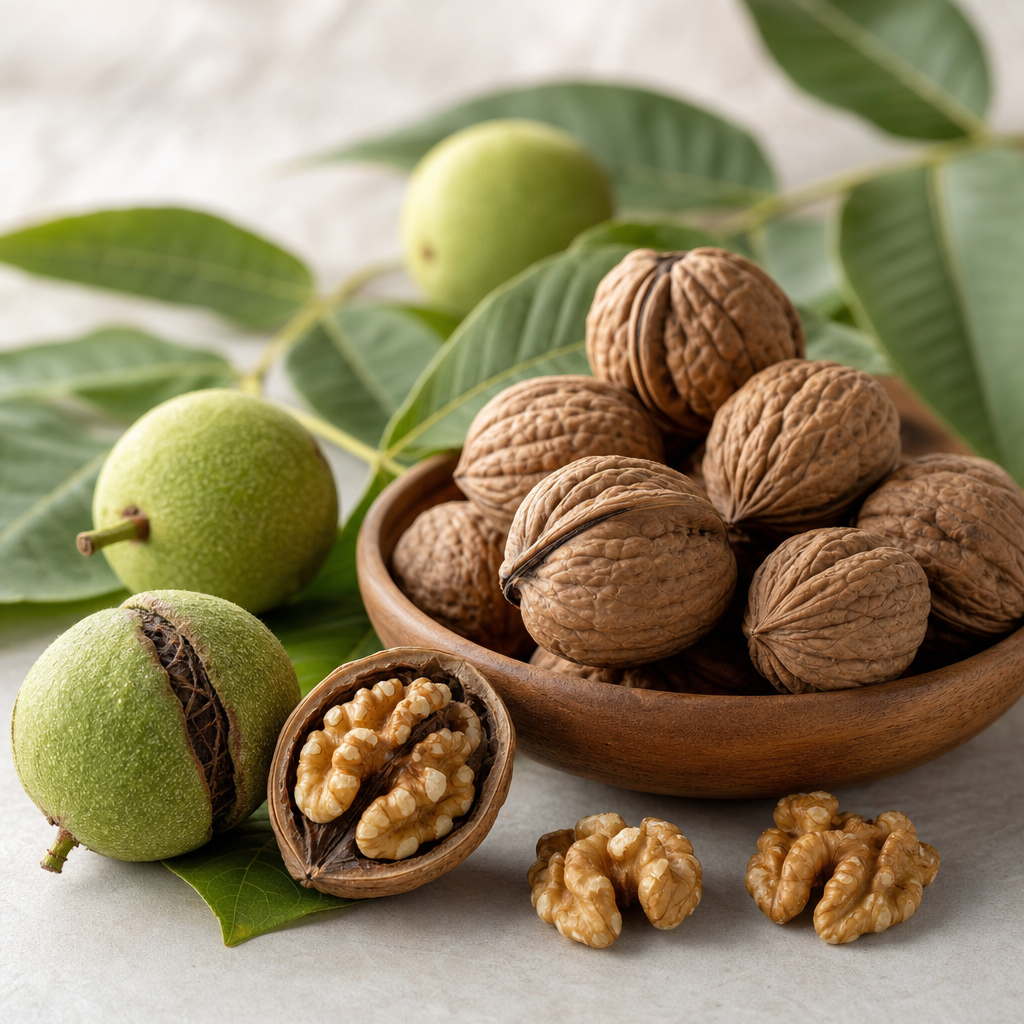
Black walnut (Juglans nigra) is a North American tree known for its hard, dark wood and edible nuts. In traditional herbalism, the green hulls (outer casing around the nut), leaves, and sometimes bark have been used for their astringent and antimicrobial properties. Modern products most often come from the green hulls, which contain tannins, polyphenols, and the naphthoquinone compound juglone. The edible nut meats are a nutrient-dense food similar to English walnuts, providing healthy fats, protein, and minerals.
As a health product, black walnut is considered a botanical/herbal ingredient or a food, not an essential nutrient. The human body does not require black walnut in the same way it requires vitamins or minerals. Supplements are typically marketed for digestive and skin support or as part of traditional “cleansing” formulas, while the nuts are consumed as part of a varied diet. Scientific evidence for many supplemental claims is limited, and black walnut should be used thoughtfully and with attention to safety.
Benefits of Black Walnut
-
Antimicrobial and antifungal support (topical and oral)
(Limited evidence)
Black walnut hull extracts show activity against certain bacteria and fungi in laboratory experiments, likely due to juglone, tannins, and other polyphenols. Historically, practitioners have used diluted preparations on minor skin fungal issues and as part of oral hygiene rinses. However, well-designed human trials are sparse, and potency can vary widely among products. For significant infections, clinical diagnosis and evidence-based treatments are recommended.
-
Traditional support for intestinal parasites
(Limited evidence)
Black walnut hull has a long history of use in North American and European folk medicine as an anthelmintic. While in vitro and animal data suggest potential, rigorous human trials are limited. Some combination formulas pair black walnut with wormwood and clove, but the specific contribution and optimal dosing of black walnut remain unclear. Anyone with suspected parasitic infection should seek medical testing and appropriate prescription therapy.
-
Astringent effects for mild, short-term diarrhea
(Limited evidence)
Tannins in black walnut have astringent properties that may help temporarily firm stools and soothe irritated tissues. This traditional use is plausible and consistent with how astringent herbs are used generally. Still, dosing and duration are not standardized, and controlled human trials are lacking. Hydration, electrolyte balance, and evaluation for underlying causes are crucial if diarrhea persists.
-
Antioxidant and anti-inflammatory properties
(Preliminary evidence)
Polyphenols and naphthoquinones in black walnut demonstrate antioxidant activity in test-tube and animal studies, with possible downstream anti-inflammatory effects. Translation to meaningful human health outcomes has not been firmly established. If used for general wellness, it should complement—not replace—core lifestyle practices like a nutrient-dense diet, sleep, and physical activity.
-
Cardiometabolic support from the edible nuts
(Moderate evidence)
Tree nut consumption, including walnuts, is associated with improved lipid profiles and cardiometabolic health in observational and intervention studies. While most trials focus on English walnuts (Juglans regia), black walnuts provide a similar nutrient profile—unsaturated fats (including alpha-linolenic acid in smaller amounts than English walnuts), fiber, and minerals—which can support heart health when they replace refined snacks and are part of a balanced diet. This benefit pertains to eating the nuts as food, not taking hull extracts.
Types or Forms Available
-
Green hull (husk) tinctures and liquid extracts:
Common in herbal practice. Products may be alcohol-based or glycerites. Standardization is uncommon, so concentrations of juglone and tannins vary. Typically intended for short-term use. Potency and color can deepen as hulls oxidize.
-
Hull powder in capsules:
Offers measured portions without the strong taste of tinctures. As with tinctures, standardization is rare. Quality depends on harvest timing (often “green” hulls) and processing to limit oxidation and contamination.
-
Leaf tea (infusion) or leaf capsules:
Considered milder than hull preparations, traditionally used as an astringent. Evidence is limited; dosing is less clearly defined than for food-based uses.
-
Topical preparations (salves, creams):
Used traditionally for minor skin concerns. Should be patch-tested due to potential for irritation or staining from juglone and tannins.
-
Edible nuts and cold-pressed oil:
The nuts are a whole-food option that provide healthy fats, protein, and micronutrients. Oil can be used in culinary applications; it is not the same as hull extract and does not provide the same phytochemical profile.
How to Use Black Walnut
Because black walnut is not an essential nutrient and human research is limited, there are no universally accepted dosing standards. Use the lowest effective amount for the shortest reasonable time, and follow product labels or practitioner guidance.
-
Common dosage range:
For hull capsules, many products provide roughly 250–500 mg per serving, taken 1–3 times daily for short-term use. For tinctures, labels often suggest about 1–2 mL up to three times daily. Leaf teas commonly use 1–2 grams steeped in hot water for 5–10 minutes. For the edible nuts, a typical serving is about 28 g (1 ounce). Always start low to assess tolerance.
-
Best timing:
If sensitive to astringency or gastrointestinal effects, take hull extracts with meals. For potential interactions with minerals, separate from iron, zinc, and other mineral supplements by at least 2–3 hours due to tannins potentially reducing absorption.
-
How to take it:
Swallow capsules with water and food. Tinctures can be diluted in water or tea. Leaf tea is sipped warm. For topical products, use externally only, on intact skin, and patch-test first.
-
Consistency:
Hull extracts are typically used intermittently or short-term. The edible nuts can be consumed regularly as part of a balanced diet. Long-term daily use of concentrated hull extracts is not well studied and should be supervised by a qualified professional.
Food Sources and Supplement Options
Black walnuts are naturally found as an edible tree nut; the nuts can be eaten on their own or used in recipes. Supplements most often use the green hulls, and less commonly leaves, prepared as tinctures or capsules. Choosing between food and supplements depends on the goal: whole nuts for nutrition, or short-term targeted botanical use when appropriate.
-
Key food source:
Black walnut nuts (Juglans nigra)
-
What they provide:
Unsaturated fats, some alpha-linolenic acid (ALA), protein, fiber, manganese, magnesium, copper, and phytochemicals.
Supplements may make sense for short-term, targeted applications (for example, when guided by a practitioner for specific digestive or skin goals). Whole foods typically offer broader nutritional benefits and are better supported by evidence for cardiometabolic health. Supplements can provide more concentrated, standardized dosing of certain constituents, but quality varies widely and safety considerations are important.
Who May Benefit from Black Walnut?
-
People who enjoy and tolerate tree nuts and want to diversify nut intake for heart-healthy snacking using the edible nuts.
-
Individuals seeking a traditional astringent botanical for brief support with mild, self-limited diarrhea, alongside hydration and dietary adjustments.
-
Adults interested in topical, traditional herbal approaches to minor skin concerns, using patch-tested, diluted products.
-
Those exploring herbal combinations for gut-related wellness under guidance from a qualified practitioner, understanding evidence is limited.
-
People avoiding it entirely if they have nut allergies, are pregnant or breastfeeding, or are managing complex medical conditions unless advised by a clinician.
Side Effects and Considerations
-
Allergies:
Black walnut is a tree nut. Anyone with nut allergies should avoid the nuts and be cautious with any product that could be contaminated with nut proteins. Symptoms can be severe.
-
Gastrointestinal effects:
Hull extracts are astringent and can cause nausea, cramping, constipation, or, less commonly, diarrhea. Start low and take with food. Discontinue if irritation occurs.
-
Skin irritation and staining:
Topical products may cause contact dermatitis or dark staining due to juglone. Patch-test on a small area for 24 hours and avoid broken skin.
-
Liver and kidney caution:
Juglone and concentrated extracts have limited human safety data. People with liver or kidney conditions should avoid use unless medically supervised. Stop if you notice jaundice, dark urine, or unusual fatigue.
-
Pregnancy and breastfeeding:
Safety data are insufficient. Avoid black walnut hull supplements and topical use during pregnancy and lactation unless specifically approved by a healthcare professional.
-
Children and adolescents:
Limited safety data; avoid hull extracts in children unless directed by a qualified clinician. Nuts can be appropriate for older children if there is no allergy and choking risk is managed.
-
Medication interactions:
Tannins may reduce absorption of iron and other minerals; separate dosing by 2–3 hours. The nuts contain modest vitamin K; people on warfarin should maintain consistent vitamin K intake and consult their prescriber. As with many botanicals, theoretical interactions with hepatotoxic drugs exist—use caution.
-
Pre-surgery considerations:
Disclose use to your surgical team. Although specific bleeding risks are not well established, many clinicians advise discontinuing nonessential botanicals 1–2 weeks before procedures.
-
Quality and contamination:
Choose reputable brands that test for identity, heavy metals, and microbial contamination. Hull material can degrade or mold if processed or stored improperly.
-
Duration of use:
Long-term or high-dose use of hull extracts is not well studied and is not recommended without professional guidance.
-
Medical oversight:
People who are pregnant, breastfeeding, taking medications, or managing a medical condition should consult a healthcare professional before using black walnut.
Common Myths About Black Walnut
-
“Black walnut cures all parasites.”
While traditional use includes support for intestinal parasites, robust human trials are scarce. Some lab studies are promising, but black walnut is not a stand-alone cure. Proper diagnosis and, when indicated, prescription treatments are the standard of care.
-
“Natural means it’s safe for everyone.”
Black walnut is a tree nut allergen, hull extracts can irritate the gut or skin, and safety data in pregnancy and long-term use are limited. “Natural” does not guarantee universal safety—individual risk and product quality matter.
-
“You need regular black walnut ‘cleanses’ to detox.”
The body’s liver, kidneys, lungs, skin, and gut already manage detoxification. There is no good evidence that periodic black walnut cleanses improve toxin removal, and overuse can cause side effects. Emphasize balanced nutrition, hydration, sleep, and medical care when needed.
Conclusion
Black walnut is a versatile tree that offers both a nutritious food (the nuts) and traditional herbal preparations (primarily the green hulls). The strongest, most practical benefit with human evidence is the inclusion of nuts in a heart-healthy eating pattern. Potential antimicrobial, antifungal, and astringent effects of hull preparations are supported mainly by traditional use and early-stage research, so expectations should be modest and use should be cautious and time-limited.
If you choose a black walnut supplement, prioritize reputable brands, start with conservative doses, and monitor for tolerance. People who are pregnant or breastfeeding, individuals with nut allergies, those on medications, or anyone with underlying medical conditions should consult a healthcare professional before use. For most people, a food-first approach—enjoying a variety of nuts, seeds, fruits, vegetables, and whole grains—makes the most sense, with botanicals like black walnut considered as targeted, short-term adjuncts when appropriate.