What is Beet root?
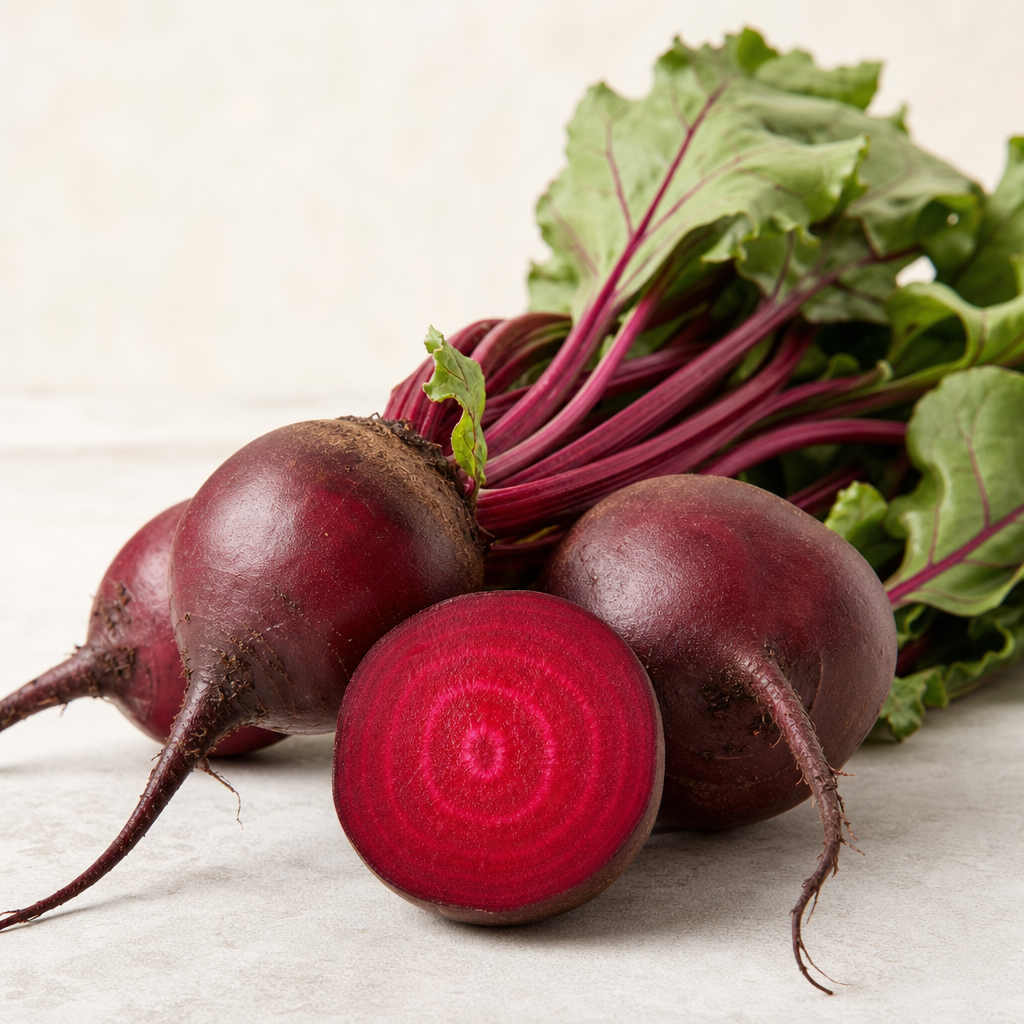
Beet root (Beta vulgaris), commonly called beetroot or simply “beets,” is the bulbous root of a vegetable in the amaranth family. It is a whole food naturally rich in dietary nitrates, pigments called betalains (betacyanins and betaxanthins), folate, potassium, and small amounts of betaine. In nutrition and wellness, beet root refers both to the food itself and to concentrated products such as juices, powders, and standardized extracts used as supplements.
Beet root is not an essential nutrient like a vitamin or mineral. The body does not require beet root specifically to survive. However, compounds in beet root—especially dietary nitrate—can be converted via oral bacteria to nitrite and then to nitric oxide (NO), a signaling molecule that supports blood vessel relaxation, circulation, and exercise efficiency. Betalain pigments act as antioxidants and may support cellular defenses against oxidative stress. Because of these properties, beet root is often used as a food-derived ingredient or supplement to support cardiovascular health and exercise performance.
Benefits of Beet root
-
Blood pressure support
(Moderate evidence)
Beet root juice and nitrate-standardized products can help modestly lower systolic and diastolic blood pressure in some adults, likely by increasing nitric oxide availability and improving vasodilation. Meta-analyses generally show small but meaningful reductions, especially in people with elevated blood pressure. Effects are not universal and can vary by dose, product nitrate content, baseline blood pressure, and oral hygiene practices that affect nitrate-to-nitrite conversion.
-
Endurance exercise performance and efficiency
(Mixed evidence)
Beet root can reduce the oxygen cost of submaximal exercise and, in some studies, improve time-to-exhaustion or time-trial performance, especially in recreationally active or moderately trained individuals. Results in elite athletes are more variable. Benefits depend on adequate nitrate intake (often ~5–9 mmol nitrate), timing (about 2–3 hours pre-exercise), and consistent protocols. Some studies show no advantage, highlighting individual response differences and the importance of product standardization.
-
Vascular function (endothelial health)
(Moderate evidence)
By boosting nitric oxide, beet root can acutely improve measures of endothelial function such as flow-mediated dilation. Repeated intake may help maintain these improvements. These effects tie into overall cardiovascular support, though they do not replace medical therapy for cardiovascular disease.
-
Exercise recovery and muscle soreness
(Limited evidence)
Beet root’s betalains and other polyphenols may help reduce exercise-induced muscle damage markers and perceived soreness in some protocols. Findings are not consistent across all studies, and benefits may relate more to antioxidant and anti-inflammatory properties than to nitrate content alone. More research is needed to determine optimal dosing and populations.
-
Cognitive performance and brain blood flow
(Limited to mixed evidence)
Small trials suggest beet root may enhance cerebral blood flow and, in some cases, aspects of cognitive performance in older adults or during demanding tasks, likely through nitric oxide-mediated vasodilation. Evidence remains preliminary and heterogeneous; it should be considered exploratory rather than definitive.
-
Walking tolerance in peripheral artery disease (PAD)
(Limited evidence)
Because nitric oxide supports vascular function, beet root has been investigated for improving walking distance and reducing claudication symptoms in PAD. Some studies note modest improvements, but the data are limited and not yet conclusive. Beet root is not a substitute for supervised exercise therapy or medical care in PAD.
-
Liver and metabolic markers (via betaine and polyphenols)
(Preliminary evidence)
Beets contain betaine, a methyl donor that can influence homocysteine metabolism, and betalains with antioxidant activity. Early research suggests potential benefits for certain biomarkers and, in specific contexts, liver fat accumulation; however, most evidence is preliminary, and supplement formulations vary widely in betaine content. These uses require more high-quality trials.
Types or Forms Available
-
Whole food beets (fresh, cooked, pickled)
Whole beets provide fiber, micronutrients, betalains, and variable nitrate content depending on soil, season, and storage. Cooking can modestly affect nitrate and betalain levels, but beets remain nutrient-dense regardless of preparation. Pickled beets add sodium and vinegar; nitrate content may vary.
-
Beet root juice and “shots”
Common in research, juices often come in 70–140 mL “shots.” Quality products disclose nitrate content (e.g., 300–600 mg nitrate per serving). Juice provides consistent delivery but can be relatively high in natural sugars. Some brands produce concentrated shots with more predictable nitrate dosing for performance or blood pressure goals.
-
Beet root powders (standardized and non-standardized)
Powders can be mixed into water or smoothies. Non-standardized powders have variable nitrate levels based on agricultural factors and processing. Standardized powders list nitrate content per serving, aiding dose control for performance or blood pressure purposes. Some powders emphasize betalains rather than nitrate.
-
Encapsulated beet root
Capsules offer convenience but often deliver lower nitrate per serving unless specifically standardized. They may still provide betalains and other phytonutrients. Users seeking nitrate-related benefits should check labels for actual nitrate content, not just milligrams of “beet root powder.”
-
Betalain-rich extracts (low-nitrate)
These extracts prioritize antioxidant pigments and may be intended for recovery or general wellness. They may contain little to no nitrate and are less suitable for nitric-oxide-dependent goals like acute performance or blood pressure effects.
-
Fermented beet beverages (e.g., beet kvass)
Fermentation changes the profile of bioactive compounds and may alter nitrate and nitrite content. Products vary widely; data on performance or blood pressure outcomes with fermented forms are limited.
How to Use Beet root
Approach usage based on your goal and the specific product’s nitrate or betalain content. Not all beet products are equivalent; check labels for nitrate standardization when targeting nitric oxide–related benefits.
-
Common dosage range:
For blood pressure and vascular support, studies often use daily intakes providing about 300–600 mg nitrate from beet root (for example, 250–500 mL of beet juice or standardized “shots” with 5–9 mmol nitrate). For endurance performance, an acute dose of ~5–9 mmol nitrate (about 310–560 mg) 2–3 hours pre-exercise is common; some protocols include daily loading for 3–7 days. For non-standardized powders, practical servings range from ~3–10 g, but nitrate content is highly variable; standardized products are preferable for precise dosing. Avoid excessive or prolonged high dosing without guidance.
-
Best timing:
Nitric oxide peaks about 2–3 hours after intake, so time pre-exercise doses accordingly. For blood pressure, daily intake at a consistent time is reasonable; benefits may accrue over 1–4 weeks and persist with continued use.
-
How to take it:
Mix powders with water or a smoothie; juice or shots can be taken alone. Food does not appear to block benefits meaningfully. Avoid antibacterial mouthwash and antiseptic mouth rinses around dosing (they disrupt oral bacteria needed for nitrate-to-nitrite conversion), especially in the 6–12 hours before key doses.
-
Consistency:
For sports, beet root can be used acutely before events or training and/or as a short loading phase. For blood pressure and vascular function, consistent daily use is more relevant. Periodic breaks can help assess ongoing need and response.
Food Sources and Supplement Options
Beet root is a natural food and also widely available as juices, powders, and extracts. Whole-food intake offers fiber, folate, potassium, betalains, and other phytochemicals, while supplements provide convenient, targeted nitrate or betalain dosing.
-
Key food sources:
Fresh beets (raw, roasted, boiled), beet salads, grated beet in slaws, beet soups (e.g., borscht), pickled beets, beet smoothies, and beet juice.
-
Other nitrate-rich vegetables:
Although not beet root, foods like arugula (rocket), spinach, lettuce, and celery are also high in dietary nitrate and can complement beet intake for total nitrate exposure.
Supplementation may make sense when you want a consistent, standardized nitrate dose for pre-exercise performance or when aiming to support blood pressure with predictable intake. Whole foods remain valuable for overall diet quality and provide additional nutrients and fiber that supplements lack. Many people do well prioritizing vegetables (including beets) daily, then using standardized beet root products strategically for specific goals.
Who May Benefit from Beet root?
-
Endurance and team-sport athletes seeking small performance gains or improved exercise efficiency, particularly recreational to well-trained (but not necessarily elite) individuals.
-
Adults with elevated blood pressure or suboptimal endothelial function who are pursuing diet and lifestyle strategies to support cardiovascular health, under medical guidance.
-
Older adults interested in vascular support or exploring potential cognitive benefits alongside a nutrient-dense diet and regular activity.
-
People preparing for specific events (races, competitions) who want a standardized nitrate boost pre-exercise.
-
Individuals with low intake of nitrate-rich vegetables who prefer a practical way to increase dietary nitrate, while also working to improve overall diet quality.
Side Effects and Considerations
-
Blood pressure lowering:
Beet root can modestly reduce blood pressure. People on antihypertensive medications, with low baseline blood pressure, or using medications that affect vasodilation (including PDE-5 inhibitors) should consult a healthcare professional to avoid excessive hypotension or dizziness.
-
Gastrointestinal effects:
Some experience stomach discomfort, gas, or loose stools, especially with concentrated shots or large servings. Start with lower amounts and assess tolerance.
-
Beeturia and stool discoloration:
Pink/red urine or stools after beet intake is common and harmless but can be alarming. It is not blood.
-
Oxalate content and kidney concerns:
Beets contain oxalates, which can contribute to kidney stone risk in susceptible individuals. Those with a history of calcium oxalate stones or kidney disease should be cautious and consult a healthcare professional.
-
Sugar and calorie load from juices:
Beet juice can be high in natural sugars. People managing blood glucose or caloric intake may prefer smaller servings, blended whole-food preparations, or nitrate-standardized products with known sugar content.
-
Oral hygiene interactions:
Antibacterial mouthwashes can blunt benefits by disrupting oral bacteria needed for nitrate-to-nitrite conversion. Avoid such products around dosing when aiming for nitric oxide–related outcomes.
-
Medication and condition interactions:
If you take blood pressure medications, nitrates, PDE-5 inhibitors, or have cardiovascular, kidney, or liver conditions, seek medical advice before using concentrated beet root supplements.
-
Pregnancy, breastfeeding, and children:
Food amounts of beets are generally considered safe, but safety data on high-dose beet root supplements are limited. Pregnant or breastfeeding individuals and children should consult a healthcare professional before supplement use.
-
Quality and contamination:
Nitrate and betalain content vary widely across products. Choose reputable brands with third-party testing for label accuracy and contaminants (e.g., heavy metals). Athletes should consider products certified for sport to avoid banned substances.
-
Dosing prudence:
More is not necessarily better. Extremely high or prolonged dosing may increase side effects without added benefit. Follow product directions and monitor your response.
Common Myths About Beet root
-
“Beet root cures hypertension.”
Beet root can modestly lower blood pressure in some people, but it is not a cure and does not replace prescribed medications or lifestyle changes. Effects are variable and typically modest. Use it as part of a broader cardiovascular strategy under medical guidance.
-
“Beet root juice is the same as beet sugar, so it’s bad for blood sugar.”
Beet root (the vegetable) is different from refined beet sugar. Whole beets provide fiber and micronutrients; however, beet juice contains natural sugars and lacks fiber. People managing blood glucose can still include beets thoughtfully, favoring whole preparations or controlled portions rather than assuming all beet products are equivalent to added sugar.
-
“If some nitrate is good, megadoses are always better.”
Excessive dosing increases the chance of gastrointestinal upset, headaches, and blood-pressure drops without guaranteeing greater benefits. Research-based ranges and product standardization matter more than sheer quantity.
-
“Mouthwash won’t affect beet root’s benefits.”
Antibacterial mouthwashes can significantly reduce the conversion of nitrate to nitrite in the mouth, blunting increases in nitric oxide. If you rely on beet root for performance or vascular effects, avoid antiseptic mouthwash around dosing.
-
“Beet root detoxes the liver.”
Beets provide betaine and antioxidants that may support normal metabolic processes, but claims of dramatic “detox” effects are not supported by strong evidence. The liver already has robust detoxification pathways; a balanced diet and lifestyle are primary.
Conclusion
Beet root is a nutrient-dense food and a popular supplement primarily because of its dietary nitrate and betalain content. It may modestly support blood pressure, vascular function, and certain aspects of exercise performance, with emerging but less consistent evidence for recovery and cognition. Benefits depend heavily on dose, timing, product quality, and individual response. For nitric oxide–related goals, standardized nitrate content and appropriate timing (about 2–3 hours before activity) are key.
Most people can start with food-first approaches—regularly including beets and other nitrate-rich vegetables—then consider standardized beet root products for targeted, short-term goals like competition prep or structured blood-pressure support. Choose reputable, tested products, and use prudent doses. Individuals who are pregnant, breastfeeding, taking medications, or managing medical conditions—especially cardiovascular or kidney issues—should consult a healthcare professional before using concentrated beet root supplements.