What is Quercetin?
Quercetin is a naturally occurring plant flavonoid (a type of polyphenol) found widely in fruits, vegetables, leaves, and certain grains. It contributes to the color of many plants and acts as an antioxidant within them. In human nutrition, quercetin is considered a food-derived bioactive compound and is also available as a dietary supplement. It is not a vitamin or mineral, and it is not an essential nutrient; the body does not technically require quercetin for survival in the same way it needs essential vitamins, minerals, amino acids, or fatty acids.
In the body, quercetin has been studied for antioxidant and anti-inflammatory actions, potential support for blood vessel function, and possible effects on immune and histamine responses. Researchers have explored quercetin for cardiovascular health, seasonal allergy symptoms, exercise recovery, and general wellness. While it has promising biological activities in cell and animal models, human evidence varies by outcome, dose, and formula, and results can be mixed. As a supplement, quercetin is usually used to complement, not replace, a nutrient-dense diet rich in plant foods that naturally provide quercetin and other beneficial compounds.
Benefits of Quercetin
-
Blood pressure support (small reductions in some adults)
(Moderate evidence)
Quercetin supplementation at doses around 500 mg per day has been associated with modest reductions in systolic and diastolic blood pressure in some randomized trials and meta-analyses, particularly in adults with elevated blood pressure. Effects are generally small (a few mmHg), may take several weeks, and are not a substitute for prescribed therapy or lifestyle interventions such as sodium reduction, weight management, physical activity, and sleep optimization.
-
Allergy symptom support via mast-cell stabilization
(Limited to mixed evidence)
Quercetin can influence histamine release from mast cells in laboratory studies, and small human trials suggest it may help with seasonal allergy symptoms like sneezing and nasal congestion for some individuals. However, findings are inconsistent, optimal dosing is not firmly established, and not all studies show benefit. When used, it is typically an adjunct to standard allergy care, not a replacement.
-
Antioxidant and inflammation marker modulation
(Moderate evidence)
As a flavonoid, quercetin can help modulate oxidative stress and inflammatory signaling. Some human studies report small improvements in biomarkers such as oxidized LDL, malondialdehyde, or C-reactive protein, especially in people with higher baseline risk. Benefits appear dose- and duration-dependent and are often more noticeable when diet quality is suboptimal.
-
Endothelial function and circulation
(Limited to moderate evidence)
Quercetin may support endothelial function, including flow-mediated dilation, in certain populations. Improvements are not universal, but they are biologically plausible given quercetin’s effects on nitric oxide pathways and oxidative stress. Results vary by dose, form, and baseline vascular health.
-
Exercise recovery and upper-respiratory symptom days
(Mixed evidence)
Some studies in athletes and highly active individuals suggest quercetin may reduce the number of days with upper-respiratory symptoms following heavy training and slightly ease perceived soreness or fatigue. Other trials show minimal or no effect. Differences likely relate to training load, co-supplements, and quercetin bioavailability.
-
Metabolic health (glucose and lipids)
(Limited evidence)
Early findings indicate quercetin may modestly affect fasting glucose, triglycerides, or total cholesterol in some groups, but the overall impact is small and inconsistent. It should not be used as primary treatment for metabolic disorders. Dietary patterns, physical activity, and medications remain central to management.
-
Respiratory health during common colds
(Preliminary evidence)
Quercetin’s immune-modulating and antiviral mechanisms observed in laboratory settings have prompted trials for common cold support. Some combinations (e.g., quercetin with vitamin C or bromelain) show signals of benefit, but evidence is preliminary and not definitive. Standard preventive measures and medical care should take priority.
Types or Forms Available
-
Quercetin aglycone (standard form):
The most common supplemental form. It has relatively low water solubility and modest oral bioavailability. It is widely available and reasonably priced.
-
Quercetin dihydrate:
A stable, commonly used raw material with similar properties to aglycone. Labeling may show “quercetin dihydrate,” but once absorbed, the body processes quercetin similarly across aglycone forms.
-
Quercetin phytosome (e.g., lecithin-bound complexes):
Formulations that bind quercetin to phospholipids can enhance absorption. These are often marketed for improved bioavailability, which may allow lower milligram doses to achieve comparable blood levels versus standard forms.
-
Isoquercitrin and enzymatically modified isoquercitrin (EMIQ):
Glycosylated forms designed for higher bioavailability than quercetin aglycone. EMIQ, in particular, is noted for better absorption in some studies.
-
Rutin (quercetin rutinoside):
A quercetin glycoside naturally found in buckwheat and citrus peels. It has different absorption characteristics and may not produce the same blood levels of free quercetin as enhanced forms.
-
Liposomal quercetin:
Encapsulated in lipid vesicles to potentially improve uptake. Quality can vary widely by manufacturer; evidence is promising but not as extensive as for phytosome or EMIQ.
-
Combination products:
Quercetin is frequently paired with vitamin C (for complementary antioxidant roles) and bromelain (a proteolytic enzyme sometimes included for sinus/allergy support). Combinations can change tolerability and interaction profiles.
How to Use Quercetin
Quercetin is typically used for targeted goals such as seasonal support, vascular health, or exercise recovery. Individual responses vary, and consistency matters. If you use medication or manage a medical condition, speak with a healthcare professional before starting quercetin.
-
Common dosage range:
250–1,000 mg per day is typical in supplements, often split into 250–500 mg twice daily. Enhanced-bioavailability forms (phytosome or EMIQ) may require lower milligram amounts for similar effects. Avoid megadoses beyond label guidance unless supervised by a clinician.
-
Best timing:
For general wellness or blood pressure support, morning and/or with the largest meal is practical. For seasonal symptoms, daily use leading into and during high-pollen periods may be helpful. For post-exercise immune support, consistent daily intake across training blocks may be more important than precise timing.
-
How to take it:
Take with food and a glass of water to reduce stomach discomfort and support absorption. A meal containing some fat can help uptake. If using other medications, separate dosing by at least 2–4 hours to minimize potential transporter or metabolism interactions.
-
Consistency:
Benefits, when present, often appear after 2–8 weeks of consistent use. Some individuals use quercetin seasonally, while others take it daily for specific goals. Reassess need periodically with your healthcare provider.
Food Sources and Supplement Options
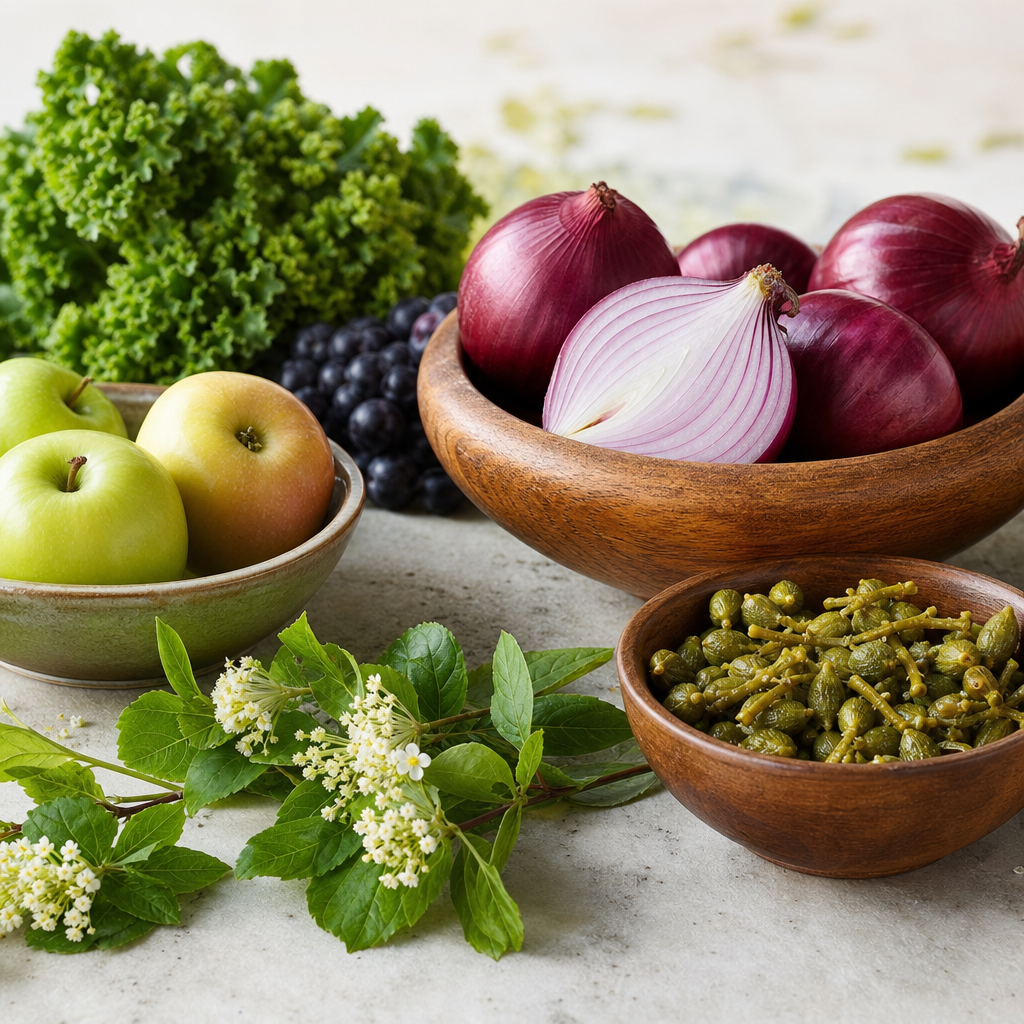
Quercetin is naturally present in many plant foods, and it is also available as a dietary supplement. Whole foods deliver quercetin alongside fiber, vitamins, minerals, and other polyphenols, which may have synergistic benefits. Supplements offer more predictable and concentrated dosing when specific outcomes are desired or when dietary intake is low.
-
Capers (very rich source)
-
Onions, especially red and yellow varieties (highest near outer layers)
-
Apples and apple skins
-
Berries (e.g., cranberries, blueberries)
-
Grapes and red wine (in moderation)
-
Leafy greens (e.g., kale) and broccoli
-
Tea (green and black)
-
Buckwheat (notably rich in rutin, a quercetin glycoside)
When supplementation makes sense: If you are targeting specific outcomes (e.g., modest blood pressure support, seasonal symptom support, or consistent intake during heavy training) and find it difficult to reach desired intake from foods alone, a supplement may be considered. Choose reputable brands with third-party testing, and consider forms with improved bioavailability if lower doses are preferred. Remember that a food-first approach supports overall health, and supplements should complement—not replace—balanced eating and clinical care.
Who May Benefit from Quercetin?
-
Adults with diet patterns low in fruits, vegetables, tea, and whole grains who want to increase intake of polyphenols through food or targeted supplementation.
-
Individuals with mildly elevated blood pressure seeking modest, adjunctive support alongside lifestyle measures and medical guidance.
-
People with seasonal environmental triggers who want an additional, non-drowsy option to try alongside standard measures. Responses vary.
-
Athletes or highly active individuals during heavy training blocks who are exploring strategies to support recovery and reduce days with upper-respiratory symptoms, recognizing mixed evidence.
-
Middle-aged and older adults interested in vascular and oxidative stress support as part of a broader heart-healthy lifestyle.
Side Effects and Considerations
-
General tolerability:
Quercetin is usually well tolerated at common doses. Possible side effects include headache, stomach upset, reflux, or tingling sensations, typically mild and transient. Taking with food may help.
-
Kidney and liver considerations:
High-dose or long-term use beyond typical supplemental ranges has not been well studied in humans. Animal data suggest potential kidney concerns at very high exposures. People with kidney or liver disease should use caution and consult a clinician before use.
-
Medication interactions (CYP and transporters):
Quercetin can influence drug-metabolizing enzymes (e.g., CYP3A4, CYP2C8/2C9) and transporters (e.g., OATP, P-glycoprotein). This may alter levels of certain medications such as cyclosporine, some statins, calcium-channel blockers, certain antihistamines, and others. Separate dosing by several hours and consult a pharmacist or clinician.
-
Anticoagulants and antiplatelet agents:
Quercetin has mild antiplatelet activity. Use caution if you take warfarin, DOACs, or daily aspirin, and before surgery or dental procedures. Monitoring and professional guidance are advised.
-
Allergy and sensitivities:
While quercetin is a plant compound, true quercetin allergy is uncommon. However, combination products (e.g., with bromelain from pineapple) can increase risk of reactions for sensitive individuals. Check labels for excipients if you have allergies.
-
Thyroid and hormone considerations:
Limited data suggest quercetin may influence thyroid enzymes in vitro. People on thyroid medication should consult a clinician and avoid taking quercetin at the exact same time as their thyroid dose.
-
Pregnancy, breastfeeding, and children:
Robust safety data are lacking. Avoid high-dose supplementation during pregnancy or breastfeeding unless specifically recommended by a healthcare professional. Use in children should be guided by a clinician.
-
Quality and contamination:
Choose brands that use third-party testing for identity, potency, and purity to reduce the risk of adulteration or contaminants. Enhanced-bioavailability forms can differ in strength; follow labeled dosing.
-
Duration and cycling:
For seasonal use, many people limit supplementation to the relevant months. For ongoing goals, consider periodic breaks and re-evaluation with a professional, especially if taking other medications.
Common Myths About Quercetin
-
“Quercetin is a vitamin that everyone needs daily.”
Quercetin is not a vitamin or essential nutrient. It is a plant-derived flavonoid that may support health but is not required for survival in the way essential vitamins and minerals are. A balanced diet rich in plants can provide quercetin along with many other beneficial compounds.
-
“More quercetin is always better.”
Higher doses do not guarantee better outcomes and can increase the chance of side effects or interactions. Many benefits observed in studies are modest and reached with typical supplemental ranges. Stick to evidence-informed amounts and product labels, and consult a healthcare professional if unsure.
-
“Quercetin cures colds or viral infections.”
Lab studies show antiviral mechanisms, but human evidence is preliminary and mixed. Quercetin should not replace proven prevention or treatment strategies. Consider it a supportive measure at best, alongside good hygiene, rest, nutrition, and medical care when needed.
-
“Natural means risk-free, even with medications.”
Quercetin can affect drug-metabolizing enzymes and transporters, potentially changing medication levels. People on prescription drugs should check with a pharmacist or clinician to avoid interactions.
-
“Food sources can’t provide meaningful quercetin.”
Many everyday foods—like onions, apples, tea, and capers—can contribute meaningful amounts. While supplements offer precise dosing, a food-first pattern delivers quercetin plus fiber, vitamins, minerals, and other polyphenols that work together for overall health.
Conclusion
Quercetin is a food-derived flavonoid with antioxidant and anti-inflammatory actions that may modestly support blood pressure, endothelial function, and seasonal comfort, with mixed results for exercise recovery and respiratory symptoms. It is not essential like vitamins or minerals, and its benefits tend to be incremental rather than dramatic. A diet rich in plant foods remains the foundation; supplements can provide consistent, targeted dosing when specific goals are being pursued or dietary intake is low.
If you choose to supplement, select a reputable product, consider forms with better bioavailability if you prefer lower doses, and use typical ranges rather than megadoses. People who are pregnant, breastfeeding, taking medications, or managing medical conditions should consult a healthcare professional before use. Reassess your response after several weeks, prioritize quality lifestyle practices, and use quercetin as one piece of a broader wellness plan.