What is Boswellia Serrata?
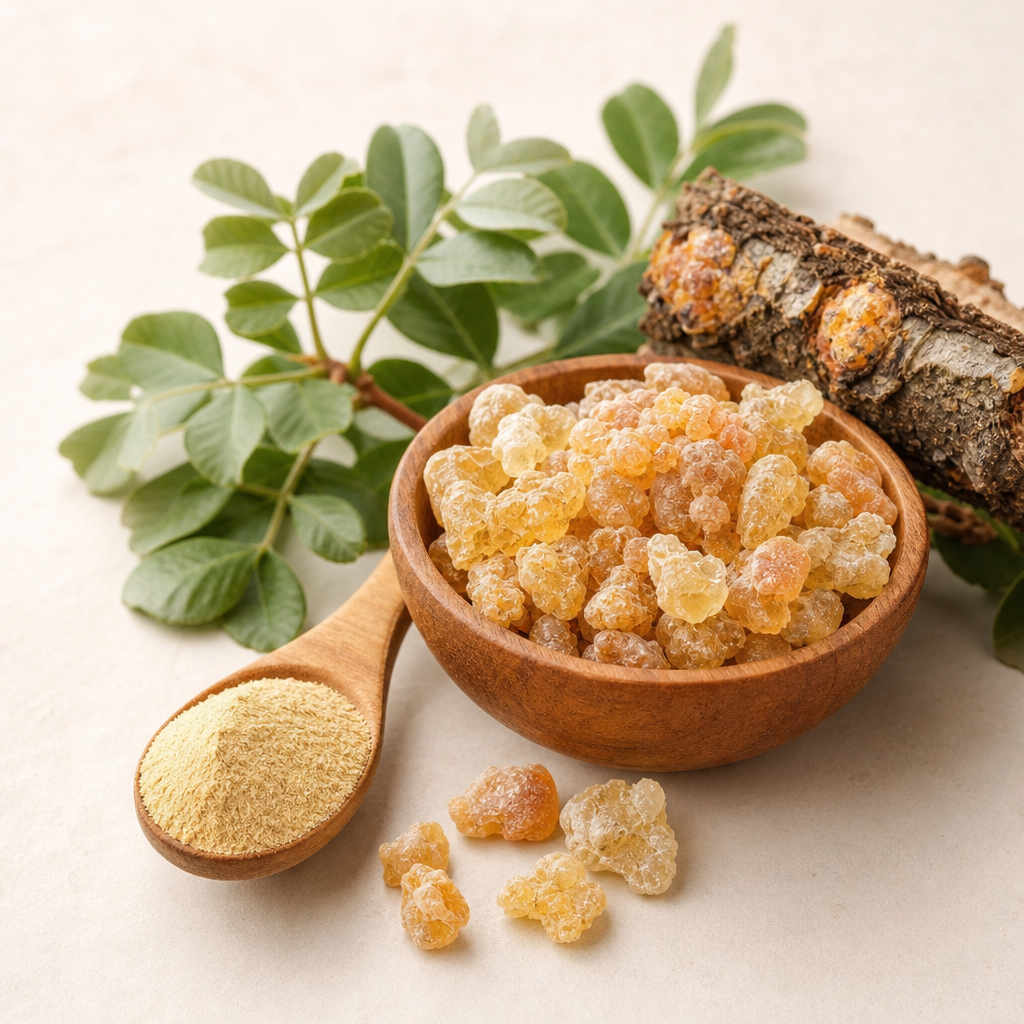
Boswellia serrata, often called Indian frankincense, is a tree native to India, the Middle East, and parts of Africa. Its aromatic resin has been used for centuries in Ayurveda and traditional medicine. Modern supplements are typically derived from this resin and standardized for active compounds known as boswellic acids—especially 3-O-acetyl-11-keto-β-boswellic acid (AKBA)—which have been studied for anti-inflammatory properties.
Boswellia is a botanical extract, not an essential nutrient. Unlike vitamins or minerals, the body does not require boswellia for basic survival or to correct a defined deficiency state. Instead, it is used as a supplement that may help manage symptoms tied to inflammatory pathways, such as joint discomfort. Its proposed mechanisms include inhibition of 5-lipoxygenase (5-LOX), modulation of leukotriene production, and potential effects on inflammatory signaling cascades.
Benefits of Boswellia Serrata
-
Osteoarthritis (joint pain and function)
(Moderate evidence)
Several randomized trials suggest standardized boswellia extracts can reduce knee osteoarthritis pain and improve function compared with placebo. Benefits often appear within 1–4 weeks and may include better walking ability and reduced stiffness. While results vary by extract and dose, high-AKBA formulations have shown clinically meaningful improvements for some participants.
-
Inflammatory bowel conditions (especially ulcerative colitis)
(Mixed evidence)
Small studies and early trials report improvements in symptoms, stool frequency, and clinical indices when boswellia is used as an adjunct to standard care for ulcerative colitis. However, findings are inconsistent across preparations, study sizes are modest, and standardized protocols are lacking. It should not replace prescribed therapies and is best considered only under medical supervision.
-
Asthma and respiratory inflammation
(Limited evidence)
Preliminary clinical work indicates boswellia may reduce asthma symptoms and improve some lung function measures, potentially by modifying leukotriene pathways. Evidence is limited and heterogeneous, and boswellia should never substitute for controller medications. Consider it, if at all, as an adjunct under a clinician’s guidance.
-
General anti-inflammatory support (biomarkers and symptoms)
(Moderate evidence)
Standardized extracts can decrease inflammatory mediators (for example, leukotrienes) and have been associated with better scores in pain and function scales across joint-related conditions. Improvements appear to depend on extract quality, AKBA content, and consistent daily use.
-
Rheumatoid arthritis symptom relief
(Limited evidence)
Small, older studies suggest boswellia may reduce joint swelling and pain in rheumatoid arthritis. The data are limited, with variable formulations and study quality. It may serve as a complementary strategy alongside disease-modifying therapies, with physician oversight.
-
Exercise-related joint discomfort and recovery
(Preliminary evidence)
Early research and athlete reports suggest potential relief of exercise-induced joint discomfort and improved joint comfort over weeks of use. Rigorous, sport-specific trials are still limited, so expectations should be modest and individualized.
Types or Forms Available
-
Whole resin (gum) or powder:
Traditionally used, but variable potency. Boswellic acid content is inconsistent, making dosing less predictable compared with standardized extracts.
-
Standardized extracts (e.g., 65% boswellic acids):
Common in capsules or tablets. These products specify total boswellic acid content but may contain relatively low AKBA (often 2–3%), which can influence effectiveness.
-
High-AKBA extracts:
Branded or proprietary forms enriched for AKBA (for example, “5-LOXIN,” “Aflapin/ApresFlex,” or similar). These aim to deliver higher bioactivity at lower doses. Study designs often use these forms, though not all products are interchangeable.
-
Enhanced-absorption formulations:
Some pair boswellia with phospholipids, botanical oils, or specific carriers to improve uptake of lipophilic boswellic acids. These may allow lower dosing but vary by brand.
-
Topical creams and gels:
Applied directly to joints or soft tissues. Evidence is more limited than for oral forms, but some users report short-term localized relief.
-
Combination formulas:
Boswellia is frequently combined with curcumin, collagen, or joint-support blends. Synergy is plausible, but combinations can complicate dose tracking and make it harder to attribute benefits to boswellia alone.
How to Use Boswellia Serrata
Because boswellia is not an essential nutrient, usage focuses on symptom management. Consistency, product quality, and appropriate dosing are key to evaluating whether it helps you.
-
Common dosage range:
For standardized extracts providing ~65% boswellic acids, typical total daily intakes are around 900–1,500 mg divided 2–3 times daily. For high-AKBA extracts, research commonly uses 100–250 mg once or twice daily, depending on the product’s standardization and study design. Always follow the manufacturer’s directions and avoid exceeding labeled doses.
-
Best timing:
Timing is flexible. Many people take boswellia with meals to reduce gastrointestinal upset. Consistency across days matters more than exact timing.
-
How to take it:
Take with food and water; a meal containing some fat may support absorption of lipophilic boswellic acids. Avoid taking with irritants (e.g., alcohol on an empty stomach) if you are prone to reflux or GI sensitivity.
-
Consistency:
Benefits, when they occur, often appear after 1–4 weeks of daily use, with further gains over 8–12 weeks. Periodic re-evaluation with your clinician is wise to assess ongoing need and the lowest effective dose.
Food Sources and Supplement Options
Boswellia serrata is a botanical resin, not a dietary nutrient found in common foods. It is primarily consumed as a supplement derived from the tree’s gum resin. In traditional settings, the resin itself has been chewed or used in preparations, but modern usage relies on standardized extracts for consistent dosing.
Supplements make sense when a targeted, consistent amount of boswellic acids—especially AKBA—is desired for symptom management. Whole foods remain foundational for joint and overall health because they provide fiber, vitamins, minerals, and diverse phytonutrients. However, because boswellia is not present in typical diets, food-first strategies do not substitute for boswellia intake; instead, consider boswellia as a complementary option alongside a nutrient-dense diet, exercise, sleep, and medical care as appropriate.
Who May Benefit from Boswellia Serrata?
-
Adults with knee osteoarthritis seeking non-drug symptom relief, especially those who do not fully tolerate or wish to limit NSAID use (under medical guidance).
-
Individuals with recurrent joint discomfort or stiffness who want a structured trial of a plant-based anti-inflammatory supplement.
-
Athletes and active individuals with exercise-related joint stress who are exploring adjuncts to training load management, strength work, and recovery practices.
-
People working with a clinician to manage inflammatory conditions (e.g., ulcerative colitis or asthma) who are considering adjunctive options; boswellia should not replace prescribed therapy.
-
Those interested in combination joint-support formulas (with curcumin or collagen) but who prefer to test single-ingredient products first to assess response.
Side Effects and Considerations
-
Gastrointestinal effects:
Boswellia can cause nausea, reflux, diarrhea, or abdominal discomfort in some people. Taking it with food and starting at the lower end of the dose range may help.
-
Allergies and skin reactions:
Individuals sensitive to frankincense, tree resins, or related botanicals may experience rash or irritation. Discontinue if signs of allergy occur.
-
Medication interactions:
Theoretical or observed interactions include anticoagulants/antiplatelets (possible bleeding risk), leukotriene-modifying drugs for asthma, and drugs metabolized by liver enzymes (possible effects on drug levels). If you take prescription medications—especially blood thinners, immunomodulators, or asthma therapies—consult your clinician before use.
-
Liver or kidney concerns:
Although serious events are rare, there are limited long-term safety data. People with liver or kidney disease should use caution and seek medical guidance, particularly with higher or prolonged dosing.
-
Autoimmune and inflammatory conditions:
Boswellia may modulate immune and inflammatory pathways. Those with autoimmune diseases should involve their healthcare provider to ensure compatibility with current treatments.
-
Surgery and dental procedures:
Because of potential effects on bleeding and inflammation, stop boswellia 1–2 weeks before scheduled procedures unless advised otherwise by your clinician.
-
Pregnancy, breastfeeding, and children:
Safety data are insufficient. Avoid use during pregnancy and breastfeeding unless a qualified healthcare professional advises otherwise. Use in children should be clinician-directed.
-
Quality and standardization:
Product potency can vary widely. Choose reputable brands that specify boswellic acid and AKBA content and offer third-party testing for potency and contaminants.
-
Dose discipline:
More is not necessarily better. Higher doses can increase side effects without proven added benefit. Stick to evidence-informed ranges and reassess need periodically.
Common Myths About Boswellia Serrata
-
“Boswellia cures arthritis.”
While boswellia may reduce pain and improve function for some people with osteoarthritis, it does not reverse structural joint changes or “cure” the condition. It should be part of a broader plan that includes exercise therapy, weight management when appropriate, and clinician-guided care.
-
“Natural means it’s safe for everyone.”
Botanicals can interact with medications and cause side effects. Boswellia may affect bleeding risk, liver enzymes, or asthma medications. People who are pregnant, breastfeeding, taking medications, or managing medical conditions should consult a healthcare professional before use.
-
“Higher AKBA or higher doses always work better.”
More is not always better. Beyond a certain point, increased AKBA or larger doses may raise the risk of GI upset without clear additional benefit. Evidence-based dosing and consistent use matter more than megadoses.
-
“You’ll feel results overnight.”
Some individuals notice changes within a week, but more typical timelines are 2–4 weeks, with further improvement up to 8–12 weeks. Patience and consistency are important when assessing response.
Conclusion
Boswellia serrata is a botanical extract with a long history of traditional use and growing modern evidence, especially for osteoarthritis symptom relief. Standardized, high-quality extracts—often enriched for AKBA—have shown meaningful improvements in pain and function for some people when taken consistently. Evidence for conditions like ulcerative colitis or asthma is promising but mixed, and boswellia should only be considered as an adjunct under medical supervision, never as a replacement for prescribed treatments.
As with any supplement, prioritize product quality, appropriate dosing, and safety. People who are pregnant, breastfeeding, managing medical conditions, or taking medications should consult a healthcare professional before use. Because boswellia is not a dietary nutrient, it’s mainly obtained through supplements; pair its targeted use with a food-first approach for overall health, focusing on a nutrient-dense diet, physical activity, and sleep. If you choose to trial boswellia, select a reputable, standardized product, use it consistently for several weeks, and reassess with your clinician to determine fit and ongoing need.