What is Cat's Claw?
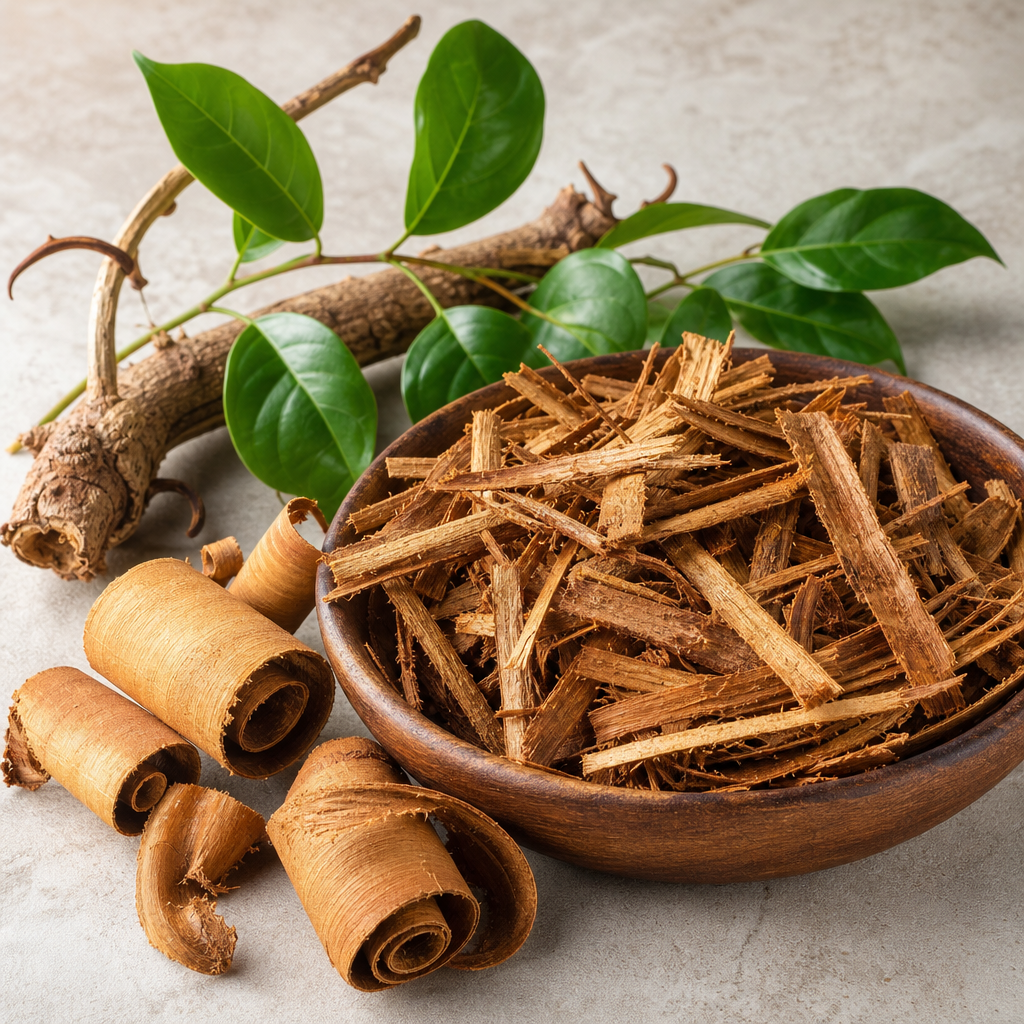
Cat’s Claw is a climbing vine native to the Amazon and other parts of Central and South America. The name commonly refers to two closely related species—Uncaria tomentosa and Uncaria guianensis—whose inner bark and root have been used in traditional medicine for generations. The plant’s “claw-like” thorns help it cling to trees, inspiring its name. Modern supplements are typically made from the inner bark and standardized to specific phytochemicals.
Cat’s Claw is a botanical herb, not an essential nutrient like a vitamin or mineral. The body does not require it to function in the way it requires essential micronutrients. Its potential wellness effects are thought to come from bioactive compounds such as oxindole alkaloids (pentacyclic and tetracyclic types), quinovic acid glycosides, triterpenes, and polyphenols. These compounds have been studied for immune-modulating, antioxidant, and anti-inflammatory properties, though human evidence varies by outcome and product type.
Benefits of Cat's Claw
-
Joint comfort and function (especially osteoarthritis)
(Moderate evidence)
Research, including small randomized trials, suggests standardized Cat’s Claw extracts may reduce activity-related pain and improve comfort in people with osteoarthritis when used for several weeks. Effects are generally modest and may take time to appear. Benefits seem more consistent with standardized extracts than with non-standardized teas or powders.
-
Adjunct support for inflammatory symptoms
(Limited to moderate evidence)
Cat’s Claw constituents show anti-inflammatory activity in laboratory studies and some human pilot trials, with observed changes in inflammatory markers and subjective symptom scores. While findings are encouraging, sample sizes are often small and results vary by extract and dosage, so expectations should be conservative.
-
Immune system modulation
(Mixed evidence)
Cat’s Claw appears to influence aspects of immune signaling and white blood cell activity in vitro and in small human studies. Some users report fewer or milder seasonal upper-respiratory symptoms, yet controlled clinical data are inconsistent, and results are not uniform across products. It may be reasonable as a supportive measure, but it is not a substitute for medical care.
-
Digestive comfort in inflammatory bowel concerns
(Limited evidence)
Traditional use and preliminary research suggest Cat’s Claw may help ease certain digestive symptoms linked to inflammation. However, rigorous, well-powered clinical trials in conditions like Crohn’s disease or ulcerative colitis are limited. Individuals with diagnosed gastrointestinal conditions should consult their clinician before use.
-
Antioxidant activity and DNA damage response
(Preliminary evidence)
Standardized extracts have been studied for supporting cellular defenses against oxidative stress and enhancing DNA repair markers after environmental stressors in small trials. These early findings are intriguing but not definitive, and more research is needed to confirm meaningful clinical outcomes.
-
Antimicrobial and antiviral properties
(Preliminary evidence)
In laboratory settings, Cat’s Claw extracts demonstrate activity against certain microbes and viruses. Translating these effects to clear benefits in humans remains unproven; most evidence is preclinical or from small, non-definitive studies.
Types or Forms Available
-
Whole powdered inner bark (capsules or bulk powder):
Provides the full spectrum of plant constituents but with variable potency. Suitable for general wellness use; less predictable for targeted outcomes due to inconsistent alkaloid levels.
-
Standardized extracts (capsules or tablets):
Often standardized to pentacyclic oxindole alkaloids (POAs) or specific marker compounds (e.g., quinovic acid glycosides). These offer more consistent dosing and are commonly used in clinical studies. Some branded extracts (e.g., hot-water processed inner-bark extracts) have been investigated for joint and DNA repair endpoints.
-
TOA-reduced or TOA-free extracts:
Marketed to minimize tetracyclic oxindole alkaloids (TOAs), which some claim may counteract desired effects of POAs. Evidence that TOA-free products are universally superior is limited; product quality and overall standardization likely matter more than a single constituent claim.
-
Liquid tinctures or glycerites:
Useful for flexible dosing or for those who prefer liquids. Potency varies by solvent and ratio; always follow the manufacturer’s directions.
-
Teas and decoctions:
Traditional preparation by simmering inner bark (typically 10–30 minutes). Flavor is earthy and bitter. Strength depends on bark quality and steeping time; effects may be gentler than with standardized extracts.
-
Topical creams or gels (less common):
Sometimes combined with other botanicals for local joint or muscle comfort. Evidence for topicals is limited compared with oral use.
How to Use Cat's Claw
Use Cat’s Claw with a clear goal, start with conservative doses, and reassess periodically. Follow the specific product label since potency and standardization vary widely.
-
Common dosage range:
For standardized extracts, 250–350 mg once or twice daily is common in supplements. For non-standardized inner-bark capsules, 500–1000 mg one to two times daily is typical. For teas, 2–4 grams of inner bark simmered in water for 10–15 minutes, once or twice daily, is common in traditional use. Avoid high or “megadose” regimens.
-
Best timing:
Timing is flexible. Taking with meals may reduce the chance of stomach upset. If using twice daily, morning and evening are convenient.
-
How to take it:
Swallow capsules with water and food. For tea, strain after simmering and drink warm. Liquids can be taken as directed in water or juice. Do not combine multiple Cat’s Claw products without adjusting the total daily intake.
-
Consistency:
Benefits for joints or general inflammation often require daily use for several weeks. Reassess after 4–8 weeks. Long-term continuous use should be discussed with a clinician, especially if you take medications or manage a health condition.
Food Sources and Supplement Options
Cat’s Claw is not a dietary staple and is not naturally present in common foods. It is a rainforest vine (primarily Uncaria tomentosa and U. guianensis), and the inner bark is the part most often used. As such, Cat’s Claw is generally accessed as an herbal tea, tincture, or dietary supplement rather than through food intake.
Supplements may make sense when someone wants a consistent, targeted dose of specific constituents (for example, a standardized extract used for joint comfort). Whole foods remain the foundation of a healthy diet because they provide fiber, vitamins, minerals, and synergistic nutrients that supplements cannot fully replicate. Herbal supplements like Cat’s Claw can be layered onto a food-first approach to address specific wellness goals, ideally with guidance from a knowledgeable practitioner.
Who May Benefit from Cat's Claw?
-
Adults with mild to moderate joint discomfort seeking a botanical option alongside exercise, physical therapy, and other lifestyle measures.
-
Individuals looking for gentle immune-modulating support during seasonal wellness challenges, recognizing evidence is mixed.
-
People aiming to support healthy inflammatory responses as part of a broader plan that includes diet, sleep, and stress management.
-
Active individuals or older adults who prefer plant-based approaches for everyday joint comfort, after discussing with a clinician.
-
Those interested in antioxidant support from botanicals, acknowledging that clinical outcomes are not firmly established.
Side Effects and Considerations
-
Common side effects:
Some users experience stomach upset, nausea, diarrhea, headache, or dizziness. Taking with food and starting at a low dose can help.
-
Autoimmune and immunosuppression concerns:
Because Cat’s Claw may modulate immune function, individuals with autoimmune conditions, those on immunosuppressive therapies, or transplant recipients should avoid use unless a specialist approves.
-
Bleeding risk and surgery:
Cat’s Claw may have antiplatelet effects. Use caution with anticoagulant or antiplatelet medications (e.g., warfarin, apixaban, clopidogrel) and stop use at least 1–2 weeks before elective surgery unless your surgeon advises otherwise.
-
Blood pressure and cardiovascular medications:
Cat’s Claw may modestly lower blood pressure in some people. Use caution if you take antihypertensives or have low blood pressure.
-
Drug metabolism interactions:
In vitro data suggest possible effects on liver enzymes (e.g., CYP3A4/CYP2C9). If you take prescription medications, especially those with narrow therapeutic windows, consult your healthcare professional before use.
-
Pregnancy, breastfeeding, and children:
Safety is not established. Avoid use during pregnancy and breastfeeding, and in children, unless advised by a qualified clinician.
-
Kidney or liver conditions:
Rare case reports suggest potential kidney or liver effects. Those with renal or hepatic disease should avoid use or proceed only under medical supervision.
-
Allergies and sensitivities:
Avoid if you are allergic to Cat’s Claw or related plants. Discontinue if you develop rash, itching, or breathing difficulties, and seek medical attention.
-
Quality and adulteration:
Ensure the correct species (typically Uncaria tomentosa), sustainable harvesting practices, clear standardization, and third-party testing for identity and contaminants (heavy metals, microbes).
-
Duration and dosing prudence:
Avoid long-term high-dose use. Periodically reassess need and dose with a healthcare professional, especially if combining with other herbs or supplements.
-
Medical oversight:
People who are pregnant or breastfeeding, taking medications, or managing a medical condition should consult a healthcare professional before starting Cat’s Claw.
Common Myths About Cat's Claw
-
Myth: Cat’s Claw cures arthritis or serious diseases.
Evidence suggests it may reduce joint discomfort in some people, but it does not cure diseases. Benefits are typically modest, and Cat’s Claw should complement—not replace—medical care and proven therapies.
-
Myth: “Natural” means it’s safe for everyone and in any dose.
Natural products can still cause side effects, interact with medications, and be unsafe for certain populations. Dosing and medical context matter; more is not always better.
-
Myth: TOA-free extracts are always superior.
While some products reduce tetracyclic alkaloids, the claim of universal superiority is not firmly supported by clinical evidence. Overall product quality, correct species identification, and consistent standardization are more reliable indicators of performance.
-
Myth: If it helps in lab studies, it will work the same in humans.
In vitro and animal research can be promising, but human outcomes often differ. High-quality clinical trials are needed to confirm real-world benefits.
Conclusion
Cat’s Claw is a traditional Amazonian botanical with modern interest for joint comfort, immune modulation, and antioxidant support. The most consistent benefits appear in joint-related outcomes using standardized extracts, while other areas of interest—immune and digestive support, DNA repair markers—have mixed or preliminary evidence. It is best used thoughtfully, alongside a nutrient-dense diet, movement, and sleep, rather than as a standalone solution.
Choose high-quality, correctly identified products with clear standardization and third-party testing. Start with conservative doses, take with food, and reassess after several weeks. Individuals who are pregnant or breastfeeding, taking medications, or managing conditions—especially autoimmune disease, bleeding disorders, or kidney/liver issues—should seek medical guidance before use. Because Cat’s Claw is not an essential nutrient and is not present in typical foods, supplementation is the primary route when it makes sense for specific wellness goals.