What is Chinese Skullcap?
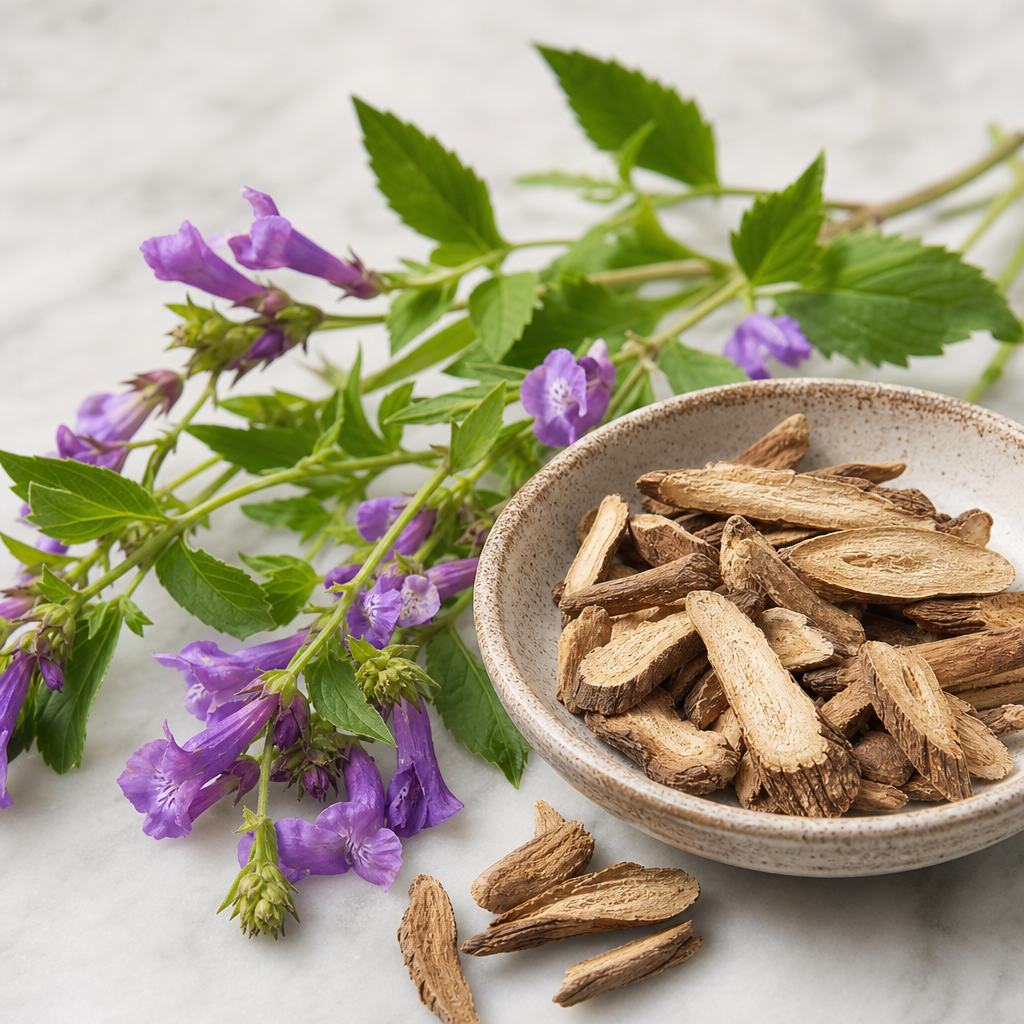
Chinese skullcap (Scutellaria baicalensis Georgi), also known as Huang Qin, is a perennial herb in the mint family whose dried root has been used for centuries in Traditional Chinese Medicine (TCM). It is native to East Asia, especially northern China and parts of Mongolia and Siberia. Practitioners traditionally use the root to “clear heat,” which in modern terms often translates to supporting normal inflammatory responses, feverish conditions, and certain respiratory or gastrointestinal complaints. Modern supplements typically provide powdered root or standardized extracts rich in flavonoids such as baicalin, baicalein, and wogonin.
Chinese skullcap is an herb/botanical, not an essential nutrient. The body does not require it in the same way it needs vitamins, minerals, essential amino acids, or essential fatty acids. Its potential value comes from bioactive plant compounds that may influence inflammatory pathways, oxidative stress, and cellular signaling. While interest in Chinese skullcap has grown due to preclinical and early clinical research, much of the evidence involves animal models, cell studies, or multi-herb formulas, so conclusions about the single herb should be cautious.
Benefits of Chinese Skullcap
-
Inflammation and antioxidant support
(Limited evidence)
Explanation: Flavonoids in Chinese skullcap, particularly baicalin and baicalein, have demonstrated the ability to influence inflammatory signaling (for example, NF-κB and COX pathways) and to act as antioxidants in laboratory and animal models. Some human research using multi-ingredient products that include S. baicalensis shows improvements in inflammatory markers or symptoms, but these findings cannot be attributed solely to Chinese skullcap. For the single-herb extract, human data remain limited, so benefits should be considered preliminary and adjunctive to core lifestyle measures like diet, sleep, and exercise.
-
Joint comfort in osteoarthritis
(Mixed evidence)
Explanation: Certain clinical trials on joint pain and function evaluated a combination of S. baicalensis extract with other botanicals (for example, Acacia catechu), reporting modest improvements in pain and mobility. Because these studies used combinations, it is unclear how much of the effect comes from Chinese skullcap alone. Some people report subjective relief when using skullcap-containing products alongside standard care, but responses vary and the evidence for the isolated herb is not definitive.
-
Allergy and histamine response
(Limited evidence)
Explanation: In vitro studies suggest that baicalin and related flavonoids can influence mast cell activation and histamine release, mechanisms relevant to seasonal allergies and allergic rhinitis. A few clinical trials on multi-herb formulas that include Chinese skullcap have shown symptom improvements, but because multiple botanicals were used, direct conclusions about S. baicalensis alone are limited. Still, some users find it helpful as part of a broader allergy-management plan that emphasizes avoidance strategies and medical therapies when needed.
-
Liver health support
(Preliminary evidence)
Explanation: Animal and cell studies suggest Chinese skullcap constituents may support normal liver enzyme activity, protect hepatocytes from certain stressors, and modulate lipid metabolism. Early or small-scale human studies—often using formulas rather than single extracts—hint at potential benefits in metabolic liver stress, but robust, well-controlled trials on the single herb are lacking. Anyone considering Chinese skullcap for liver support should do so with clinician oversight and regular lab monitoring, particularly if they have existing liver conditions or use hepatically metabolized medications.
-
Calming and mood support
(Preliminary evidence)
Explanation: Compounds such as wogonin show GABA-related and anxiolytic-like activity in animal research. Human data for Chinese skullcap alone are sparse, and most clinical work on “skullcap and relaxation” involves different species (for example, American skullcap, Scutellaria lateriflora). Some users report mild calming effects from Chinese skullcap, but it should not replace evidence-based treatments for anxiety, and those on sedatives should exercise caution due to potential additive effects.
-
Antiviral and antimicrobial properties
(Preliminary evidence)
Explanation: Laboratory studies indicate activity against certain bacteria and viruses, including respiratory viruses, via multiple mechanisms (e.g., blocking viral attachment, replication, or inflammatory cascades). However, in vitro activity does not guarantee clinical effectiveness in humans. At present, there is no strong evidence that Chinese skullcap alone treats infections. It should not be used as a substitute for recommended medical care, vaccination, or prescribed therapies.
Types or Forms Available
-
Dried root (whole or sliced) for decoction:
Traditional TCM use involves simmering 3–9 grams of the dried root in water to make a tea/decoction, often as part of multi-herb formulas. This approach delivers a broad spectrum of compounds but can vary in potency based on sourcing and preparation.
-
Standardized extracts (capsules or powders):
Many supplements standardize to a specific percentage of baicalin (for example, 30–85%) or to total flavonoids. Standardization can improve batch-to-batch consistency and allow lower milligram doses versus raw herb. Read labels carefully to identify the plant part (root), species (Scutellaria baicalensis), and standardization details.
-
Tinctures and liquid extracts:
Hydroalcoholic tinctures (for example, 1:5 or 1:3 herb-to-solvent ratios) offer flexible dosing and may be useful for those who prefer liquids. Potency depends on extraction ratio and solvent strength.
-
Granules or concentrated powders used in TCM practice:
Practitioner-dispensed granules are calibrated to approximate decoction strength. These are often used in individualized formulas and require professional guidance for dosing and herb-herb interactions.
-
Combination formulas:
Chinese skullcap commonly appears in multi-herb products targeting respiratory comfort, liver support, or joint health. While formulas may have more clinical data than single-ingredient products, it is hard to attribute benefits or risks to Chinese skullcap alone.
Note: Chinese skullcap (Scutellaria baicalensis) is distinct from American skullcap (Scutellaria lateriflora). They are not interchangeable; their chemical profiles, traditional uses, and dosing can differ.
How to Use Chinese Skullcap
Chinese skullcap is typically used short- to medium-term for specific goals, such as seasonal support or joint comfort. Because product potency varies, always follow the label and consider guidance from a qualified practitioner, especially if you take medications or manage a health condition.
-
Common dosage range:
A typical range for standardized extracts is about 250–500 mg, 1–3 times daily, depending on standardization (for example, 30% baicalin). For traditional decoctions, 3–9 grams of the dried root per day is common in TCM practice when supervised. For tinctures (for example, 1:5), 2–4 mL up to three times daily is sometimes used. Start at the low end, assess tolerance, and avoid high or prolonged dosing without professional oversight.
-
Best timing:
Timing is flexible. If you experience stomach sensitivity, take with meals. If using for calming, some prefer an evening dose. When part of a multi-herb formula, timing often follows the practitioner’s protocol.
-
How to take it:
Capsules or tablets can be taken with water and food. Decoctions should be prepared according to instructions to ensure proper extraction. Tinctures can be diluted in a small amount of water or tea. Avoid combining with alcohol or sedatives unless approved by a healthcare professional.
-
Consistency:
For general inflammatory support or seasonal goals, regular use during the target period may be preferred. For joint comfort, consistent daily use over several weeks is often needed to evaluate effect. Long-term continuous use should be discussed with a clinician.
Food Sources and Supplement Options
Chinese skullcap is a medicinal root, not a common food. You will not obtain meaningful amounts from typical diets. As a result, it is primarily accessed as a botanical supplement or as part of traditional herbal formulas prepared by a practitioner.
Supplementation may make sense for targeted, short-term goals—such as seasonal respiratory support or joint comfort—especially when food-based strategies alone are insufficient. However, prioritizing a nutrient-dense dietary pattern remains foundational for health. Whole foods supply essential vitamins, minerals, fiber, and phytonutrient diversity that no single herb can replace. Supplements can provide standardized dosing of skullcap’s key flavonoids, whereas the whole-diet approach supports broader, long-term resilience. Choose products from reputable brands that verify species identity (Scutellaria baicalensis root), standardization, and third-party testing for contaminants.
Who May Benefit from Chinese Skullcap?
-
Adults seeking adjunctive support for joint comfort, especially those exploring plant-based alternatives alongside standard care.
-
Individuals looking for seasonal respiratory or allergy support as part of a broader plan that may include environmental controls and clinician-recommended therapies.
-
People pursuing practitioner-guided traditional formulas for digestive or metabolic concerns, where Chinese skullcap is one component.
-
Those with wellness goals related to oxidative stress balance who prefer botanical approaches, recognizing the evidence for the single herb is still developing.
-
Athletes or active individuals experiencing intermittent joint stress who wish to test a short trial of a standardized extract, with attention to anti-doping and product quality.
Side Effects and Considerations
-
General tolerance:
Chinese skullcap is usually well tolerated in the short term, but possible side effects include gastrointestinal upset, nausea, dizziness, headache, or drowsiness. Stop use and seek care if you experience rash, itching, swelling, or breathing difficulties.
-
Liver and kidney considerations:
Although some research explores liver-supportive roles, rare cases of liver injury have been reported with “skullcap” products, often linked to misidentified or adulterated herbs. People with liver or kidney disease should consult a healthcare professional before use and monitor for symptoms such as dark urine, jaundice, or unusual fatigue.
-
Medication interactions:
Skullcap flavonoids may affect drug-metabolizing enzymes and transporters. Use caution with sedatives or CNS depressants (possible additive effects), anticoagulants/antiplatelets (theoretical bleeding risk), and drugs with narrow therapeutic windows. Consult a pharmacist or clinician if you take prescription medications.
-
Pregnancy, breastfeeding, and children:
Safety data are insufficient. Avoid use during pregnancy and breastfeeding, and in children, unless a qualified clinician recommends and supervises it.
-
Surgery:
Discontinue 1–2 weeks before surgery due to potential effects on bleeding risk or sedation. Inform your surgical team about all supplements you take.
-
Allergies:
Individuals allergic to plants in the Lamiaceae (mint) family should exercise caution. Introduce new products at low doses to assess tolerance.
-
Quality and adulteration risks:
Ensure the product specifically lists Scutellaria baicalensis root. Look for third-party testing (for identity, potency, heavy metals, pesticides, and microbes). Be cautious with products lacking transparency or those making drug-like claims.
-
Duration and dosing:
Avoid high doses or long-term continuous use without professional guidance. Evaluate benefit after several weeks and consider cycling off if no clear effect.
-
Herbal formulas:
Some traditional formulas containing Chinese skullcap have unique benefits and risks distinct from the single herb. Use such formulas under trained practitioner supervision to avoid herb-herb and herb-drug interactions.
Common Myths About Chinese Skullcap
-
Myth: Chinese skullcap cures viral infections.
Evidence-based explanation: Laboratory studies show activity against certain pathogens, but in vitro findings do not equal clinical efficacy in humans. There is no robust evidence that Chinese skullcap alone treats or cures viral illnesses. It should not replace vaccination, prescribed antivirals, or medical care.
-
Myth: Chinese and American skullcap are the same herb.
Evidence-based explanation: They are different species with different phytochemical profiles and traditional uses. Research on one cannot be automatically applied to the other, and dosing/safety considerations may differ.
-
Myth: If it’s natural, it’s automatically safe for everyone.
Evidence-based explanation: Botanicals can interact with medications, cause side effects, or be adulterated. People who are pregnant or breastfeeding, children, and those with medical conditions or on medications should consult a healthcare professional before use.
-
Myth: Chinese skullcap “detoxes” the liver regardless of lifestyle.
Evidence-based explanation: While preclinical research suggests supportive effects, no herb can compensate for ongoing harmful exposures or poor lifestyle habits. Sustainable liver health depends on overall nutrition, sleep, movement, and medical guidance when needed.
Conclusion
Chinese skullcap is a traditional botanical rich in flavonoids like baicalin and baicalein that may support inflammation balance, joint comfort, seasonal wellness, and liver health. Most encouraging findings come from preclinical work or multi-herb products, so expectations for the single herb should be modest. For those who wish to try it, a short, well-planned trial using a reputable, standardized extract—alongside foundational lifestyle practices—can help assess individual response.
Use caution if you are pregnant, breastfeeding, taking medications, or managing a medical condition, and seek guidance from a qualified healthcare professional. Prioritize quality: verify species (Scutellaria baicalensis), plant part (root), standardization, and third-party testing. Because Chinese skullcap is not a dietary staple or essential nutrient, a food-first approach remains central for long-term health, with supplements serving as targeted, time-limited tools rather than stand-alone solutions.