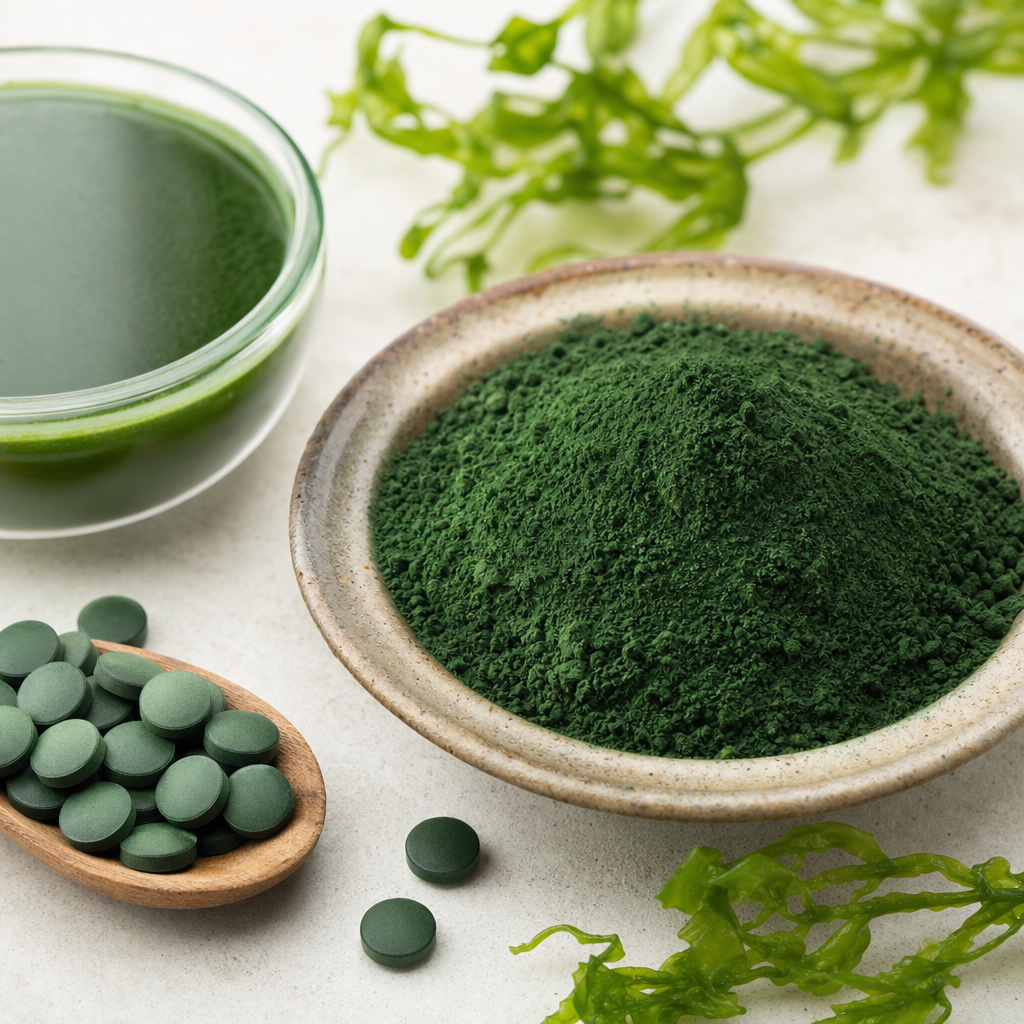
What is Chlorella?
Chlorella is a freshwater green microalga that has been used as a food and dietary supplement. It is rich in chlorophyll and naturally contains a range of nutrients, including protein, carotenoids (such as lutein and beta-carotene), some B vitamins, iron, and small amounts of essential fatty acids. In supplements, chlorella is typically offered as a dried powder or compressed tablets made from cultivated algae biomass. Because humans cannot efficiently digest intact algal cell walls, many products are processed to have a “broken” or “cracked” cell wall to improve digestibility.
Chlorella is not an essential nutrient like vitamins or minerals; the body does not require chlorella to function. Instead, it is a food-derived ingredient and supplement that can complement a varied diet. Any health effects are due to its nutrient profile and bioactive compounds rather than a specific essential role in human physiology.
Benefits of Chlorella
-
Lipid profile support (total and LDL cholesterol)
(Moderate evidence)
Some randomized trials suggest daily chlorella intake can modestly improve cholesterol profiles, particularly total and LDL cholesterol, likely via its fiber, phytosterols, and antioxidant carotenoids. Effects are generally small to moderate, and best viewed as an adjunct to diet and lifestyle changes rather than a primary therapy.
-
Blood pressure in mild hypertension
(Limited evidence)
Small studies report minor reductions in systolic and diastolic blood pressure with daily chlorella in people with elevated but untreated blood pressure. The magnitude of benefit is typically modest, and not all trials agree. It should not replace prescribed treatment.
-
Glycemic control and insulin sensitivity
(Mixed evidence)
Findings are inconsistent: some trials in individuals with metabolic risk factors note slight improvements in fasting glucose or insulin sensitivity, while others show no meaningful change. Any benefit appears small and most apparent when combined with broader diet and activity modifications.
-
Antioxidant status and inflammation markers
(Moderate evidence)
Chlorella provides carotenoids and other antioxidants that can increase blood levels of these compounds. Several studies suggest modest improvements in oxidative stress markers and some inflammatory markers, though clinical outcomes (such as disease risk reduction) are not well established.
-
Immune function markers
(Limited evidence)
Small human studies indicate chlorella may increase certain immune parameters (e.g., natural killer cell activity, salivary IgA) under physical or lifestyle stress. These changes suggest potential immune support, but direct clinical benefits such as reduced infection rates are not consistently demonstrated.
-
Support during pregnancy for anemia or nutrient status
(Limited evidence)
Preliminary research has explored chlorella as a nutrient-dense food during pregnancy, with some findings of improved iron status or fewer anemia-related parameters. Evidence is early and product-specific; prenatal care and medically recommended supplementation remain the priority.
-
Reduction of certain persistent pollutants
(Mixed evidence)
Limited studies suggest chlorella intake may help lower the body burden of some persistent organic pollutants (e.g., dioxins) or increase their excretion. Evidence is not robust, varies by contaminant, and does not establish chlorella as a medical chelation therapy for heavy metals.
-
Exercise performance and recovery
(Preliminary evidence)
A few small trials report possible improvements in aerobic capacity or reduced fatigue, potentially related to nutrient density and antioxidant compounds. Findings are preliminary and require larger, well-controlled studies.
Types or Forms Available
-
Species: Chlorella vulgaris vs. Chlorella pyrenoidosa
– These are the most common species used in supplements. Nutrient profiles are similar but can vary by species and cultivation method. Some research findings are species-specific, so matching the species used in studies to the product label can be helpful.
-
Broken/cracked cell wall vs. intact cell wall
– Human digestion struggles with intact algal cell walls. “Broken” or “cracked” cell wall chlorella is processed to enhance digestibility and nutrient availability and is the most common form in supplements.
-
Whole-food powder, tablets, and capsules
– The base material is typically the same dried biomass; tablets and capsules offer convenient dosing, while powders mix into smoothies or foods. Flavor is distinctly “green”/earthy.
-
Standardized carotenoid or chlorophyll content
– Some products highlight specific chlorophyll or lutein levels. While chlorophyll content is naturally high, standardized products may help ensure consistent dosing of selected compounds, though unique benefits of standardization are not firmly established.
-
Chlorella Growth Factor (CGF) extracts
– CGF is a marketing term for nucleic acid-rich extracts from chlorella. Evidence for CGF-specific benefits is limited; most research evaluates whole chlorella rather than isolated CGF.
-
Organic and third-party tested options
– Because algae can bioaccumulate contaminants, choose products grown in controlled freshwater systems with independent testing for heavy metals and microbes. Organic certification speaks to farming practices, while third-party testing addresses purity and potency.
How to Use Chlorella
Chlorella is typically used as a daily food-based supplement. Start with a low dose to assess tolerance and increase gradually to a target intake if desired.
-
Common dosage range:
About 1–3 g per day is typical for general wellness; some studies use 3–5 g per day. Higher intakes have been studied short term, but more is not necessarily better and may increase side effects. Avoid megadoses.
-
Best timing:
Timing is flexible. Many people take chlorella with meals to reduce stomach upset. If using for exercise recovery or immune support during heavy training, consistent daily use matters more than exact timing.
-
How to take it:
Tablets or capsules are convenient. Powders can be blended into smoothies, yogurt, or savory dishes to mask the grassy flavor. Take with water, and consider pairing with meals for better tolerance.
-
Consistency:
For potential effects on lipids, blood pressure, or nutrient status, use consistently for at least 8–12 weeks while maintaining a healthful diet and active lifestyle.
Food Sources and Supplement Options
Chlorella is a freshwater microalga, not a common component of traditional diets. It is mainly available as a supplement or a functional food ingredient added to smoothies, snack bars, noodles, or beverages. There are no typical “food sources” beyond products intentionally formulated with chlorella.
Supplementation may make sense if you want a concentrated, standardized way to boost intake of chlorophyll, carotenoids, or iron, or if you find it difficult to consume enough green vegetables. However, whole foods like leafy greens, legumes, fruits, and whole grains provide broader nutrient diversity and fiber types that chlorella alone cannot match. Supplements allow precise dosing and convenience, while food-first approaches support overall dietary quality.
Who May Benefit from Chlorella?
-
Individuals seeking to modestly support cholesterol or blood pressure alongside diet, exercise, and medical guidance.
-
People with low intake of green vegetables who want an additional source of carotenoids and chlorophyll from a whole-food algae powder.
-
Vegetarians or vegans looking to increase iron and certain micronutrients; however, they should not rely on chlorella as their sole vitamin B12 source.
-
Athletes during periods of heavy training who want to experiment with an algae-based food for potential immune or recovery support.
-
Adults interested in trying a nutrient-dense, plant-based supplement as part of a comprehensive wellness plan.
Side Effects and Considerations
-
Digestive effects:
Gas, bloating, green stools, and abdominal discomfort are the most common side effects, especially when starting or at higher doses. Begin low and increase gradually.
-
Allergy and sensitivity:
Rare allergic reactions can occur. People with known sensitivities to algae or with significant seasonal/environmental allergies should use caution.
-
Vitamin K content and anticoagulants:
Chlorella naturally contains vitamin K, which can interfere with warfarin and similar medications. Those on anticoagulants should avoid chlorella unless a healthcare professional approves and monitors INR closely.
-
Iodine and thyroid considerations:
Although freshwater algae generally contain less iodine than seaweeds, content can vary. People with thyroid disorders or those advised to limit iodine should choose products with tested iodine levels and consult a professional.
-
Purine content and gout:
Algae contain purines, which can raise uric acid. Individuals with gout or hyperuricemia should be cautious.
-
Autoimmune conditions and immunosuppressants:
Because chlorella may influence immune markers, those with autoimmune diseases or taking immunosuppressant medications should use only with medical guidance.
-
Contaminants and quality:
Algae can bioaccumulate heavy metals and microbes if grown in poor conditions. Select brands with transparent sourcing and third-party testing for purity and potency.
-
Medication timing:
The fiber and mineral content may affect absorption of some medications and thyroid hormones. Separate dosing by several hours if advised by a professional.
-
Pregnancy, breastfeeding, and children:
Some early research has explored chlorella during pregnancy, but comprehensive safety data are limited. Those who are pregnant, breastfeeding, giving supplements to children, taking medications, or managing medical conditions should consult a healthcare professional before use.
-
Surgery:
Disclose chlorella use before procedures; consider stopping 1–2 weeks prior per clinician advice due to potential effects on coagulation and interactions.
Common Myths About Chlorella
-
“Chlorella detoxes all heavy metals quickly and replaces medical chelation.”
While some studies suggest increased excretion of specific pollutants, evidence is inconsistent and contaminant-specific. Chlorella is not a substitute for medically supervised chelation or treatment of toxicity.
-
“It provides all the vitamin B12 vegans need.”
B12 content and bioavailability in chlorella vary by species and production methods, and some forms may include analogs with uncertain activity. Vegans should not rely on chlorella alone for B12; use verified B12-fortified foods or supplements.
-
“More chlorella is always better.”
Higher doses can increase side effects and do not guarantee greater benefits. Most studies use modest daily amounts; start low, follow label directions, and avoid megadoses.
-
“Chlorella cures diseases like cancer or infections.”
No robust clinical trials show chlorella cures or treats diseases. It may support general nutrition, but it is not a medication or a replacement for standard medical care.
Conclusion
Chlorella is a nutrient-dense, food-derived microalga that can complement a balanced diet. Research suggests modest benefits for lipid profiles, antioxidant status, and selected immune markers, with early or mixed findings in blood pressure, glycemic control, pollutant excretion, and exercise performance. It is best viewed as an adjunct to evidence-based nutrition and lifestyle practices rather than a stand-alone solution.
Choose high-quality products (broken cell wall, third-party tested) and start with conservative doses. Some groups should be cautious, including those on anticoagulants, individuals with gout, thyroid disorders, autoimmune conditions, or allergies, and anyone who is pregnant, breastfeeding, taking medications, or managing a medical condition. A food-first approach remains foundational; chlorella supplements can provide targeted dosing when desired, but they do not replace the diverse benefits of whole foods and a well-constructed eating pattern.