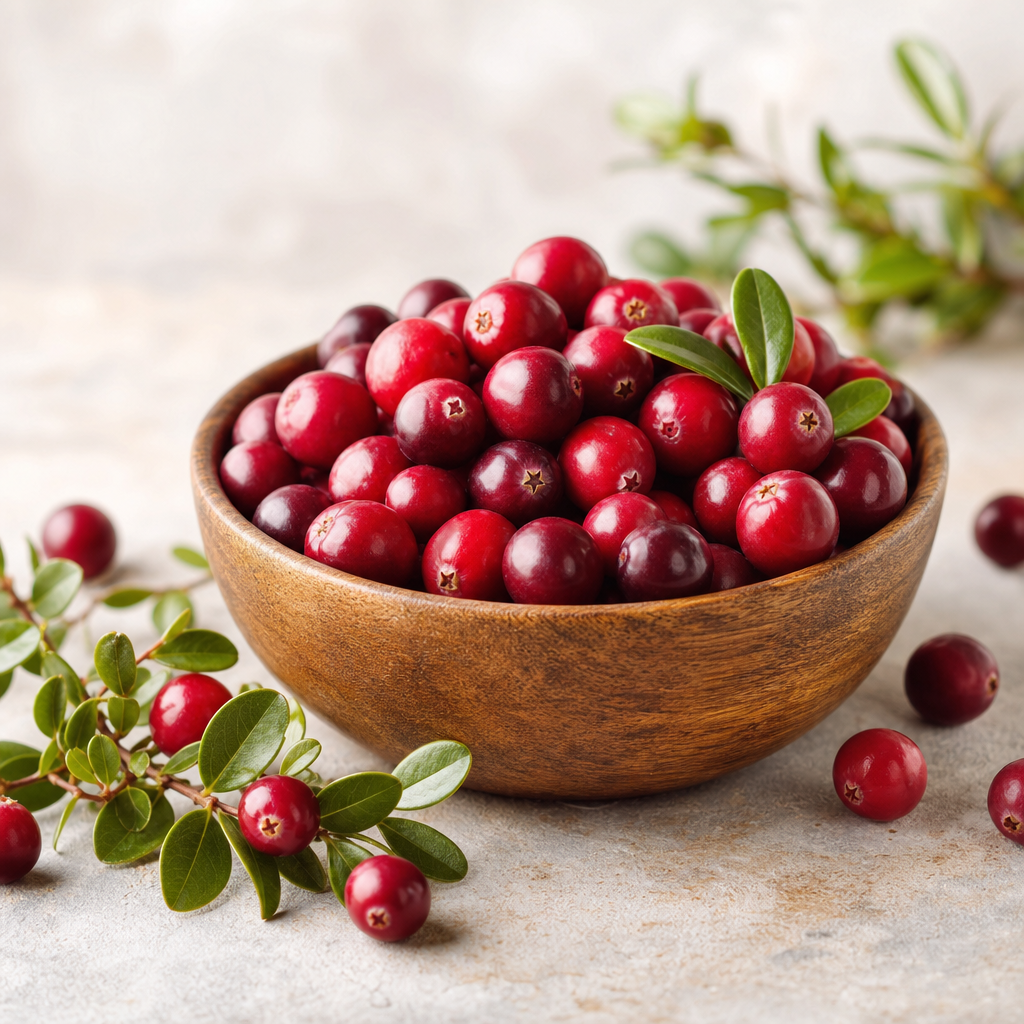
What is Cranberry?
Cranberry (Vaccinium macrocarpon) is a small, tart red berry native to North America. It is widely consumed as a food (fresh, dried, juiced, or as sauces) and as a dietary supplement. Beyond its culinary uses, cranberry is best known for supporting urinary tract health. Its most studied bioactive components are A-type proanthocyanidins (PACs), along with anthocyanins, flavonols, and organic acids that together contribute to its characteristic flavor and potential health effects.
Cranberry is a food-derived botanical ingredient, not an essential nutrient like a vitamin or mineral. The body does not technically require cranberry to function; rather, its value lies in providing polyphenols and other compounds that may influence bacterial adhesion in the urinary tract and support certain health markers. Supplements and juices concentrate these compounds to deliver more consistent amounts than typical food portions, though whole cranberries also supply fiber, vitamin C, and manganese.
Benefits of Cranberry
-
Helps reduce recurrence of uncomplicated urinary tract infections (UTIs) in women
(Moderate evidence)
Several randomized trials and meta-analyses suggest cranberry products can lower the risk of recurrent UTIs in women with a history of frequent infections. Benefits are most consistently seen with products delivering adequate amounts of A-type proanthocyanidins (often around 36 mg PACs daily, measured by the BL-DMAC method). Cranberry is used for prevention rather than treatment and should not replace medical care for an active infection.
-
Adjunct support for UTI risk reduction in select groups (e.g., some children or high-risk populations)
(Mixed evidence)
Research in children with recurrent UTIs and certain higher-risk groups shows variable results, with some studies reporting reduced infections and others finding no difference. Differences in product type, PAC content, adherence, and population characteristics likely explain inconsistent outcomes. When considered, use should be guided by a clinician, especially in pediatrics.
-
Inhibits bacterial adhesion in the urinary tract
(Limited evidence)
Laboratory and small human mechanistic studies indicate that A-type PACs in cranberry can reduce the ability of uropathogenic Escherichia coli to adhere to urinary tract epithelial cells, a key step in early infection. While this anti-adhesion action is plausible and measurable in urine after cranberry intake, translating these findings into consistent clinical outcomes depends on product dose, PAC standardization, and individual factors.
-
Adjunct to Helicobacter pylori management
(Mixed evidence)
Some studies suggest cranberry juice or extracts, when used alongside standard therapy, may modestly improve H. pylori eradication or reduce urease breath test positivity. Results are not uniform across trials, and cranberry is not a stand-alone therapy. If used, it should complement clinician-directed treatment and not delay appropriate care.
-
Supports selected cardiometabolic and antioxidant markers
(Limited evidence)
Trials using cranberry juice or PAC-rich powders report small improvements in measures such as LDL oxidation, endothelial function, or certain inflammatory biomarkers. Effects tend to be modest, dose- and product-dependent, and not universally observed. For general cardiometabolic health, broader dietary patterns and lifestyle changes remain primary; cranberry may provide an added polyphenol source for some individuals.
-
Potential oral health support
(Preliminary evidence)
Early studies indicate cranberry polyphenols might reduce the adhesion of oral bacteria implicated in dental plaque and gingival inflammation. These findings are preliminary, and real-world benefits depend on product formulation, contact time, and overall oral hygiene habits.
Types or Forms Available
-
100% cranberry juice vs. cranberry juice cocktail:
100% juice or not-from-concentrate options are tart and typically contain more cranberry solids per serving than “cocktail” beverages, which are usually about 27% juice with added sugars or sweeteners. PAC content varies widely and is often not labeled. Look for products that disclose PAC content and measurement method (BL-DMAC is a widely used method).
-
Capsules/tablets standardized to PACs:
These are popular for urinary tract support because they provide a targeted PAC dose without sugar. Many quality products aim for about 36 mg A-type PACs per day, verified by BL-DMAC. Labels may list total extract weight (e.g., 250–500 mg) and a percent PAC, but the actual milligrams of PACs and the assay method are most informative.
-
Powders and concentrates:
Cranberry powders can be mixed into water or smoothies; concentrates can be diluted. PAC content is highly variable—choose products that verify A-type PACs per serving using a recognized method.
-
Dried cranberries and whole fruit (fresh or frozen):
Dried cranberries are typically sweetened and lower in PACs by weight compared with standardized extracts. Whole berries provide fiber and vitamin C but are quite tart; culinary uses often involve added sweeteners. These forms are more food-forward and less suitable for precise PAC dosing.
-
Gummies and functional blends:
Gummies are convenient but can be low in PACs and high in sugars. Some supplements combine cranberry with D-mannose, hibiscus, or probiotics; these blends may offer complementary mechanisms but make it harder to attribute effects to cranberry alone.
How to Use Cranberry
Use depends on your goal. For prevention of recurrent uncomplicated UTIs, standardized cranberry supplements are commonly chosen to provide consistent amounts of A-type PACs without the sugar load of juice.
-
Common dosage range:
Many clinical protocols target about 36 mg of A-type PACs daily, sometimes split into two doses. Some products provide 36–72 mg PACs per day. If the label lists only extract weight and a PAC percentage, calculate the actual milligrams of A-type PACs. For juice-based approaches, studies have used roughly 240–300 mL once or twice daily, though PAC content can be unpredictable and sugar intake may be high.
-
Best timing:
Timing is flexible. Taking cranberry with meals can reduce gastrointestinal discomfort and blunt blood sugar spikes if using sweetened products. Dividing the dose morning and evening may maintain more consistent urinary anti-adhesion activity.
-
How to take it:
Swallow capsules with water. If using juice or concentrates, consider diluting with water and rinsing the mouth afterward to protect dental enamel. Pairing with adequate daily hydration supports urinary flow, which also helps reduce bacterial accumulation.
-
Consistency:
For prevention, daily use over weeks to months is typically needed; benefits cease when intake stops. Some people choose short-term use around personal UTI triggers (e.g., after sexual activity), but evidence for event-based dosing is limited compared with daily regimens.
Cranberry should not be used to treat an active UTI. If you have symptoms such as burning urination, urgency, fever, flank pain, or blood in the urine, seek medical evaluation promptly.
Food Sources and Supplement Options
Cranberry is naturally found as a whole food and as beverages, and it is also widely available as a dietary supplement. Whole-food options provide fiber, vitamin C, manganese, and a broad polyphenol spectrum, while supplements can deliver a targeted A-type PAC dose with minimal sugar.
-
Fresh or frozen cranberries
-
100% cranberry juice or not-from-concentrate juice
-
Unsweetened cranberry concentrates (to dilute)
-
Dried cranberries (typically sweetened)
-
Cranberry sauces or relishes (often sweetened)
Supplementation may make sense for individuals seeking standardized PAC intake for urinary tract support, those who prefer to avoid the sugars in juice, or anyone who finds the tartness of whole cranberries challenging. When possible, consider combining a food-first approach for overall nutrition with a well-formulated supplement if targeted support is desired.
Who May Benefit from Cranberry?
-
Women with a history of recurrent uncomplicated UTIs who want a non-antibiotic preventive strategy.
-
Postmenopausal women managing urinary tract health, particularly if not using or not fully benefiting from local estrogen therapy; discuss coordinated care with a clinician.
-
Children with recurrent UTIs, under pediatric guidance, when standardized products and dosing can be ensured.
-
People who prefer a botanical option to reduce reliance on continuous antibiotic prophylaxis, after discussing risks and benefits with a healthcare professional.
-
Individuals seeking additional dietary polyphenols with low-sugar cranberry options (e.g., PAC-standardized capsules or unsweetened concentrates).
Side Effects and Considerations
-
Gastrointestinal effects:
Some people experience stomach discomfort, reflux, or loose stools, especially with large amounts of juice or concentrates. Taking cranberry with meals and starting with lower doses can help.
-
Sugar and calories:
Many cranberry juices and dried cranberries contain added sugars. This can affect blood glucose management and overall calorie intake. Choose unsweetened or low-sugar products when possible.
-
Kidney stone risk:
Cranberries and some concentrates contain oxalates. People with a history of calcium oxalate kidney stones or chronic kidney disease should be cautious, moderate intake, and consult a clinician.
-
Medication interactions:
Case reports suggest possible interaction with warfarin (elevated INR/bleeding risk). If you take warfarin or other anticoagulants/antiplatelets, consult your healthcare professional and monitor appropriately. Do not start high-dose cranberry products without medical guidance.
-
Allergies and sensitivities:
Rarely, individuals may be sensitive to cranberries or salicylate-like compounds. Discontinue use if allergic symptoms occur.
-
Dental enamel and oral health:
Cranberry beverages are acidic and, when sweetened, can contribute to enamel erosion and caries risk. Dilute, use a straw, avoid sipping over long periods, and rinse your mouth afterward.
-
Pregnancy, breastfeeding, and children:
Culinary amounts are generally considered acceptable, but supplement use should be discussed with a healthcare professional due to limited high-quality safety data.
-
Quality and standardization:
Choose products that specify A-type PAC content and the testing method (BL-DMAC is commonly referenced). Third-party-tested supplements can reduce concerns about contamination and ensure label accuracy.
-
Not a replacement for medical care:
Cranberry is not a treatment for active UTIs. Delaying appropriate evaluation and antibiotics (when indicated) can lead to complications.
-
Surgery and bleeding risk:
Out of caution, stop high-dose cranberry supplements before elective surgery per your surgeon’s guidance, especially if you use anticoagulants or antiplatelet agents.
Common Myths About Cranberry
-
Myth: Cranberry cures active UTIs and replaces antibiotics.
Cranberry may help reduce recurrence risk, but it does not reliably treat an existing infection. Prompt diagnosis and appropriate therapy are important to prevent complications.
-
Myth: All cranberry juices and supplements work the same.
Products vary widely in PAC content and quality. Effectiveness is tied to adequate A-type PAC dosage, ideally verified by a recognized method such as BL-DMAC. Many juice cocktails are low in PACs and high in sugar.
-
Myth: Cranberry works by acidifying urine to kill bacteria.
The primary proposed mechanism is reduced bacterial adhesion to urinary tract cells, not urine acidification. pH changes from cranberry intake are minimal and not the key driver of effects.
-
Myth: More is always better.
Very high intakes add sugar, acidity, and potential side effects without proven added benefit. Use evidence-based doses, prioritize product quality, and monitor how you feel.
Conclusion
Cranberry is a food-derived botanical best known for helping reduce the recurrence of uncomplicated UTIs in some individuals, particularly women with frequent infections. Benefits are linked to adequate amounts of A-type PACs, so product selection and standardization matter. While cranberry can contribute polyphenols that may support additional health markers, effects are generally modest and should be considered alongside broader nutrition and lifestyle strategies.
Choose high-quality, PAC-standardized supplements if you want targeted urinary tract support without extra sugars, and use whole cranberries or low-sugar juices when you prefer a food-first approach that adds fiber and micronutrients. People who are pregnant or breastfeeding, children, and anyone taking medications (especially warfarin or other blood thinners) or managing medical conditions such as kidney stone disease should consult a healthcare professional before using cranberry supplements. Avoid using cranberry to self-treat an active UTI, and seek timely medical care when symptoms arise.