What is Choline?
Choline is an essential, vitamin-like nutrient that your body uses to build cell membranes, make the neurotransmitter acetylcholine, support fat transport and liver function, and provide methyl groups for one‑carbon metabolism. Although the liver can produce small amounts, endogenous production is not sufficient for most people, so adequate intake from foods and/or supplements is needed to maintain health. Because of its wide-ranging roles, choline is grouped with B‑complex–related nutrients, but it is classified as its own essential nutrient.
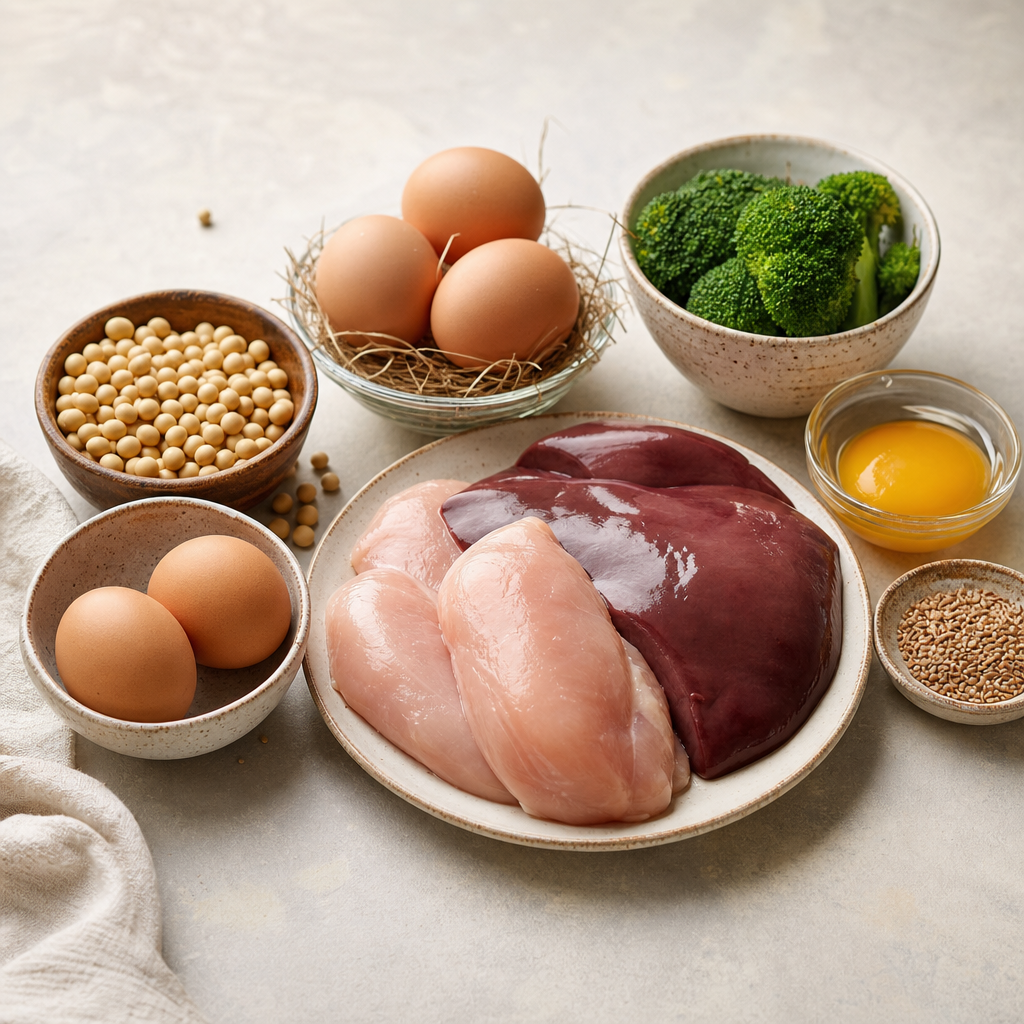
Choline occurs naturally in many foods, especially egg yolks, liver, meat, fish, dairy, soybeans, and some legumes and whole grains. It is present in different chemical forms, including free choline, phosphatidylcholine (a phospholipid), and other choline‑containing phospholipids. Choline is also available as a dietary supplement in several forms (for example, choline bitartrate, phosphatidylcholine/lecithin, alpha‑GPC, and citicoline) that can be used to help meet daily needs or for targeted applications.
Benefits of Choline
-
Liver health and fat metabolism
(Strong evidence)
Choline is required to produce phosphatidylcholine, which enables the export of triglycerides from the liver. Human depletion–repletion studies show that inadequate choline intake can lead to accumulation of liver fat and elevations in liver enzymes, and that restoring choline reverses these changes. Adequate intake supports normal fat transport, helping maintain healthy liver function.
-
Homocysteine and methylation support
(Moderate evidence)
Choline provides methyl groups via betaine, helping remethylate homocysteine to methionine alongside folate and vitamin B12. Controlled trials demonstrate that choline or betaine intake can reduce fasting homocysteine, especially when folate status is marginal. Lowering homocysteine is considered beneficial for cardiovascular and pregnancy-related outcomes, though clinical endpoint data are mixed.
-
Pregnancy and fetal brain development
(Moderate evidence)
During pregnancy, choline demand increases for rapid cell division, brain development, and placental function. Observational and interventional studies suggest adequate maternal choline supports normal fetal neural development and may benefit offspring cognitive outcomes. Some research also indicates a potential reduction in certain birth-related risks when maternal choline intake is sufficient. Evidence is supportive but not uniform across all outcomes.
-
Cognitive function and attention (citicoline, alpha‑GPC)
(Mixed evidence)
Supplemental choline donors like citicoline (CDP‑choline) and alpha‑GPC have been studied for attention, memory, and aspects of executive function in adults. Some trials show small to moderate benefits, particularly in those with cognitive complaints or vascular-related cognitive issues, while others find minimal effects in healthy, high-functioning adults. Overall results vary by population, dose, and duration.
-
Support during parenteral nutrition or low‑intake states
(Strong evidence)
People receiving long-term parenteral nutrition without choline develop biochemical and clinical signs of deficiency, including fatty liver and muscle damage. Adding choline improves these markers. This underscores the essentiality of choline when dietary sources are absent.
-
Athletic performance (power output with alpha‑GPC)
(Preliminary evidence)
Small studies suggest that acute alpha‑GPC (a choline-containing compound) may increase lower‑body power or barbell velocity in trained individuals. Findings are not universal, sample sizes are small, and long-term performance outcomes are unclear. Athletes should view this as early-stage evidence rather than a proven ergogenic effect.
Deficiency or Low Levels of Choline
-
Common signs of low levels:
Accumulation of liver fat (hepatic steatosis), elevated liver enzymes (ALT/AST), muscle damage (elevated creatine kinase), and, in more severe deficiency, symptoms related to impaired nerve and muscle function. Early deficiency may be subclinical, showing only biochemical changes.
-
Who may be at risk:
Pregnant and breastfeeding individuals (higher requirements); people with low dietary intake, especially those who avoid eggs and organ meats; postmenopausal women (lower estrogen reduces endogenous choline synthesis via PEMT); individuals with certain genetic variants in methylation and choline pathways (PEMT, CHDH, MTHFD1, and others); those on long-term parenteral nutrition without added choline; people with high alcohol intake or existing liver disease; and those with low folate status, which increases methylation demand.
-
How it is checked:
There is no single gold-standard clinical test. Assessment may include plasma or serum free choline, phosphatidylcholine, or betaine; functional markers such as liver enzymes and imaging for liver fat; and dietary intake evaluation. Clinicians interpret these together with symptoms and risk factors.
Types or Forms Available
-
Choline bitartrate or choline citrate/chloride (salts):
Cost-effective sources of free choline commonly used to help meet daily needs. They raise blood choline but do not directly supply phospholipids. Some people notice mild gastrointestinal upset at higher doses.
-
Phosphatidylcholine (PC; often from soy or sunflower lecithin):
A choline-containing phospholipid that also contributes to cell membrane structure and bile formation. Lecithin products vary in PC content; standardized PC supplements provide more predictable dosing. PC may be gentler on the stomach and provides lipid companions found in food.
-
Alpha‑GPC (L‑alpha‑glycerylphosphorylcholine):
A highly bioavailable choline donor that crosses the blood–brain barrier and is studied for cognitive and performance applications. It typically provides more choline per gram than salts. Often used in smaller capsule doses due to potency.
-
Citicoline (CDP‑choline):
A choline donor and cytidine source that supports phospholipid synthesis in the brain. It has been studied in attention, memory, and some neurological conditions. Dosing is typically split across the day due to a moderate half-life.
-
Food-bound choline:
Naturally present in foods such as eggs, liver, meat, fish, dairy, legumes, and whole grains, often as phosphatidylcholine or other phospholipids alongside free choline. Food forms deliver complementary nutrients (for example, protein, B vitamins, DHA in some foods).
-
Related compound: Betaine (trimethylglycine):
A methyl donor derived from choline metabolism and present in foods like beets and whole grains. Betaine supports homocysteine metabolism but is not choline and does not replace choline’s structural roles (for example, building phosphatidylcholine for membranes and lipoproteins).
How to Use Choline
Most people can meet their choline needs through a balanced diet. Supplements can help when intake is low, requirements are increased (such as during pregnancy), or for targeted applications. Avoid megadoses, and choose reputable products that clearly state choline content per serving.
-
Common dosage range:
For general nutritional support, supplements typically provide 100–400 mg of choline per day, often used to “top up” dietary intake toward the Adequate Intake (AI). Research with specific forms has used: citicoline 250–500 mg once or twice daily; alpha‑GPC 300–600 mg per day, sometimes as a single pre‑task dose. Clinical needs vary—work with a healthcare professional if you have a medical condition.
-
Best timing:
Timing is flexible for basic intake. For cognitive or performance uses, some studies use alpha‑GPC or citicoline 30–60 minutes before activity or cognitively demanding tasks. If you are sensitive to stimulatory or alertness effects, avoid taking near bedtime.
-
How to take it:
Choline can be taken with water and is often better tolerated with meals, especially the salt forms (bitartrate, citrate) to reduce stomach upset. Phosphatidylcholine/lecithin is lipid-based and pairs naturally with meals containing fat.
-
Consistency:
To meet daily needs and support liver and methylation pathways, regular daily intake from foods and/or supplements is most effective. For time‑specific goals (for example, pre‑workout alpha‑GPC), occasional targeted use may be considered, but long-term consistency is what addresses baseline insufficiency.
Food Sources and Supplement Options
Choline is naturally abundant in certain foods and is also available as a supplement. A food‑first approach is often effective, while supplements offer convenience and precise dosing when intake is low or needs are higher.
-
Eggs (especially yolks)
-
Beef and chicken liver
-
Beef, turkey, and chicken
-
Fish (such as cod and salmon)
-
Milk and yogurt
-
Soybeans, edamame, and tofu
-
Peanuts and other legumes
-
Wheat germ and some whole grains
Supplements may make sense for people who do not regularly consume choline‑rich foods (for example, those who avoid eggs and organ meats), during pregnancy and breastfeeding when needs rise, in clinical settings like parenteral nutrition, or for specific research‑informed goals. Whole foods supply additional beneficial nutrients (protein, B vitamins, minerals, and healthy fats), while supplements provide targeted and consistent amounts of choline or specific choline forms.
Who May Benefit from Choline?
-
People with low intake of choline‑rich foods (for example, those who rarely eat eggs or organ meats, or who follow strict vegan or very low‑animal‑product diets).
-
Pregnant or breastfeeding individuals, given higher requirements for fetal/infant brain development and maternal health.
-
Postmenopausal women, due to lower endogenous choline synthesis related to reduced estrogen.
-
Individuals with certain genetic variants affecting choline or folate pathways, who may require more choline to maintain normal function.
-
People with liver concerns or high alcohol intake, under medical guidance, as part of broader nutrition and lifestyle management.
-
Students or professionals seeking cognitive support, and athletes targeting power output, when considering citicoline or alpha‑GPC—recognizing that evidence is mixed or preliminary and results vary.
Side Effects and Considerations
-
Common side effects:
At higher doses, some people experience gastrointestinal upset (nausea, cramping, diarrhea), sweating, salivation, or a fishy body odor due to trimethylamine production. Reducing the dose or switching forms may help.
-
Upper intake level (UL):
For adults, the tolerable upper intake level is set at 3,500 mg per day from supplements and fortified sources due to risks like hypotension, sweating, and body odor. Typical supplemental intakes to meet needs are far below this level.
-
TMAO and heart health:
Choline can be metabolized by gut microbes to TMA, which the liver converts to TMAO. Elevated TMAO has been associated with cardiovascular risk in observational research, but causality and clinical implications remain debated. People with kidney disease or established cardiovascular disease should discuss choline supplementation with a clinician.
-
Medication interactions:
Choline may have additive cholinergic effects with acetylcholinesterase inhibitors (for example, donepezil) and could theoretically counteract anticholinergic medications. While significant interactions are uncommon, those on such medications should consult their healthcare provider.
-
Health conditions needing caution:
Individuals with liver or kidney disease, trimethylaminuria (fish‑odor syndrome), bipolar disorder or major mood disorders, or those prone to low blood pressure should seek medical advice before using higher-dose choline supplements.
-
Allergies and sources:
Some phosphatidylcholine and lecithin products are derived from soy or egg. People with allergies should select allergen‑free options (for example, sunflower-derived PC) and read labels carefully.
-
Pregnancy, breastfeeding, children:
Requirements are higher during pregnancy and lactation, but dosing should prioritize food sources and, if needed, standard prenatal products. Children and adolescents should use age‑appropriate intakes under professional guidance.
-
Surgery and procedures:
Because some choline forms can influence autonomic tone, inform your medical team about supplement use before procedures. Follow pre‑operative instructions from your provider.
-
Quality considerations:
Choose third‑party tested products that specify the exact choline form and amount of elemental choline per serving. Avoid proprietary blends that do not disclose dose.
Common Myths About Choline
-
Myth: “Your body makes enough choline, so you don’t need to worry about it.”
While the liver can synthesize some choline, most people do not make enough to meet physiological needs. Diet and, when appropriate, supplements are often required to achieve adequate intake, especially in pregnancy and other higher‑demand states.
-
Myth: “More choline always means better brain power.”
Beyond meeting needs, higher and higher doses do not linearly improve cognition and can cause side effects. Research with citicoline and alpha‑GPC shows possible benefits in specific groups, but results are inconsistent in healthy adults. Dose, form, and individual variability matter.
-
Myth: “Only vegans are at risk of low choline.”
People who avoid eggs and organ meats are at higher risk, but surveys indicate many omnivores also fall short of the AI. Postmenopausal women, pregnant individuals, and people with certain genetic variants can have higher requirements regardless of diet type.
-
Myth: “Eggs are unhealthy because choline raises heart disease risk.”
Choline can be converted to TMAO, which has been linked to cardiovascular risk in observational studies, but the overall picture is complex and influenced by gut microbiota, kidney function, and diet pattern. For most people, eggs can fit into a balanced diet, and focusing on overall dietary quality remains most important.
Conclusion
Choline is an essential nutrient that supports cell membranes, neurotransmission, liver function, and methylation. Most people can meet their needs by emphasizing choline‑rich foods like eggs, seafood, meats, dairy, legumes, and whole grains. Supplements—particularly choline salts, phosphatidylcholine, citicoline, or alpha‑GPC—can help when intake is low, requirements are higher, or for targeted goals, though benefits for cognition and performance vary by individual and are not guaranteed.
Choose quality, clearly labeled products and avoid megadoses. People who are pregnant or breastfeeding, taking medications, or managing medical conditions (especially liver, kidney, cardiovascular, or mood disorders) should consult a healthcare professional before supplementing. A food‑first approach provides a foundation of complementary nutrients, while judicious use of supplements can offer precise, convenient support when needed.