What is Corydalis?
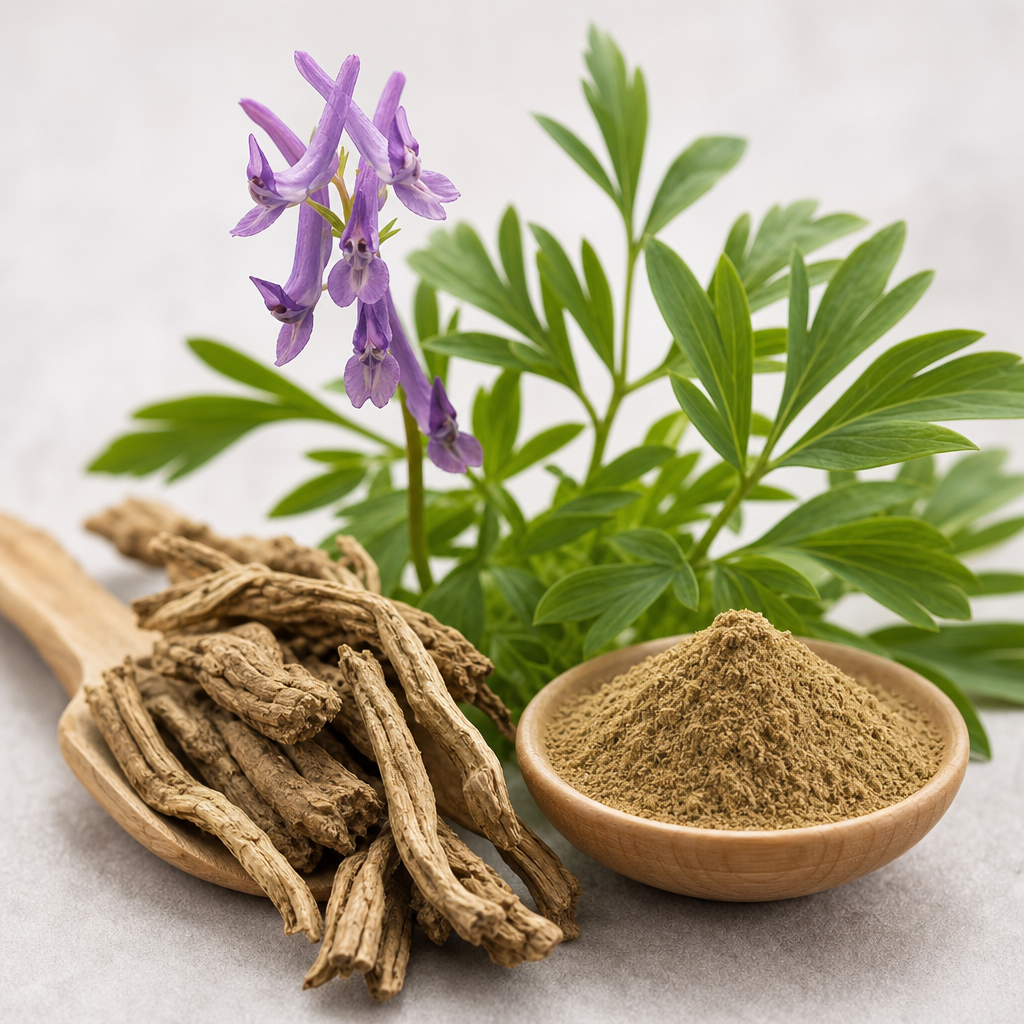
Corydalis generally refers to the rhizome of Corydalis yanhusuo, a flowering plant in the poppy family traditionally used in Chinese herbal medicine. The dried tuber (rhizome) is the medicinal part and is rich in isoquinoline alkaloids, including tetrahydropalmatine (THP, especially the l-THP isomer), dehydrocorybulbine (DHCB), corydaline, and others. In Traditional Chinese Medicine (TCM), Corydalis is used to “invigorate the blood” and alleviate various types of pain and spasm. Modern supplements often provide concentrated extracts or isolated alkaloids aimed at targeted effects such as pain relief or support for sleep.
Corydalis is a botanical herb and not an essential nutrient. The human body does not require it in the way it requires vitamins, minerals, essential amino acids, or essential fatty acids. Instead, it is considered a non-essential plant-derived supplement with bioactive compounds that may influence pain signaling, muscle tone, and the nervous system. Early research suggests its alkaloids may modulate dopamine receptors, voltage-gated ion channels, and inflammatory pathways, which could help explain its traditional uses.
Benefits of Corydalis
-
Pain relief for musculoskeletal or neuropathic discomfort
(Mixed evidence)
Animal and preliminary human studies suggest Corydalis yanhusuo extracts and alkaloids like DHCB and l-THP may reduce pain by modulating dopamine receptors and ion channels involved in nociception. In practice, Corydalis is used for back, joint, or nerve-related pain, and in TCM formulas for headache and dysmenorrhea. However, rigorous large-scale clinical trials are limited and often confounded by multi-herb combinations, so results may not generalize to all users or all types of pain.
-
Support for sleep onset and sleep quality
(Moderate evidence)
The alkaloid l-THP has sedative properties and has been used in China as a sleep aid. Small clinical studies report improved sleep onset latency and subjective sleep quality when taken in low doses at night. While promising, the evidence base is not as robust as for conventional hypnotics, and individual responses vary. Sedation can persist into the next morning if dosing is too high or timing is late.
-
Calming effects for stress and mild anxiety
(Limited evidence)
Corydalis alkaloids interact with dopaminergic and possibly GABAergic signaling, which may contribute to a sense of calm. Limited clinical observations and traditional use support this effect, but high-quality randomized controlled trials are sparse. Benefits, if present, are usually modest and dose-dependent, and excessive dosing may cause unwanted drowsiness or dizziness.
-
Menstrual and gastrointestinal cramp relief
(Limited evidence)
Traditional use and preclinical data suggest antispasmodic actions on smooth muscle, which could ease menstrual cramps or functional gastrointestinal spasm. Some combination TCM formulas containing Corydalis have shown benefits for dysmenorrhea in small clinical studies. Evidence for standalone Corydalis is less clear and requires more rigorous trials.
-
Adjunct support during opioid withdrawal
(Limited to Mixed evidence)
l-THP has been studied in China as an adjunct during opioid withdrawal, with reports of reduced craving, anxiety, and insomnia. While encouraging, studies vary in quality and design, and safety concerns (notably sedation and rare liver injury) require caution. This use should only occur under medical supervision and not as a self-directed therapy.
Types or Forms Available
-
Dried rhizome powder or decoction (traditional use):
The whole, powdered herb or sliced rhizome simmered as a tea. Traditional decoction doses are typically larger by weight because they are not concentrated. Effects can be gentler but less standardized from batch to batch.
-
Standardized extracts:
Common strengths include 5:1 to 10:1 extracts, sometimes standardized to a percentage of total alkaloids or to specific compounds like l-THP. Standardization improves dose consistency, which is useful for repeatable effects and research comparisons.
-
Isolated alkaloids (e.g., l-THP):
Some products provide l-THP as a single compound for targeted sedation or analgesia. This offers precision but also carries higher risk for side effects and interactions. In some regions, isolated l-THP may be regulated more like a drug than a supplement.
-
Combination formulas (e.g., Yuanhu Zhitong Pian):
Common TCM formulations pair Corydalis with other botanicals such as Angelica dahurica for pain. Effects may differ from single-herb Corydalis due to synergistic or additive actions.
-
Tinctures and liquid extracts:
Alcohol- or glycerin-based liquids allow flexible dosing and faster absorption, but standardization varies. Look for labeled alkaloid content when possible.
-
Topicals:
Balms or liniments containing Corydalis are marketed for localized discomfort. Systemic absorption is limited; benefits, if any, are usually mild and localized.
How to Use Corydalis
Individual needs vary, so start low, go slow, and prioritize products that disclose alkaloid content and use verified Corydalis yanhusuo. Because Corydalis can cause drowsiness, avoid combining it with alcohol or sedative medications unless directed by a clinician.
-
Common dosage range:
For standardized extracts, many supplements provide 250–1,000 mg per day, often divided into 1–3 doses, with extracts standardized to total alkaloids (for example, 5–10%). For l-THP as a single compound, research in China often used 30–60 mg at bedtime for sleep; higher intakes increase the risk of next-day sedation and adverse effects and are not recommended without medical supervision. Traditional decoctions may use 3–9 g of the dried rhizome per day, prepared as tea, but potency varies widely.
-
Best timing:
For sleep support or calming, evening or bedtime is typical. For pain or cramps, divided doses with morning and mid-day use may be appropriate. Avoid taking late at night if you are sensitive to next-morning grogginess.
-
How to take it:
Take capsules or tinctures with a small meal or snack to reduce nausea. Maintain hydration. If using a decoction, follow traditional preparation instructions and strain thoroughly to avoid irritation.
-
Consistency:
For pain or cramp relief, some people use Corydalis as needed. For sleep or ongoing discomfort, a consistent once-daily bedtime dose (or divided doses) for 1–2 weeks may be trialed to assess response. If no clear benefit occurs, reconsider use and consult a professional.
Food Sources and Supplement Options
Corydalis is a botanical herb, not a common dietary food. It is not meaningfully obtained from the regular diet. Most people encounter Corydalis as a supplement, tincture, or as part of a traditional herbal formula prepared by an herbalist or TCM practitioner.
Supplementation may make sense if you are seeking a targeted approach to mild-to-moderate pain, muscle spasm, or sleep onset support and prefer a botanical option. In contrast, whole foods provide broader nutritional value and are the foundation of overall health; Corydalis cannot replace the nutrient density of a balanced diet. If you use supplements, choose products that specify the plant species (Corydalis yanhusuo), plant part (rhizome), extraction ratio, and standardization to alkaloids, and that are tested for contaminants and adulteration.
Who May Benefit from Corydalis?
-
Adults with occasional musculoskeletal discomfort who prefer a botanical adjunct to non-prescription options, after discussing with a healthcare professional.
-
Individuals experiencing sleep onset difficulties who need a gentle, short-term aid and can tolerate mild sedation.
-
People with recurring menstrual cramps or functional GI spasm who are exploring traditional herbal approaches alongside lifestyle and diet measures.
-
Those under the guidance of a clinician exploring adjunctive support during substance withdrawal management, recognizing the need for close monitoring and comprehensive care.
-
Active individuals with overuse aches who want a short-term botanical option and can schedule doses away from training or tasks requiring alertness.
Side Effects and Considerations
-
Sedation and dizziness:
Corydalis—particularly l-THP—can cause drowsiness, dizziness, and impaired coordination. Avoid driving, operating machinery, or engaging in tasks requiring alertness until you understand your response.
-
Liver health:
Rare cases of liver enzyme elevations and clinically apparent liver injury have been reported with l-THP–containing products. Avoid use if you have liver disease, limit alcohol, and discontinue if you develop jaundice, dark urine, severe fatigue, or right-upper-quadrant pain. Periodic liver function monitoring is prudent during extended use.
-
Drug interactions:
Corydalis may potentiate central nervous system depressants (benzodiazepines, opioids, sedating antihistamines), increasing risk of excessive sedation or respiratory depression. In vitro data suggest potential inhibition of CYP enzymes (e.g., CYP3A4/CYP2D6), which could affect the metabolism of certain medications. Consult your clinician and pharmacist if you take prescription drugs.
-
Blood pressure and heart rate:
Some alkaloids may modestly lower blood pressure or heart rate. Use caution if you take antihypertensives, have cardiovascular conditions, or are prone to orthostatic dizziness.
-
Bleeding risk (theoretical):
Lab studies suggest possible antiplatelet effects; clinical relevance is uncertain. Use caution with anticoagulants, antiplatelet drugs, or upcoming surgery. Stop use 1–2 weeks before elective procedures unless advised otherwise by your physician.
-
Gastrointestinal effects:
Nausea, dry mouth, and constipation can occur. Taking with food and adequate fluids may help. Reduce dose if symptoms persist.
-
Neurologic and psychiatric conditions:
Because l-THP can interact with dopamine receptors, use caution if you have Parkinson’s disease or take antipsychotic medications; discuss with your specialist before use.
-
Pregnancy, breastfeeding, and children:
Safety data are insufficient. Corydalis is traditionally avoided in pregnancy due to theoretical uterine effects and lack of robust safety evidence. Not recommended while breastfeeding or for children unless directed by a qualified clinician.
-
Quality and adulteration:
Ensure proper species identification (Corydalis yanhusuo), standardized alkaloid content, and third-party testing. Some products have been adulterated with unlabeled compounds or inconsistent alkaloid levels.
-
Duration of use and dosing:
Avoid high or escalating doses. If using regularly, reassess need after 1–2 weeks. Long-term continuous use should be medically supervised, particularly when other medications or conditions are present.
Common Myths About Corydalis
-
“Corydalis is natural, so it’s completely safe at any dose.”
Natural products can still have potent pharmacologic effects. Corydalis may cause sedation, interact with medications, and has been linked to rare liver injury. Dose, timing, and medical context matter.
-
“Corydalis works like a strong opioid for all types of pain.”
While some users report pain relief, its effects are generally milder than prescription analgesics, and evidence is mixed, with many studies small or using multi-herb formulas. It should not be used to replace medically indicated treatments.
-
“More is better for faster results.”
Higher doses increase side-effect risk—especially next-day drowsiness, dizziness, and liver strain—without guaranteeing better outcomes. Starting with conservative doses and reassessing is safer and often more effective.
-
“It doesn’t interact with medications.”
Corydalis may potentiate sedatives and could affect drug metabolism pathways. Always review use with a clinician, particularly if you take CNS depressants, anticoagulants, or drugs with narrow therapeutic windows.
-
“All Corydalis supplements are the same.”
Potency varies by species, plant part, extraction method, and alkaloid standardization. Choose products with transparent labeling and third-party testing to ensure consistency and safety.
Conclusion
Corydalis yanhusuo is a traditional botanical with modern interest for pain modulation, muscle spasm relief, and sleep support. Evidence ranges from promising preclinical findings to small human studies, with more robust data for sleep onset benefits from l-THP and mixed findings for pain. When used thoughtfully—at conservative doses, with appropriate timing, and under professional guidance—it can be a reasonable adjunct for select goals.
Because it is not an essential nutrient, a food-first approach remains the priority for overall health, while Corydalis may serve as a targeted supplement. Individuals who are pregnant or breastfeeding, taking medications, or managing medical conditions—especially liver disease, cardiovascular issues, Parkinson’s disease, or mental health disorders—should consult a qualified healthcare professional before use. Prioritize quality products that disclose species, plant part, extraction, and alkaloid content; avoid high doses; and reassess need regularly to balance potential benefits with safety.