What is Creatine?
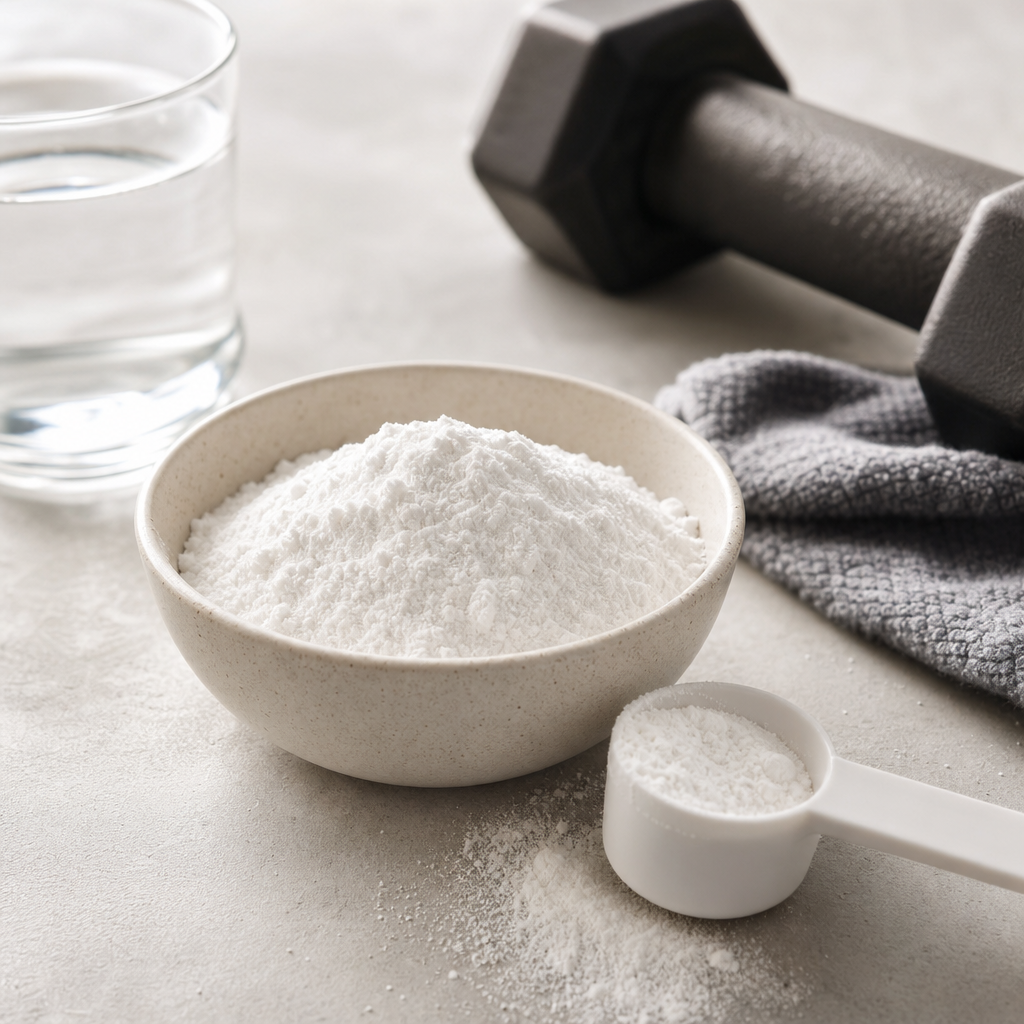
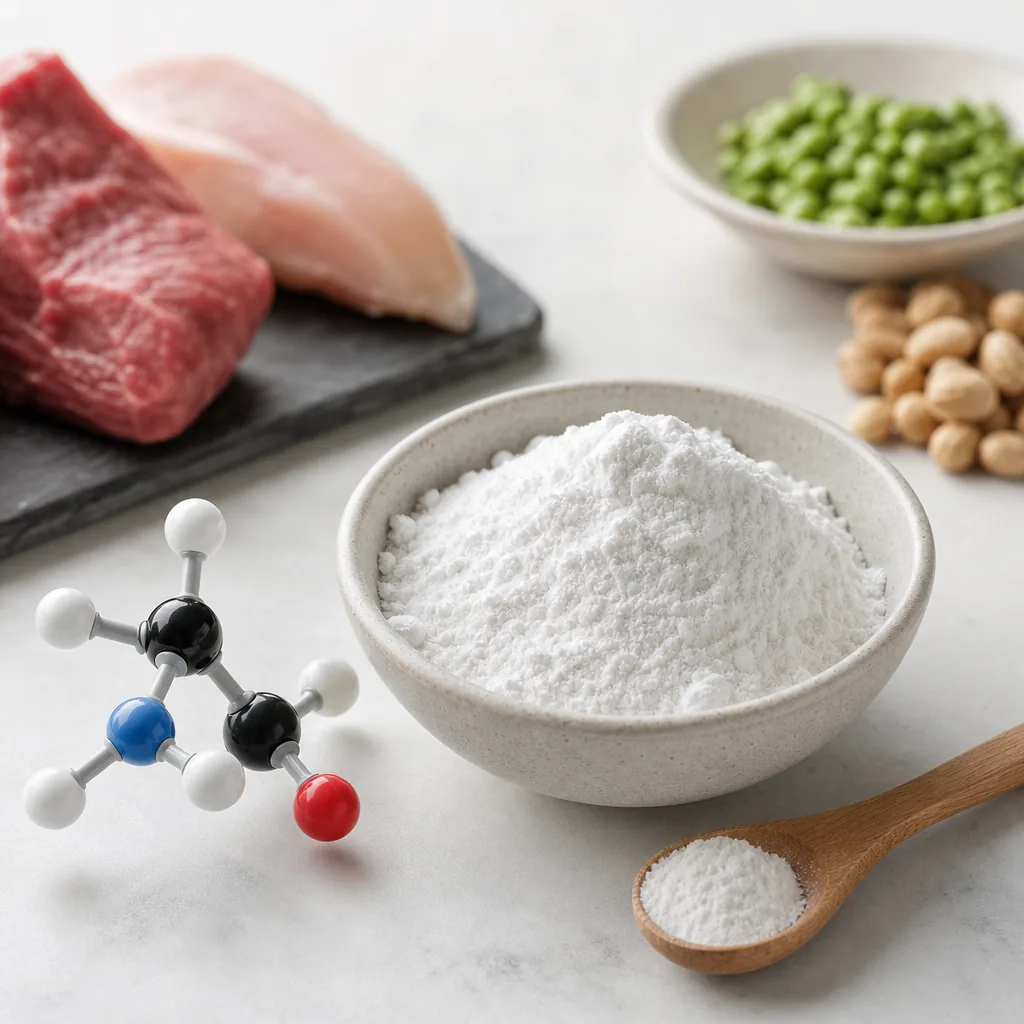
Creatine is a naturally occurring compound made in the body from the amino acids glycine, arginine, and methionine. It is stored primarily in skeletal muscle as free creatine and phosphocreatine, where it supports rapid energy production by helping regenerate ATP, the body’s main energy currency, during short, high-intensity efforts. Smaller amounts are found in the brain, heart, and other tissues, reflecting its broader role in cellular energy metabolism.
Creatine is found in animal-based foods such as meat and fish and is also widely available as a dietary supplement. It is best described as a non-essential compound and supplement, not an essential nutrient like a vitamin or mineral. The human body can synthesize creatine in sufficient amounts for survival; however, supplemental creatine can increase muscle creatine stores beyond typical dietary and endogenous levels, which may enhance performance, support training adaptations, and potentially benefit certain aspects of recovery and cognition.
Benefits of Creatine
-
Increased strength and power in resistance training
(Strong evidence)
Supplemental creatine increases intramuscular phosphocreatine, improving the ability to regenerate ATP during high-intensity, short-duration efforts. Numerous randomized trials and meta-analyses show greater gains in one-repetition maximum (1RM) strength and power output when creatine is combined with structured training compared with placebo.
-
Enhanced high-intensity exercise performance and repeated sprints
(Strong evidence)
Creatine consistently improves performance in activities relying on the phosphagen energy system—such as sprinting, jumping, and repeated high-intensity intervals—by supporting faster ATP replenishment between bouts. Benefits are most apparent in efforts lasting under ~30 seconds with incomplete rest.
-
Greater lean mass and training adaptations
(Moderate to strong evidence)
By enabling higher training volume and intensity, creatine supplementation is associated with modest but meaningful increases in fat-free mass and muscle cross-sectional area over weeks to months of training. While some early weight gain is water within muscle cells, longer-term increases reflect actual muscle accretion when combined with progressive resistance training.
-
Improved recovery and reduced markers of muscle damage
(Moderate evidence)
Research indicates creatine can reduce subjective soreness and biomarkers such as creatine kinase following strenuous exercise, potentially aiding recovery and supporting more frequent or higher-quality training sessions. Effects vary by protocol and population but trend positive.
-
Cognitive support under stress or low baseline creatine intake
(Mixed evidence)
Creatine may benefit aspects of cognition—such as working memory, reaction time, and mental fatigue—particularly in sleep-deprived individuals, during demanding cognitive tasks, or in those with low dietary creatine (e.g., vegetarians/vegans). Results in well-rested, omnivorous young adults are mixed, with some studies showing no effect.
-
Support during injury recovery and periods of immobilization
(Limited to moderate evidence)
Some studies suggest creatine may help preserve muscle mass and strength during limb immobilization and may accelerate recovery when combined with appropriate rehabilitation. Findings are promising but heterogeneous and not universal.
-
Hydration status and heat tolerance during exercise
(Limited evidence)
Creatine increases intracellular water in muscle and may improve thermoregulatory responses and perceived exertion in the heat. Overall, controlled trials do not support increased risk of dehydration or cramping in healthy users; some data suggest the opposite. Evidence here remains limited.
-
Adjunct to exercise for glucose control
(Mixed evidence)
When combined with regular exercise, creatine has shown small improvements in glycemic control and glucose transport in some studies, potentially via enhanced muscle energy handling. Findings are inconsistent, and creatine should not be used as a primary therapy for blood sugar management.
Types or Forms Available
-
Creatine monohydrate
The most studied, effective, and cost-efficient form. It reliably increases muscle creatine stores and performance outcomes. “Micronized” monohydrate is the same compound ground to smaller particle size for better mixability; efficacy is equivalent.
-
Creatine hydrochloride (HCl)
More soluble in water and may mix more easily. Limited head-to-head research shows no consistent performance advantage over monohydrate when taken at equivalent effective doses. Often more expensive.
-
Buffered or “alkaline” creatine (e.g., Kre-Alkalyn)
Marketed to reduce stomach discomfort or “convert” less to creatinine. Independent studies have not demonstrated superiority over monohydrate for muscle uptake or performance.
-
Creatine ethyl ester
Once popular, but research indicates poorer bioavailability and smaller increases in muscle creatine than monohydrate. Generally not recommended.
-
Creatine salts and chelates (e.g., magnesium creatine chelate, creatine nitrate)
Sometimes combined with minerals or nitrate. Evidence is limited and does not consistently show advantages over monohydrate for strength or power; some may have unique secondary effects (e.g., nitrate on blood flow), but data are preliminary.
-
Delivery forms
Powders, capsules, tablets, and chewables are common. Powders are most economical and allow flexible dosing; capsules are convenient but may require multiple pills to reach effective doses.
Bottom line: For most users, creatine monohydrate is the preferred choice given its robust evidence, safety profile, and affordability.
How to Use Creatine
-
Common dosage range:
Two well-supported approaches: (1) Loading: 20 g/day of creatine monohydrate split into 4 doses of 5 g for 5–7 days, then 3–5 g/day for maintenance; or (2) No loading: 3–5 g/day consistently, which saturates muscles more gradually over ~3–4 weeks. Higher routine doses are rarely necessary outside specific clinical contexts under medical supervision.
-
Best timing:
Timing is not critical. Some evidence suggests taking creatine near workouts with a mixed meal may be slightly beneficial, but daily consistency matters most. On non-training days, take at any convenient time.
-
How to take it:
Mix powder with water or a warm beverage to aid dissolution. Taking with a meal containing carbohydrates and sodium may support uptake and reduce stomach upset. Capsules are an alternative if you dislike the texture of powder.
-
Consistency:
Daily use is recommended to maintain elevated muscle creatine stores. Skipping occasional days is not critical, but prolonged breaks will gradually reduce muscle creatine toward baseline.
Food Sources and Supplement Options
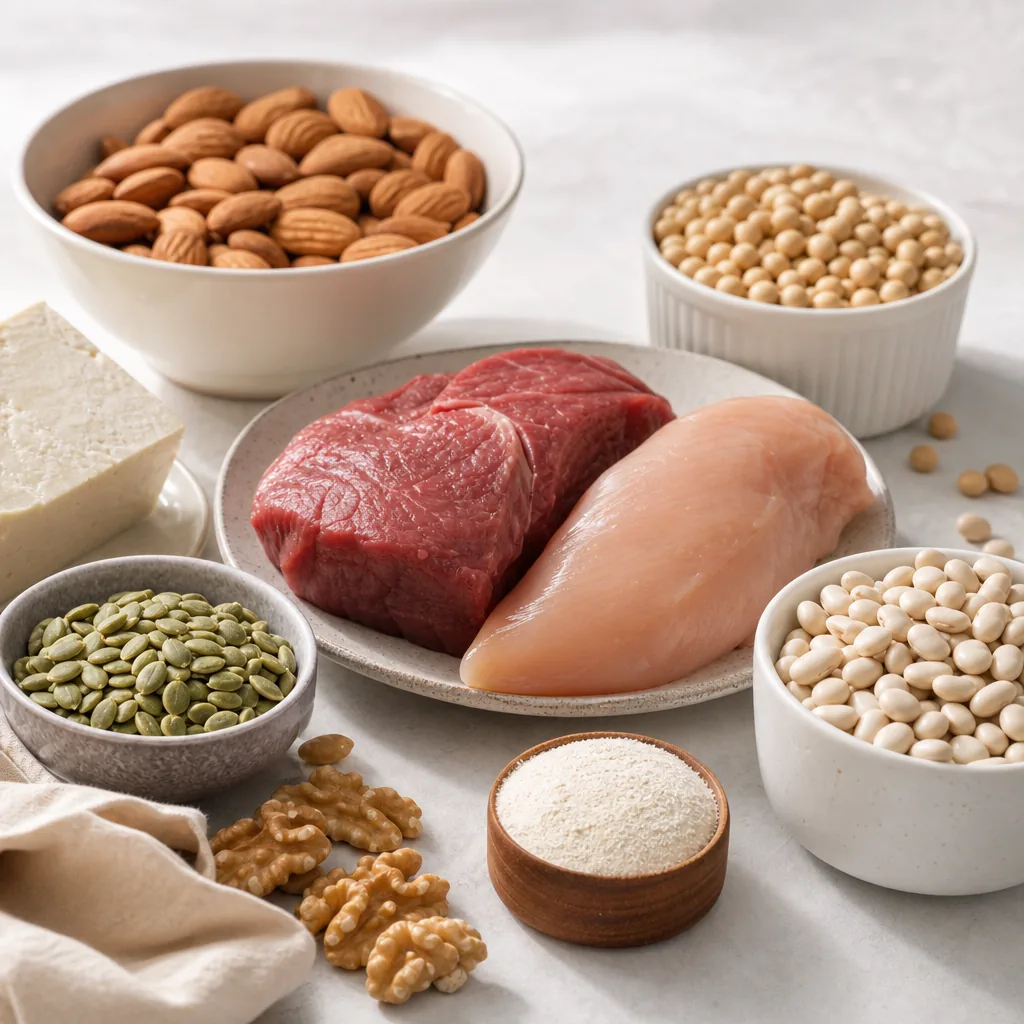
Creatine is present naturally in animal-derived foods and is also widely used as a supplement. Dietary sources generally provide small amounts compared with typical supplemental doses.
-
Beef and pork:
Approximately 0.3–0.6 g creatine per 100 g raw meat (values vary by cut and processing).
-
Herring, salmon, tuna, and cod:
Fish can be relatively rich, though content varies widely by species; cooking can reduce creatine content.
-
Poultry:
Moderate amounts, typically less than red meat.
Plant foods contain little to no creatine, so vegetarians and vegans typically have lower muscle creatine stores. Supplements make sense when targeting performance or recovery benefits that require 3–5 g/day—intakes difficult to achieve from food alone. Whole foods remain important for overall nutrition, providing protein, iron, B vitamins, omega-3s, and other nutrients. Supplements allow precise, evidence-based dosing without extra calories or saturated fat.
Who May Benefit from Creatine?
-
Athletes in strength, power, and sprint-based sports seeking improvements in lifting performance, jumping, and repeated high-intensity efforts.
-
Team-sport athletes (e.g., soccer, basketball, hockey) performing repeated sprints with limited rest.
-
Adults engaged in resistance training who want modest increases in lean mass and training volume.
-
Older adults combining creatine with resistance exercise to support muscle strength and function.
-
Vegetarians and vegans who typically have lower baseline muscle creatine levels.
-
Individuals recovering from injury or periods of immobilization, as part of a supervised rehabilitation plan.
-
People facing acute cognitive demands under sleep deprivation or high stress; benefits are more likely when baseline intake is low.
-
Workers or athletes training in the heat looking to support intracellular hydration; individual responses vary.
Side Effects and Considerations
-
Water retention and weight gain:
A 1–2 kg increase is common in the first weeks due to greater intracellular water in muscle. This is typically not harmful but may be relevant for weight-class sports.
-
Gastrointestinal upset:
Large single doses may cause stomach discomfort, bloating, or loose stools. Split doses, take with food, and ensure adequate fluid intake to reduce issues.
-
Kidney health:
Creatine is generally safe for healthy individuals at recommended doses, including long-term use. Those with kidney disease, a history of kidney problems, or who take nephrotoxic medications should consult a healthcare professional and avoid unsupervised use.
-
Serum creatinine confusion:
Creatine can raise blood creatinine (a breakdown product) without harming kidney function, potentially confounding lab tests. Inform your clinician and avoid making kidney-related decisions based solely on creatinine after starting creatine.
-
Hydration:
Maintain normal fluid intake, especially during loading, hot weather, or intense training.
-
Caffeine:
Evidence is mixed regarding performance interactions. Co-use is generally fine for most people, but if you experience GI upset or jitteriness, separate timing and assess tolerance.
-
Medication and condition interactions:
Use caution and seek medical advice if taking diuretics, nephrotoxic drugs (e.g., certain NSAIDs at high doses, aminoglycosides), or managing conditions affecting kidney or liver function.
-
Pregnancy and breastfeeding:
Safety data are limited. Avoid routine use unless specifically recommended and supervised by a qualified healthcare professional.
-
Youth and adolescents:
Creatine has been used in adolescent athletes, but product quality, dosing, and supervision are important. Consult a knowledgeable clinician or sports dietitian before use.
-
Product quality and purity:
Choose third-party tested supplements (e.g., NSF Certified for Sport, Informed Choice) to reduce the risk of contamination or label inaccuracies.
-
Pre-surgery considerations:
Discuss supplement use with your surgical team; some clinicians prefer minimizing non-essential supplements around the time of surgery.
-
Allergies and sensitivities:
Pure creatine is unlikely to trigger common food allergies, but flavored or blended products may contain allergens, caffeine, or other stimulants—check labels carefully.
Common Myths About Creatine
-
Myth: “Creatine is a steroid.”
Creatine is not a steroid. It is a non-essential compound synthesized from amino acids and found in foods like meat and fish. It supports cellular energy production and is permitted by major sports governing bodies. Its mechanisms and safety profile differ fundamentally from anabolic steroids.
-
Myth: “Creatine damages your kidneys.”
Extensive research in healthy individuals shows recommended doses of creatine do not impair kidney function. While serum creatinine may rise, this reflects creatine metabolism rather than kidney damage. People with existing kidney issues should seek medical guidance before using creatine.
-
Myth: “Creatine causes hair loss.”
Evidence linking creatine to hair loss is very limited. One small study reported increased DHT in college athletes, but follow-up research has not confirmed creatine-induced hair loss. Genetics, hormones, and other factors are far more influential.
-
Myth: “You must load and cycle creatine.”
Loading accelerates saturation but is not required. Taking 3–5 g daily without loading achieves similar muscle levels over several weeks. Cycling is not necessary for efficacy or safety in healthy users.
-
Myth: “Creatine dehydrates you and causes cramps.”
Controlled studies do not support increased risk of dehydration or cramping; some show better heat tolerance and hydration markers. Adequate fluid intake remains important, as with any training program.
Conclusion
Creatine is a well-researched, non-essential compound that can meaningfully support high-intensity performance, strength gains, and training adaptations. It may also aid recovery and provide cognitive benefits in specific contexts, especially for those with low baseline intake. For most people, creatine monohydrate at 3–5 g per day is a practical, economical, and generally safe choice when paired with structured training and adequate nutrition.
Those who are pregnant or breastfeeding, managing medical conditions, taking medications, or who have kidney or liver concerns should consult a healthcare professional before use. Choose third-party tested products, start with conservative dosing, maintain normal hydration, and prioritize a food-first approach—leveraging whole foods for broader nutrition while using creatine supplements for targeted, evidence-based benefits when appropriate.