What is Huperzine-A?
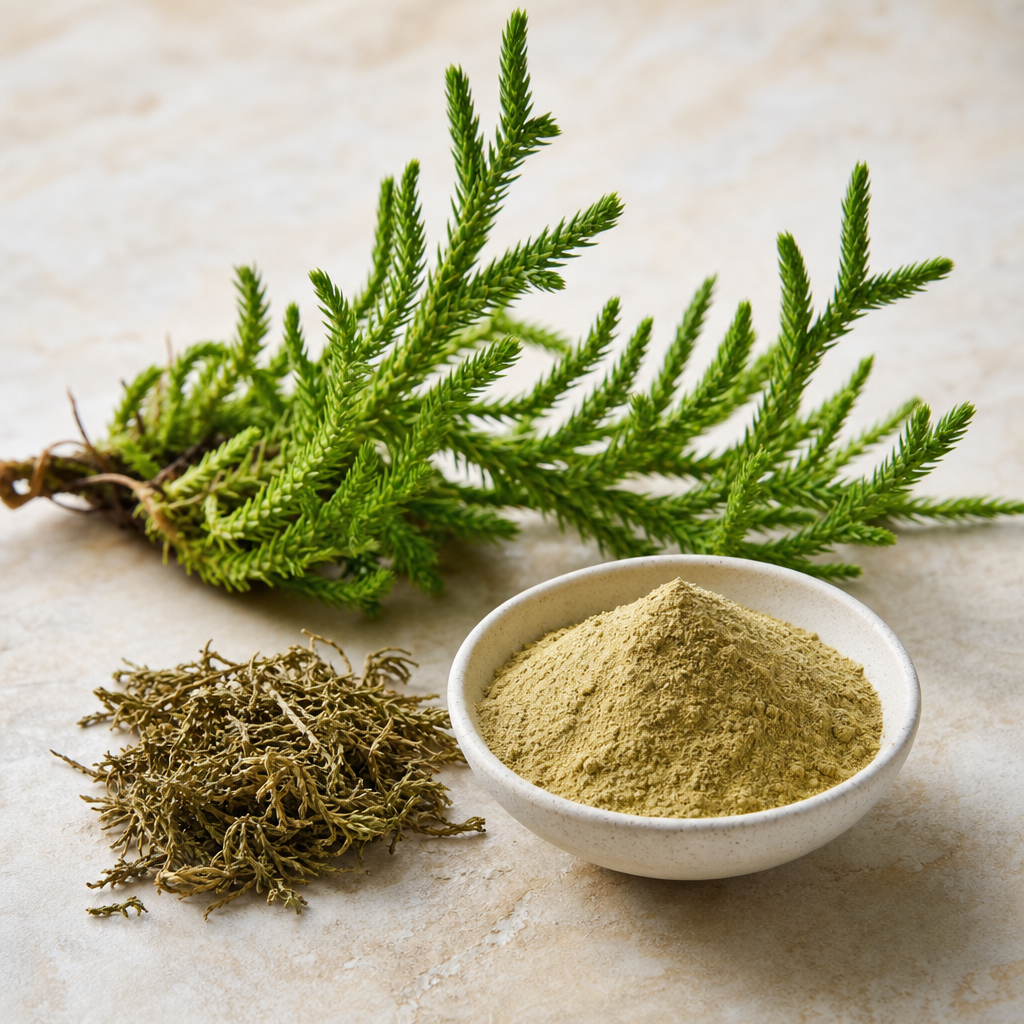
Huperzine-A is a naturally occurring alkaloid isolated from Huperzia serrata (Chinese club moss), a plant long used in traditional Chinese practices. In modern nutrition and wellness, huperzine-A is categorized as a bioactive compound and is typically sold as a dietary supplement, sometimes as a standardized botanical extract and sometimes as a synthesized molecule that is chemically identical to the natural form. It is not a vitamin, mineral, or macronutrient.
Biologically, huperzine-A is best known as a potent, reversible inhibitor of acetylcholinesterase—the enzyme that breaks down acetylcholine, a neurotransmitter involved in learning, memory, attention, and neuromuscular function. By slowing the breakdown of acetylcholine, huperzine-A can temporarily increase cholinergic signaling. Early laboratory research also suggests antioxidant and neuroprotective actions, though clinical relevance is not fully established. Importantly, huperzine-A is not an essential nutrient; the body does not require it the way it requires vitamins, minerals, essential fatty acids, or essential amino acids.
Because huperzine-A affects neurotransmission, it behaves more like a pharmacologic agent than a typical dietary nutrient. That means potential benefits must be balanced with careful attention to dose, timing, and safety—especially for people who are pregnant or breastfeeding, have medical conditions, or use medications.
Benefits of Huperzine-A
-
Cognitive symptoms in Alzheimer’s disease and other dementias
(Mixed evidence)
Explanation: Multiple small randomized and controlled trials—many conducted in China—report short-term improvements in cognitive test scores (for example, MMSE and ADAS-Cog) with huperzine-A compared with placebo. However, study quality varies, sample sizes are often modest, and trial durations are short. Some studies show meaningful benefits, while others find limited or no effect, leading to a mixed overall picture. Clinical use should be supervised by a healthcare professional, particularly to avoid interactions with prescription acetylcholinesterase inhibitors.
-
Memory and learning in healthy adults and students
(Limited evidence)
Explanation: A few small trials—mostly in adolescents or young adults—suggest huperzine-A may modestly support short-term memory or learning performance during intensive study periods. Results are not consistent across studies, and effects, when present, appear modest and task-dependent. More rigorous, larger, and longer-duration trials are needed.
-
Mild cognitive impairment or age-related memory complaints
(Mixed evidence)
Explanation: Preliminary and small clinical studies suggest possible benefits for memory and executive function in people with subjective memory complaints or mild cognitive deficits, but findings are inconsistent and often limited by small sample sizes and short follow-up. At this time, results are not definitive.
-
Myasthenia gravis (neuromuscular support)
(Limited evidence)
Explanation: Because huperzine-A increases acetylcholine availability, it has been explored in small studies as an adjunct for myasthenia gravis, with some reporting symptom improvement. Evidence remains limited, protocols vary, and safety monitoring is essential. Any use for this purpose should be under specialist medical care and not self-directed.
-
Attention, focus, and working memory during demanding tasks
(Limited evidence)
Explanation: Some users report improved focus and mental clarity, and a few small studies indicate possible benefits for working memory or sustained attention. Objective findings are inconsistent and generally small in magnitude. Individual responses vary, and benefits—if present—tend to be acute and task-specific rather than broad or long-term.
-
Neuroprotection and anti-excitotoxic effects
(Preliminary evidence)
Explanation: Laboratory and animal research suggests huperzine-A may protect neurons from glutamate-induced excitotoxicity and oxidative stress, potentially through both acetylcholinesterase inhibition and NMDA receptor–modulating properties. Human data confirming clinically meaningful neuroprotection are not yet adequate.
Types or Forms Available
-
Standardized Huperzia serrata extract:
Typically standardized to a defined microgram (mcg) content of huperzine-A per serving (for example, 100 mcg). Standardization helps ensure consistent dosing versus whole-herb powders, which can vary widely in alkaloid content.
-
Purified or synthesized huperzine-A:
A chemically identical form to the natural compound, often used to achieve precise microgram dosing and improve batch-to-batch consistency.
-
Capsules and tablets:
The most common delivery systems, convenient for routine dosing. Because the effective dose is in micrograms, products should be manufactured carefully; third-party testing is valuable.
-
Sublingual tablets or drops:
Designed for quicker onset by absorption under the tongue. Some users prefer this route before study sessions, though robust comparative data with standard capsules are limited.
-
“Nootropic” blends or stacks:
Products combining huperzine-A with ingredients like choline donors, L-tyrosine, bacopa, or caffeine. Blends can complicate identifying which component drives effects and may increase side-effect risk; review labels carefully and avoid overlapping cholinergic agents.
How to Use Huperzine-A
Because huperzine-A is a potent acetylcholinesterase inhibitor with a relatively long half-life, conservative dosing and careful self-monitoring are important. Always consider discussing use with a qualified clinician, especially if you take medications or manage health conditions.
-
Common dosage range:
Typical supplemental doses fall between 50–200 mcg per day. Many products provide 100 mcg once daily. Higher doses or multiple daily doses have been used in some clinical trials under medical supervision, but self-directed high dosing is not advised. Start at the low end to assess tolerance.
-
Best timing:
For general cognitive support, morning or early afternoon is common to minimize sleep disruption. For study or cognitively demanding tasks, some users take it 30–60 minutes beforehand. Avoid dosing late in the evening if you experience vivid dreams or insomnia.
-
How to take it:
Swallow with water. Taking with a small meal may reduce gastrointestinal upset. Sublingual forms are placed under the tongue and allowed to dissolve as directed by the product label.
-
Consistency:
Some people use huperzine-A only on days of high cognitive demand. If using daily, consider periodic breaks (for example, several weeks on followed by 1–2 weeks off) due to uncertain long-term tolerance and safety. Discontinue if adverse effects occur.
Food Sources and Supplement Options
Huperzine-A is not meaningfully present in common foods. It is derived from the club moss Huperzia serrata (and related species) or produced synthetically for supplement use. As such, huperzine-A intake comes almost exclusively from supplements rather than diet.
Supplements can provide precise microgram-level dosing that is difficult to achieve from raw plant material. Consider supplementation only when there is a specific, time-limited goal (such as an important learning period) or when advised by a clinician for a medical condition. While whole foods remain the foundation of brain health—providing essential nutrients, fiber, and phytochemicals—huperzine-A offers a targeted pharmacologic effect rather than broad nutritional support.
Who May Benefit from Huperzine-A?
-
Adults seeking short-term support for demanding cognitive tasks (for example, exams or intensive learning), recognizing that effects are variable and generally modest.
-
Older adults with age-related memory complaints or mild cognitive concerns, but only after discussing risks, benefits, and medication interactions with a healthcare professional.
-
Individuals exploring options when prescription acetylcholinesterase inhibitors are not tolerated or contraindicated—strictly under medical supervision to avoid duplication of cholinergic effects.
-
People interested in nootropic strategies who prefer non-stimulant approaches and understand that evidence for healthy users is limited.
Side Effects and Considerations
-
Cholinergic side effects:
Nausea, vomiting, diarrhea, abdominal cramping, increased salivation or sweating, muscle twitching, urinary urgency, and blurred vision may occur, especially at higher doses.
-
Cardiovascular effects:
Huperzine-A can lower heart rate. People with bradycardia, conduction abnormalities, or those on rate-limiting drugs (for example, beta-blockers) should use caution and consult a clinician.
-
Sleep and mood:
Some users report insomnia, restlessness, or vivid dreams. Avoid late-day dosing if sleep disruption occurs.
-
Respiratory and GI conditions:
Increased cholinergic tone may exacerbate asthma/COPD, peptic ulcers, GERD, or gastrointestinal hypermotility. Use caution or avoid without medical guidance.
-
Genitourinary considerations:
Those with urinary obstruction or severe benign prostatic hyperplasia should exercise caution due to possible increased bladder contractions.
-
Neurologic conditions:
If you have a seizure disorder or a history of significant head injury, discuss risks with a clinician. Human data are limited and mixed regarding seizure risk.
-
Medication interactions:
Do not combine with prescription acetylcholinesterase inhibitors (for example, donepezil, rivastigmine, galantamine) without medical oversight; effects may be additive. Huperzine-A may oppose anticholinergic drugs (for example, some antihistamines, tricyclic antidepressants, bladder antispasmodics) and could alter their efficacy or side effects. Caution is also warranted with NMDA antagonists such as memantine.
-
Surgery and anesthesia:
Stop huperzine-A at least 1–2 weeks before planned surgery. Acetylcholinesterase inhibition can interact with neuromuscular blocking agents used during anesthesia.
-
Pregnancy, breastfeeding, and children:
Safety data are insufficient. Avoid use during pregnancy or breastfeeding and in children unless specifically directed by a qualified clinician.
-
Liver and kidney health:
Robust pharmacokinetic data in hepatic or renal impairment are lacking. Use cautiously and at the low end of dosing if at all, with professional guidance.
-
Quality and dosing precision:
Effective doses are in micrograms, so manufacturing accuracy matters. Choose products from companies that provide third-party testing to reduce the risk of mislabeling or contamination.
Common Myths About Huperzine-A
-
“Huperzine-A is natural, so it’s automatically safe for everyone.”
Natural origin does not guarantee universal safety. Huperzine-A has drug-like effects on neurotransmission and can cause meaningful side effects and interactions, especially with heart, respiratory, or gastrointestinal conditions and with certain medications.
-
“It will permanently boost IQ or prevent Alzheimer’s disease.”
Current evidence does not support permanent IQ changes. In dementia research, some short-term cognitive improvements have been observed, but study quality is variable and results are mixed. There is no conclusive evidence that huperzine-A prevents Alzheimer’s disease.
-
“More is better.”
Higher doses increase the risk of cholinergic side effects without guaranteeing greater cognitive benefits. Because the active range is in micrograms, conservative dosing and careful monitoring are essential.
-
“It replaces prescription treatments.”
Huperzine-A is not a substitute for clinician-prescribed therapies. Combining it with prescription acetylcholinesterase inhibitors can lead to excessive cholinergic effects and should only be considered with medical supervision.
-
“It works the same for everyone and for every task.”
Responses vary and effects—when present—are often modest and task-specific. Some people notice benefits; others do not.
Conclusion
Huperzine-A is a potent acetylcholinesterase inhibitor derived from Huperzia serrata and used as a targeted supplement for cognitive support. Evidence suggests it may provide short-term improvements in certain cognitive measures, particularly in some dementia studies, and possibly modest support for learning or attention in healthy individuals. However, findings are mixed, and long-term safety and efficacy remain uncertain. If used, prioritize low, precise dosing and reputable, third-party–tested products.
Because huperzine-A has meaningful pharmacologic activity and interaction potential, people who are pregnant or breastfeeding, those taking medications, or those managing medical conditions should consult a healthcare professional before use. A food-first approach remains foundational for brain health, while huperzine-A—lacking significant dietary sources—functions as a supplement for specific, time-limited goals or under clinical guidance. Use cautiously, monitor for side effects, and discontinue if adverse reactions occur.