What is Fu Ling?
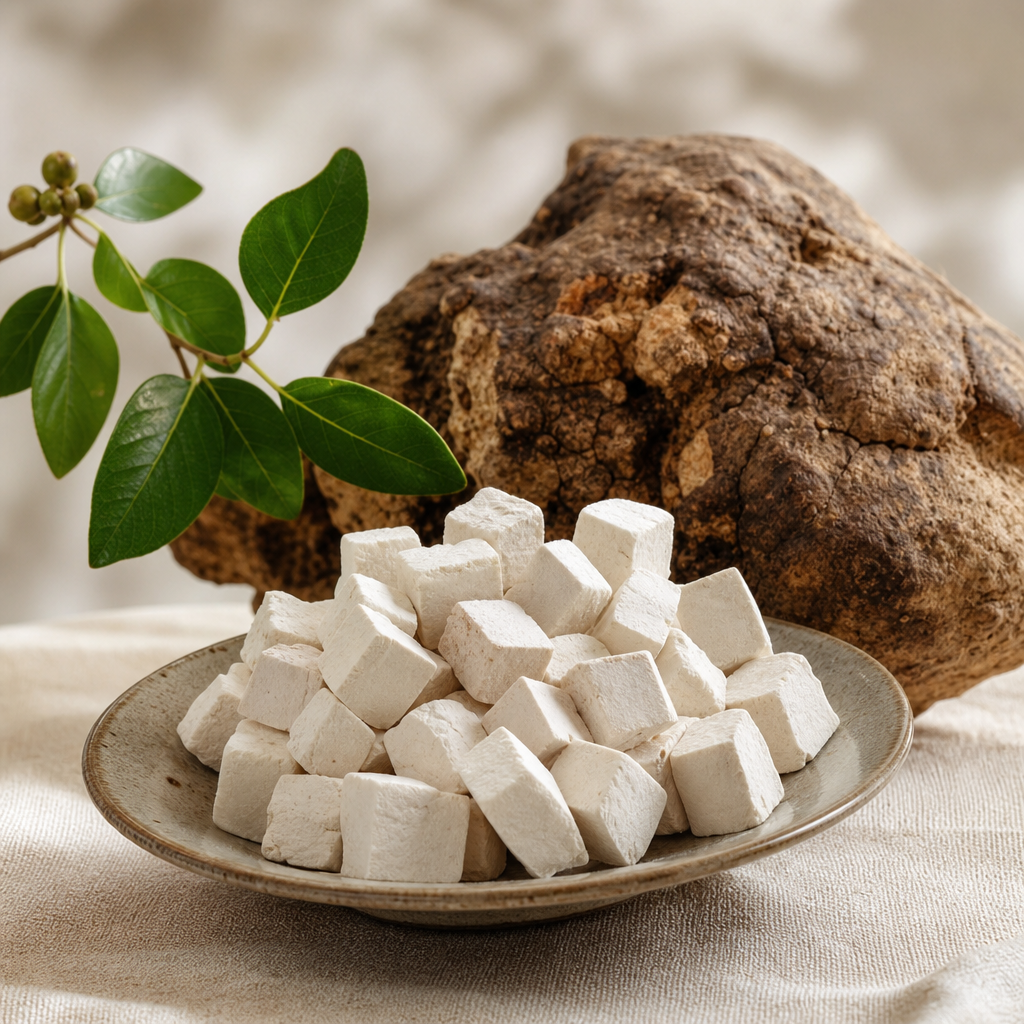
Fu Ling is the common name in Traditional Chinese Medicine (TCM) for the sclerotium of Wolfiporia extensa (formerly Poria cocos), a medicinal fungus that grows underground in association with pine tree roots. In English you may also see it called poria, hoelen, or tuckahoe. In TCM, Fu Ling is traditionally used to promote urination, support digestive function, and calm the mind (“calm shen”). It has been used for centuries in multi-herb formulas to address patterns that include fluid retention, bloating, low appetite, loose stools, palpitations associated with worry, and restlessness.
Fu Ling is considered an herb (specifically a medicinal mushroom sclerotium), not an essential nutrient. The body does not require Fu Ling in the way it requires vitamins, minerals, essential fatty acids, or essential amino acids. Its potential effects are attributed to bioactive constituents such as polysaccharides (e.g., pachymaran) and triterpenoids (e.g., pachymic acid), which have been studied for mild diuretic actions and for modulating immune and inflammatory pathways. In modern use, Fu Ling is available as dried slices for decoction, powders, and concentrated extracts taken as supplements or incorporated into traditional formulas.
Scientific research on Fu Ling includes in vitro and animal studies, with a growing but still limited number of human trials—often using multi-herb combinations rather than Fu Ling alone. As a result, most proposed benefits should be viewed as traditional uses supported by preliminary or evolving evidence. People who are pregnant or breastfeeding, taking medications, or managing a medical condition should consult a qualified healthcare professional before use.
Benefits of Fu Ling
-
Mild diuretic and water balance support
(Moderate evidence)
Fu Ling has a longstanding reputation in TCM for promoting urination and reducing a sense of puffiness or fluid retention. Modern pharmacology suggests polysaccharides and triterpenes may influence fluid balance and kidney handling of water and electrolytes. Small human studies and clinical experience support a gentle diuretic effect, which may help with transient water retention from high-sodium meals or travel. This is not a treatment for medical causes of edema; persistent swelling warrants medical evaluation.
-
Digestive comfort and gut tolerance
(Limited evidence)
Traditionally categorized as supporting the “spleen” (digestive function in TCM terms), Fu Ling is often used for bloating, a heavy sensation after eating, low appetite, and loose stools. Preclinical work suggests Fu Ling polysaccharides may support gut barrier function and a balanced inflammatory response. Limited clinical observations, often within multi-herb formulas, suggest some people experience improved digestive comfort. Evidence specific to Fu Ling alone in rigorous trials is still limited.
-
Calming effect and sleep support
(Limited evidence)
Fu Ling, especially the pine-core–containing variety known as Fu Shen, is traditionally used to “calm the shen,” aligning with gentle anxiolytic or sleep-supportive effects. Mechanistically, triterpenoids and polysaccharides may influence neuroinflammatory pathways and stress responses. Human data are limited and often confounded by combination formulas. Some individuals report a subtle calming effect without next-day grogginess, but more high-quality, Fu Ling–only studies are needed.
-
Immune modulation and healthy inflammatory balance
(Preliminary evidence)
Fu Ling polysaccharides have been studied for immunomodulatory activity, including effects on innate and adaptive immune responses in laboratory and animal models. Early evidence suggests potential support for balanced immune activity and antioxidant capacity. Human trials isolating Fu Ling’s effects are preliminary, so conclusions remain tentative.
-
Metabolic wellness (glucose and lipid markers)
(Preliminary evidence)
Preclinical studies indicate that Fu Ling constituents may influence carbohydrate and lipid metabolism, potentially affecting insulin sensitivity, glucose transport, and lipid peroxidation. Limited pilot human data, usually with multi-herb formulas, suggest possible benefits for select metabolic markers. Evidence specific to Fu Ling alone remains preliminary and should not replace standard care for metabolic conditions.
-
Urinary tract and kidney marker support
(Mixed evidence)
Because of its traditional diuretic role, Fu Ling has been explored as adjunctive support for urinary comfort and kidney-related laboratory markers. Some small studies or combination-formula trials note favorable changes, while others are inconclusive. Variability in product quality, dosing, and formula composition contributes to mixed findings. Medical evaluation is essential for any persistent urinary or kidney concerns.
Types or Forms Available
-
Dried sclerotium slices (whole herb):
The classic TCM form, simmered as a decoction. Water extracts emphasize water-soluble polysaccharides. Typically used within multi-herb formulas tailored by a practitioner.
-
Powdered whole Fu Ling:
Milled powder of the dried sclerotium, taken in capsules or mixed into warm water/tea. Delivers the full spectrum of constituents in non-concentrated form; potency depends on source quality.
-
Standardized extracts:
Concentrated powders or capsules standardized to polysaccharides (e.g., 10–30%) or triterpenes (e.g., quantified pachymic acid). These offer more predictable dosing and may target specific mechanisms.
-
Dual (water + alcohol) extracts:
Designed to capture both water-soluble polysaccharides and alcohol-soluble triterpenoids. Useful when a broader constituent profile is desired.
-
Specialized parts: Fu Ling Pi, Chi Fu Ling, and Fu Shen:
Fu Ling Pi (outer peel) is traditionally emphasized for promoting urination; Chi Fu Ling (red Fu Ling) is processed with pine root and used when stronger fluid-draining action is desired; Fu Shen includes the pine-core region and is favored for calming effects. These distinctions are rooted in TCM practice.
-
Granules/instant decoction granules:
Factory-prepared, standardized granules designed for quick preparation, often used in clinics for convenience and consistent dosing.
-
Tinctures/liquid extracts:
Alcohol or glycerite preparations. Alcohol tinctures tend to extract more triterpenoids; glycerites are alcohol-free but may be less comprehensive in constituent range.
How to Use Fu Ling
Because Fu Ling is an herb with mild diuretic and calming properties, start low, go slow, and adjust based on individual response. Work with a qualified practitioner if you plan to use it alongside medications or as part of a multi-herb regimen.
-
Common dosage range:
Traditional decoctions often use 9–15 g of the dried sclerotium daily (sometimes up to 30 g under practitioner supervision). For supplements, a common range is 500–1,500 mg per day of a concentrated extract (for example, a 10:1 extract), divided once or twice daily. Always follow the product label and avoid megadoses.
-
Best timing:
Morning or early afternoon is typical, especially if the goal is fluid management; taking it late in the evening may increase nighttime urination. If using a calming-focused preparation (e.g., Fu Shen), some people take a small dose in the early evening, avoiding doses too close to bedtime if nocturia is an issue.
-
How to take it:
Capsules or granules can be taken with water. Decoctions are simmered (often 20–30 minutes) and sipped warm. Taking Fu Ling with a light meal can improve tolerance if you experience stomach sensitivity.
-
Consistency:
For fluid balance or digestive support, daily use for several weeks may be needed to gauge effect. Many people cycle use (e.g., 2–8 weeks on, then reassess). Occasional use may be reasonable for short-term water retention from travel or salty meals, but avoid using it as a substitute for medical care when swelling has an unknown cause.
Food Sources and Supplement Options
Fu Ling is not a common food. It is an herbal/mushroom sclerotium harvested from Wolfiporia extensa, typically growing around pine roots. While traditional confections such as “Fu Ling cake” exist in some regions, most people encounter Fu Ling as part of TCM formulas or as a dietary supplement rather than as a routine food.
If you choose supplements, you will find Fu Ling as a single-ingredient product or combined within classic formulas intended for fluid balance, digestive support, or calming. Supplements offer targeted dosing and convenience, whereas whole-food approaches (fruits, vegetables, legumes, whole grains) provide a broader array of essential nutrients and fiber that support overall health. Supplementation may make sense if you are following a TCM-guided plan, prefer a targeted approach to mild fluid retention or digestive comfort, or if consistent culinary use is impractical. Quality varies widely, so source from reputable brands with robust identity testing and third-party verification.
Who May Benefit from Fu Ling?
-
Individuals experiencing transient water retention or bloating related to high-sodium meals, travel, or hormonal fluctuations, seeking a gentle diuretic approach (after ruling out medical causes of edema).
-
People wanting mild digestive support for a heavy sensation after eating, low appetite, or loose stools, especially when guided by a practitioner using traditional pattern assessment.
-
Those seeking a subtle calming aid without strong sedation, such as during periods of worry or restlessness, particularly when caffeine-sensitive.
-
People using classical TCM formulas where Fu Ling is a core component and a practitioner has recommended it to balance the overall formula.
-
Health-conscious users interested in botanicals with preliminary evidence for immune and metabolic support, while recognizing the evidence base is not definitive.
-
Athletes or frequent travelers looking to manage day-to-day bloating or water heaviness; not as a tool for rapid weight cutting or replacing medical advice.
Side Effects and Considerations
-
Increased urination and fluid shifts:
A mild diuretic effect can lead to more frequent urination. Monitor hydration and watch for symptoms like dizziness or lightheadedness, especially in hot weather or when exercising.
-
Medication interactions:
Use caution with diuretics, antihypertensives, and lithium (changes in fluid balance can affect lithium levels). Fu Ling may also modestly influence blood sugar; monitor closely if using diabetes medications. If you take sedatives or sleep aids, be aware of potential additive calming effects.
-
Underlying health conditions:
People with kidney or liver disorders, low blood pressure, electrolyte imbalances, or a history of frequent dehydration should consult a clinician before use. Do not self-treat unexplained edema or urinary issues.
-
Allergies and sensitivities:
Avoid if you are allergic to mushrooms or have known sensitivity to fungal products. Discontinue if you experience rash, itching, swelling, or breathing difficulty, and seek medical attention.
-
Pregnancy, breastfeeding, and children:
Safety data are limited. Avoid use during pregnancy and breastfeeding unless a qualified practitioner advises otherwise. Children should use only with professional guidance and age-appropriate dosing.
-
Surgery and medical procedures:
Due to potential effects on fluid balance and mild calming properties, consider stopping Fu Ling 1–2 weeks before surgery or procedures, in coordination with your healthcare team.
-
Dosing and duration:
Start at the low end of the range and avoid long-term, continuous use without oversight. Periodically reassess need and response.
-
Quality and contamination:
Choose products that verify species identity (Wolfiporia extensa) and screen for heavy metals, pesticides, and microbial contaminants. Look for reputable manufacturing practices and third-party testing.
-
Herb-herb combinations:
Fu Ling is often used within multi-herb formulas. Combinations may change effects and interaction profiles; consult a practitioner knowledgeable in TCM and medication reconciliation.
-
Not a replacement for medical care:
Persistent swelling, shortness of breath, chest discomfort, or urinary problems require prompt medical evaluation.
Common Myths About Fu Ling
-
“Fu Ling melts fat and causes rapid weight loss.”
Fu Ling may promote mild water loss, which can temporarily lower scale weight, but there is no solid evidence that it directly burns body fat. Sustainable fat loss still depends on nutrition, activity, sleep, and overall energy balance.
-
“It’s a mushroom, so it’s completely safe for everyone.”
Natural does not guarantee universal safety. Fu Ling can interact with medications (including lithium and blood pressure or diabetes drugs), affect hydration status, and may not be appropriate for people with certain health conditions. Professional guidance is wise.
-
“Only water extracts work; powders are useless.”
Water extracts concentrate polysaccharides, while alcohol or dual extracts can capture more triterpenoids. Whole-powder forms provide the full spectrum but at lower concentration. Different forms can be effective depending on the goal and quality of the product.
-
“More is better—high doses ‘detox’ faster.”
There is no evidence that large doses provide superior benefits, and they may increase side effects like dizziness, excessive urination, or electrolyte imbalance. Using the lowest effective dose and reassessing need is safer and more sensible.
Conclusion
Fu Ling is a traditional medicinal mushroom sclerotium used primarily to support gentle diuresis, digestive comfort, and calmness. Its bioactives—polysaccharides and triterpenoids—show promising mechanistic and early clinical signals, but high-quality, Fu Ling–only human trials remain limited. For many, Fu Ling is best considered as part of a practitioner-guided formula or as a short-term, targeted supplement when mild fluid retention or digestive heaviness is the main concern.
If you decide to try Fu Ling, prioritize reputable, tested products, begin with conservative dosing, and monitor how you feel. People who are pregnant or breastfeeding, children, and those with medical conditions—or using medications such as diuretics, antihypertensives, lithium, or diabetes drugs—should consult a healthcare professional first. A food-first approach remains foundational for health; Fu Ling can complement, but not replace, balanced nutrition, adequate hydration, sleep, and appropriate medical care when needed.