What is Maitake?
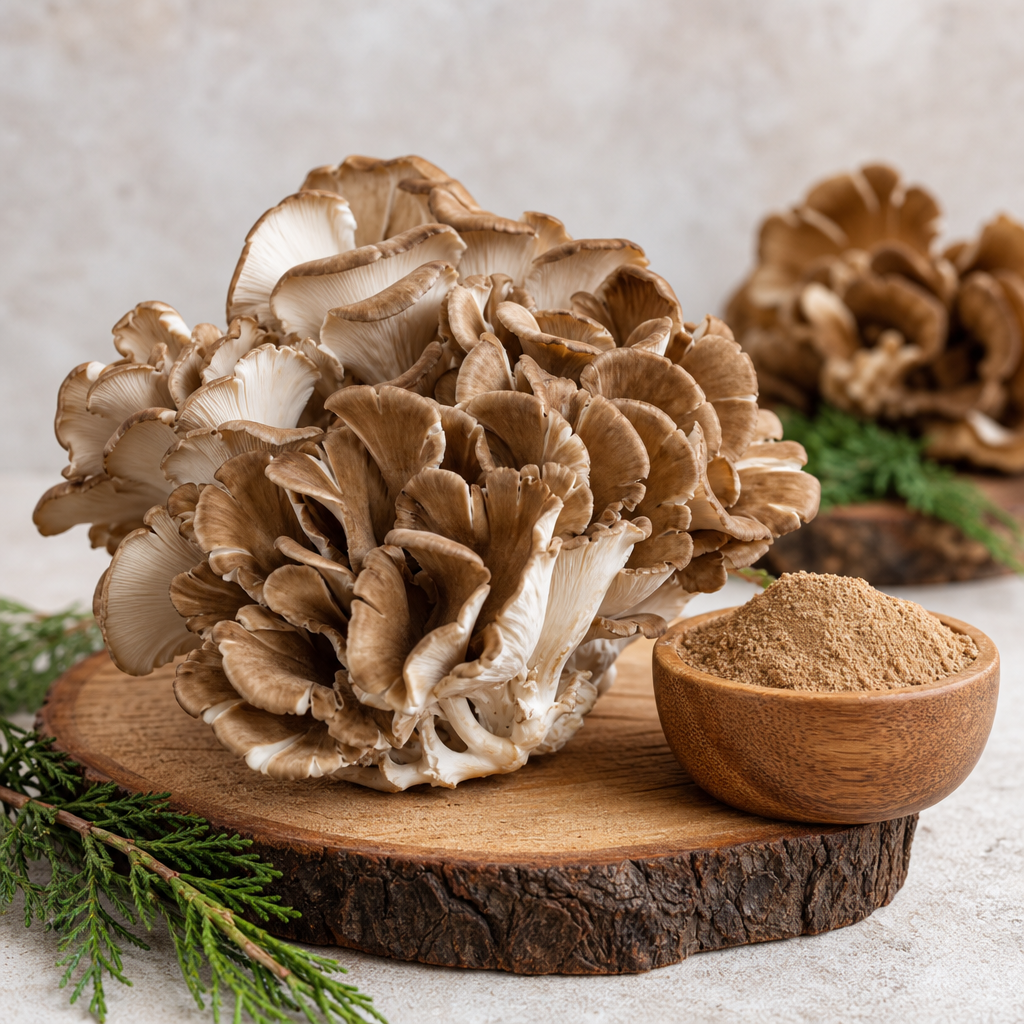
Maitake (Grifola frondosa), also known as “hen of the woods,” is an edible, wood-growing polypore mushroom native to East Asia and found in temperate forests worldwide, often at the base of oak trees. It has a ruffled, clustered appearance and a savory, umami flavor that makes it popular in cuisine. Beyond food use, maitake has a long history in traditional practices, where it has been valued for general vitality and resilience.
From a health perspective, maitake is best described as a mushroom-derived food and supplement ingredient. It is not an essential nutrient like a vitamin or mineral. Rather, it contains bioactive compounds—especially beta-glucan polysaccharides (e.g., “D-fraction,” “MD-fraction,” and other standardized extracts)—that may influence immune signaling, metabolic health markers, and oxidative stress. While these compounds can be incorporated into supplements, the body does not technically “require” maitake in the way it requires essential nutrients. People consume maitake as a whole food for culinary enjoyment and fiber, and some choose concentrated extracts to target specific wellness goals under professional guidance.
Benefits of Maitake
-
Immune support and natural killer (NK) cell activity
(Mixed evidence)
Maitake’s beta-glucans can interact with immune cell receptors and may help modulate innate defenses. Small human studies and preliminary clinical observations have reported increases in NK cell activity and favorable shifts in certain cytokines after consumption of maitake or its standardized extracts. However, findings are inconsistent across studies, and differences in dose, extract type, and participant health status make results variable. Overall, maitake appears to have immunomodulatory potential, but responses can differ widely between individuals.
-
Glycemic control and insulin sensitivity
(Moderate evidence)
Early clinical research suggests maitake may support healthy blood sugar regulation, particularly when used alongside diet and lifestyle strategies. Small trials and pilot studies have shown modest improvements in fasting glucose, post-meal glucose excursions, or insulin sensitivity with maitake preparations. Effects are not uniform and should not replace medical treatment for diabetes, but maitake (food or standardized extract) may be a complementary option for some adults aiming to support glycemic control, ideally with healthcare supervision—especially if using glucose-lowering medications.
-
Cholesterol and cardiometabolic markers
(Limited evidence)
Maitake’s soluble fibers and polysaccharides may help modestly lower total and LDL cholesterol in some individuals, likely by influencing bile acid metabolism and gut-derived pathways. Evidence in humans is limited, with small sample sizes and variability in the specific extract or preparation used. While dietary inclusion of maitake as part of a heart-healthy pattern is reasonable, supplement-based expectations for lipid changes should remain conservative.
-
Adjunct support during cancer care (quality of life and immune markers)
(Mixed evidence)
Standardized maitake extracts have been studied as adjuncts to conventional cancer care, with some reports of improved well-being, appetite, fatigue, or immune parameters. Results are mixed and not definitive for disease outcomes. Maitake should not be viewed as a treatment or cure, and any use during oncology care must be coordinated with the medical team to avoid interactions and ensure safety.
-
Inflammation and oxidative stress markers
(Preliminary evidence)
Laboratory and small human studies suggest maitake may help reduce certain inflammatory mediators and improve antioxidant capacity. These effects are biologically plausible given its beta-glucans and phenolic compounds, but high-quality human trials are still limited. At present, such benefits should be considered early-stage and supportive rather than conclusive.
-
Gut health and prebiotic-like effects
(Preliminary evidence)
The fibers and beta-glucans in maitake may act as fermentable substrates for beneficial gut microbes, potentially influencing short-chain fatty acid production and gut barrier function. Human data are emerging but remain preliminary. Culinary use of maitake as part of an overall fiber-rich diet is a practical way to explore these potential benefits.
Types or Forms Available
-
Fresh or dried culinary maitake (whole mushroom):
Used in cooking, soups, sautés, and broths. Provides fiber, beta-glucans, and a wide range of mushroom phytonutrients in their natural food matrix. Dried forms can be rehydrated and concentrated in flavor.
-
Powdered fruiting body:
Ground whole mushroom powder for adding to food, smoothies, or teas. Potency varies by source and processing; not standardized unless specified. Suitable for culinary convenience more than targeted dosing.
-
Standardized extracts (e.g., D-fraction, MD-fraction, SX-fraction):
Concentrated preparations, typically from hot-water or alcohol extractions, standardized to specific beta-glucan content or proprietary fractions. These are used when a more predictable and concentrated dose of polysaccharides is desired.
-
Capsules and tablets:
Contain dried powders or standardized extracts. Label transparency matters—look for beta-glucan standardization and clear identification of fruiting body vs. mycelium content.
-
Liquid extracts/tinctures:
Alcohol or glycerin-based preparations of fruiting body or mycelium. Offer flexible dosing but can vary widely in concentration; follow manufacturer instructions.
-
Mycelium-based products (fermented grain substrate):
Made from the mushroom’s root-like mycelium rather than the fruiting body. Composition differs; may contain more substrate material and different polysaccharide profiles. Choose reputable brands that quantify active components.
How to Use Maitake
Maitake can be enjoyed as a food or taken as a supplement, depending on your goals and preferences. Start low, observe how you feel, and adjust gradually within safe ranges. Always follow product-specific directions and consider professional guidance if you have medical conditions or take medications.
-
Common dosage range:
For culinary intake, 50–100 g cooked maitake a few times per week is a practical food-first approach. For non-standardized powders, 1–3 g per day is typical. For standardized extracts, many products provide 500–1,000 mg once or twice daily, often supplying a specified percentage of beta-glucans. For proprietary D-fraction–type liquids, serving sizes commonly range from about 1–3 mL one to three times daily as directed by the manufacturer. Avoid excessive intake and do not exceed label instructions.
-
Best timing:
Timing is flexible. Many people take maitake with meals to minimize gastrointestinal upset and to align with post-meal metabolic effects.
-
How to take it:
Capsules or tablets can be taken with water. Powders blend into smoothies, soups, or broths; avoid inhaling fine powders and drink adequate fluids. If using liquid extracts, measure carefully and follow the product’s guidance.
-
Consistency:
For targeted benefits (e.g., metabolic or immune support), consistent daily use for 6–12 weeks is often used in studies. Reassess periodically and consider breaks if not seeing benefit.
Food Sources and Supplement Options
Maitake is naturally found as a culinary mushroom and is also available as powders, capsules, and liquid extracts. Whole-food maitake offers fiber, micronutrients, and a broad array of mushroom compounds, while supplements provide a more concentrated and standardized way to obtain specific beta-glucans.
-
Fresh maitake mushrooms (sold as “hen of the woods” in markets)
-
Dried maitake for rehydration, teas, or stocks
-
Culinary powders for cooking, seasoning, or beverages
Supplements may make sense for people seeking predictable beta-glucan dosing or who cannot regularly access or digest larger culinary amounts. Whole foods, however, deliver additional nutrients and culinary enjoyment that supplements cannot fully replicate. A food-first approach is reasonable for most, with supplements considered when specific, measurable goals are being pursued with professional input.
Who May Benefit from Maitake?
-
People who enjoy cooking with mushrooms and want to increase fiber and beta-glucan intake through whole foods.
-
Adults working on metabolic wellness (e.g., healthy glucose or lipid support) alongside diet, exercise, and medical care.
-
Athletes or highly active individuals seeking gentle, food-based immune and recovery support during heavy training phases.
-
Older adults interested in diversifying dietary fiber and adding nutrient-dense, low-calorie foods.
-
Plant-forward eaters and vegetarians/vegans looking for umami-rich, nutrient-dense additions to meals.
-
Individuals exploring adjunct wellness strategies during or after periods of high stress, travel, or seasonal immune challenges, with clinician guidance as needed.
Side Effects and Considerations
-
Gastrointestinal effects:
Gas, bloating, or loose stools can occur, especially with higher intakes of fibers or concentrated extracts. Start low and take with food.
-
Allergies and sensitivities:
People with known mushroom allergies should avoid maitake. Discontinue use if you develop rash, itching, swelling, or breathing difficulty, and seek medical care.
-
Blood sugar and blood pressure:
Maitake may modestly lower glucose or blood pressure. If you take antidiabetic or antihypertensive medications, monitor closely and consult your clinician to prevent hypoglycemia or hypotension.
-
Bleeding risk and surgery:
Some mushrooms may have mild antiplatelet effects. If you use anticoagulants/antiplatelet drugs or have surgery scheduled, consult your healthcare professional and consider stopping maitake 1–2 weeks prior to procedures.
-
Immune conditions and immunosuppressants:
Because maitake modulates immune activity, people with autoimmune conditions, organ transplants, or those on immunosuppressive therapy should use caution and medical supervision.
-
Pregnancy, breastfeeding, and children:
Safety data are limited. Avoid supplemental doses unless a qualified healthcare professional advises otherwise. Culinary amounts are generally considered acceptable for most, barring allergies.
-
Liver or kidney concerns:
People with significant hepatic or renal disease should consult their clinician before using concentrated extracts.
-
Product quality and contamination:
Choose reputable brands with third-party testing for identity, purity (heavy metals, pesticides), and active beta-glucan content. Verify species (Grifola frondosa) and whether the product uses fruiting body, mycelium, or both.
-
Wild foraging caution:
Do not consume wild mushrooms unless expertly identified; misidentification can be dangerous.
-
Medication interactions:
In addition to glucose, blood pressure, and anticoagulant medications, discuss supplements with your pharmacist or clinician to screen for other potential interactions.
Common Myths About Maitake
-
Maitake cures cancer.
Evidence does not support this claim. Some studies explore maitake extracts as adjuncts to standard care and report changes in immune markers or quality of life, but they do not establish maitake as a treatment. Cancer management should always be directed by an oncology team.
-
All maitake products are the same.
They vary by species verification, plant part (fruiting body vs. mycelium), extraction method (hot water vs. alcohol), and beta-glucan standardization. These differences can meaningfully affect potency and effects.
-
“Natural” means risk-free.
Even food-derived supplements can interact with medications or cause side effects. Maitake may influence blood sugar, blood pressure, or bleeding risk, and some people are allergic to mushrooms.
-
You should feel results immediately.
Most potential benefits, such as metabolic or immune support, tend to be subtle and may require consistent use over weeks, along with supportive diet and lifestyle choices.
-
Oat beta-glucans and mushroom beta-glucans are identical.
Both are beta-glucans, but their structures differ (linkage patterns and branching), which may influence biological effects. Foods and mushrooms can be complementary rather than interchangeable.
Conclusion
Maitake is a flavorful culinary mushroom and a source of bioactive beta-glucans that may support immune balance and certain metabolic markers. It is not an essential nutrient, and evidence—while promising in some areas—ranges from preliminary to mixed. For most people, a food-first approach makes sense: enjoy maitake in meals to obtain fiber and a broad array of mushroom compounds. When more standardized dosing is desired, carefully selected extracts can be considered, ideally with guidance if you take medications or manage health conditions.
Choose quality products with species verification, clear labeling of fruiting body vs. mycelium, and third-party testing for purity and beta-glucan content. Those who are pregnant, breastfeeding, on prescription medications, or managing medical conditions should consult a healthcare professional before using maitake supplements. With sensible expectations and attention to safety, maitake can be a useful culinary addition and, for some, a thoughtful supplemental option.