What is MCT Oil?
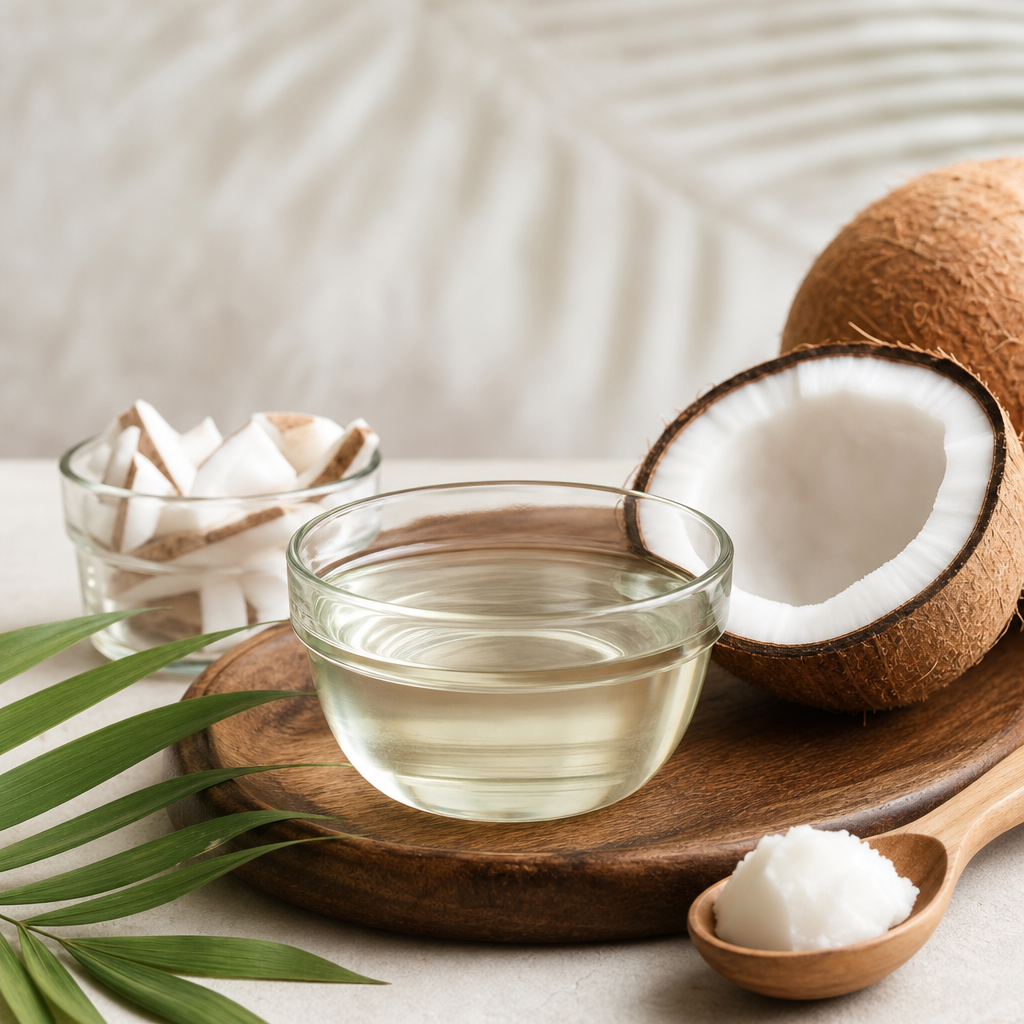
MCT oil is a concentrated source of medium-chain triglycerides—fat molecules made of medium-length fatty acids, most commonly caprylic acid (C8) and capric acid (C10). It is typically extracted from coconut oil or palm kernel oil and refined to enrich these specific fatty acids. Unlike long-chain fats, MCTs are absorbed rapidly from the gut and transported directly to the liver via the portal vein, where they are readily converted into energy or ketones.
MCT oil is best described as a food-derived ingredient and dietary supplement, not an essential nutrient. The body does not require MCT oil in the same way it requires vitamins, minerals, essential amino acids, or essential fatty acids. People use MCT oil to support quick energy needs, to facilitate nutritional ketosis, or as part of specialized medical nutrition plans. It can be added to foods and beverages or taken as a standalone supplement.
Benefits of MCT Oil
-
Rapid ketone production and quick energy
(Strong evidence)
MCTs—especially C8—are rapidly absorbed and preferentially oxidized in the liver, producing ketones that can be used by the brain and muscles as an alternative fuel. Multiple acute feeding studies show that C8 and C10 raise circulating ketone levels within 30–90 minutes, even in people eating mixed diets. This makes MCT oil a practical tool for individuals seeking mild nutritional ketosis without very low carbohydrate intake, or for those on ketogenic diets who want higher ketone levels from the same diet.
-
Weight management and appetite support
(Mixed evidence)
Several controlled trials report that replacing some long-chain fats with MCTs can modestly increase energy expenditure and fat oxidation and may reduce spontaneous calorie intake for some individuals. Small but significant differences in body weight or waist measurements have been observed over weeks to months compared with long-chain fats. However, effects are generally modest and not universal; other studies find minimal or no impact when diet quality and calorie intake are not managed. MCT oil is calorie-dense, so benefits depend on overall dietary pattern and energy balance.
-
Medical nutrition for fat-malabsorption
(Strong evidence)
Because MCTs require less bile and pancreatic lipase for digestion and are absorbed directly into the portal circulation, they are commonly used in clinical nutrition for conditions involving fat-malabsorption (e.g., pancreatic insufficiency, certain cholestatic liver diseases, chylomicron retention disease, short-bowel syndrome). In these settings, MCTs can help improve calorie intake and nutrient absorption when long-chain fats are poorly tolerated. Use should be individualized and guided by a healthcare professional or dietitian.
-
Adjunct to ketogenic diets (including epilepsy management)
(Moderate evidence)
MCT-containing ketogenic diets can achieve therapeutic levels of ketosis with slightly more dietary carbohydrate and protein compared with classic long-chain triglyceride ketogenic diets. Clinical practice and trials in pediatric and adult epilepsy support MCT-inclusive ketogenic protocols as effective for seizure reduction in many patients. Tolerance varies, and gastrointestinal side effects can occur, so professional supervision is advised.
-
Cognitive support in mild cognitive impairment
(Mixed evidence)
Several randomized trials using MCTs (often C8-rich emulsions) show increased blood ketones and improvements on certain cognitive tests, particularly in individuals without the APOE4 allele. Other studies report minimal or no benefit across broader populations. Overall, results suggest possible cognitive support for some individuals, but findings are not consistent and do not constitute a treatment for neurodegenerative disease.
-
Glycemic and lipid effects
(Limited evidence)
Small studies suggest MCTs may influence postprandial glucose and insulin responses and could modestly improve certain metabolic markers when substituted for long-chain fats. However, lipid responses are variable—LDL cholesterol and triglycerides may rise, fall, or remain unchanged depending on diet and individual factors. Larger, longer-term trials are needed to clarify these effects.
Types or Forms Available
-
C8 (caprylic acid) MCT oil:
Rapidly converted to ketones and often preferred for cognitive or ketosis-focused uses. Typically more expensive and often marketed as “C8-only” or “caprylic triglyceride.”
-
C10 (capric acid) MCT oil:
Slightly slower to convert to ketones than C8 but still faster than long-chain fats. Sometimes better tolerated by people who find C8 causes GI discomfort.
-
C8/C10 blends:
The most common consumer products. They balance cost, tolerability, and ketone production.
-
MCT powder:
Oil bound to a carrier (e.g., acacia fiber, tapioca-derived dextrins, or milk proteins) to form a powder. Easier to mix into beverages and may be gentler on digestion. Check labels for additives and allergens.
-
Emulsified MCT liquids:
Pre-emulsified products that blend more easily into coffee or smoothies and may reduce GI side effects for some users.
-
Softgels/capsules:
Convenient but deliver small amounts per serving; less practical for typical dosing unless portability is the priority.
-
Coconut oil vs. MCT oil:
Coconut oil naturally contains a mixture of fatty acids, including lauric acid (C12), which behaves more like a long-chain fat metabolically. Standard coconut oil has only a modest proportion of C8 and C10 compared with refined MCT oil; it is not interchangeable for rapid ketone production.
How to Use MCT Oil
Start low and go slow to minimize gastrointestinal discomfort. Add small amounts to foods or beverages and increase gradually as tolerated.
-
Common dosage range:
Begin with 5 mL (about 1 teaspoon) once daily. If well tolerated, increase to 10–15 mL per serving, up to a typical total of 15–30 mL per day, divided into 1–2 doses. Higher intakes are more likely to cause GI upset and are generally unnecessary for most goals.
-
Best timing:
For ketosis or quick energy, many people take MCT oil in the morning or before cognitively demanding tasks. Athletes sometimes use small doses 30–60 minutes pre-exercise to reduce GI load from solid foods. Timing is flexible—choose when it fits your routine and tolerance.
-
How to take it:
Mix into coffee, tea, smoothies, yogurt, or drizzle over cool or warm foods. MCT oil has a relatively low smoke point and a neutral flavor—avoid high-heat frying. Taking it with food or in a beverage can improve tolerance.
-
Consistency:
Daily use is optional. Some people use MCT oil regularly to support a ketogenic pattern; others use it situationally (e.g., before long work sessions or training). Effects on ketone levels are acute and short-lived, so consistent daily dosing is not required unless it suits your goals.
Food Sources and Supplement Options
MCTs occur naturally in some foods, though in smaller amounts than you’d get from supplements. MCT oil supplements provide a concentrated, standardized dose of specific medium-chain fats, usually C8 and C10.
-
Coconut oil:
Contains a mixture of fats with a modest proportion of C8 and C10 and a higher proportion of lauric acid (C12). Useful in cooking but not equivalent to MCT oil for rapid ketone production.
-
Palm kernel oil:
Similar fatty acid profile to coconut oil; used industrially for MCT extraction. Sustainability certifications (e.g., RSPO) are relevant.
-
Dairy fat:
Butter, cream, and some cheeses contain small amounts of true MCTs (C6–C10), but quantities are low relative to total fat.
Supplementation may make sense when you want predictable, higher amounts of C8 and/or C10 for ketosis support, clinical nutrition applications, or convenient calorie provision without large meals. Whole-food fats provide additional nutrients (fat-soluble vitamins, bioactive compounds, flavor, and satiety), whereas supplements deliver targeted dosing and faster metabolic effects.
Who May Benefit from MCT Oil?
-
Individuals following ketogenic or low-carbohydrate diets who want higher or more stable ketone levels.
-
People seeking modest appetite or weight-management support as part of a structured nutrition and activity plan.
-
Those with medically diagnosed fat-malabsorption who have been advised to use MCTs by a clinician or dietitian.
-
Athletes who prefer a small, easily digestible fat source before or during training to reduce GI load from whole-food fats.
-
Adults exploring cognitive support strategies, especially when guided by a healthcare professional and combined with broader lifestyle interventions.
-
People who struggle to meet energy needs due to poor appetite or early satiety and require compact, calorie-dense options.
Side Effects and Considerations
-
Gastrointestinal upset:
Nausea, cramping, loose stools, and reflux are common when starting or using large doses. Begin with small amounts and take with food or blended in beverages.
-
Calorie density:
MCT oil provides about 115–120 calories per tablespoon. Without adjusting overall intake, it can contribute to weight gain.
-
Lipid responses vary:
Some people experience increases in LDL cholesterol or triglycerides, while others see neutral or favorable changes. Consider periodic lipid monitoring if using MCT oil regularly.
-
Liver considerations:
MCTs are rapidly metabolized in the liver. Individuals with advanced hepatic disease should seek medical advice before use.
-
Diabetes and ketosis:
MCTs can raise ketone levels. People with diabetes—especially those using insulin or SGLT2 inhibitors—should monitor glucose and ketones and consult a clinician, particularly if following a very low-carbohydrate diet.
-
Allergies and additives:
MCT oil is often derived from coconut or palm; while coconut allergy is rare, it can occur. Powders may contain carriers such as milk proteins or corn/tapioca-derived fibers—check labels if you have allergies or follow specific diets.
-
Pregnancy, breastfeeding, and children:
Research is limited. Discuss with a healthcare professional before use.
-
Medication timing:
MCT oil itself has few documented drug interactions, but mixing it into meals may alter medication absorption for drugs that require fasting or consistent timing. Follow medication instructions.
-
Cooking and safety:
MCT oil has a relatively low smoke point and is best for finishing dishes, beverages, or gentle heating—not for high-heat frying.
-
Sustainability and quality:
If sourced from palm kernel oil, look for sustainability certifications. Choose products with clear C8/C10 content, minimal additives, and third-party testing when possible.
Common Myths About MCT Oil
-
MCT oil is the same as coconut oil.
While related, they are not interchangeable. Coconut oil contains a mix of fatty acids, including a high proportion of lauric acid (C12), which behaves more like a long-chain fat. Refined MCT oil concentrates C8 and/or C10 for faster absorption and ketone production.
-
MCT oil guarantees rapid weight loss.
MCTs may slightly increase energy expenditure and satiety, but they still contribute calories. Without an overall calorie deficit and supportive habits, meaningful weight loss is unlikely.
-
MCT oil cures Alzheimer’s disease.
Some studies show short-term cognitive benefits in select individuals, but results are inconsistent and do not represent a cure. MCT oil should not replace medical care or comprehensive lifestyle strategies.
-
You can use MCT oil for all high-heat cooking.
MCT oil has a modest smoke point and is better for finishing or low-heat applications. Use more heat-stable oils (e.g., high-oleic oils) for high-temperature cooking.
Conclusion
MCT oil is a refined, food-derived supplement that offers rapid energy and ketone production, with established roles in medical nutrition for fat-malabsorption and practical utility for ketogenic diets. It may provide modest support for appetite, body composition, or cognitive function in some individuals, though results vary and are not guaranteed. If you decide to use it, prioritize quality products with clear C8/C10 content, minimal additives, and responsible sourcing.
Start with small amounts, monitor tolerance, and consider periodic checks of lipids or metabolic markers if using regularly. People who are pregnant or breastfeeding, children, and anyone taking medications or managing a medical condition should consult a healthcare professional before use. Whole foods remain foundational for nutrition; MCT oil can complement, not replace, a balanced diet—use it when a targeted, fast-acting fat source aligns with your goals.