What is Mullein?
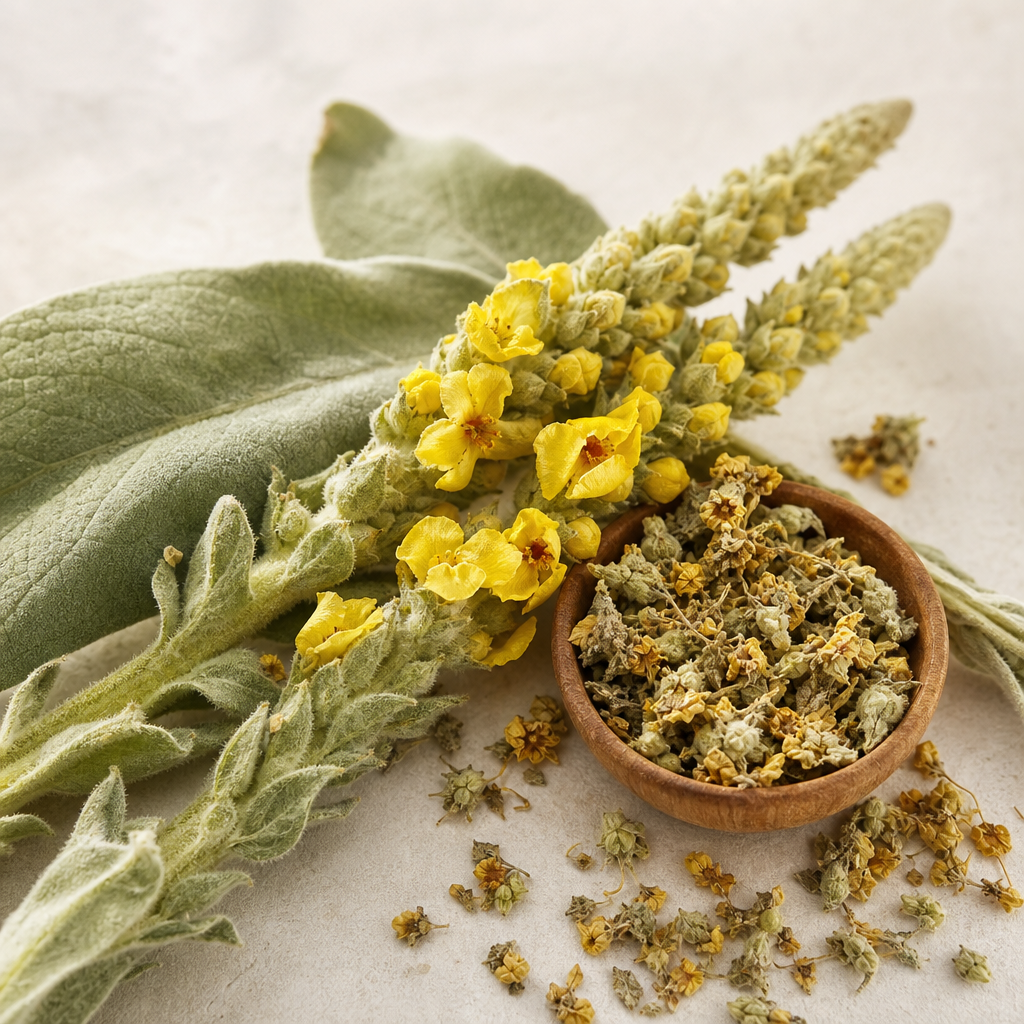
Mullein (Verbascum thapsus) is a flowering plant native to Europe, Asia, and North Africa that now grows widely in temperate regions, often along roadsides and open fields. Traditionally, the leaves and flowers have been used in herbal preparations for respiratory comfort, ear discomfort, and general soothing of irritated tissues. In modern wellness, mullein is most commonly consumed as a tea, tincture, capsule, or used topically as an infused oil (especially in combination ear-drop formulas).
Mullein is an herb and botanical supplement—not an essential nutrient. The body does not require mullein in the same way it needs vitamins, minerals, essential fatty acids, or essential amino acids. Rather, it contains naturally occurring plant constituents such as mucilage (gel-like polysaccharides), saponins, and polyphenols (including verbascoside/acteoside and flavonoids). These compounds are thought to contribute to mullein’s demulcent (soothing), mild expectorant, and anti-inflammatory properties observed in traditional use and preliminary scientific studies.
Benefits of Mullein
-
Ear pain relief in acute otitis media (in combination ear drops)
(Moderate evidence)
Mullein flower oil is often included with other herbs (such as garlic, calendula, St. John’s wort) in over-the-counter ear oil blends. Several small clinical trials have found that these combination herbal ear drops can reduce ear pain in children and adults with acute otitis media and may perform similarly to anesthetic ear drops for short-term comfort. This benefit is specific to combination products and does not mean mullein alone treats infection. Ear infections still require medical evaluation, and antibiotics may be necessary for bacterial cases.
-
Soothing cough and throat irritation
(Limited evidence)
Mullein’s mucilage may coat and soothe irritated mucous membranes. Traditionally, warm mullein tea has been used for dry, tickly coughs and scratchy throats. While clinical trials are limited, the demulcent action and anecdotal reports support short-term use for symptom relief, especially as part of a broader plan that includes rest, hydration, and other evidence-based measures (e.g., honey for adults and children over one year old).
-
Upper respiratory comfort (expectorant support)
(Limited evidence)
Mullein has a long history as a gentle expectorant, helping to thin and move mucus. Preliminary human evidence and traditional use suggest it may support comfort during self-limited colds or seasonal irritation. However, robust, high-quality trials are lacking. It should not replace medical care for persistent, severe, or worsening symptoms, wheezing, shortness of breath, or suspected infection.
-
Antimicrobial activity (laboratory findings)
(Preliminary evidence)
Extracts of mullein have shown inhibitory effects against certain bacteria and viruses in test-tube studies. These findings are promising but do not demonstrate clinical effectiveness in humans. In-vitro activity does not necessarily translate to real-world treatment outcomes. More well-designed clinical trials are needed.
-
Anti-inflammatory and antioxidant effects
(Preliminary evidence)
Mullein contains polyphenols (e.g., verbascoside) with antioxidant and anti-inflammatory properties observed in lab and animal studies. These mechanisms may partly explain its traditional use for irritated tissues. Human evidence remains sparse, so conclusions about disease-specific benefits are premature.
-
Topical soothing for minor skin irritation
(Limited evidence)
Traditional applications include poultices or infused oils for minor skin irritation. Modern evidence is small and preliminary. If used topically, test on a small area first to check for sensitivity and do not apply to open, deep, or infected wounds without medical guidance.
Types or Forms Available
-
Dried leaves (tea or capsules)
: Commonly used for teas aimed at cough and throat comfort. The leaves have tiny hairs that can irritate the mouth or throat if not filtered well; strain tea through a fine filter or cloth. Capsules provide a convenient alternative for those who dislike tea.
-
Dried flowers
: Used in teas and to make infused oils for topical or ear-drop preparations. Flowers are generally considered more delicate and are often featured in combination products.
-
Tinctures and liquid extracts
: Hydroalcoholic extracts allow flexible dosing and quick use. Labels may list ratios (e.g., 1:5) and alcohol percentages. Some products are standardized to certain phenolic compounds (like verbascoside), although standardization is not universal.
-
Herbal ear oil blends
: Typically an infused oil of mullein flowers combined with other botanicals (e.g., garlic) for short-term comfort in uncomplicated earaches. These are not the same as essential oils; they are fatty oil infusions and are gentler for ear use. Always follow safety guidance and consult a clinician for ear pain.
-
Topical infused oils or balms
: Used for minor skin irritation. Quality and concentration vary. Patch test before wider application.
-
“Herbal smoking” blends with mullein
: Marketed for the lungs, but inhaling smoke is not recommended. Combustion byproducts can irritate and harm the respiratory tract.
How to Use Mullein
Choose a form that matches your goal and preferences. For respiratory soothing, tea or tincture is common; for ear discomfort, combination ear oils are most frequently used. Follow product labels, as concentrations vary. The following ranges are typical in traditional and commercial practice for otherwise healthy adults:
-
Common dosage range:
Tea: 1–2 grams of dried leaf or flowers per cup, steeped 10–15 minutes, up to 2–3 times daily, strained through a fine filter. Tincture (e.g., 1:5, 40–50% alcohol): about 1–2 mL up to 3 times daily. Capsules: often 300–500 mg dried herb equivalent 1–3 times daily. Ear oil (combination products): commonly 3–5 drops in the affected ear up to 3 times daily; warm the bottle to body temperature before use and consult a clinician, especially for children.
-
Best timing:
Timing is flexible. For throat or cough comfort, evening or bedtime use may be helpful. Split doses across the day for steady support if needed during acute symptoms.
-
How to take it:
Tea and tinctures can be taken with or without food; taking with a small snack may reduce any stomach upset. Always strain tea well to remove fine hairs. For ear oil, lie on your side for a few minutes after applying drops to allow contact.
-
Consistency:
Mullein is typically used short-term during periods of irritation or discomfort. It does not require long-term daily use for most people. If symptoms persist beyond a few days, worsen, or are accompanied by fever, wheezing, chest pain, or ear drainage, seek medical care.
Food Sources and Supplement Options
Mullein is not a dietary food and is not a significant component of the human diet. It is a botanical herb obtained from the mullein plant (Verbascum thapsus), particularly its leaves and flowers. As such, there are no conventional “food sources” to list. Most people who use mullein do so via teas, tinctures, capsules, or topical/ear oil preparations.
Supplementation or herbal preparations may make sense if you want a targeted approach to short-term throat or ear comfort, or if you prefer a standardized product. Whole-food strategies, such as warm fluids, adequate hydration, and, for adults and children over one year old, honey, also provide symptom relief and contribute additional nutrients. Supplements offer convenience and consistent dosing, while whole foods and supportive lifestyle measures provide broader nutritional and wellness benefits.
Who May Benefit from Mullein?
-
Adults seeking short-term soothing for a dry, tickly cough or irritated throat during colds or seasonal changes.
-
People looking for a gentle, traditional herb to support upper respiratory comfort alongside hydration, rest, and other self-care practices.
-
Individuals considering an adjunctive, over-the-counter option for ear discomfort (in the form of combination herbal ear oils), with guidance from a clinician—especially for children.
-
Those who prefer tea-based or non-drowsy options for mild symptom relief.
-
People who cannot tolerate some over-the-counter cough syrups and are exploring mild herbal alternatives with a favorable safety profile.
Side Effects and Considerations
-
Allergies and sensitivities:
Rarely, mullein may cause skin irritation or allergic reactions, particularly in those sensitive to plants in the Scrophulariaceae family. Patch test topicals and discontinue if rash or irritation occurs.
-
Throat and skin irritation from fine hairs:
The leaves have tiny hairs that can irritate the mouth, throat, or skin. Always strain tea through a fine filter or cloth. Handle dried herb gently to avoid airborne particles.
-
Gastrointestinal upset:
Mild stomach upset, nausea, or diarrhea can occur. Taking with a small snack and avoiding large doses can help minimize discomfort.
-
Ear oil precautions:
Do not use ear drops if there is a suspected or known eardrum perforation, ear tubes, drainage, severe pain, high fever, or if symptoms persist beyond 24–48 hours without improvement. Children with ear pain should be evaluated by a clinician. Use only infused oils intended for ears; do not place essential oils into the ear canal.
-
Medication interactions:
No well-documented drug interactions are established, but data are limited. Theoretical interactions (e.g., with diuretics or sedatives) are possible. If you take prescription medications, consult a healthcare professional before use.
-
Pregnancy and breastfeeding:
Safety data are limited. Pregnant or breastfeeding individuals should consult a qualified healthcare professional before using mullein in any form.
-
Liver or kidney concerns and chronic conditions:
There is limited long-term safety data. People with chronic medical conditions or organ disease should seek medical advice before use.
-
Quality and contamination:
Choose reputable brands that identify the correct species (Verbascum thapsus), plant part, and extraction method. Herbal oils should be prepared and stored properly to reduce contamination risk.
-
Smoking mullein:
Inhaling smoke (even from herbs) exposes the lungs to combustion byproducts and is not recommended. Avoid smoking mullein for “lung cleansing.”
-
Surgery and procedures:
While no specific effects on bleeding are known, inform your healthcare team about all supplements and herbs prior to procedures.
Common Myths About Mullein
-
Mullein can cure pneumonia or bronchitis.
There is no evidence that mullein cures infections or serious respiratory diseases. It may help soothe irritation, but medical evaluation and appropriate treatment are essential for suspected infections, persistent cough, fever, or breathing difficulties.
-
Smoking mullein cleanses the lungs.
Inhaling smoke—regardless of the plant—introduces irritants and harmful byproducts into the airways. This practice is not a safe or evidence-based method for respiratory health.
-
Mullein replaces antibiotics for ear infections.
Herbal ear oils that include mullein may reduce pain in uncomplicated cases, but they do not eradicate bacterial infections. A clinician should evaluate ear pain, and antibiotics may be necessary in certain situations.
-
Because it’s natural, mullein is safe for everyone.
“Natural” does not guarantee safety. Allergies, sensitivities, inappropriate ear use, and interactions are possible. People who are pregnant, breastfeeding, taking medications, or managing medical conditions should consult a healthcare professional.
Conclusion
Mullein is a traditional herb used primarily for short-term soothing of throat irritation, mild cough, and ear discomfort (particularly in combination ear oil formulas). Early evidence supports some applications—especially ear pain relief in combination products—while broader claims remain preliminary or based on tradition. For uncomplicated symptoms, mullein can be part of a practical self-care plan that includes rest, fluids, and other supportive measures.
Use high-quality products, follow label directions, and be cautious with ear applications. Do not rely on mullein to treat infections or serious respiratory issues. Individuals who are pregnant, breastfeeding, taking medications, or living with medical conditions should consult a healthcare professional before use. Since mullein is not a dietary essential, a food-first strategy for general health remains best, with mullein supplements reserved for targeted, short-term symptom support when appropriate.