What is NAD+?
Nicotinamide adenine dinucleotide (NAD+) is a coenzyme found in every living cell. It cycles between oxidized (NAD+) and reduced (NADH) forms to shuttle electrons in energy-producing reactions, making it fundamental to cellular respiration and ATP production. Beyond energy metabolism, NAD+ serves as a substrate for enzymes such as sirtuins and PARPs that help regulate DNA repair, gene expression, stress responses, and circadian rhythms.
NAD+ itself is not a vitamin, mineral, herb, or food; it is an endogenous compound your body makes primarily from niacin (vitamin B3) and related precursors via “salvage” and de novo pathways. Because the body synthesizes NAD+ from dietary precursors, it is not considered an essential nutrient in the way vitamins and minerals are. Interest in NAD+ has grown because cellular NAD+ levels tend to decline with age and certain stressors, prompting research into whether restoring NAD+ via lifestyle or supplementation with precursors can support metabolic and cellular health.
Benefits of NAD+
-
Supports cellular energy metabolism
(Moderate evidence)
NAD+ is central to glycolysis, the tricarboxylic acid cycle, and mitochondrial oxidative phosphorylation. Human trials using precursors such as nicotinamide riboside (NR) or nicotinamide mononucleotide (NMN) consistently show increases in blood and/or tissue NAD+ levels. Several studies in older adults report improvements in markers of mitochondrial function and oxidative capacity, although effects on concrete outcomes like strength or VO2max are variable. Overall, evidence supports a role in supporting cellular energy processes, while performance gains remain less consistent.
-
Healthy aging and cellular stress responses
(Limited to mixed evidence)
By fueling sirtuins and PARPs, NAD+ is involved in DNA repair, chromatin remodeling, and stress resistance. Animal and cell studies suggest that higher NAD+ can improve resilience to metabolic and oxidative stress and may influence longevity pathways. Early human data show biomarker changes (e.g., increased NAD+ pools, some inflammatory markers shifting), but clear, clinically meaningful aging outcomes in humans are not well established. Results vary by dose, duration, and baseline health status.
-
Metabolic health (insulin sensitivity, lipid profile)
(Mixed evidence)
Some randomized controlled trials in individuals with metabolic risk factors have observed modest improvements in insulin sensitivity or liver fat with NAD+ precursors, while others show no significant changes. Niacin (a precursor) can improve lipids at pharmacologic doses but may worsen insulin sensitivity in some contexts and requires medical supervision. Overall, results differ across populations and study designs, indicating potential but not uniform metabolic benefits.
-
Exercise recovery and muscle function
(Limited evidence)
Because NAD+ underpins mitochondrial function, researchers have explored whether precursors enhance exercise recovery or muscle performance. Small human studies report improvements in some fatigue and mitochondrial markers, but changes in real-world performance are inconsistent. Evidence is promising but limited, and benefits may depend on training status, age, and dosing strategies.
-
Neuroprotection and cognitive support
(Preliminary evidence)
Preclinical work suggests that boosting NAD+ can support neuronal resilience, axonal integrity, and DNA repair pathways relevant to brain health. Human data are early and largely limited to biomarker shifts or small pilot trials without robust cognitive endpoints. More rigorous, longer-term studies are needed before drawing conclusions.
-
Skin health and barrier support
(Limited evidence)
Topical and oral NAD+ precursors may influence skin cell energy metabolism and repair enzymes. Early human and in vitro data show improvements in some skin aging biomarkers and barrier-related outcomes, but clinical evidence for visible anti-aging effects is limited.
Types or Forms Available
-
Nicotinamide riboside (NR)
An oral NAD+ precursor with human trials showing reliable increases in NAD+ levels. Typically well tolerated. Available as standard capsules or “liposomal” versions (the latter aims to enhance absorption; independent evidence for superiority is limited).
-
Nicotinamide mononucleotide (NMN)
Another direct precursor that raises NAD+ in animals and in human studies. Regulatory status varies by country. Some products use capsules or sublingual powders. Claims of superior sublingual absorption exist, but robust head-to-head human data are limited.
-
Niacin (nicotinic acid) and nicotinamide (niacinamide)
Essential vitamin B3 forms that the body can convert into NAD+. Niacin at higher doses can cause flushing and, when used pharmacologically, requires medical oversight. Nicotinamide does not cause flushing but in high doses may affect liver enzymes. These forms are the most traditional and widely available.
-
Direct NAD+ supplements
Oral NAD+ is marketed, but its stability and absorption are less certain compared with precursors. Current evidence more robustly supports NR and NMN for raising NAD+ in humans than direct oral NAD+.
-
Intravenous (IV) or injection NAD+
Offered in some clinics for rapid increases in circulating NAD+. While IV delivery bypasses the gut, high-quality clinical outcome data are limited, costs are high, and risks (e.g., infusion reactions) exist. This approach should be considered medical therapy and discussed with a qualified clinician.
-
Combination formulas
Some products pair NAD+ precursors with compounds such as resveratrol, quercetin, or pterostilbene, aiming to influence sirtuins or NAD+ turnover. Evidence for additive benefits in humans is not yet conclusive.
How to Use NAD+
There is no single “best” regimen for everyone. Dosing depends on the specific form, your health goals, and your medical history. Always review new supplements with a healthcare professional, especially if you are pregnant, breastfeeding, taking medications, or managing a medical condition.
-
Common dosage range:
Human studies commonly use NR at 300–1000 mg per day and NMN at 250–600 mg per day. Nicotinamide in multivitamin-level doses (e.g., 10–30 mg) supports daily B3 needs; higher doses should be clinician-guided. Pharmacologic niacin for lipids is a prescription-level therapy and not a self-supplement strategy.
-
Best timing:
Timing is flexible. Many people take NAD+ precursors in the morning to align with circadian energy demands. Splitting the dose (morning/evening) can improve tolerance for some individuals.
-
How to take it:
Swallow capsules with water. Taking NR, NMN, or nicotinamide with food may reduce gastrointestinal upset; niacin is often taken with food to lessen flushing. For sublingual powders, follow product-specific instructions.
-
Consistency:
Most benefits studied involve daily use over weeks to months. Effects appear to depend on maintaining higher NAD+ pools, so consistent intake and supportive lifestyle habits (sleep, exercise, balanced diet) matter.
Food Sources and Supplement Options
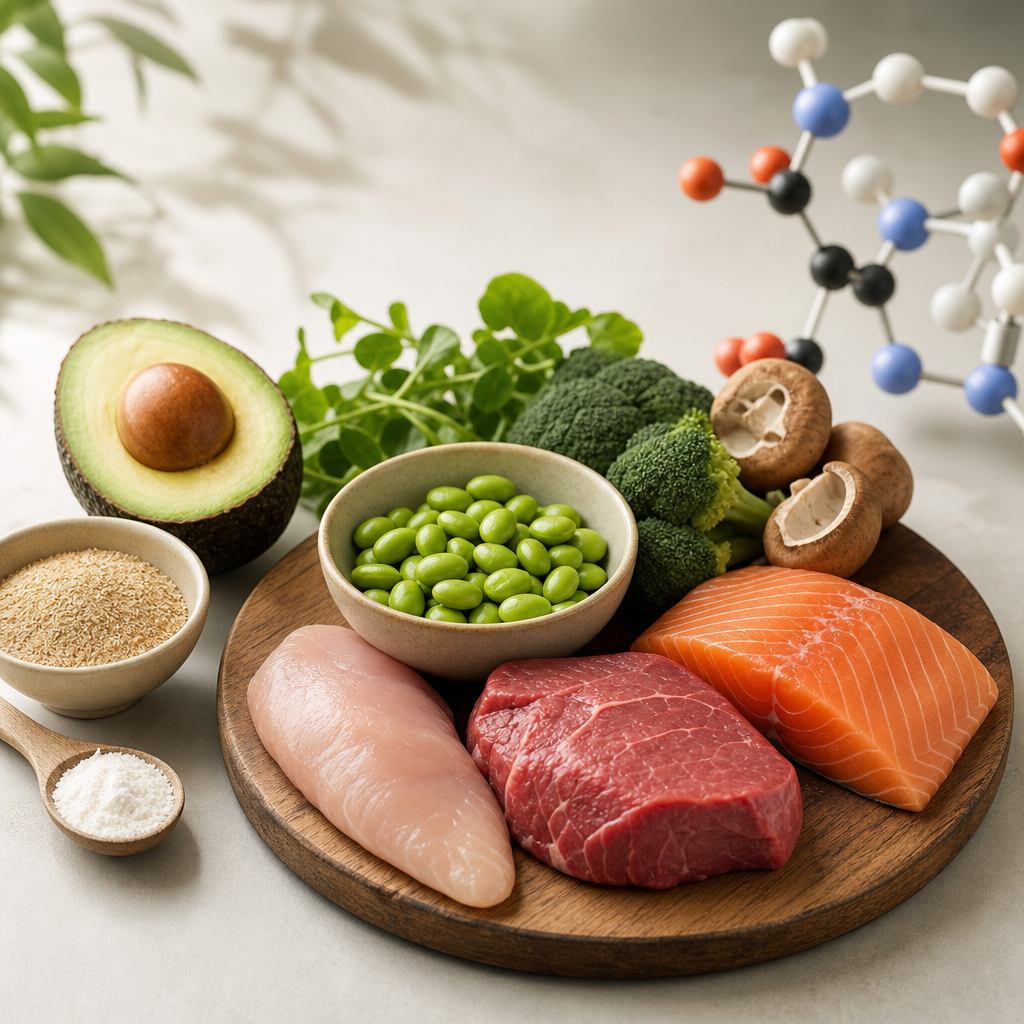
NAD+ itself is not significantly obtained from food, but your body makes NAD+ from dietary precursors, mainly niacin (vitamin B3) and the amino acid tryptophan. Small amounts of NAD+-related compounds, including NR, occur naturally in foods such as milk and yeast, but typical dietary intakes are modest compared with supplement doses used in research.
-
Foods rich in niacin (B3):
Poultry (chicken, turkey), fish (tuna, salmon), beef, pork, peanuts, mushrooms, and fortified grains/cereals.
-
Foods providing tryptophan:
Turkey, chicken, eggs, dairy, soy, legumes, nuts, and seeds.
-
Foods containing trace NAD+ precursors:
Milk (small amounts of NR), nutritional yeast, and some whole grains.
Supplements are commonly used when targeted dosing is desired beyond what food provides, especially for research purposes or specific wellness goals. Whole foods remain foundational because they deliver broader nutrient patterns (protein, fiber, micronutrients, phytochemicals) that support overall metabolism. Supplements can be considered for short- or medium-term trials of effect, ideally alongside a nutrient-dense diet, adequate sleep, regular activity, and stress management.
Who May Benefit from NAD+?
-
Adults interested in supporting cellular energy and metabolic health alongside lifestyle changes.
-
Older adults, as NAD+ levels may decline with age; some may pursue precursors to support mitochondrial function.
-
Individuals with high training loads seeking potential support for recovery and mitochondrial efficiency, acknowledging that performance outcomes are not guaranteed.
-
People with metabolic risk factors under medical care who are exploring adjunctive strategies; expectations should be modest and coordinated with a clinician.
-
Individuals with low dietary niacin intake who prefer to meet needs through food first or a standard multivitamin before considering specialty NAD+ boosters.
Side Effects and Considerations
-
General tolerance:
NR and NMN are typically well tolerated; possible side effects include mild nausea, headache, flushing, or gastrointestinal upset.
-
Liver considerations:
High-dose nicotinamide or sustained-release niacin can elevate liver enzymes or, rarely, cause liver injury. People with liver disease should avoid high doses unless supervised.
-
Glucose and insulin:
Pharmacologic niacin can worsen insulin resistance or raise blood glucose in some individuals. Monitor if you have prediabetes or diabetes and consult your clinician.
-
Uric acid and gout:
Niacin may increase uric acid; use caution if you have a history of gout.
-
Methylation and homocysteine:
Some studies report increased homocysteine with NR. Ensure adequate folate, vitamin B12, and vitamin B6 intake; consider monitoring if using higher doses.
-
Medication interactions:
High-dose niacin used with statins can raise the risk of muscle-related side effects. Discuss all supplements if you take lipid-lowering agents, diabetes medications, anticoagulants, or blood pressure drugs.
-
Cancer and oncologic therapies:
Because NAD+ fuels DNA repair pathways, those with active cancers or undergoing treatments that target DNA repair (e.g., PARP inhibitors) should only use NAD+ precursors under oncology guidance.
-
IV NAD+ risks:
Infusions may cause chest tightness, nausea, flushing, or blood pressure changes and should only be administered in appropriate medical settings.
-
Pregnancy, breastfeeding, and children:
Safety data for high-dose NR/NMN during pregnancy, lactation, or in children are limited. Stick to dietary intake or a prenatal/pediatric multivitamin unless your clinician advises otherwise.
-
Kidney concerns:
People with significant kidney impairment should be cautious with high-dose supplements due to altered metabolite clearance.
-
Quality and labeling:
Choose third-party tested products to reduce the risk of mislabeling or adulteration. Be aware that NMN’s regulatory status varies by country; purchase from reputable sources.
Common Myths About NAD+
-
Myth: “NAD+ supplements reverse aging.”
Reality: NAD+ supports cellular processes linked to aging biology, but no supplement has been shown to reverse human aging. Human trials show increases in NAD+ and changes in some biomarkers, not proven extensions of lifespan or consistent rejuvenation of function.
-
Myth: “IV NAD+ is always superior to oral forms.”
Reality: IV delivery raises circulating NAD+ quickly, but superiority for meaningful clinical outcomes over well-chosen oral precursors is unproven. IV therapy carries higher costs and procedure-related risks and should be considered a medical intervention, not a default option.
-
Myth: “More is always better.”
Reality: Raising NAD+ beyond a certain point does not guarantee added benefits and may increase side effect risks (e.g., flushing, liver enzyme elevations, homocysteine changes). Thoughtful dosing and medical guidance matter more than maximal dosing.
-
Myth: “Fatigue means you need NAD+.”
Reality: Fatigue has many causes (sleep debt, stress, iron deficiency, thyroid issues, illness). NAD+ precursors may support energy metabolism, but they are not a universal fix for low energy. Proper evaluation is important.
Conclusion
NAD+ is a fundamental cellular coenzyme that supports energy production, DNA repair, and stress responses. While human studies show that oral precursors like NR and NMN can raise NAD+ levels and influence certain biomarkers, evidence for broad, clinically significant benefits remains mixed and context-dependent. For most people, a food-first approach that ensures adequate vitamin B3 and overall nutrient sufficiency, paired with sleep, exercise, and stress management, is a strong foundation. Supplements can provide targeted dosing when specific goals or research-guided trials are desired.
Choose reputable, third-party tested products and avoid megadoses. Individuals who are pregnant, breastfeeding, taking medications, or managing medical conditions—especially liver disease, diabetes, gout, cancer, or kidney impairment—should consult a healthcare professional before use. When used thoughtfully and alongside healthy lifestyle habits, NAD+ precursors may be a useful adjunct for select individuals, but they are not a cure-all and should be matched to realistic goals and personalized medical guidance.