What is Noni?
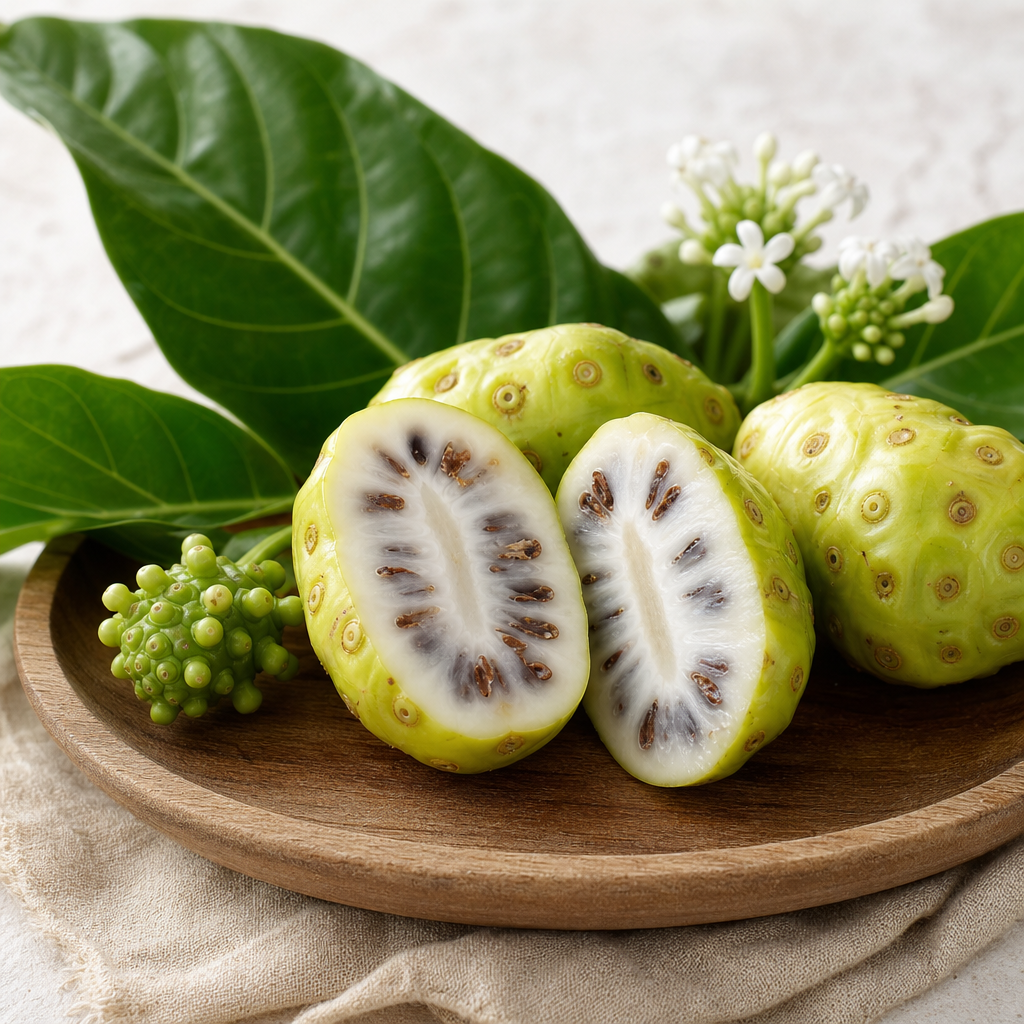
Noni (Morinda citrifolia) is a small evergreen tree native to Polynesia, Southeast Asia, and parts of the Indian Ocean. Its fruit, leaves, and roots have been used for centuries in traditional Polynesian and Southeast Asian practices as food and folk remedies. The fruit is notable for its strong, pungent aroma when ripe, and it is commonly processed into juices, purees, teas, and topical preparations.
From a nutrition and wellness perspective, noni is best described as a botanical or food-derived ingredient often used as a dietary supplement. It contains a variety of naturally occurring compounds, including iridoids (such as deacetylasperulosidic acid), phenolic compounds, vitamin C, and small amounts of minerals like potassium. Noni is not an essential nutrient; the body does not require it in the way it requires vitamins, minerals, essential fatty acids, or essential amino acids. Instead, it is considered a plant-based functional food or supplement that may provide supportive effects for general wellness in certain contexts.
Research on noni’s effects in humans is growing but still limited compared with more established nutrients. Most studies are small, short-term, or use specific preparations of noni juice or extracts, which makes it hard to generalize findings to all products. As with many botanicals, quality and standardization matter, and results can vary by formulation.
Benefits of Noni
-
Antioxidant and anti-inflammatory support
(Limited evidence)
Early clinical research suggests that noni juice and standardized extracts may reduce oxidative stress markers and modestly lower inflammatory mediators in certain groups (such as smokers). Noni’s iridoids and phenolics likely contribute to these effects. However, studies are generally small and often funded by manufacturers, and not all preparations show the same outcomes.
-
Exercise recovery and anti-fatigue
(Preliminary evidence)
A few small trials and pilot studies indicate that noni juice consumption may help reduce perceived fatigue, improve tolerance to exercise, or modestly attenuate exercise-induced oxidative stress. While intriguing for recreational athletes, the overall body of evidence is preliminary, with limited sample sizes and varying dosages and formulations.
-
Metabolic markers (lipids and glycemia)
(Mixed evidence)
Some small human studies report modest reductions in triglycerides, C-reactive protein, or improvements in lipid profiles among specific groups (e.g., smokers). Data on blood glucose and insulin sensitivity are less consistent and often confounded by the natural sugar content in many noni juices. Standardized low-sugar extracts or capsules may be preferable for those watching carbohydrate intake.
-
Joint comfort and pain relief
(Limited evidence)
Traditional use includes managing discomfort, and limited human data suggest noni juice might reduce self-reported pain or stiffness in conditions like osteoarthritis. Effects, when present, tend to be modest, and high-quality, longer-term trials are needed to clarify the magnitude and consistency of benefit.
-
Immune modulation
(Preliminary evidence)
In vitro and animal studies suggest that noni constituents may influence immune signaling and macrophage activity. Limited human data point to potential changes in certain immune markers with noni juice use. The clinical relevance for infection risk or immune resilience remains uncertain, and more rigorous trials are needed.
-
Antimicrobial and skin support (topical)
(Limited evidence)
Noni leaf and fruit preparations have demonstrated antimicrobial activity in laboratory studies, and topical folk uses include poultices for minor skin irritations. Clinical evidence in humans is scarce and typically uncontrolled, so topical noni should be viewed as complementary rather than a primary therapy for skin or wound concerns.
Types or Forms Available
-
Juice and puree (pasteurized or fermented)
: The most common commercial form. Products vary widely in fruit concentration, sugar content, and presence of other fruit juices. Traditional fermented noni can be more pungent and may contain different metabolite profiles compared with pasteurized, blended juices.
-
Capsules and powders (dried fruit or leaf)
: Provide noni without added sugars. These can be whole-fruit powders, leaf powders, or extracts. Potency varies, and the absence of a universal standardization makes label transparency important.
-
Standardized extracts (iridoid-focused)
: Some products are standardized to iridoids (e.g., deacetylasperulosidic acid). Standardization improves batch-to-batch consistency and may align more closely with research that targets specific compounds.
-
Teas and infusions (leaf-based)
: Typically milder in taste and potency than juices or extracts. Useful for those preferring a beverage with fewer calories and sugars.
-
Topical preparations (creams, gels, oils)
: Used for minor skin care routines or as complementary approaches for local discomfort. Evidence is limited; quality and formulation vary.
How to Use Noni
Because noni is not an essential nutrient, dosing is based on traditional use and available research rather than a required daily intake. Product quality and formulation differences mean label guidance and standardization are important considerations.
-
Common dosage range:
In clinical studies, noni juice is often used at 30–90 mL per day (about 1–3 fl oz), occasionally up to 180 mL. Standardized extracts may be dosed to deliver a specified iridoid amount (for example, roughly 30–60 mg total iridoids daily, if stated on the label). For capsules, typical amounts range from 500–1,500 mg of dried fruit powder per day, depending on concentration. Start at the lower end to assess tolerance.
-
Best timing:
Timing is flexible. Some people take noni in the morning or split the dose with meals. If the juice causes stomach upset, try taking it with food. Athletes experimenting with noni for recovery may take it around training, though evidence does not dictate a specific window.
-
How to take it:
Juice or puree can be consumed straight or diluted with water. Capsules and powders should be taken with water. Teas can be consumed hot or iced. If monitoring carbohydrate or calorie intake, consider capsules, teas, or low-sugar extracts instead of sweetened juices.
-
Consistency:
For potential benefits, consistent use over several weeks is typical in studies. Occasional use as a food or beverage is fine, but measurable effects on markers like lipids or oxidative stress (if any) are more likely with steady intake and a comprehensive lifestyle approach.
Food Sources and Supplement Options
Noni is a botanical derived from the Morinda citrifolia tree. In traditional regions (e.g., Polynesia, parts of Southeast Asia), the fruit and leaves are consumed as foods in various preparations. In many other markets, noni is most commonly available as a commercial juice, puree, tea, capsule, or standardized extract. Whole fruit may be available in specialty or tropical markets but is less common elsewhere.
-
Natural source:
Noni fruit (ripe and unripe) and leaves from Morinda citrifolia.
-
Traditional preparations:
Fermented or aged noni juice, cooked greens from noni leaves, and topical poultices.
Supplements can make sense when you prefer a low-sugar option (versus juice), want standardized iridoid content, or cannot access the fresh fruit. Whole-food preparations may provide additional phytonutrients and a culinary experience, while supplements offer more predictable dosing and, potentially, fewer sugars or calories. As with any botanical, product quality, sourcing, and third-party testing can help ensure safety and potency.
Who May Benefit from Noni?
-
Adults interested in traditional Polynesian or Southeast Asian botanicals for general wellness, with realistic expectations.
-
Recreational athletes curious about potential support for post-exercise recovery or perceived fatigue, alongside established recovery strategies.
-
Individuals seeking additional antioxidant support, particularly those who prefer plant-based supplements.
-
People exploring complementary options for mild joint discomfort, while continuing evidence-based care.
-
Those who want a lower-sugar alternative to noni juice (e.g., capsules or standardized extracts) due to calorie or carbohydrate goals.
-
Individuals who cannot regularly access fresh noni but are interested in trying standardized, quality-controlled products.
Side Effects and Considerations
-
Liver safety:
Rare case reports have linked noni juice to liver injury. Causality is not definitive, but people with existing liver disease should avoid noni unless cleared by a clinician. Stop use and seek medical care if you develop symptoms such as jaundice, dark urine, severe fatigue, or abdominal pain.
-
Potassium content and kidney concerns:
Noni can be relatively high in potassium. Individuals with chronic kidney disease or those taking medications that raise potassium (e.g., ACE inhibitors, ARBs, potassium-sparing diuretics) should use caution and consult a healthcare professional.
-
Warfarin and vitamin K:
Some noni products contain vitamin K, which may reduce the effectiveness of warfarin. If you take anticoagulants, avoid noni or involve your prescriber for INR monitoring and guidance.
-
Blood sugar and calories:
Many noni juices contain natural and added sugars. People with diabetes or those following carbohydrate-restricted diets should consider low-sugar formulations, capsules, or teas, and monitor blood glucose as advised by their healthcare team.
-
Gastrointestinal effects:
Nausea, stomach upset, or diarrhea can occur, particularly with larger amounts or fermented juice. Taking smaller doses with food may help.
-
Allergies and sensitivities:
Individuals allergic to Morinda species or sensitive to botanicals should avoid noni. Discontinue use if you experience rash, itching, or breathing difficulties and seek medical attention.
-
Pregnancy and breastfeeding:
Safety data are limited. Out of caution, pregnant or breastfeeding individuals should avoid noni unless specifically recommended by a qualified healthcare professional.
-
Children and adolescents:
There is insufficient evidence to support routine use in minors. Discuss with a pediatric healthcare professional before considering noni for children.
-
Surgery and medical procedures:
Because of potential interactions (e.g., vitamin K content or effects on blood pressure/lipids), stop noni at least 2 weeks before surgery unless your surgical team advises otherwise.
-
Quality and contamination:
Choose reputable brands with third-party testing. Formulations vary widely in iridoid content, added sugars, or adjunct fruits, which can affect both efficacy and tolerability.
Common Myths About Noni
-
Noni cures cancer and serious diseases.
While laboratory studies explore anticancer mechanisms, there is no robust clinical evidence that noni cures cancer or replaces standard medical care. Patients should not discontinue prescribed treatments in favor of noni.
-
If it’s natural, it has no side effects.
Natural products can still cause adverse effects or interact with medications. Noni has been linked, albeit rarely, to liver injury and can affect potassium balance and anticoagulation in susceptible individuals.
-
All noni juices are the same.
Products differ in fruit concentration, fermentation, added sugars, and standardization. These factors can change both taste and potential physiological effects, so results cannot be generalized across all brands.
-
Noni “detoxes” the liver.
There is no high-quality evidence that noni detoxifies the liver. In fact, rare cases of liver injury have been reported. Liver health is better supported by evidence-based habits like balanced nutrition, moderate alcohol intake, and medical guidance when needed.
Conclusion
Noni is a traditional botanical from Morinda citrifolia that is available today as juices, capsules, teas, and standardized extracts. Emerging research suggests potential support for antioxidant capacity, exercise recovery, metabolic markers, and joint comfort, but the evidence base remains limited or mixed and varies by product type and dose. If you choose to try noni, look for quality-controlled, standardized options, especially if you want predictable dosing with fewer sugars than juice.
People with liver or kidney disease, those taking warfarin or potassium-influencing medications, pregnant or breastfeeding individuals, children, and anyone managing a medical condition or taking prescription drugs should consult a healthcare professional before use. For most people, a food-first approach with a varied, plant-rich diet is a sound foundation, while noni supplements can be considered as a cautious, complementary option aligned with personal goals and under professional guidance.