What is Turkey Tail?
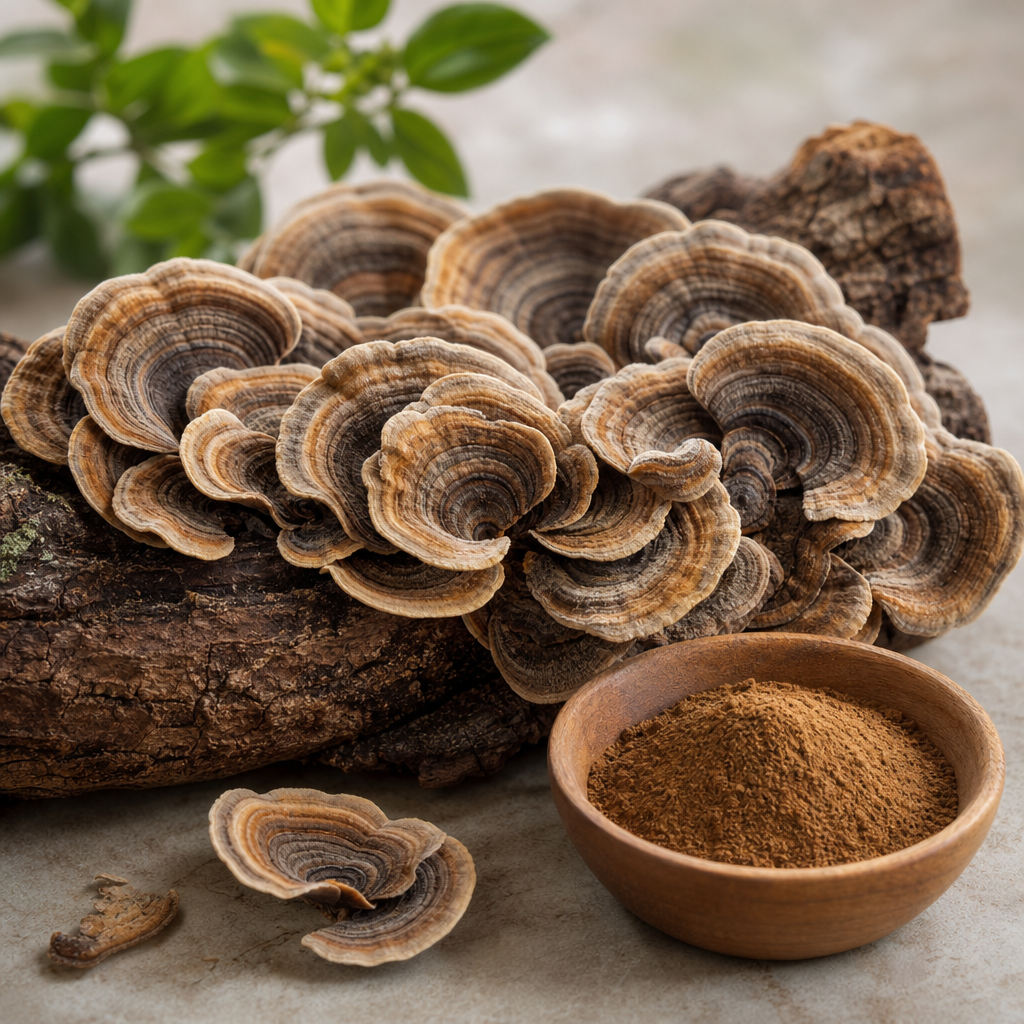
Turkey tail (Trametes versicolor, also known as Coriolus versicolor) is a colorful, fan-shaped medicinal mushroom that grows on decaying hardwood logs around the world. Its common name comes from the multicolored, banded pattern that resembles a turkey’s tail. It has a long history of traditional use in East Asia, especially for supporting general vitality and resilience. Modern research has focused on its polysaccharides—particularly beta-glucans and protein-bound polysaccharides such as PSK (polysaccharide-K) and PSP (polysaccharopeptide)—which appear to influence immune function and gut microbiota.
Turkey tail is not an essential nutrient like a vitamin or mineral; the body does not require it to prevent a deficiency disease. Instead, it is best described as a mushroom-derived supplement or botanical ingredient. It is available as whole dried fruiting bodies, teas/decoctions, powders, and standardized extracts. Its role in health centers on immune modulation (helping to balance, rather than simply “boost,” immune responses), support for gut microbial diversity, and general wellness. In some countries, specific turkey tail-derived extracts (notably PSK) have been used alongside standard cancer treatments under medical supervision.
Benefits of Turkey Tail
-
Adjunct support during cancer treatment (PSK/PSP)
(Moderate evidence)
Human clinical trials, particularly from Japan and China, have evaluated protein-bound polysaccharide extracts from turkey tail (PSK and PSP) alongside standard chemotherapies for certain cancers (for example, gastric, colorectal, and some lung cancers). Meta-analyses suggest these extracts can modestly improve survival rates and immune parameters in specific settings when used under medical supervision. These findings apply to well-characterized extracts used in clinical contexts; they should not be generalized to all over-the-counter mushroom powders. Turkey tail is not a standalone cancer treatment and should never replace conventional care. If you are undergoing cancer therapy, discuss any supplement use with your oncology team.
-
Immune system modulation for everyday wellness
(Mixed evidence)
Turkey tail beta-glucans may help balance aspects of innate and adaptive immunity, including natural killer (NK) cell activity and certain cytokines. Small human studies and mechanistic research suggest potential benefits for general immune readiness, such as during times of stress or increased exposure to seasonal bugs. However, results across studies are not entirely consistent, dosage and extract types vary, and many studies are small or use multi-ingredient formulas. Overall, evidence is promising but not definitive.
-
Gut microbiome support and prebiotic effects
(Moderate evidence)
Turkey tail contains non-digestible polysaccharides that function as prebiotics, feeding beneficial gut bacteria. Early human trials and several laboratory studies indicate increases in commensal bacteria (such as Bifidobacterium and Lactobacillus) and shifts in short-chain fatty acid profiles, which may relate to digestive and immune health. While more large-scale human data are needed, the prebiotic activity and plausible mechanisms make this one of the more substantiated wellness uses outside of clinical oncology settings.
-
Antioxidant capacity and inflammatory balance
(Limited evidence)
Extracts of turkey tail contain phenolic compounds and polysaccharides that demonstrate antioxidant activity in vitro and may modulate inflammatory signaling. Small human and animal studies have reported favorable changes in biomarkers of oxidative stress and low-grade inflammation, but findings are not uniform and often use varying preparations. At present, this potential benefit is supported by preliminary and mechanistic research rather than robust clinical outcomes.
-
Support during heavy training or high stress
(Limited evidence)
Because intense exercise and chronic stress can temporarily dampen certain immune defenses, some athletes and highly stressed individuals explore turkey tail for immune resilience. Limited pilot studies and extrapolation from beta-glucan research suggest possible support for upper-respiratory wellness and immune markers, but turkey tail–specific evidence in these populations is sparse. Consider it experimental adjunct support rather than a proven performance aid.
-
Metabolic markers (glucose and lipids)
(Preliminary evidence)
A few animal and small human studies suggest turkey tail polysaccharides may favorably influence fasting glucose, insulin sensitivity, or blood lipids. Data are early-stage, sample sizes are small, and preparations differ widely. These findings are hypothesis-generating and not sufficient for clinical recommendations.
Types or Forms Available
-
Whole dried fruiting body (tea/decoction):
The traditional method involves simmering chopped or sliced mushroom in water for 20–60 minutes to extract water-soluble polysaccharides. This is cost-effective and preserves the complexity of the mushroom but is less standardized dose-to-dose.
-
Powdered fruiting body (capsules or loose powder):
Typically milled and sometimes hot-water processed before drying. Quality varies. Look for products specifying fruiting body (not just mycelium) and providing beta-glucan content.
-
Standardized hot-water extracts:
Concentrated extracts listing a defined beta-glucan percentage (for example, 20–50%) offer more predictable dosing of the key water-soluble components. These are often preferred for consistent immune and gut support.
-
Dual extracts (water + alcohol):
Some products combine hot-water and alcohol extraction. While turkey tail’s primary actives are water-soluble beta-glucans, dual extracts may capture additional phenolics and triterpenes. The added value over water-only extracts is not firmly established.
-
Protein-bound polysaccharides (PSK/PSP):
Pharmaceutical-grade preparations studied clinically as adjuncts to oncology care. Availability and regulation vary by country; use only under medical supervision.
-
Mycelium-on-grain products:
Cultures grown on grains and then dried/milled. These can contain significant grain-derived starch (alpha-glucans) and lower beta-glucans than fruiting body products. Choose brands that transparently report beta-glucan content and testing methods.
How to Use Turkey Tail
Turkey tail is typically used for steady, background support rather than immediate effects. Choose a form that matches your goals and tolerance, and start at the lower end of dosage ranges while monitoring how you feel.
-
Common dosage range:
For powdered fruiting body, 1–3 grams per day is common. For standardized hot-water extracts, 500–1,500 mg per day (often split once or twice daily) is typical when providing a meaningful beta-glucan content (for example, 20–50%). Clinical doses of PSK/PSP used in oncology settings are higher and should only be used under physician guidance. Always follow product-specific directions and avoid megadoses.
-
Best timing:
Timing is flexible. Many people take turkey tail with breakfast and/or lunch. There is no stimulant effect, but taking with meals may improve tolerance.
-
How to take it:
Capsules or powders can be taken with water and food. For tea or decoction, simmer 3–9 grams of dried mushroom in water for 20–60 minutes; strain and drink. If taste is earthy or bitter, add lemon or blend into soups.
-
Consistency:
Benefits, especially for gut and immune modulation, are more likely with regular daily use over weeks. Consider 8–12 weeks of consistent intake before reassessing. Periodic breaks (for example, 1–2 weeks off every few months) are reasonable if you use higher doses long term.
Food Sources and Supplement Options
Turkey tail is a wild/woodland mushroom found on decaying hardwood logs. It is not typically eaten as a culinary mushroom due to its leathery texture, but it can be prepared as a tea or added to long-simmered broths. Foragers must be confident in identification and harvest from clean environments to avoid contaminants.
Most people encounter turkey tail as a supplement (capsules, powders, or extracts). Supplements can provide more targeted and consistent dosing of beta-glucans compared with homemade tea, while whole-mushroom preparations may deliver a broader spectrum of compounds and dietary fiber. If you rarely consume mushrooms, supplementation can be a practical way to obtain mushroom beta-glucans, but aim for quality products that clearly state fruiting body vs. mycelium, beta-glucan percentage, and third-party testing.
Who May Benefit from Turkey Tail?
-
Adults seeking gentle, ongoing immune system support during periods of stress, travel, or seasonal exposure.
-
Individuals interested in supporting gut microbiome diversity with mushroom-derived prebiotic fibers.
-
Older adults looking for non-stimulant options that may help modulate aspects of immune function.
-
Athletes or highly active people who experience heavy training loads and want experimental support for immune resilience.
-
People who seldom eat mushrooms but want a convenient source of mushroom beta-glucans.
-
Patients exploring adjunct options during cancer treatment specifically under the guidance of their oncology team, where certain standardized extracts (PSK/PSP) have been studied.
Side Effects and Considerations
-
General tolerance:
Turkey tail is typically well tolerated. The most common side effects are mild gastrointestinal symptoms (gas, bloating, loose stools) that often improve when taken with food or at lower doses.
-
Allergies and sensitivities:
Avoid use if you have known allergies to mushrooms or molds. Discontinue and seek care if you develop rash, itching, swelling, or breathing difficulty.
-
Autoimmune conditions:
Because turkey tail can modulate immune activity, people with autoimmune disorders should consult a healthcare professional to assess appropriateness and monitor for symptom changes.
-
Medication interactions:
Use caution with immunosuppressants (for example, post-transplant medications), and discuss with your prescriber. Interactions with chemotherapy, anticoagulants/antiplatelets, and antidiabetic medications are possible; coordinate with your medical team.
-
Oncology use:
Do not self-treat cancer. Any use during cancer therapy should be supervised by your oncology team, especially if considering PSK/PSP or higher-dose extracts.
-
Surgery:
Due to potential effects on immune and inflammatory pathways, consider stopping turkey tail 1–2 weeks before elective surgery unless your surgeon advises otherwise.
-
Liver and kidney considerations:
Serious toxicity is rare, but if you have liver or kidney disease, consult your clinician and consider periodic monitoring when using concentrated extracts long term.
-
Pregnancy, breastfeeding, and children:
Safety data are limited. People who are pregnant, breastfeeding, or considering turkey tail for children should consult a qualified healthcare professional before use.
-
Quality and contamination:
Choose products that are third-party tested for identity, beta-glucan content (not just “total polysaccharides”), and contaminants (heavy metals, pesticides, microbes). Look for clear labeling of fruiting body vs. mycelium and extraction method.
-
Dietary restrictions:
Myceliated-grain products may contain residual grain starches; individuals with strict grain or gluten avoidance should verify sourcing and testing with the manufacturer.
Common Myths About Turkey Tail
-
“Turkey tail cures cancer.”
Evidence supports the use of specific extracts (PSK/PSP) as adjuncts alongside conventional therapy in certain cancers, with modest benefits in survival or immune markers. It is not a cure, not appropriate as a standalone treatment, and decisions about use belong with an oncology team.
-
“All turkey tail products are the same.”
Composition varies widely. Fruiting body extracts tend to be richer in beta-glucans, while mycelium-on-grain products often contain more starch. Clinical research often uses standardized, well-characterized extracts. Always check for beta-glucan content and third-party testing.
-
“Alcohol tinctures are always superior.”
Many of turkey tail’s key constituents (beta-glucans, PSK/PSP) are water-soluble, so hot-water extracts or decoctions are typically most appropriate. Alcohol can capture other compounds, but for immune-focused use, water extraction is central.
-
“More is always better.”
Higher doses do not guarantee better outcomes and can increase side effects. Targeted, standardized dosing matched to your goals—and guided by a professional when medical issues are involved—is safer and more sensible.
-
“You’ll feel it working immediately.”
Turkey tail’s effects on immune balance and the gut microbiome are gradual. Consistency over weeks matters more than expecting an immediate, noticeable effect.
Conclusion
Turkey tail is a well-known medicinal mushroom used primarily for immune modulation and gut microbiome support. The most robust human data involve specific protein-bound polysaccharide extracts (PSK/PSP) used as adjuncts to standard cancer treatments under medical supervision. For general wellness, standardized hot-water extracts providing meaningful beta-glucan content are a practical option, while teas and whole-mushroom preparations offer a broader spectrum of compounds with less precise dosing.
If you are pregnant, breastfeeding, managing a medical condition, or taking medications—especially immunosuppressants, chemotherapy, anticoagulants, or antidiabetic agents—consult a healthcare professional before using turkey tail. Prioritize quality products with verified beta-glucan content and third-party testing. For most people, a food-first approach that includes a varied, fiber-rich diet remains foundational, with turkey tail supplements considered as a targeted, adjunct strategy when goals include gentle immune or gut support. Regular, moderate dosing and periodic reassessment can help you determine if it fits your wellness plan.