What is Vitamin B12?
Vitamin B12 (cobalamin) is an essential water-soluble vitamin that the body needs for DNA synthesis, red blood cell formation, and normal function of the brain and nervous system. It contains the trace mineral cobalt at its core and exists in several biologically active forms in the body, primarily methylcobalamin and adenosylcobalamin. Because humans cannot make vitamin B12, it must be obtained from diet or supplements.
Vitamin B12 is naturally produced by certain bacteria and accumulates in animal tissues, which is why it is found mainly in animal-derived foods such as meat, fish, dairy, and eggs. Some plant-based foods are fortified with a crystalline form of B12 to help people who avoid animal products meet their needs. As a nutrient, vitamin B12 is available as a dietary supplement and via prescription preparations (e.g., injections or nasal formulations) when medically indicated.
In the body, vitamin B12 partners with folate and vitamin B6 to support one-carbon metabolism, a network of reactions important for methylation, homocysteine regulation, and cellular repair. Its roles in myelin maintenance and neurotransmitter synthesis help protect nerve function, while its involvement in bone marrow cell division supports healthy red blood cell production. Adequate intake is vital across the lifespan, with particular importance in pregnancy, older age, and in individuals with conditions that impair absorption.
Benefits of Vitamin B12
-
Prevents and treats megaloblastic anemia
(Strong evidence)
Adequate B12 is required for DNA synthesis in rapidly dividing cells, including bone marrow precursors of red blood cells. Deficiency leads to large, immature red cells (megaloblasts) and anemia, which can cause fatigue, pallor, shortness of breath, and weakness. Restoring B12 normalizes blood cell production and corrects these symptoms.
-
Supports nerve health and cognitive function (especially in deficiency)
(Strong evidence)
B12 is essential for maintaining myelin, the protective sheath around nerves. Low B12 can cause numbness, tingling, balance issues, memory troubles, and mood changes. Repleting deficient individuals can improve or prevent progression of neurologic symptoms, especially when addressed early.
-
Lowers homocysteine levels
(Strong evidence)
B12 helps convert homocysteine to methionine. Supplementation in people with low or borderline B12 typically lowers homocysteine, a cardiovascular risk marker. While homocysteine reliably decreases, large trials have not consistently shown fewer heart attacks or strokes, so reductions in clinical events remain uncertain.
-
Improves energy and reduces fatigue in people with deficiency
(Strong evidence)
In B12 deficiency, anemia and impaired cellular energy processes can lead to pronounced fatigue. Correcting deficiency often restores normal energy levels. For people with normal B12 status, evidence does not support a stimulant-like energy effect.
-
May support cognitive function in older adults with low or marginal status
(Mixed evidence)
Observational studies link low B12 and elevated methylmalonic acid to cognitive decline. Some trials suggest benefits of B-vitamin therapy on brain atrophy rates or cognition in subgroups with high homocysteine, but results are inconsistent and benefits appear greatest when deficiency or insufficiency is present.
-
Supports healthy pregnancy and fetal development when adequate
(Moderate evidence)
Low maternal B12 has been associated with adverse outcomes such as neural tube defects (along with folate insufficiency), low birth weight, and impaired infant neurodevelopment. Ensuring adequate B12 intake—especially in those following plant-based diets—supports maternal health and fetal nervous system development.
-
Potential role in bone health
(Mixed evidence)
Some studies associate low B12 with reduced bone mineral density and higher fracture risk, possibly through impaired osteoblast function or increased homocysteine. Intervention data are limited and inconsistent; it is premature to conclude that B12 alone prevents osteoporosis.
-
Possible reduction in age-related macular degeneration risk (in combination with folate and B6)
(Limited evidence)
One large randomized trial in women reported a lower risk of age-related macular degeneration with a combination of B12, folic acid, and B6. Because this was a multi-nutrient approach and findings are not universally replicated, B12’s independent effect remains uncertain.
Deficiency or Low Levels of Vitamin B12
-
Common signs of low levels:
Fatigue, weakness, pale skin, shortness of breath, heart palpitations, glossitis (sore, smooth tongue), mouth ulcers, numbness and tingling in hands and feet, balance problems, memory issues, confusion, low mood or irritability, visual disturbances, and in severe cases, difficulty walking. Laboratory findings often include macrocytosis (high MCV), elevated methylmalonic acid (MMA) and homocysteine, and low or borderline serum B12.
-
Who may be at risk:
Vegans and many vegetarians; older adults (reduced stomach acid and intrinsic factor); people with pernicious anemia; those with gastrointestinal disorders (celiac disease, Crohn’s disease) or who have had gastric/intestinal surgery (e.g., gastric bypass); long-term users of metformin, proton pump inhibitors, or H2 blockers; individuals with alcohol use disorder or malnutrition; pregnant and breastfeeding people with low intake (and their infants); and those exposed to nitrous oxide (which inactivates B12) during anesthesia or recreational use.
-
How it is checked:
Evaluation may include serum B12, methylmalonic acid (serum or urine), homocysteine, holotranscobalamin (active B12), and a complete blood count. Clinicians consider symptoms, dietary pattern, medications, and medical history because serum B12 alone can be inconclusive in borderline cases.
Types or Forms Available
-
Cyanocobalamin:
The most common and stable supplemental form, widely used in multivitamins and fortified foods. It is well studied, cost-effective, and generally well tolerated. In rare cases of severe renal impairment or certain optic neuropathies, clinicians may prefer non-cyano forms.
-
Methylcobalamin:
A coenzyme form active in methylation reactions. Popular in standalone B12 products and often marketed for nerve support. While widely used, current evidence does not consistently show superiority over cyanocobalamin for most people.
-
Adenosylcobalamin (dibencozide):
The mitochondrial coenzyme form involved in energy metabolism. Frequently included in combination B12 products. Human data comparing it to other forms for clinical outcomes are limited.
-
Hydroxocobalamin:
Often used in prescription injections due to longer retention time; also the form used for cyanide poisoning. It may be preferred in certain clinical scenarios under medical supervision.
-
Delivery methods:
Oral tablets/capsules, sublingual lozenges, liquids, and sprays are common. Prescription nasal sprays and intramuscular injections are options when absorption is impaired. At high oral doses, a small percentage of B12 is absorbed by passive diffusion, allowing efficacy even without intrinsic factor in some cases, under clinical guidance.
How to Use Vitamin B12
Most healthy adults need about 2.4 mcg per day from all sources. People with low intake or impaired absorption often use supplements for maintenance or repletion, ideally guided by lab testing and a healthcare professional’s advice. A food-first approach is encouraged when practical, with supplements used to fill gaps or correct deficiency.
-
Common dosage range:
For general maintenance or dietary gaps, 25–100 mcg per day is typical. For individuals with low or borderline levels, 250–500 mcg per day is commonly used. Clinicians may recommend 1000 mcg per day orally or prescribe injections when deficiency or malabsorption is confirmed. Avoid megadoses unless specifically directed by a clinician.
-
Best timing:
Timing is flexible. Some prefer morning dosing to align with daily routines. If taking high-dose vitamin C, consider separating by at least an hour as a precaution.
-
How to take it:
B12 can be taken with or without food. Consistent intake with water or a meal helps adherence. Sublingual forms are convenient for those who dislike swallowing tablets; evidence suggests overall similar effectiveness to standard oral dosing when total dose is adequate.
-
Consistency:
Daily use improves maintenance of adequate levels. For repletion, consistent dosing for several weeks to months is often needed, followed by reassessment. Continue as advised by your healthcare professional, especially if you take medications that reduce absorption.
Food Sources and Supplement Options
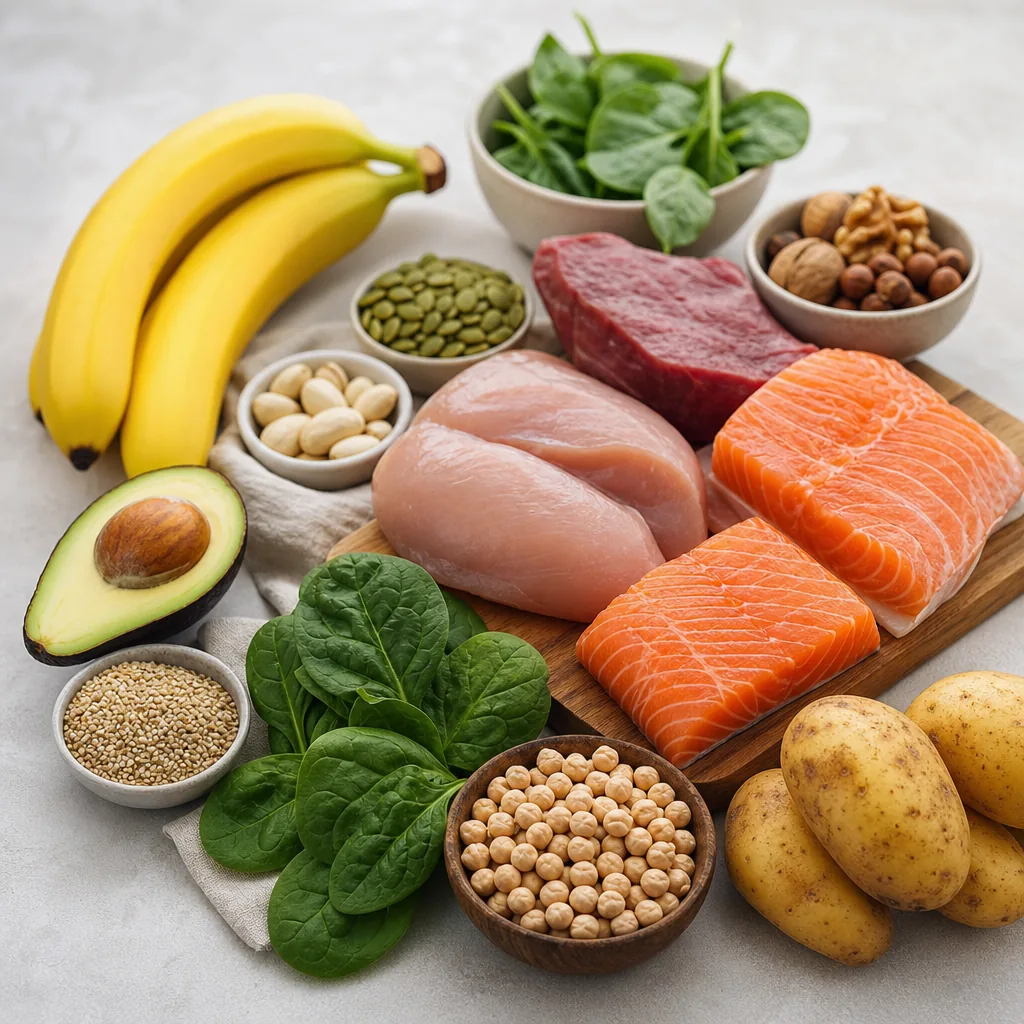
Vitamin B12 is found naturally in animal-derived foods and in fortified products. Because reliable plant sources are scarce, many people—especially those following vegetarian or vegan diets—use fortified foods and/or supplements to meet needs. Whole foods provide additional nutrients like protein, iron, zinc, and omega-3s, while supplements offer a precise, convenient way to achieve consistent intake when diet alone is insufficient.
-
Shellfish (e.g., clams, oysters)
-
Liver and other organ meats
-
Fish (e.g., salmon, trout, tuna, sardines)
-
Meat and poultry (e.g., beef, turkey, chicken)
-
Dairy products (milk, yogurt, cheese)
-
Eggs
-
Fortified foods (e.g., plant milks, breakfast cereals, nutritional yeast labeled as B12-fortified)
Supplementation may make sense for vegans and many vegetarians, older adults with low stomach acid, people with gastrointestinal disorders or surgeries affecting absorption, and those on medications like metformin or acid-suppressing drugs. In deficiency, supplements or medically supervised injections are commonly used to restore normal levels. Even when supplementing, building a nutrient-dense diet remains important for overall health.
Who May Benefit from Vitamin B12?
-
Vegans and vegetarians who consume few or no animal products
-
Older adults with reduced stomach acid or intrinsic factor
-
People with pernicious anemia or gastrointestinal conditions that impair absorption (celiac disease, Crohn’s disease) or after gastric/intestinal surgery
-
Long-term users of metformin, proton pump inhibitors, or H2 blockers
-
Pregnant or breastfeeding individuals following plant-based diets, and infants of B12-deficient mothers (under pediatric guidance)
-
Individuals with unexplained fatigue, neuropathy, or macrocytosis where B12 status is uncertain
-
Athletes on predominantly plant-based diets or with low energy intake who may struggle to meet needs through food alone
-
People exposed to nitrous oxide (recreationally or during frequent procedures), which inactivates B12
Side Effects and Considerations
-
Generally well tolerated: B12 has a wide safety margin as a water-soluble vitamin. Most people do not experience side effects at typical doses.
-
Skin reactions: High doses occasionally trigger acne or rosacea-like eruptions in susceptible individuals; reducing the dose or changing the form may help.
-
Allergy and cobalt sensitivity: Rare hypersensitivity reactions (hives, itching) can occur. People with known cobalt allergy should use caution and seek medical advice.
-
Medication interactions: Metformin, proton pump inhibitors, and H2 blockers can reduce B12 absorption; long-term users may benefit from monitoring. Chloramphenicol can blunt hematologic response to B12 therapy; consult a clinician.
-
Nitrous oxide caution: Exposure to nitrous oxide inactivates B12 and can precipitate neurologic symptoms in those with low stores. Inform your clinician about your B12 status before procedures requiring anesthesia.
-
Folate interplay: High folic acid intake can correct anemia while allowing B12-related nerve damage to progress. If you use high-dose folic acid, ensure your B12 status is adequate.
-
Renal and optic neuropathy considerations: In severe kidney disease or certain hereditary optic neuropathies, non-cyanide forms (e.g., hydroxocobalamin, methylcobalamin) may be preferred under medical supervision.
-
Repletion monitoring: Treating severe megaloblastic anemia can rarely cause shifts in electrolytes (e.g., hypokalemia). Clinicians may monitor labs during intensive therapy.
-
Children, pregnancy, and breastfeeding: B12 is important for growth and neurodevelopment. Use age-appropriate doses and seek professional guidance, especially for higher-than-RDA supplementation.
-
Quality matters: Choose third-party tested products to ensure potency and purity. Verify that fortified foods clearly list B12 on the label.
Common Myths About Vitamin B12
-
“B12 gives an energy boost to everyone, even if levels are normal.”
Correction of deficiency often restores normal energy, but in people with adequate status, B12 is not a stimulant and has not been shown to enhance energy or performance.
-
“Plant foods like seaweed, algae, or fermented soy reliably provide B12.”
Many of these foods contain B12 analogs that are inactive in humans. Reliable sources are animal-derived foods or fortified products, and supplements when needed.
-
“Sublingual B12 is always superior to standard tablets.”
When total dose is sufficient, studies generally find similar improvements between sublingual and oral forms. Choice can be based on preference and adherence.
-
“Injections are the only effective way to treat low B12.”
Injections are appropriate for some, especially with severe deficiency or malabsorption. However, high-dose oral B12 can also be effective due to passive diffusion and is commonly used under clinical guidance.
Conclusion
Vitamin B12 is a vital nutrient for red blood cell formation, nervous system integrity, and homocysteine regulation. It is abundant in animal foods and widely available in fortified products and supplements. Supplementation can be especially helpful for people with low dietary intake, older adults, those with absorption issues, or individuals on medications that interfere with B12. In confirmed deficiency, timely repletion helps prevent anemia and neurological complications.
Choose quality, third-party tested products and use reasonable doses tailored to your needs. People who are pregnant, breastfeeding, giving supplements to children, taking medications, or managing medical conditions should consult a healthcare professional for individualized guidance and monitoring. Aim for a food-first approach when feasible, and use supplements strategically to fill gaps or correct deficiency while maintaining an overall nutrient-dense diet.