What is White Willow?
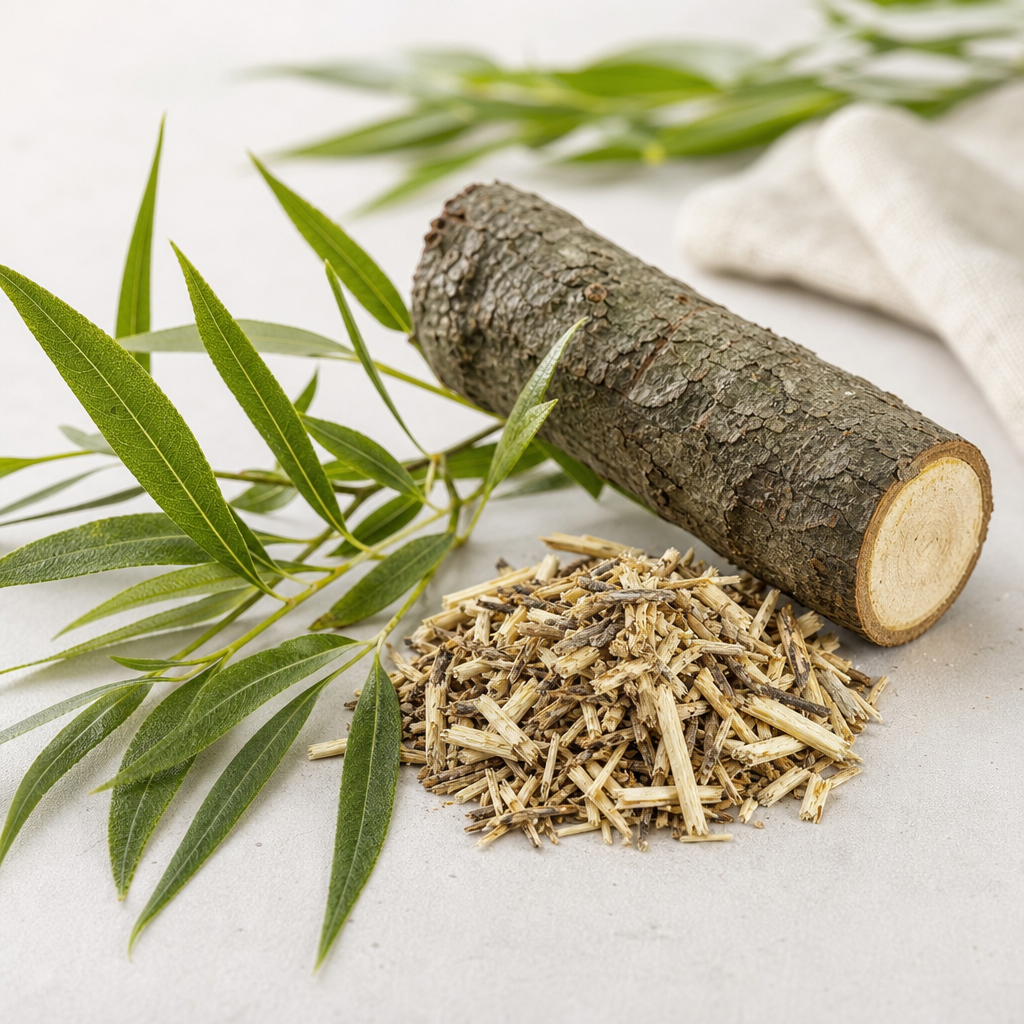
White willow (Salix alba) is a botanical herb derived from the bark of willow trees native to Europe and parts of Asia. The bark contains salicin and related salicylates that the body can convert to salicylic acid, along with polyphenols, flavonoids, and tannins. For centuries, willow bark teas and extracts have been used in traditional systems for relief of pain and fever. Modern supplements typically use standardized extracts to deliver a consistent amount of salicin.
White willow is not an essential nutrient like a vitamin or mineral. It is best categorized as a botanical extract or herbal supplement. The body does not require it to function, but some people use it to support comfort during episodes of musculoskeletal pain or to reduce reliance on conventional nonsteroidal anti-inflammatory drugs (NSAIDs). Because salicylates can influence blood clotting and gastrointestinal health, white willow should be used intentionally and with awareness of safety considerations.
Benefits of White Willow
-
Relief of low back pain
(Moderate evidence)
White willow extract providing a defined amount of salicin has reduced pain intensity in adults with mechanical low back pain in several randomized and comparative studies. Some trials found comparable symptom relief to certain NSAIDs over short periods. It generally does not act as quickly as aspirin, but may offer meaningful relief over several days of consistent use, particularly when standardized to known salicin doses.
-
Osteoarthritis symptom support
(Mixed evidence)
Studies in knee and hip osteoarthritis have reported modest improvements in pain and function with standardized willow bark, while others found little to no difference from placebo. Differences in extract quality, dosing, and study design likely contribute to the variability. Some people report benefit when used as part of a broader plan that may include physical therapy, weight management, and other lifestyle measures.
-
Headache and fever relief
(Limited evidence)
Traditional use includes headaches and fever, and salicylates plausibly support these effects. However, modern clinical trials specifically targeting tension headaches, migraines, or febrile illnesses are few and methodologically limited. For acute, fast relief, conventional options may act more quickly. When considering willow for recurrent headaches, it is important to rule out medication-overuse headaches and address triggers with a clinician.
-
Anti-inflammatory activity
(Limited evidence)
In vitro and small human studies suggest willow bark may decrease certain inflammatory mediators and oxidative stress markers. These effects are most strongly supported in laboratory and animal models; high-quality, longer-term human trials are limited. Any anti-inflammatory benefit likely depends on dose, extract standardization, and individual response.
-
Potentially fewer stomach side effects than aspirin for some users
(Mixed evidence)
Because salicin is converted to salicylic acid after intestinal absorption, some people experience less direct stomach irritation compared with immediate-release aspirin. That said, salicylates can still irritate the gastrointestinal tract and increase bleeding risk, especially at higher intakes or when combined with alcohol, corticosteroids, or NSAIDs. Anyone with a history of ulcers or GI bleeding should seek medical guidance before use.
Types or Forms Available
-
Standardized bark extract (capsules/tablets)
: The most common supplement form. Products often standardize to a specific salicin content (for example, 15% standardized extract), allowing dosing based on milligrams of salicin rather than total bark weight. Standardization improves consistency across batches.
-
Whole bark powder (capsules or loose)
: Ground bark provides the full spectrum of plant constituents but may deliver variable amounts of salicin. It is harder to dose precisely, and potency can vary with species, harvest, and processing.
-
Liquid extracts/tinctures
: Alcohol- or glycerin-based extracts can be convenient for titrating doses. Unless the label specifies salicin content, these also tend to be variable in potency. Taste can be a limiting factor for some users.
-
Tea/decoction
: Traditionally prepared by simmering the bark. While this preserves the herbal practice, salicin extraction and dose are difficult to quantify. Flavor is astringent due to tannins.
-
Combination formulas
: Willow bark is frequently paired with other botanicals such as devil’s claw, boswellia, turmeric/curcumin, or ginger in “joint support” or “comfort” blends. These may provide additive effects but make it difficult to pinpoint what works for an individual and may increase interaction risks.
-
Topical creams/gels
: Some products include willow bark or salicylates for localized application. Systemic absorption is minimal compared with oral use; any benefits are typically localized and milder.
How to Use White Willow
Choose products from reputable brands that identify the Salix species, specify the part used (bark), and list standardized salicin content. Because effects are dose-dependent and vary by product, follow the label and consider starting at the lower end of the range to assess tolerance.
-
Common dosage range:
Many clinical protocols used 120–240 mg of salicin per day from standardized extracts, often divided 1–2 times daily. Some individuals respond to 60–120 mg of salicin per day. Without professional guidance, avoid exceeding 240 mg of salicin daily. If the label lists only total extract weight (e.g., 1,000 mg) and a percentage of salicin (e.g., 20%), you can estimate the salicin dose (1,000 mg × 0.20 = 200 mg salicin).
-
Best timing:
Timing is not critical. Because absorption and conversion to salicylic acid are gradual, benefits may build over several days. For stomach comfort, many prefer taking it with meals.
-
How to take it:
Take with a full glass of water and food to reduce GI upset. Do not combine with aspirin, other salicylates, or multiple NSAIDs unless specifically advised by your clinician. Limit alcohol to reduce GI irritation and bleeding risk.
-
Consistency:
Many use it occasionally for acute episodes of discomfort, while others may use it daily for short, defined periods (for example, 2–4 weeks) to assess response. Long-term, continuous use should be guided by a healthcare professional.
Food Sources and Supplement Options
White willow is not found in common foods. It is derived from the bark of willow trees (Salix species), so intake occurs through herbal preparations such as standardized extracts, teas, tinctures, or capsules. Because it is a botanical rather than a dietary nutrient, there is no “food-first” pathway to obtain salicin in meaningful amounts from typical meals.
Supplementation may make sense for adults seeking a plant-based option for episodic musculoskeletal discomfort, especially when they prefer to avoid frequent use of conventional NSAIDs and have discussed safety with a clinician. Whole foods remain foundational for overall health because they supply fiber, protein, vitamins, minerals, and phytonutrients that support tissue repair and resilience. Supplements can deliver targeted, measured amounts of active compounds like salicin but should complement—not replace—sound nutrition, physical therapy, sleep, and training-recovery practices.
Who May Benefit from White Willow?
-
Adults with occasional low back or joint discomfort who prefer an herbal option and are not taking blood thinners or other salicylates.
-
People with osteoarthritis who have discussed non-drug adjuncts with their clinician and want to trial a standardized extract for several weeks to gauge response.
-
Active individuals or athletes experiencing episodic training-related aches who wish to rotate strategies to minimize frequent NSAID use, provided they have medical clearance.
-
Individuals who experience stomach upset with standard aspirin and want to explore a botanical approach that may be gentler for some—while recognizing that GI and bleeding risks still exist.
-
Those looking for a short-term, structured trial of a botanical comfort aid alongside core strategies like exercise therapy, mobility work, and weight management where appropriate.
Side Effects and Considerations
-
Gastrointestinal effects:
Nausea, stomach upset, and heartburn can occur. Higher doses and concurrent alcohol, corticosteroids, or NSAIDs increase the risk of gastritis, ulcers, and GI bleeding. Stop use and seek care for black/tarry stools, vomiting blood, or severe abdominal pain.
-
Allergy and aspirin sensitivity:
Avoid if you have a known salicylate allergy or aspirin-sensitive asthma/nasal polyps. Hives, wheezing, or swelling require immediate medical attention.
-
Medication interactions:
Potential additive effects with anticoagulants (e.g., warfarin), antiplatelet agents (e.g., aspirin, clopidogrel), and other NSAIDs increase bleeding risk. Salicylates can raise methotrexate toxicity and may interact with certain gout medicines (e.g., probenecid). Consult your clinician and pharmacist before combining with any prescription or over-the-counter drugs.
-
Medical conditions:
Use caution or avoid with active peptic ulcer disease, GERD, bleeding disorders, kidney disease, liver disease, or uncontrolled hypertension. People with a history of GI bleeding or those at high cardiovascular risk should obtain individualized guidance.
-
Pregnancy and breastfeeding:
Avoid use due to insufficient safety data and potential salicylate-related risks to the fetus or infant.
-
Children and adolescents:
Do not use in children or teens with viral illnesses due to the theoretical risk of Reye’s syndrome associated with salicylates. Pediatric use should only occur under medical supervision.
-
Surgery and dental procedures:
Because salicylates may affect clotting, stop white willow 1–2 weeks before planned procedures unless your surgeon advises otherwise.
-
Dosing discipline:
Do not exceed label directions or combine multiple salicylate-containing products (e.g., aspirin, bismuth subsalicylate) unless directed by a clinician. More is not necessarily more effective and increases adverse event risk.
-
Quality and authenticity:
Choose products that identify the species (e.g., Salix alba), use the bark, state standardized salicin content, and are third-party tested for purity and potency. Botanical misidentification and variable salicin levels are common quality concerns.
-
When to seek care:
New, severe, or persistent pain; neurological symptoms; fever with stiff neck; swelling/redness of a joint; or pain after injury warrant medical evaluation. Supplements are not a substitute for diagnosis and appropriate treatment.
-
General caution:
If you are pregnant, breastfeeding, taking medications, or managing a medical condition, consult a healthcare professional before starting white willow.
Common Myths About White Willow
-
Myth: “White willow is the same as aspirin but safer.”
While both involve salicylates, white willow delivers salicin that converts to salicylic acid more slowly. Some people experience less immediate stomach irritation, but the risks of GI upset and bleeding remain—especially at higher intakes or when combined with other blood-thinning agents. “Natural” does not automatically mean safer for everyone.
-
Myth: “Herbal means no drug interactions.”
White willow’s salicylates can interact with anticoagulants, antiplatelets, NSAIDs, and methotrexate, among others. These interactions can be clinically significant and occasionally dangerous. Always review supplements with your clinician and pharmacist.
-
Myth: “Taking more will work faster.”
Higher doses increase the risk of side effects without guaranteeing faster or better relief. Because conversion to salicylic acid occurs after absorption and metabolism, there is a ceiling to how rapidly effects appear. Stick to evidence-informed ranges and give several days to assess response.
-
Myth: “It’s fine for long-term daily use without supervision.”
Extended use may increase risks to the stomach, kidneys, and bleeding parameters. If ongoing pain requires regular relief, work with a healthcare professional to identify causes, adjust training loads, and consider comprehensive pain-management strategies.
Conclusion
White willow is a botanical supplement that provides salicin, a precursor to salicylic acid, and may help some adults manage episodic musculoskeletal pain. Evidence is most supportive for low back pain, with mixed findings for osteoarthritis and limited data for headaches or fever. If you choose to try it, look for a standardized extract from a reputable brand, start at a conservative dose, and allow a few days to evaluate effects.
Because white willow contains salicylates, it is not appropriate for everyone. People who are pregnant or breastfeeding, children and teens with viral illnesses, and anyone with bleeding risks, ulcers, or on anticoagulants should avoid it or seek personalized medical advice. As with any supplement, prioritize a food-first foundation for overall health, and use targeted products like white willow to complement—not replace—sound nutrition, recovery practices, and medical care when needed.