What is Ashwagandha?
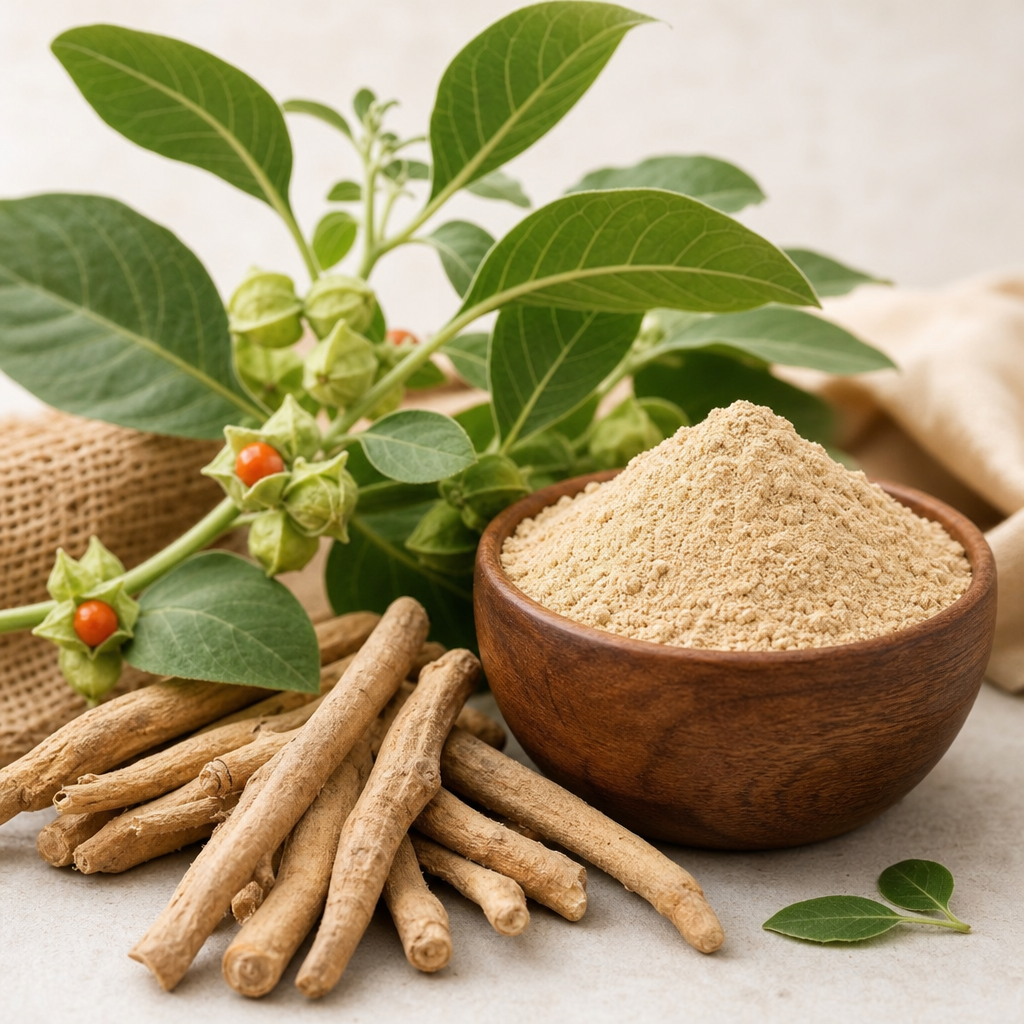
Ashwagandha (Withania somnifera) is a small shrub in the nightshade family traditionally used in Ayurvedic practice as a Rasayana—an herb intended to support resilience and vitality. The primary bioactive compounds are withanolides and withanosides, a group of steroidal lactones thought to contribute to its adaptogenic effects. Modern supplements are typically made from the root, the leaf, or a combination, and may be standardized to a specific percentage of withanolides to provide consistent dosing.
Ashwagandha is an herb and botanical supplement, not an essential nutrient. Unlike vitamins, minerals, essential fatty acids, or essential amino acids, the body does not require Ashwagandha to function. People use it for specific wellness goals such as stress management, sleep support, and exercise recovery. Its role is supportive and optional, and it should be considered alongside foundational lifestyle strategies like adequate sleep, balanced nutrition, regular physical activity, and appropriate medical care when needed.
Benefits of Ashwagandha
-
Stress reduction and perceived anxiety support
(Moderate evidence)
Ashwagandha has been studied in multiple randomized trials for its ability to support the body’s stress response. Standardized root extracts have been associated with reductions in perceived stress scales and improvements in well-being. Proposed mechanisms include modulation of the hypothalamic–pituitary–adrenal (HPA) axis and GABAergic activity. It may be most helpful for generally healthy adults experiencing day-to-day stress rather than as a treatment for clinical anxiety disorders.
-
Sleep quality and onset
(Moderate evidence)
Several studies report improvements in self-rated sleep quality, sleep latency (time to fall asleep), and overall restfulness after daily use for several weeks. Effects tend to be modest and may be more noticeable in individuals with occasional sleep difficulties linked to stress. Evening dosing is often used in research, though timing can be individualized.
-
Cortisol and physiological stress markers
(Moderate evidence)
Ashwagandha supplementation has been associated with reductions in morning or reactive cortisol in some trials, aligning with reports of better stress management. While not a cure for high cortisol states, it may contribute to small, supportive shifts when combined with sleep, nutrition, and stress-reduction practices.
-
Exercise performance and recovery
(Mixed evidence)
Some trials in recreationally active people show benefits for strength gains, VO2max, and muscle recovery markers when combined with standardized training programs. Other studies show minimal or no effect. Outcomes likely depend on the specific extract, dose, training status, and program quality. Any benefit appears to be adjunctive rather than a replacement for structured training, progressive overload, and adequate protein intake.
-
Cognitive function and mental performance under stress
(Limited evidence)
Preliminary research suggests potential support for aspects of attention, executive function, and memory, particularly under stressful conditions. Data sets are small and heterogeneous, and benefits—if present—appear modest.
-
Male fertility parameters
(Limited evidence)
Small studies indicate possible improvements in semen quality metrics (e.g., sperm count or motility) in men with fertility challenges. Evidence is not yet robust and should not replace medical evaluation. When used, it should be part of a broader plan including lifestyle, nutrition, and clinical guidance.
Types or Forms Available
-
Whole root powder (non-standardized):
Traditional form made from dried, ground root. Doses are larger (often grams per day) and potency can vary due to natural differences in withanolide content. Flavor is earthy and slightly bitter; commonly mixed into warm milk or smoothies.
-
Standardized root extract:
The most common supplemental form, typically standardized to a specific withanolide percentage (e.g., ~2.5–5%). Offers consistent potency and lower capsule counts compared to raw powder.
-
Root-only branded extracts (e.g., KSM-66):
Marketed for consistency and studied in several trials. Standardization aims to reflect a broad spectrum of root constituents while keeping leaf components minimal or absent.
-
Leaf+root extracts (e.g., Sensoril or similar):
Often standardized to a higher percentage of withanolide glycosides. These may require smaller milligram doses than root-only extracts. Differences in plant parts and standardization can influence effects and tolerability.
-
Liquid tinctures and drops:
Alcohol- or glycerin-based preparations that allow flexible dosing. Potency varies by brand and extraction method; taste can be strong.
-
Gummies, powders, and teas:
Convenient or palatable options. Gummies may contain lower amounts per serving and added sugars; teas are typically milder and may not deliver clinically relevant doses compared with standardized capsules.
How to Use Ashwagandha
Approach Ashwagandha with a clear goal, start low, and adjust gradually while monitoring how you feel over several weeks. Consistency tends to matter more than the exact time of day, though many people prefer evening use for sleep support or morning/early evening for stress management.
-
Common dosage range:
For standardized root extracts, typical total daily intake is about 300–600 mg, often split into one or two doses. Some higher-potency leaf+root extracts are used at 125–250 mg once or twice daily. Traditional whole-root powders are often taken at 1–5 g per day. Follow product instructions and avoid escalating beyond recommended amounts.
-
Best timing:
Take once or twice daily. If sleep support is a goal, consider an evening dose. If daytime calm or stress resilience is the goal, morning or early evening can work. Allow 2–8 weeks to gauge effects.
-
How to take it:
Capsules are convenient and minimize taste. Powders can be mixed into warm milk, smoothies, or yogurt. Taking with a small meal or snack may reduce stomach upset.
-
Consistency:
Daily use is common for stress and sleep support. Some people prefer cycles (e.g., 8–12 weeks on, then a short break) to periodically reassess need. Occasional use may feel less noticeable compared with consistent daily intake.
Food Sources and Supplement Options
Ashwagandha is an herb, not a typical dietary food. It comes from the Withania somnifera plant, with the root used most often and the leaf included in some extracts. While teas and culinary-style preparations exist, most people seeking specific, measurable effects rely on supplements because they offer standardized dosing and consistent potency.
Supplements make sense when your goal is targeted support—such as managing everyday stress, sleep quality, or training recovery—and you want a known withanolide amount per serving. Whole-food diets are still foundational for overall health by delivering essential nutrients, fiber, and phytonutrients that an herb alone cannot provide.
Who May Benefit from Ashwagandha?
-
Adults experiencing day-to-day stress who want gentle, non-stimulating support.
-
People with occasional sleep difficulties, especially when stress-related, looking for a non-habit-forming option.
-
Recreational athletes or active individuals aiming to support training adaptations and recovery, alongside sound programming and nutrition.
-
Busy professionals or students seeking calm focus during demanding periods.
-
Men exploring supportive options for fertility metrics under the guidance of a healthcare professional.
-
Individuals sensitive to caffeine who want a calming alternative for daytime composure.
Side Effects and Considerations
-
Common side effects:
Gastrointestinal discomfort, loose stools, nausea, or drowsiness can occur, especially at higher doses or when taken on an empty stomach.
-
Liver considerations:
Rare case reports of liver injury have been described. People with known liver disease or those who develop jaundice, dark urine, or severe fatigue should stop use and seek medical evaluation.
-
Thyroid and hormones:
Ashwagandha may influence thyroid hormones in some individuals. Those with thyroid conditions or on thyroid medication should use caution and speak with a clinician.
-
Blood pressure and blood sugar:
It may modestly lower either in some users. People on antihypertensives, diuretics, or diabetes medications should monitor closely with medical guidance.
-
Sedation and CNS effects:
May have calming properties. Use caution with other sedatives, sleep aids, certain anxiety medications, or alcohol.
-
Autoimmune and immunomodulation:
As an immune-active botanical, use caution with autoimmune conditions or if taking immunosuppressive therapies. Discuss with a healthcare professional before use.
-
Pregnancy, breastfeeding, and children:
Safety is not well established. Pregnant or breastfeeding individuals and children should avoid use unless a qualified healthcare professional recommends it.
-
Surgery and procedures:
Discontinue 1–2 weeks before surgery or procedures requiring anesthesia, due to potential sedative or blood pressure effects.
-
Allergies and sensitivities:
Ashwagandha is in the nightshade family; those with sensitivities to nightshades should exercise caution.
-
Quality and contamination risk:
Choose products with third-party testing for identity, potency, and contaminants (e.g., heavy metals, pesticides). Look for clear standardization (e.g., withanolide content) and reputable brands.
-
Medical conditions and medications:
If you are pregnant, breastfeeding, taking medications, or managing a medical condition, consult a healthcare professional before using Ashwagandha.
Common Myths About Ashwagandha
-
Ashwagandha cures anxiety and depression.
It may help with everyday stress and mild, situational anxiety, but it is not a cure for mental health disorders. Evidence supports small-to-moderate improvements when combined with broader care, not a standalone replacement for therapy, medication, or professional support.
-
It dramatically boosts testosterone for everyone.
Some studies in men—particularly those training or with specific fertility concerns—suggest modest changes, while many people experience no meaningful shift. Lifestyle factors like sleep, nutrition, and resistance training have a larger and more reliable impact.
-
Results are immediate.
While a few people notice calm within days, most trials assess outcomes over several weeks. Consistent daily use, appropriate dosing, and realistic expectations are key.
-
Natural means risk-free.
Botanical supplements can still cause side effects, interact with medications, and be inappropriate for certain populations such as pregnant individuals or those with liver or thyroid concerns. Quality and dosing matter.
-
Higher withanolides are always better.
More potency can also mean greater risk of side effects. The best choice balances standardization, dose, tolerability, and your specific goal—not simply the highest percentage on the label.
Conclusion
Ashwagandha is a well-known Ayurvedic herb used for stress resilience, sleep support, and complementary help with training recovery. When chosen thoughtfully—ideally as a standardized root or root+leaf extract from a reputable brand—and paired with healthy sleep, nutrition, and stress-management practices, it can be a practical tool for select goals. Benefits are generally modest, and consistency over several weeks is usually needed to judge response.
Not everyone needs Ashwagandha, and certain groups should be cautious or avoid it, including those who are pregnant or breastfeeding, people with liver or thyroid conditions, or anyone taking medications that affect mood, blood sugar, blood pressure, immunity, or sedation. If you decide to try it, prioritize quality, start with a conservative dose, and monitor how you feel. A food-first approach covers essential nutrients, while supplements like Ashwagandha can provide targeted, optional support when used wisely and with professional guidance as needed.