What is Black Cohosh?
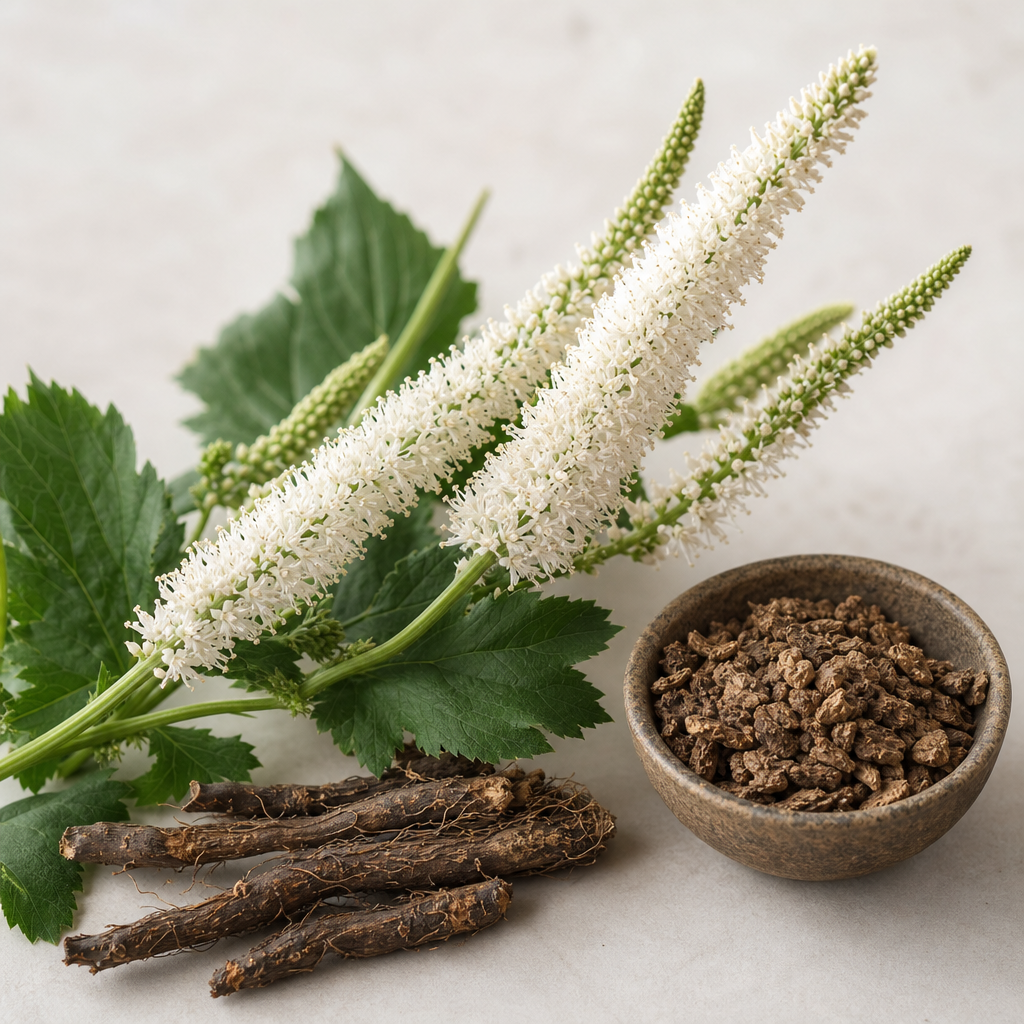
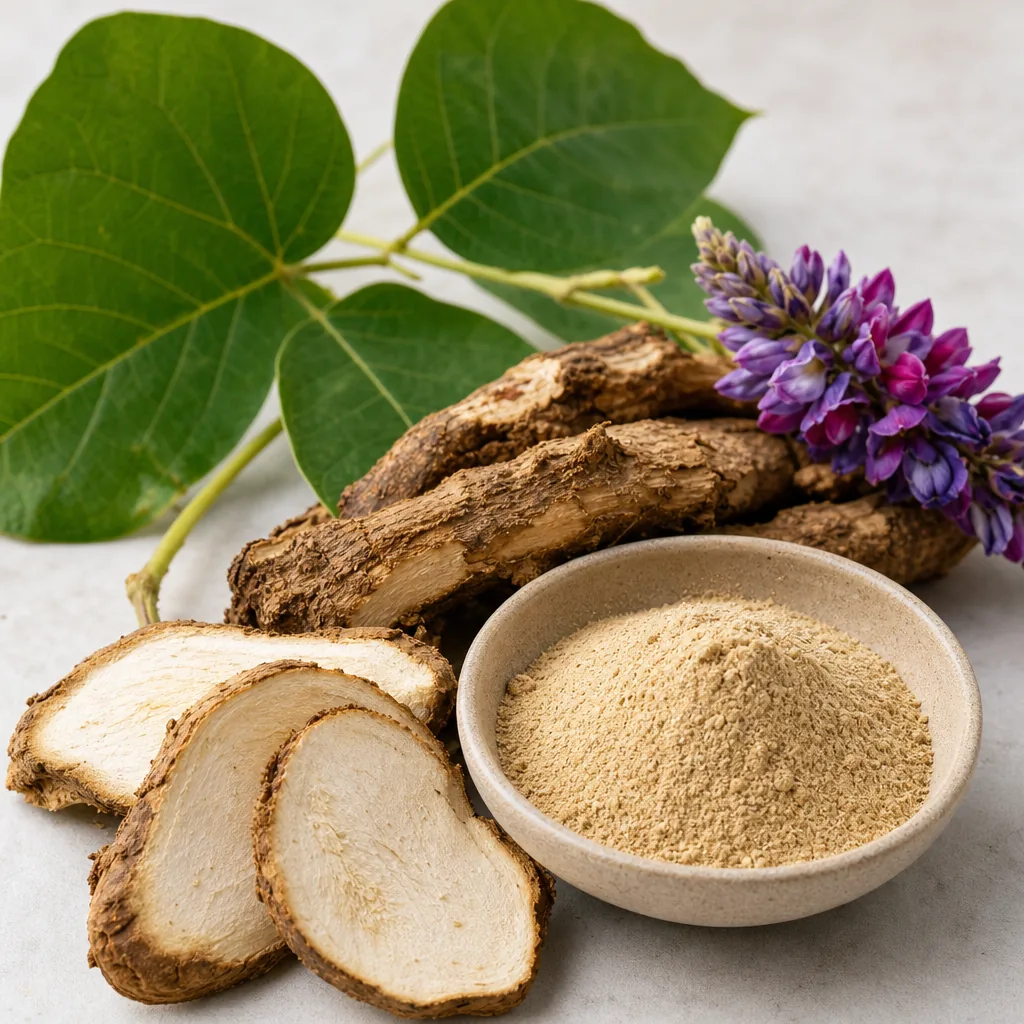
Black cohosh (Actaea racemosa, formerly Cimicifuga racemosa) is a perennial herb native to North America. The supplement is made from the root and rhizome of the plant and has a long history of traditional use among Indigenous communities and in early American herbal medicine. Today, it is most commonly used as a botanical supplement to help manage menopausal symptoms, especially hot flashes and night sweats.
Black cohosh is not an essential nutrient like a vitamin or mineral. The body does not require it for basic physiological function. Instead, it is an herbal extract that contains bioactive constituents such as triterpene glycosides (e.g., actein and 27-deoxyactein), phenylpropanoids, and other compounds. Although it was once thought to act like a phytoestrogen, current evidence suggests it does not meaningfully raise estrogen levels. Its effects may involve actions on neurotransmitter pathways (such as serotonergic signaling) and central thermoregulation rather than direct hormonal replacement.
As a supplement, black cohosh is available in standardized extracts, capsules, tablets, and occasionally teas or tinctures. Quality and standardization vary widely between products, which can influence both effectiveness and safety.
Benefits of Black Cohosh
-
Relief of menopausal hot flashes and night sweats (vasomotor symptoms)
(Mixed evidence)
Explanation: Several randomized trials and meta-analyses report modest reductions in hot flash frequency or intensity with certain standardized extracts (especially specific isopropanolic or ethanolic preparations). However, findings across studies are inconsistent due to differences in extract type, dose, and study design. Benefits, when present, are generally smaller than those seen with hormone therapy. Some people notice improvements within 4–8 weeks; others may not respond.
-
Improved sleep quality in peri- and postmenopause
(Limited evidence)
Explanation: A subset of studies and secondary outcomes suggest that black cohosh may modestly improve sleep quality, possibly by reducing nocturnal vasomotor symptoms that disrupt sleep. Direct sleep benefits independent of hot flash reduction are not well established.
-
Support for mood-related menopausal symptoms (irritability, mild anxiety)
(Limited evidence)
Explanation: Some trials report small improvements in questionnaires assessing mood, irritability, or overall climacteric symptoms. The effect appears variable and may relate to central neurotransmitter effects rather than hormonal changes. Evidence is insufficient to recommend it for clinically significant depression or anxiety.
-
Adjunctive option for women who cannot or prefer not to use hormone therapy
(Mixed evidence)
Explanation: In people with bothersome vasomotor symptoms who avoid or cannot use estrogen therapy, black cohosh is sometimes tried as a nonhormonal approach. While responses vary, standardized extracts may offer modest relief for some. It should not be considered equivalent to hormone therapy in efficacy.
-
Menstrual or premenstrual discomfort
(Limited evidence)
Explanation: Historical use and a few small studies suggest black cohosh may ease menstrual cramping or premenstrual symptoms. Contemporary clinical evidence is sparse, and other well-studied approaches may be more reliable.
-
Bone-related markers
(Preliminary evidence)
Explanation: Early and mechanistic research hints that black cohosh could influence bone turnover markers, but consistent clinical benefits for bone density or fracture risk have not been demonstrated. It should not replace established bone health strategies.
Types or Forms Available
-
Isopropanolic root/rhizome extract (iCR):
A well-studied standardized extract used in several clinical trials. Typical doses are around 40 mg/day of extract. Products often standardize to triterpene glycosides (commonly about 2.5%, measured as 27-deoxyactein), which helps support consistent dosing across batches.
-
Ethanolic or hydroalcoholic extracts:
Also widely available and used in research, with varying extract ratios (e.g., 5:1) and standardizations. Effects can differ from isopropanolic extracts due to differences in the profile of extracted constituents.
-
Capsules or tablets of powdered root/rhizome:
Less standardized and potentially more variable in active constituents. While traditional, these forms make it harder to compare doses with clinical trials that used standardized extracts.
-
Liquid tinctures:
Alcohol-based tinctures allow flexible dosing but can vary significantly in strength and composition. Look for clear labeling of extraction ratio and standardization.
-
Combination formulas (e.g., with St. John’s wort):
Some products combine black cohosh with other botanicals intended to support mood or sleep. Combinations can complicate attribution of benefits and increase the potential for interactions (for example, St. John’s wort affects drug metabolism).
-
Teas and decoctions:
Traditional but not well standardized. Many active components may not extract reliably in water at typical brewing times, making dosage uncertain.
Because potency varies widely, choose products that list the Latin binomial (Actaea racemosa), the plant part used (root/rhizome), the extraction solvent and ratio, and a triterpene glycoside standardization. Third-party testing (e.g., USP, NSF, or similar) helps reduce the risk of adulteration or mislabeling.
How to Use Black Cohosh
-
Common dosage range:
Many clinical trials used 20–40 mg of a standardized extract once or twice daily (for example, 40 mg/day of an isopropanolic extract). Avoid exceeding label directions. Evaluate response after 8–12 weeks. Long-term safety beyond about 6–12 months is less certain; periodic reassessment is prudent.
-
Best timing:
Timing is flexible. Some take it morning and/or evening. If night sweats are a major issue, an evening dose may be reasonable. Consistency is more important than exact timing.
-
How to take it:
Take with a glass of water; taking with food can reduce stomach upset. Follow the product’s instructions, as concentration and serving size vary by brand and extract type.
-
Consistency:
Daily use is typically needed for potential benefits. Black cohosh is not an acute, on-demand remedy; it may take several weeks to assess effect.
Food Sources and Supplement Options
Black cohosh is a botanical supplement derived from the root and rhizome of the Actaea racemosa plant. It is not found naturally in common foods and is not a dietary nutrient. For this reason, intake comes almost exclusively from supplements or traditional herbal preparations.
Supplementation may be considered by individuals seeking a nonhormonal approach to menopausal vasomotor symptoms after discussing options with a healthcare professional. Whole foods remain foundational for overall health because they deliver fiber, vitamins, minerals, protein, and phytonutrients that supplements cannot replicate. Supplements provide targeted dosing of specific compounds but should complement, not replace, a balanced diet and lifestyle strategies.
Who May Benefit from Black Cohosh?
-
Peri- or postmenopausal individuals with bothersome hot flashes or night sweats who prefer a nonhormonal option.
-
Those who cannot use hormone therapy or who wish to try a botanical adjunct under clinical guidance.
-
People with menopause-related sleep disruption possibly linked to nocturnal vasomotor symptoms.
-
Individuals seeking herbal support for mild mood or irritability during the menopausal transition, recognizing that effects are variable and often modest.
-
Those interested in a time-limited trial (e.g., 8–12 weeks) to gauge personal response before committing longer-term.
Side Effects and Considerations
-
Common side effects:
Upset stomach, cramping, nausea, headache, dizziness, rash, or a feeling of heaviness in the legs have been reported. Most are mild and resolve with dose reduction or discontinuation.
-
Liver safety:
Rare cases of liver injury have been reported in people taking black cohosh or products labeled as black cohosh, though causality is debated and adulteration is a concern. Stop use and seek medical attention if you develop dark urine, severe fatigue, abdominal pain, or jaundice. People with liver disease should consult a clinician before use and consider avoiding it.
-
Hormone-sensitive conditions:
Black cohosh does not appear to act like estrogen in a clinically meaningful way, but uncertainty remains. Those with a history of estrogen receptor–positive cancers, endometriosis, or uterine fibroids should consult their oncology or gynecology team before use.
-
Medication interactions:
In vitro data suggest possible effects on drug-metabolizing enzymes (e.g., CYP2D6, CYP3A4), with unclear clinical significance. Use caution with narrow-therapeutic-index medications and discuss with a pharmacist or clinician. People using tamoxifen, aromatase inhibitors, anticoagulants, hepatotoxic drugs, or complex medication regimens should seek medical advice before starting.
-
Pregnancy, breastfeeding, and children:
Avoid use. Historically, black cohosh was used in late pregnancy and labor, but contemporary safety data do not support use during pregnancy or lactation. It is not recommended for children.
-
Surgery and procedures:
As with many botanicals, discontinue black cohosh 1–2 weeks before scheduled surgery unless otherwise advised by your surgical team.
-
Allergies and sensitivity:
Individuals allergic to plants in the buttercup family (Ranunculaceae) should use caution. Discontinue if allergic symptoms or skin reactions occur.
-
Quality and adulteration:
Adulteration with other Actaea species or confusion with blue cohosh (a different plant with different safety concerns) has occurred in the marketplace. Choose products with clear Latin binomial, plant part, standardization, and third-party testing.
-
Dosing and duration:
More is not better. Stick to typical studied ranges and reassess after 8–12 weeks. Long-term continuous use should involve periodic check-ins with a healthcare professional, especially if you have medical conditions or take medications.
-
General medical guidance:
If you are pregnant, breastfeeding, taking medications, or managing a medical condition, consult a qualified healthcare professional before using black cohosh or any supplement.
Common Myths About Black Cohosh
-
Myth: Black cohosh is a “natural estrogen.”
Explanation: Modern analyses show black cohosh does not meaningfully raise estrogen or progesterone levels and likely works through nonhormonal mechanisms (e.g., neurotransmitter pathways). It is not a direct substitute for estrogen therapy.
-
Myth: It works as well as hormone therapy for hot flashes.
Explanation: While some people experience modest relief, hormone therapy generally provides stronger and more consistent reductions in vasomotor symptoms. Black cohosh may help some individuals but is not equivalent to estrogen therapy.
-
Myth: It’s completely safe because it’s natural.
Explanation: “Natural” does not guarantee safety. There are rare reports of liver injury and potential interactions with medications. Quality varies between products, and adulteration has occurred. Prudent dosing and medical guidance are important.
-
Myth: All black cohosh supplements are the same.
Explanation: Extract type, standardization, plant part, and manufacturing quality differ widely. Clinical outcomes seen with one standardized extract cannot be assumed for unstandardized or different preparations.
-
Myth: You’ll feel results immediately.
Explanation: When benefits occur, they typically appear over several weeks of consistent use. An 8–12 week trial is a reasonable window to evaluate response.
Conclusion
Black cohosh is a nonessential botanical supplement most often tried for menopausal hot flashes and night sweats. Evidence ranges from mixed to limited depending on the outcome and extract used; a subset of individuals may experience modest relief, particularly with standardized, well-studied formulations. It is not a replacement for hormone therapy or other established treatments, but it can be a reasonable time-limited trial for those seeking a nonhormonal option.
Because quality varies and rare but serious adverse events (notably potential liver injury) have been reported, choose reputable products and use typical studied doses. People who are pregnant or breastfeeding, those with liver disease or hormone-sensitive conditions, and anyone taking medications or managing medical conditions should consult a healthcare professional before starting. A food-first approach is essential for overall health, while supplements like black cohosh can offer targeted support when appropriate and monitored thoughtfully.