What is Black Garlic?
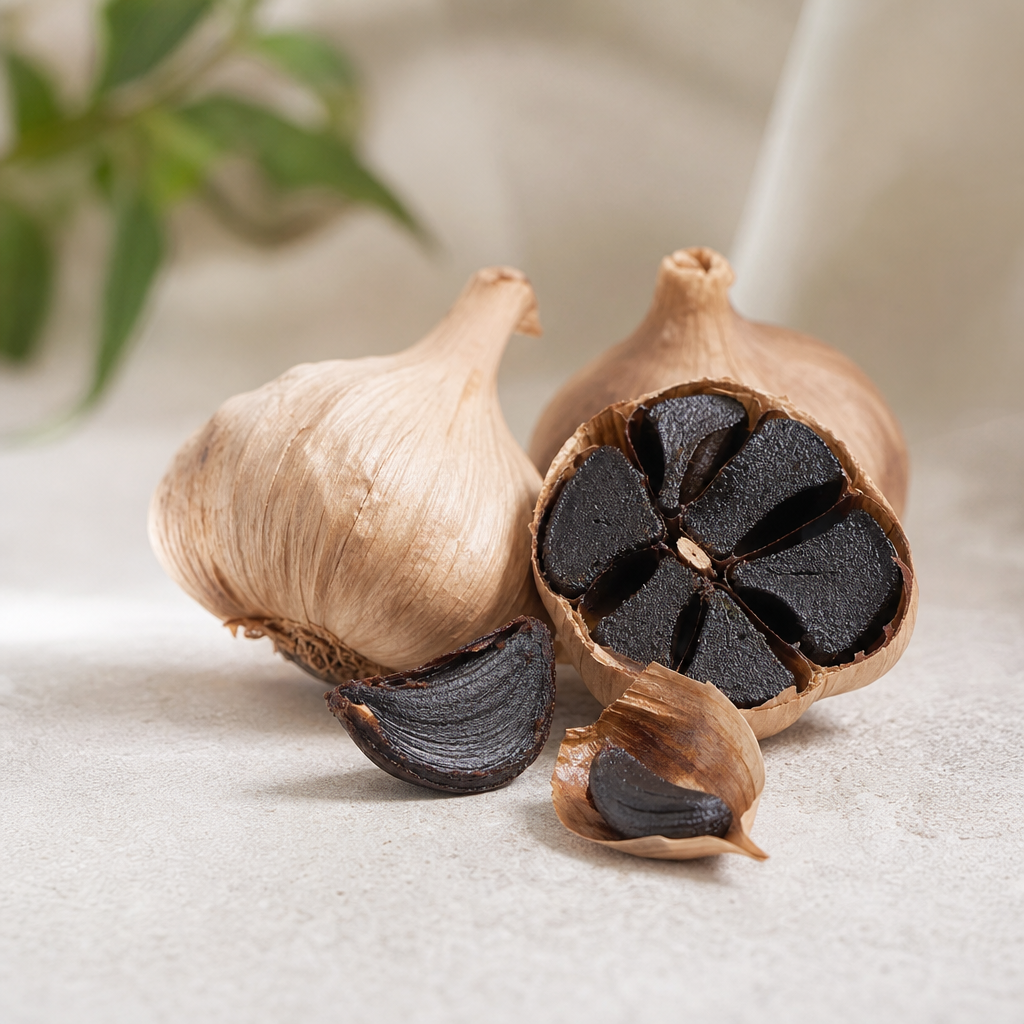
Black garlic is a culinary form of garlic (Allium sativum) that has been slowly aged at controlled warm temperatures and high humidity for several weeks. This heat-driven aging triggers Maillard reactions—non-enzymatic browning between amino acids and sugars—transforming raw white cloves into soft, dark, slightly sticky bulbs with a sweet, tangy, umami-rich flavor. During this process, pungent allicin is largely broken down, while other sulfur-containing compounds such as S-allyl cysteine (SAC) and various phenolics and melanoidins increase. The result is a milder, less acrid version of garlic with distinct chemistry and taste.
From a health perspective, black garlic is best described as a food-derived ingredient that can also be formulated as a supplement. It is not an essential nutrient like a vitamin or mineral; the body does not require it to survive. Instead, it provides non-essential bioactive compounds that may influence markers of cardiovascular, metabolic, and antioxidant status. Research is growing, but much of the clinical evidence on garlic’s health effects comes from “aged garlic extract,” which is produced via a different process than black garlic. While there is overlap in some active compounds (notably SAC), black garlic and aged garlic extract are not identical, so findings are not always interchangeable.
Benefits of Black Garlic
-
Antioxidant support and oxidative stress
(Moderate evidence)
Black garlic exhibits higher antioxidant capacity than raw garlic in laboratory tests, likely due to elevated levels of phenolics, SAC, and melanoidins formed during aging. Small human studies with black garlic preparations have reported improvements in biomarkers such as total antioxidant capacity and malondialdehyde (a marker of lipid peroxidation). While the number of rigorous, large-scale trials is limited, the biochemical plausibility and initial clinical findings support a moderate evidence rating for helping reduce oxidative stress.
-
Cholesterol and lipid profile
(Mixed evidence)
Some small trials of black garlic or black garlic extract report modest reductions in total and LDL cholesterol and increases in HDL cholesterol over several weeks. However, results are inconsistent across studies, and stronger data for lipid management exist for aged garlic extract rather than heat-aged black garlic specifically. Because formulations, doses, and populations vary—making it hard to compare results directly—the current signal for lipid improvements with black garlic is promising but inconsistent.
-
Blood pressure and vascular function
(Limited evidence)
Preclinical research suggests black garlic compounds may improve endothelial function and nitric oxide availability. A few small human studies have noted modest changes in blood pressure or arterial stiffness, but findings are not uniform and sample sizes are small. Compared with aged garlic extract—which has more consistent human data for blood pressure—black garlic’s evidence remains limited. Individuals with elevated blood pressure should not rely on black garlic alone and should work with a healthcare professional.
-
Glycemic control and metabolic health
(Limited evidence)
Early human studies and animal models suggest black garlic may support modest improvements in fasting glucose, insulin sensitivity, or inflammatory markers linked to metabolic health. Proposed mechanisms include antioxidant effects, modulation of inflammatory pathways, and potential impacts on gut microbiota. Evidence in humans remains limited in scope and size; black garlic should complement, not replace, established nutrition and lifestyle strategies for glycemic control.
-
Liver health markers
(Preliminary evidence)
In animal studies and small exploratory human trials, black garlic or its extracts have been associated with improvements in liver enzymes and reductions in oxidative stress within the liver. These findings are preliminary and require validation in larger, well-controlled human trials. People with liver conditions should consult a clinician before using concentrated extracts.
-
Exercise recovery and fatigue
(Preliminary evidence)
Some early investigations suggest black garlic could reduce markers of exercise-induced oxidative stress and perceived fatigue, possibly aiding recovery. The data are preliminary, heterogeneous in design, and often rely on small samples. Athletes interested in black garlic should view it as a potential adjunct to, not a replacement for, evidence-based recovery practices like adequate carbohydrate, protein, sleep, and periodized training.
Types or Forms Available
-
Whole black garlic bulbs or peeled cloves:
The culinary form used in cooking. Soft, spreadable cloves with sweet, umami flavor. Ideal for food-first approaches and for those who prefer minimal processing.
-
Black garlic paste or puree:
Convenient for sauces, marinades, dressings, and spreads. Flavor is consistent, and dosing by “teaspoon” is easy for culinary use.
-
Black garlic powder or granules:
Dehydrated and ground black garlic for rubs and seasoning. Potency and flavor can vary based on processing and storage.
-
Black garlic extract capsules or tablets:
Concentrated preparations often standardized to S-allyl cysteine (SAC) or total polyphenols. Useful for targeted intake when consistent daily dosing is desired. Check labels for standardization and third-party testing.
-
Fermented/biotransformed black garlic blends:
Some products combine black garlic with probiotics or other botanicals. These are more variable in composition; health effects specific to the blend are less well studied.
-
Note on aged garlic extract (AGE) vs. black garlic:
AGE is produced via room-temperature aqueous extraction over months, while black garlic is produced by heat-aging. Both contain SAC but differ in other constituents and clinical evidence. Results from AGE studies do not automatically apply to black garlic, and vice versa.
How to Use Black Garlic
Black garlic can be enjoyed as food or taken as a supplement. Culinary use allows you to incorporate it into meals while benefiting from its flavor; supplements may be preferred for standardized, consistent intake of key compounds like SAC.
-
Common dosage range:
For food use, 1–3 cloves (about 5–15 g) per day is typical in culinary contexts. For supplements, follow product-specific directions; many black garlic extracts provide about 300–1,200 mg per day, often standardized to SAC. A practical target is to choose products that provide a clearly stated SAC amount per serving and avoid exceeding labeled doses. Higher intakes are not necessarily better.
-
Best timing:
Timing is flexible. Taking supplements with meals may improve tolerance and consistency. If using twice daily, morning and evening with food is common.
-
How to take it:
Whole cloves, paste, or powder can be added to soups, roasted vegetables, grain bowls, spreads, or salad dressings. Capsules or tablets are typically taken with water and food to reduce gastrointestinal discomfort.
-
Consistency:
Potential benefits, especially for lipid or oxidative stress markers, may require daily use for 4–12 weeks. As with many botanicals and food-derived bioactives, consistency over time is more important than acute dosing.
Food Sources and Supplement Options
Black garlic is not naturally present in multiple foods; it is made from standard garlic bulbs that are heat-aged. You can obtain it directly as a culinary ingredient (whole bulbs, peeled cloves, paste, powder) or as dietary supplements that contain black garlic extract standardized to certain compounds (e.g., SAC).
-
Natural source:
Allium sativum (garlic) bulbs that have been aged under controlled heat and humidity become black garlic.
-
Culinary forms:
Whole black garlic bulbs, peeled cloves, paste/puree, and powder available in grocery stores and specialty markets.
-
Supplement forms:
Capsules or tablets with standardized black garlic extract, often listing SAC content or polyphenol levels.
Choosing food or supplements depends on goals. Whole-food black garlic offers flavor and a matrix of compounds that may act synergistically, along with the broader nutritional value of the meal it enhances. Supplements can provide more predictable dosing when studying or targeting specific outcomes, or when regular culinary use is impractical. As always, prioritize overall dietary quality; supplements are adjuncts, not replacements for a balanced eating pattern.
Who May Benefit from Black Garlic?
-
Adults seeking a flavorful way to increase intake of polyphenol- and sulfur-containing garlic derivatives without the pungency and odor of raw garlic.
-
People exploring gentle, food-first strategies to support cardiometabolic markers (lipids, oxidative stress) alongside diet, exercise, and medical care.
-
Individuals who experience digestive discomfort or strong odor with raw garlic and may tolerate black garlic better.
-
Athletes or active individuals interested in additional antioxidant support during periods of heavy training, recognizing evidence is preliminary.
-
Older adults curious about supporting vascular health with a culinary ingredient, used in coordination with healthcare advice.
-
Those with low habitual intake of allium vegetables who want an easy, palatable entry point to include garlic-derived foods.
Side Effects and Considerations
-
Gastrointestinal effects:
Black garlic is generally gentler than raw garlic, but supplements or large amounts may still cause bloating, gas, or reflux in sensitive individuals. Start low and assess tolerance.
-
Bleeding risk and medications:
Garlic compounds can have mild antiplatelet effects. Use caution if you take anticoagulants or antiplatelet drugs (e.g., warfarin, apixaban, clopidogrel, aspirin) or have bleeding disorders. Stop supplemental forms 1–2 weeks before surgery unless your clinician advises otherwise.
-
Blood pressure and glucose medications:
Because black garlic may modestly influence blood pressure or glucose in some people, monitor if you use antihypertensives or diabetes medications to avoid additive effects. Discuss with your clinician.
-
Allergies:
Avoid black garlic if you have known allergies to garlic or other Allium species (onion, leek, chive). Allergic reactions can occur even with aged forms.
-
Pregnancy, breastfeeding, and children:
Culinary amounts are generally considered acceptable, but safety data for concentrated extracts are limited. Those who are pregnant, breastfeeding, or considering supplements for children should consult a healthcare professional.
-
Liver or kidney conditions:
While preliminary data suggest potential liver-supportive effects, concentrated extracts have not been extensively studied in people with liver or kidney disease. Seek medical guidance before use.
-
Quality and standardization:
Choose products with clear labeling of black garlic content and, ideally, SAC standardization. Prefer brands with third-party testing (e.g., USP, NSF, Informed Choice) to reduce the risk of adulteration or inconsistent potency.
-
Form confusion:
Do not assume black garlic supplements are identical to aged garlic extract. Evidence and dosing are not directly interchangeable; follow product-specific guidance.
-
Dose escalation:
More is not necessarily better. High doses may increase the likelihood of GI upset without providing proportionally greater benefits.
Common Myths About Black Garlic
-
“Black garlic is fermented by microbes.”
Traditional black garlic is produced by controlled heat and humidity that drive Maillard reactions, not by microbial fermentation. Some modern products may add fermentation steps, but the classic process is thermal aging, which shapes its unique flavor and chemistry.
-
“Black garlic cures heart disease or diabetes.”
No single food or supplement cures chronic diseases. Black garlic may modestly influence certain biomarkers in some studies, but it should be used as part of a broader plan that includes diet, exercise, sleep, stress management, and medical care when needed.
-
“All garlic supplements are the same.”
Black garlic and aged garlic extract are produced differently and contain different profiles of sulfur compounds and polyphenols. Evidence from one form does not automatically apply to the other, and dosing is not interchangeable.
-
“Black garlic is just raw garlic with color.”
Aging profoundly alters the chemical composition—reducing allicin, increasing S-allyl cysteine, and forming melanoidins and other compounds. These changes affect flavor, odor, and potential biological activity.
Conclusion
Black garlic is a heat-aged, food-derived ingredient with a distinctive flavor and a growing, but still developing, evidence base for antioxidant, lipid, and metabolic support. It is not an essential nutrient, nor a stand-alone treatment for any condition. For many people, a food-first approach—using whole black garlic cloves, paste, or powder in everyday meals—offers an enjoyable way to explore potential benefits while enhancing overall dietary quality. For targeted or consistent intake, standardized black garlic extracts may be considered, particularly when guided by a healthcare professional.
Those who are pregnant or breastfeeding, taking medications (especially blood thinners, blood pressure, or diabetes drugs), or managing medical conditions should consult a clinician before using supplemental forms. Prioritize reputable, third-party-tested products with transparent standardization, and avoid megadoses. Used thoughtfully—ideally as part of a balanced diet and healthy lifestyle—black garlic can be a flavorful addition with promising, though not definitive, wellness potential.