What is Black Pepper?
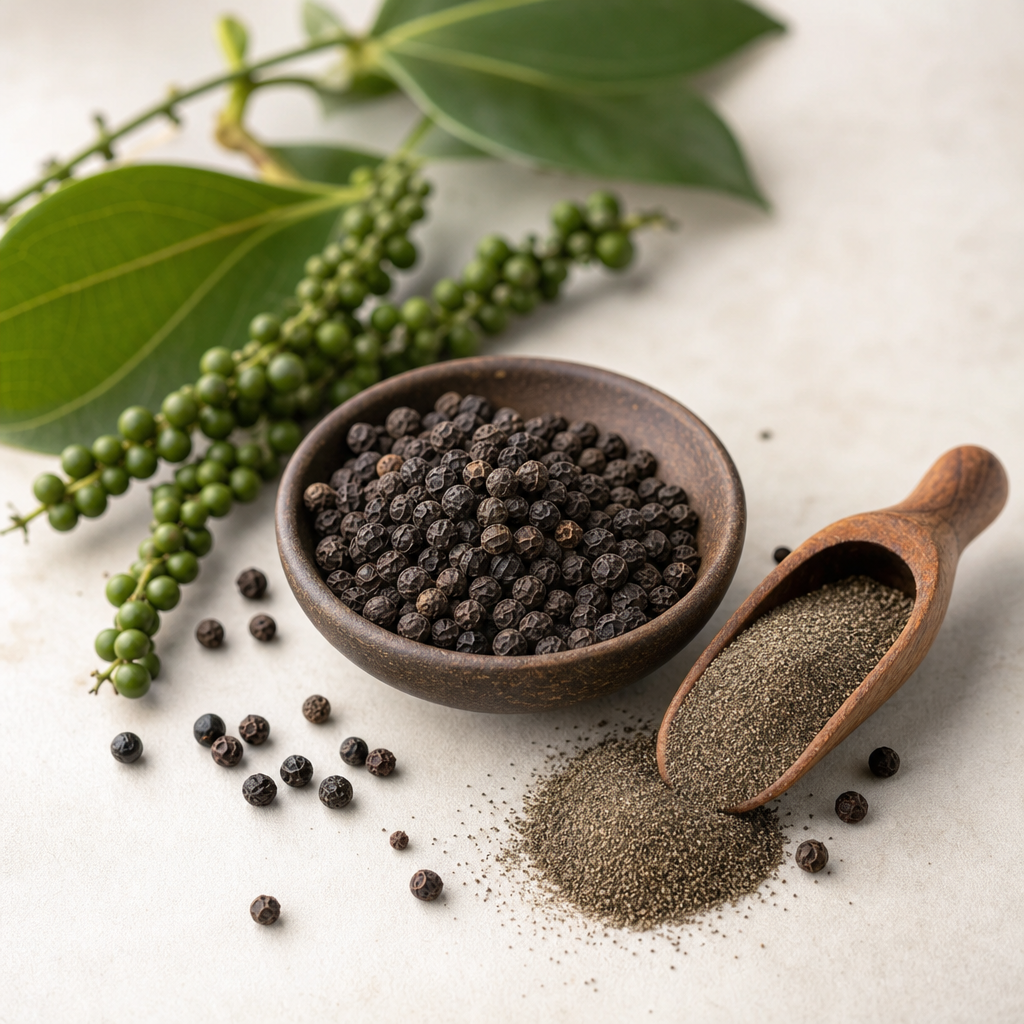
Black pepper is the dried, unripe fruit of Piper nigrum, a flowering vine native to India and widely cultivated across tropical regions. The wrinkled “peppercorns” are harvested green and sun-dried until they turn black, developing their characteristic aroma and pungency. As one of the world’s most commonly used spices, black pepper is valued for flavor as well as its content of bioactive compounds, especially the alkaloid piperine.
From a nutrition perspective, black pepper is a botanical spice and a food-derived ingredient—not an essential nutrient. The body does not require it in the way it requires vitamins, minerals, essential fatty acids, or essential amino acids. However, certain constituents of black pepper, particularly piperine, have been studied for their potential to influence digestion, antioxidant pathways, and the absorption of other nutrients and plant compounds. Black pepper is consumed as a culinary spice, and concentrated extracts (often standardized to piperine) are used in dietary supplements, commonly to enhance the bioavailability of companion ingredients.
Benefits of Black Pepper
-
Enhances absorption of certain nutrients and botanicals
(Strong evidence)
Piperine, the primary pungent alkaloid in black pepper, can increase the bioavailability of several compounds by influencing intestinal transporters and drug-metabolizing enzymes (notably P-glycoprotein and CYP3A4). Human pharmacokinetic studies consistently show that piperine markedly increases blood levels of curcumin and may enhance the absorption of other poorly bioavailable compounds such as resveratrol and coenzyme Q10. The strongest evidence base is with curcumin, where relatively small amounts of piperine are sufficient to meaningfully increase exposure. While enhanced absorption does not guarantee clinical benefit, this is a well-demonstrated kinetic effect relevant when formulating or taking certain supplements.
-
Digestive support via stimulation of digestive secretions
(Limited evidence)
Traditional systems have used black pepper to kindle digestion, and small human and mechanistic studies suggest piperine may stimulate salivary, gastric, and pancreatic enzyme activity and increase bile flow. Some people report improved appetite or a sense of digestive comfort with culinary amounts. However, robust clinical trials are limited, and those with reflux or sensitive gastrointestinal tracts may find pepper irritating rather than helpful.
-
Antioxidant and anti-inflammatory properties
(Preliminary evidence)
Black pepper contains polyphenols and piperine, which demonstrate antioxidant and anti-inflammatory actions in cell and animal models. Early human data suggest possible favorable changes in oxidative stress markers, but findings are inconsistent and often confounded by multi-ingredient formulas. Evidence remains preliminary, and black pepper should not be considered a stand-alone anti-inflammatory therapy.
-
Metabolic effects (glucose and lipid markers)
(Mixed evidence)
Some small trials and multi-ingredient supplement studies report modest improvements in fasting glucose, lipid profiles, or insulin sensitivity when piperine-containing extracts are used. Others show no significant effects. Differences in study design, populations, and co-ingredients make conclusions uncertain. Black pepper should not replace evidence-based approaches to glycemic or lipid management.
-
Thermogenesis and energy expenditure
(Limited evidence)
Piperine may influence catecholamine pathways and thermogenic signaling in preclinical research, with a few small human studies hinting at slight increases in energy expenditure. To date, effects on body weight or fat loss in free-living humans are minimal or not clinically meaningful. Black pepper is best considered a flavor enhancer rather than a weight-loss aid.
-
Antimicrobial and food safety support
(Preliminary evidence)
In vitro studies show that black pepper and its volatile constituents can inhibit the growth of certain microbes and may contribute to the preservative effects of spice blends. These findings do not directly translate to infection treatment in humans, but they support the culinary use of pepper within a varied, safe food-preparation context.
Types or Forms Available
-
Whole black peppercorns
: Dried, unripe berries of Piper nigrum. Varietals such as Tellicherry are graded for size and aroma. Freshly cracked peppercorns preserve volatile aromas better than pre-ground forms.
-
Ground black pepper
: Convenient for cooking and table use, but pre-ground pepper can lose aroma over time. Quality varies widely; look for reputable brands that test for purity and contaminants.
-
Black pepper extract (standardized to piperine)
: Dietary supplements often standardized to about 95% piperine. Commonly included in combination formulas to enhance absorption of ingredients like curcumin or resveratrol. Branded versions (e.g., black pepper fruit extract standardized to piperine) are functionally similar when equivalently standardized.
-
Piperine as a single-ingredient supplement
: Offered in capsules or tablets for tailored dosing alongside a target nutrient or botanical. Potency and labeling clarity are important due to interaction potential.
-
Black pepper essential oil
: Distilled from the fruit and rich in volatile terpenes (e.g., beta-caryophyllene). It does not provide meaningful piperine (an alkaloid, not present in the volatile oil). Primarily used for aroma and flavoring; not equivalent to piperine extracts for bioavailability effects.
How to Use Black Pepper
For most people, black pepper is best used as a culinary spice to enhance flavor. When used as a supplement, it is typically included in small amounts to support absorption of specific nutrients or botanicals with poor bioavailability.
-
Common dosage range:
Culinary use varies by taste. For supplements, typical piperine intakes are about 5–10 mg per dose when taken with a target compound; total daily intakes commonly range from 5–20 mg piperine. Higher amounts are not necessarily more effective and may increase the risk of gastrointestinal irritation or medication interactions.
-
Best timing:
Take piperine at the same time as the nutrient or botanical you wish to enhance (e.g., with your curcumin or resveratrol dose). If you use medications, separate piperine-containing supplements from medications by several hours and consult a healthcare professional.
-
How to take it:
Take with food and water. Pair fat-soluble compounds (e.g., curcumin, coenzyme Q10) with a meal containing some healthy fat to further support absorption.
-
Consistency:
Daily use is only necessary if you are consistently taking a compound that benefits from piperine co-administration. Otherwise, enjoy black pepper as part of normal cooking without a need for strict scheduling.
Food Sources and Supplement Options
Black pepper comes from the Piper nigrum plant and is consumed primarily as a culinary spice. It is also available as a dietary supplement in the form of black pepper extract or isolated piperine, most often included to support absorption of other ingredients rather than for standalone effects.
-
Natural source:
Dried unripe fruit (peppercorns) of Piper nigrum.
-
Culinary forms:
Whole peppercorns for grinding, pre-ground black pepper, and pepper blends.
-
Supplement forms:
Black pepper fruit extract standardized to piperine, or piperine capsules. Commonly paired with curcumin, resveratrol, or coenzyme Q10.
Supplementation may make sense if you use a nutrient or botanical with poor bioavailability and your product is formulated with an appropriate, modest dose of piperine. Food-first approaches remain valuable because whole foods offer additional nutrients and culinary enjoyment; supplements provide targeted dosing and convenience when a specific absorption-enhancing effect is desired.
Who May Benefit from Black Pepper?
-
People taking curcumin, resveratrol, or coenzyme Q10 supplements who want to improve absorption with a small amount of piperine.
-
Athletes using curcumin for joint comfort or recovery and seeking formulations that improve bioavailability.
-
Individuals aiming to reduce sodium intake who use spices like black pepper to add flavor and rely less on salt.
-
Those who enjoy culinary spices and tolerate mild pungency, using pepper to make nutrient-dense meals more appealing.
-
Supplement users who prefer lower doses of certain compounds but want comparable exposure through enhanced absorption, under professional guidance.
Side Effects and Considerations
-
Gastrointestinal irritation:
Pepper’s pungency can aggravate reflux, gastritis, or ulcers and may cause heartburn, stomach discomfort, or loose stools in some people—especially at supplemental doses.
-
Medication interactions:
Piperine can inhibit intestinal and liver enzymes/transporters (e.g., CYP3A4 and P-glycoprotein), potentially increasing blood levels of certain drugs and supplements. Use caution with medications such as anticoagulants/antiplatelets, antiepileptics, antihypertensives, sedatives, immunosuppressants, and drugs with narrow therapeutic windows. Consult a healthcare professional and consider separating dosing by several hours.
-
Pregnancy and breastfeeding:
Culinary amounts are generally considered acceptable, but avoid high-dose supplements containing piperine due to limited safety data and potential interaction effects. Discuss with a healthcare professional first.
-
Children and adolescents:
Culinary use is typically fine, but piperine-containing supplements are not routinely recommended for minors unless advised by a healthcare professional.
-
Allergies and contact sensitivity:
Rarely, black pepper can cause oral irritation, sneezing, or contact dermatitis. Discontinue if adverse reactions occur.
-
Kidney stone risk:
Black pepper contains oxalates. While typical culinary amounts are modest, individuals with a history of calcium oxalate stones may wish to moderate very high intakes and maintain adequate hydration.
-
Surgery and anesthesia:
Because of potential effects on drug metabolism, stop high-dose piperine supplements and inform your surgical team at least 1–2 weeks before a procedure unless advised otherwise.
-
Quality and contamination:
Spices can be contaminated with heavy metals or microbes if poorly processed. Choose reputable brands that perform quality testing; for supplements, look for third-party certification and clear piperine standardization.
-
Dosing caution:
More is not better. High supplemental doses increase the likelihood of interactions and GI upset. Essential oil forms are not substitutes for piperine extracts and should not be ingested undiluted.
-
Medical conditions and professional advice:
People who are pregnant, breastfeeding, taking medications, or managing a medical condition should consult a qualified healthcare professional before using piperine-containing supplements.
Common Myths About Black Pepper
-
Myth: Black pepper melts fat and causes significant weight loss.
Although piperine shows thermogenic effects in preclinical models, human trials do not support meaningful weight-loss outcomes from pepper or piperine alone. Any impact on energy expenditure appears small and unlikely to drive clinically important fat loss without comprehensive diet and activity changes.
-
Myth: Turmeric is useless unless taken with black pepper.
Piperine can substantially increase curcumin absorption, but turmeric can still be used in cooking, and various enhanced curcumin formulations (e.g., phospholipid complexes, micelles) improve bioavailability without piperine. Fat-containing meals may also help. Pepper is helpful, not mandatory.
-
Myth: If some piperine helps, more is always better.
Absorption-enhancing effects occur at relatively small doses (e.g., about 5–10 mg piperine). Higher intakes do not reliably add benefit and can increase the risk of gastrointestinal irritation and drug interactions. Using the lowest effective amount is prudent.
-
Myth: Black pepper essential oil provides the same benefits as piperine extracts.
Essential oil contains volatile terpenes but little to no piperine, an alkaloid that is non-volatile. It is not equivalent to standardized piperine extracts for enhancing bioavailability.
Conclusion
Black pepper is a widely used culinary spice with a notable role in supplementation due to piperine’s ability to enhance the absorption of certain nutrients and botanicals—most convincingly curcumin. Culinary use is the simplest and safest way to enjoy black pepper’s flavor and potential digestive support. When considering supplements, choose products with modest, well-defined piperine doses from reputable brands and use pepper strategically alongside the specific compounds that benefit from it.
People with reflux, those taking medications, and individuals who are pregnant, breastfeeding, or managing health conditions should be cautious with piperine-containing supplements and seek professional guidance. A food-first approach typically makes the most sense, while targeted supplementation can be useful when absorption is a priority. Quality, appropriate dosing, and individualized consideration of interactions are essential for safe, effective use.