What is Echinacea?
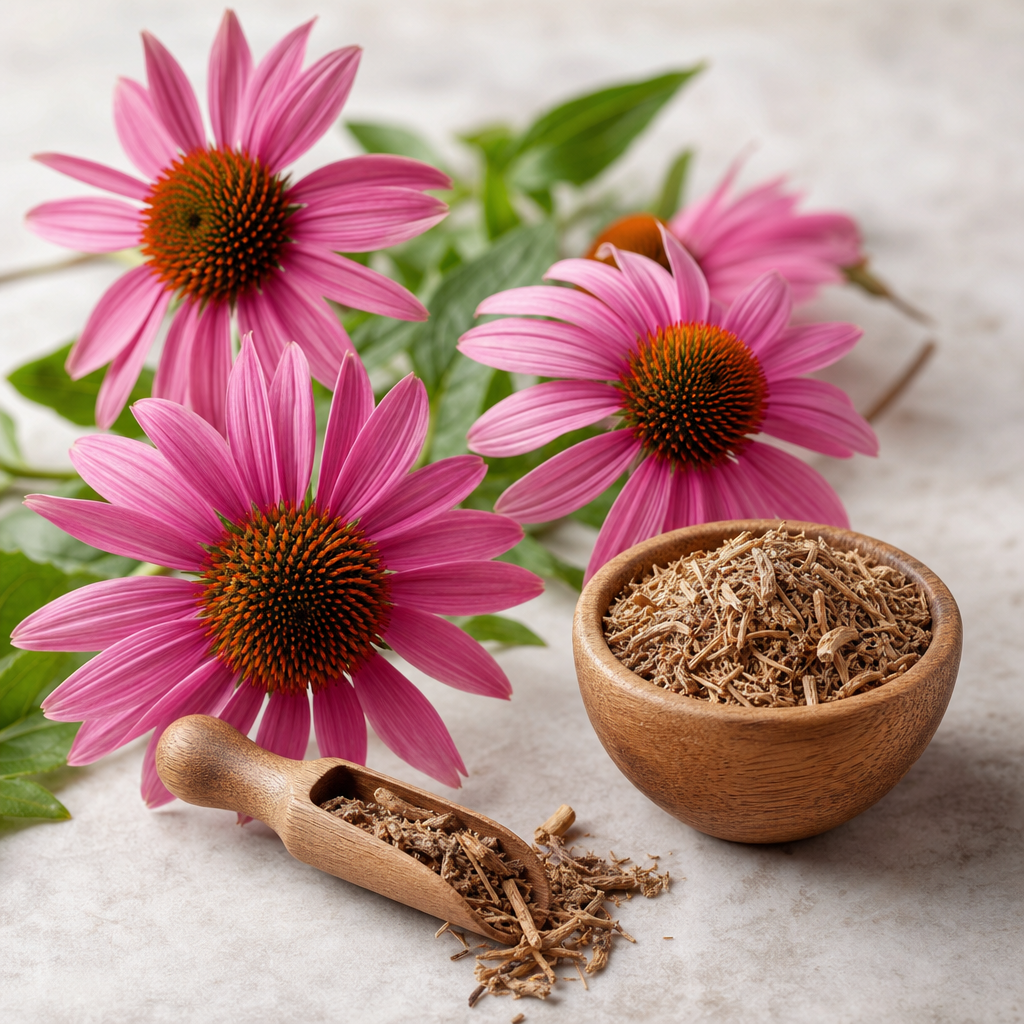
Echinacea is a group of flowering plants in the daisy family (Asteraceae), native to North America. The most commonly used species in supplements are Echinacea purpurea, Echinacea angustifolia, and Echinacea pallida. Traditionally used by Indigenous peoples and later adopted in Western herbalism, echinacea is typically consumed as capsules, liquid extracts (tinctures), teas, lozenges, or throat sprays. The aerial parts (leaves, flowers) and roots contain a mixture of compounds such as alkylamides, caffeic acid derivatives (including cichoric acid), and polysaccharides that may influence immune activity.
Echinacea is an herb and dietary supplement, not an essential nutrient. Unlike vitamins and minerals, the body does not require echinacea to function. Instead, it is used for potential supportive effects—most notably for upper respiratory tract symptoms such as the common cold. Research suggests it may modestly influence aspects of immune response and inflammation, though results vary by species, plant part, extraction method, and product quality. As with many botanicals, benefits are context-dependent and evidence ranges from moderate to preliminary depending on the outcome measured.
Benefits of Echinacea
-
May reduce duration and severity of common cold symptoms
(Moderate evidence)
Echinacea, particularly Echinacea purpurea preparations, has been associated with a small reduction in the duration and severity of cold symptoms when taken at the first sign of illness and continued for several days. Meta-analyses show mixed results, but many report modest benefits such as a shorter course of illness or milder symptom scores. Effects appear product-specific and are more consistent in standardized extracts used promptly at symptom onset.
-
Prevention of upper respiratory tract infections (URTIs)
(Mixed evidence)
Studies assessing echinacea for preventing colds show inconsistent findings. Some trials report fewer colds or fewer sick days during seasonal use, while others find no significant difference from placebo. Variability likely stems from differences in species (purpurea vs. angustifolia), plant parts (aerial vs. root), dosing schedules, and extract standardization (e.g., alkylamide content). Overall, prevention effects are uncertain but possible with specific formulations.
-
Adjunct support during high-exposure or high-stress periods
(Limited evidence)
In groups under frequent exposure to pathogens—such as travelers, teachers, healthcare workers, or endurance athletes in heavy training—some studies suggest echinacea may reduce the number of symptomatic days or the intensity of URTI symptoms. Evidence remains limited and heterogeneous, but strategic, time-bound use (e.g., during travel or intense training blocks) is a common practical approach among users.
-
Symptom relief for sore throat and cough
(Limited evidence)
Echinacea-containing lozenges and sprays (often combined with other botanicals like sage) have shown short-term relief for throat irritation and cough in some trials. Because multi-ingredient products are common, it is difficult to isolate echinacea’s specific contribution. Still, localized delivery to the throat may provide soothing effects while systemic extracts address broader cold symptoms.
-
Potential to lower antibiotic use in recurrent respiratory infections
(Limited evidence)
A few studies using standardized Echinacea purpurea extracts reported fewer recurrent colds and reduced antibiotic prescriptions compared with control conditions. While promising from an antibiotic stewardship perspective, data are not uniform across products, and replication in diverse populations is needed before drawing firm conclusions.
-
Anti-inflammatory and antiviral actions in laboratory studies
(Preliminary evidence)
In vitro and animal research shows echinacea constituents can modulate cytokine activity, influence macrophage function, and exhibit antiviral effects against select respiratory viruses. Human biomarker changes have been observed with certain extracts, but clinical relevance and consistency are not well established. These mechanistic findings support plausibility but do not guarantee clinical outcomes on their own.
Types or Forms Available
-
Species differences (E. purpurea, E. angustifolia, E. pallida)
: Most human research uses E. purpurea. E. angustifolia and E. pallida are also used but have different phytochemical profiles. Benefits and dosing may not be interchangeable across species.
-
Plant part (aerial parts vs. root)
: Aerial parts of E. purpurea are commonly used and often standardized for cichoric acid and alkylamides. Roots (especially of E. angustifolia) contain distinct alkylamide profiles. Some products blend parts to balance constituents.
-
Standardized extracts
: Quality products specify the species, part, extract ratio (e.g., 4:1), and markers (e.g., alkylamides, cichoric acid). Standardization helps ensure batch-to-batch consistency and may correlate with more predictable effects.
-
Expressed juice or pressed herb preparations
: Liquid forms derived from fresh aerial parts (sometimes sold as proprietary brands) are used in several trials. These can differ chemically from dried extracts and are typically dosed in milliliters.
-
Tinctures and liquid extracts
: Alcohol- or glycerin-based extracts allow flexible dosing and rapid onset at symptom start. Alcohol content varies; glycerites are alcohol-free alternatives.
-
Capsules and tablets
: Convenient for standardized dosing of dried extracts. Look for products that clearly identify species, part, and standardization targets.
-
Teas
: Offer hydration and soothing warmth. Tea provides a gentler, less standardized intake of water-soluble constituents; potency is generally lower than extracts.
-
Lozenges and throat sprays
: Designed for localized throat comfort. Many are combination formulas; evaluate labels for echinacea content and potential allergens.
How to Use Echinacea
There is no official recommended intake for echinacea. Dosing varies by species, extract type, and goal (onset of symptoms vs. seasonal support). Consistency and timing matter: many users begin at the first sign of a cold and continue for several days to a week. For planned exposure (e.g., travel season), some people use it daily for a limited period with breaks.
-
Common dosage range:
Standardized dried extracts often provide about 300–500 mg per serving, taken 2–3 times daily for short periods. Tinctures are commonly dosed around 2–3 mL up to three times daily at onset of symptoms (follow product instructions). Lozenges and sprays are used as directed on labels. Avoid excessive or prolonged high-dose use.
-
Best timing:
Start at the first sign of upper respiratory symptoms (e.g., scratchy throat, mild congestion). For seasonal or situational support, consider short courses during periods of higher exposure or stress.
-
How to take it:
Capsules/tablets with water; tinctures can be taken in a small amount of water or juice; teas sipped hot; lozenges and sprays for local throat application. Taking with a small snack may reduce mild stomach upset.
-
Consistency:
Typically used short-term (several days to a few weeks). Some studies use continuous courses lasting up to 8–12 weeks with specific standardized products. If considering longer use, discuss with a healthcare professional, especially if you have medical conditions or take medications.
Food Sources and Supplement Options
Echinacea is not a dietary nutrient found in common foods; it is a botanical herb sourced from Echinacea species. As such, intake comes from herbal preparations rather than typical diet. Whole-plant preparations provide a complex mix of constituents (alkylamides, caffeic acid derivatives, and polysaccharides), while supplements allow for targeted and standardized dosing.
Supplementation may make sense for short-term support at the start of cold symptoms or during predictable high-exposure periods, particularly when you want a consistent dose. When choosing a product, look for clear identification of the species and plant part, extraction ratio, and standardization markers, and consider third-party tested brands to reduce the risk of adulteration or mislabeling. While whole foods are generally preferred for meeting nutrient needs, herbs like echinacea are primarily used as supplements because their active compounds are not typically consumed through regular meals.
Who May Benefit from Echinacea?
-
Adults who want modest, short-term support for cold symptom duration or severity.
-
People with frequent community exposure (teachers, healthcare workers, parents of young children).
-
Travelers during cold/flu season or long flights.
-
Endurance athletes during heavy training blocks, when URTI risk can be higher.
-
Individuals who prefer non-pharmacologic first-line options for early cold symptoms.
-
Those who tolerate echinacea well and have identified a specific, standardized product that works for them.
Side Effects and Considerations
-
Allergies:
Echinacea belongs to the Asteraceae (daisy/ragweed) family. People with known allergies to ragweed, chrysanthemums, marigolds, or daisies may be at higher risk of allergic reactions (rash, itching, hives, rarely anaphylaxis). Discontinue and seek care if reactions occur.
-
Gastrointestinal upset:
Some users report nausea, stomach discomfort, or a transient tingling sensation on the tongue with liquid extracts. Taking with a small snack or diluting tinctures may help.
-
Autoimmune and immune-related conditions:
Because echinacea may influence immune activity, individuals with autoimmune diseases, transplant recipients, or those on immunosuppressive therapy should avoid use unless advised and monitored by a clinician.
-
Medication interactions:
Potential interactions may occur with immunosuppressants and, theoretically, with drugs metabolized by certain liver enzymes. Evidence is mixed, but use caution with narrow-therapeutic-index medications and consult a healthcare professional.
-
Liver considerations:
Rare cases of liver enzyme elevations have been reported, sometimes with multi-herb products. People with existing liver disease or those taking hepatotoxic medications should exercise caution and avoid high-dose or prolonged use without medical guidance.
-
Pregnancy and breastfeeding:
Human data are limited and quality varies. Out of caution, pregnant or breastfeeding individuals should consult a healthcare professional before use and generally avoid unless clearly needed and supervised.
-
Children:
Pediatric recommendations vary by country and product; allergy risk may be higher in younger children. Caregivers should consult a pediatric clinician before giving echinacea to children.
-
Surgery and procedures:
Because of potential immune and metabolic effects, stop echinacea 1–2 weeks before scheduled surgery unless your surgical team advises otherwise.
-
Quality and adulteration:
Misidentification of species and variable alkylamide content are common. Choose reputable brands with third-party testing and clear standardization to reduce variability.
-
Duration of use:
Most evidence supports short-term use. If considering extended courses (e.g., seasonal support), discuss duration and dosing with a qualified professional to minimize risks.
-
Medical advice:
Anyone who is pregnant, breastfeeding, taking medications, or managing a medical condition should consult a healthcare professional before using echinacea.
Common Myths About Echinacea
-
Myth: Echinacea cures the common cold.
The common cold is caused by many viruses, and there is no cure. Echinacea may modestly reduce symptom duration or severity in some people and with specific products, but it does not eradicate infections or guarantee rapid recovery.
-
Myth: More is better—high doses prevent all colds.
Taking very large amounts does not ensure better outcomes and may increase the risk of side effects. Evidence for prevention is mixed, and benefits—when present—are typically modest and product-specific. Thoughtful, short-term use at onset is a more evidence-aligned strategy than megadosing.
-
Myth: All echinacea products work the same.
Effects vary by species (e.g., E. purpurea vs. E. angustifolia), plant part (aerial vs. root), extraction method, and standardization (alkylamide and cichoric acid content). Choosing a well-characterized, third-party tested product is essential for consistency.
-
Myth: Echinacea is completely safe for everyone because it’s natural.
“Natural” does not guarantee universal safety. People with allergies to Asteraceae plants, those with autoimmune conditions, transplant recipients, and individuals on immunosuppressants should be cautious or avoid use. Pregnancy, breastfeeding, liver disease, and pediatric use warrant professional guidance.
Conclusion
Echinacea is a non-essential herbal supplement that may offer modest support for upper respiratory symptoms, especially when started at the first sign of a cold and used for a short period. Benefits for preventing colds are uncertain and vary by product quality, species, plant part, and dose. If you choose to try echinacea, select a standardized, third-party tested product and use it in a targeted, time-limited manner.
People with allergies to Asteraceae plants, autoimmune conditions, transplants, liver disease, or those who are pregnant, breastfeeding, or giving it to children should consult a healthcare professional. While whole foods are the foundation of health, echinacea is primarily a supplement rather than a dietary source of nutrients. Thoughtful use, realistic expectations, and attention to product quality can help determine whether it’s a practical addition to your self-care plan during cold season.