What is Fiber?
Dietary fiber is a group of non-digestible carbohydrates and lignin found in plant foods. Unlike starches and sugars, fiber resists digestion in the small intestine and reaches the large intestine, where some types are fermented by gut microbes. Broadly, fiber is categorized as soluble (dissolves in water), insoluble (does not dissolve), viscous/gel-forming (thickens fluids), and fermentable (serves as a food source for beneficial gut bacteria). These physical properties drive fiber’s different effects on digestion, cholesterol, blood sugar, and the gut microbiome.
Fiber comes from whole plant foods such as legumes, whole grains, fruits, vegetables, nuts, seeds, and certain plant-derived supplements like psyllium husk or inulin from chicory root. Fiber is a food component and can also be used as a supplement, but it is not an essential nutrient in the same sense as vitamins or minerals—the body does not require fiber to maintain basic life functions. However, consistent evidence links higher dietary fiber intake with better digestive and cardiometabolic health, which is why health authorities set recommended intakes and encourage fiber-rich eating patterns.
Benefits of Fiber
-
Improved bowel regularity and relief of constipation
(Strong evidence)
Gel-forming soluble fibers like psyllium increase stool water content and softness while adding bulk, which helps normalize stool form and frequency. Insoluble fibers (e.g., wheat bran) add bulk and speed transit time. Clinical trials and guidelines consistently support fiber—especially psyllium—for functional constipation and general regularity. Start low and increase gradually with adequate water to minimize gas or cramping.
-
Lower LDL cholesterol and heart health support
(Strong evidence)
Viscous fibers such as psyllium, oat beta-glucans, and barley beta-glucans bind bile acids in the gut, increasing their excretion and nudging the body to use more cholesterol to make new bile. Numerous trials and meta-analyses show modest but meaningful reductions in LDL cholesterol with regular intake of these fibers, supporting cardiovascular risk reduction as part of a heart-healthy diet and lifestyle.
-
Better post-meal blood sugar control and reduced diabetes risk
(Moderate evidence)
Soluble, viscous fibers slow gastric emptying and carbohydrate absorption, blunting post-meal glucose spikes. Fermentable fibers also produce short-chain fatty acids (SCFAs) that can influence insulin sensitivity. Controlled studies indicate improvements in postprandial glucose and modest A1C benefits when fiber intake is increased within a balanced diet. Long-term prevention data are supportive but vary by population and fiber type.
-
Weight management and appetite regulation
(Moderate evidence)
High-fiber foods generally have lower energy density and promote fullness through gastric distension, delayed emptying, and hormonal effects. Fiber-rich eating patterns are associated with easier calorie control and modest weight loss. Supplement trials (e.g., psyllium, glucomannan, partially hydrolyzed guar gum) show small average effects, most effective when combined with diet quality and activity changes.
-
Gut microbiome and colonic health
(Moderate evidence)
Fermentable fibers (inulin, fructo-oligosaccharides, galacto-oligosaccharides, resistant starch) feed beneficial bacteria that produce SCFAs such as butyrate, acetate, and propionate. SCFAs help maintain the colon lining and support a healthy inflammatory balance. While microbiome responses vary by individual, consistent intake of diverse fibers tends to increase microbial diversity and SCFA production.
-
Support for certain irritable bowel syndrome (IBS) symptoms
(Mixed evidence)
Soluble, gel-forming fibers like psyllium often help improve stool form and reduce constipation or diarrhea variability in IBS. However, some fermentable fibers (e.g., inulin/FOS) can worsen gas and bloating in sensitive individuals, and insoluble fibers (e.g., wheat bran) may aggravate symptoms for some. Choice of fiber type and a gradual titration are crucial.
-
Colorectal health and cancer risk
(Mixed evidence)
Observational studies often associate higher fiber intake—especially from whole grains—with lower risk of colorectal cancer and polyps. Proposed mechanisms include increased stool bulk, dilution of carcinogens, and SCFA production. However, randomized trials for cancer endpoints are limited and results are not uniform. Fiber should be viewed as one supportive component within an overall healthy lifestyle.
Types or Forms Available
-
Soluble, viscous (gel-forming) fibers
Examples include psyllium husk, oat and barley beta-glucans, pectins, and glucomannan. These fibers thicken when mixed with water, which helps lower LDL cholesterol and blunt post-meal glucose spikes. Psyllium is widely studied in supplement form; beta-glucans are often consumed via oats and barley or standardized extracts indicating a specific beta-glucan content.
-
Insoluble fibers
Found in wheat bran, cellulose, and many vegetables. Insoluble fibers increase stool bulk and speed intestinal transit, which can aid regularity for some people. They are less effective than gel-forming fibers for softening hard stools and can aggravate symptoms in sensitive IBS subtypes.
-
Fermentable prebiotic fibers
Inulin, fructo-oligosaccharides (FOS), galacto-oligosaccharides (GOS), and partially hydrolyzed guar gum (PHGG) primarily support beneficial gut bacteria and SCFA production. They may aid regularity and gut health but can cause gas and bloating if introduced too quickly. Products often specify chain length or degree of polymerization, which influences fermentability.
-
Resistant starch (RS)
Carbohydrate that resists digestion in the small intestine. Types include RS1 (physically inaccessible in whole/partially milled grains), RS2 (raw potato/green banana), RS3 (retrograded starch in cooked-then-cooled potatoes/rice), and RS4 (chemically modified). Often used for microbiome and SCFA support; tolerance varies.
-
Methylcellulose and acacia fiber
Methylcellulose is a non-fermentable soluble fiber often better tolerated with less gas, helpful for stool consistency. Acacia (gum arabic) is a gentle, fermentable fiber sometimes used to increase fiber intake with modest GI symptoms.
-
Delivery forms
Powders (to mix with water or smoothies), capsules, chewables, fiber-enriched foods/bars, and ready-to-drink beverages. Powders allow flexible dosing; capsules offer convenience but often require many capsules to reach effective doses. Look for products that disclose fiber type and amount per serving.
How to Use Fiber
It’s best to emphasize whole-food sources of fiber and use supplements as needed to close gaps or address specific goals like constipation or LDL reduction. Tolerance varies; introduce or change fiber gradually.
-
Common dosage range:
General intake targets are about 14 g of fiber per 1,000 kcal consumed daily (roughly 25 g/day for most adult women and 38 g/day for most adult men). When using supplements, many people start with 3–5 g/day and increase over 1–2 weeks. For gel-forming fibers like psyllium, typical supplemental amounts range from about 5–10 g/day, often divided. Follow product labels and avoid megadoses.
-
Best timing:
Spreading fiber across meals tends to improve tolerance and support more stable blood sugar responses. For constipation, morning and/or evening dosing can be helpful. Separate fiber supplements from medications by at least 2–4 hours to reduce the chance of binding and altered absorption.
-
How to take it:
Take fiber with adequate water. For powders like psyllium, mix in a full glass of water, stir briskly, and drink promptly, followed by another glass if directed. Many people do well adding fiber to meals or snacks (e.g., oats, yogurt, smoothies).
-
Consistency:
Benefits for regularity, lipids, and blood sugar depend on steady, daily intake. If you’re adjusting your diet or supplement routine, increase by small increments each few days and monitor symptoms.
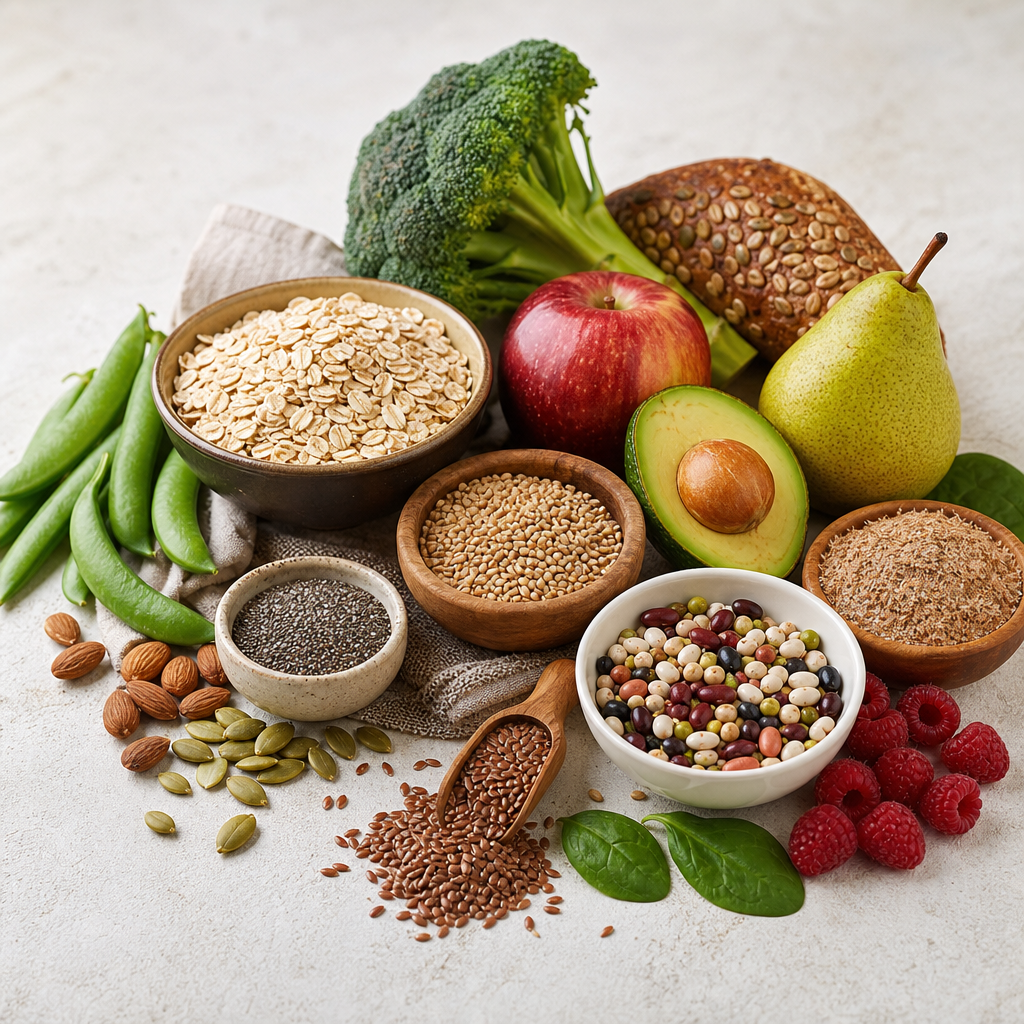
Food Sources and Supplement Options
Fiber is naturally abundant in plant foods, and a “food-first” approach provides additional vitamins, minerals, phytonutrients, and beneficial compounds not present in most supplements. Supplements can be useful when dietary intake is low, when a specific fiber type (e.g., psyllium for LDL lowering or constipation) is desired, or for practical reasons like travel or limited food access.
-
Legumes:
Lentils, black beans, chickpeas, split peas, and soybeans.
-
Whole grains:
Oats, barley, bulgur, quinoa, brown rice, and whole-wheat products.
-
Fruits:
Berries, pears, apples, oranges, and bananas (greener bananas also provide resistant starch).
-
Vegetables:
Artichokes, broccoli, Brussels sprouts, carrots, leafy greens, and winter squash.
-
Nuts and seeds:
Almonds, pistachios, chia, flaxseed, and pumpkin seeds.
-
Specialty sources:
Psyllium husk, ground flaxseed, chia gel, chicory root (inulin), acacia fiber, and green banana flour (resistant starch).
Whole foods offer fiber alongside potassium, magnesium, folate, antioxidants, and plant compounds. Supplements provide more targeted dosing and specific functional properties (e.g., gel-forming viscosity), but they do not replace the overall nutrient density and diversity of a fiber-rich diet.
Who May Benefit from Fiber?
-
People with low intake of fruits, vegetables, legumes, and whole grains who need a simple way to increase fiber gradually.
-
Individuals with functional constipation or irregular bowel habits, particularly those who may respond to gel-forming soluble fiber.
-
Adults with elevated LDL cholesterol seeking a non-pharmacologic adjunct; psyllium or beta-glucans may help.
-
People with prediabetes or type 2 diabetes who aim to blunt post-meal glucose spikes through viscous fibers and food-based strategies.
-
Those pursuing weight management who benefit from higher satiety and lower energy density diets.
-
Older adults who may experience slower gut transit and find fiber plus fluids helpful.
-
Some endurance athletes who experience travel-related irregularity or prefer predictable GI patterns; careful testing in training is essential.
-
Individuals on low-carbohydrate or gluten-free diets whose fiber intake unintentionally drops; targeted high-fiber, low-starch foods or specific supplements can help.
Side Effects and Considerations
-
GI symptoms:
Rapid increases in fiber can cause gas, bloating, cramping, or loose stools. Increase intake gradually and hydrate well to improve tolerance.
-
Medication interactions:
Fiber can bind or delay absorption of some medications (e.g., levothyroxine, certain antidepressants, carbamazepine). Separate fiber supplements and oral medications by 2–4 hours. Discuss timing with your clinician or pharmacist.
-
Blood sugar and diabetes therapy:
Fiber can modestly lower post-meal glucose; those on insulin or insulin secretagogues should monitor for changes in glycemic control and consult their healthcare professional for medication adjustments as needed.
-
Swallowing difficulties or strictures:
People with esophageal narrowing, bowel strictures, or a history of obstruction should avoid dry fiber boluses and consult a clinician before using bulking agents like psyllium.
-
Hydration needs:
Insufficient fluid with fiber supplements may worsen constipation or, rarely, contribute to impaction. Follow product instructions for water intake. Those on fluid restrictions should get individualized guidance.
-
IBS and FODMAP sensitivity:
Fermentable fibers (inulin, FOS, GOS) may exacerbate gas and bloating in sensitive individuals; psyllium or partially hydrolyzed guar gum are often better tolerated. Personalize fiber type and dose.
-
Allergy risk:
Rare allergic reactions to psyllium (including occupational exposure) can occur. Discontinue and seek care if wheezing, rash, or swelling develops.
-
Mineral and nutrient absorption:
Very high fiber intakes could slightly reduce absorption of some minerals; a balanced diet typically mitigates this. Avoid excessive supplemental doses.
-
Pregnancy, breastfeeding, children:
Dietary fiber from foods is generally encouraged. For supplements, especially in higher doses or with medical conditions, consult a healthcare professional to tailor type and amount.
-
Kidney or liver concerns:
High-fiber foods can be higher in potassium or phosphorus; individuals with advanced kidney disease may need personalized dietary guidance. Supplements may be preferable in some cases—seek medical advice.
-
Quality and purity:
Choose reputable brands that specify fiber type and dose and use third-party testing when available. Some products may contain added sugars, sugar alcohols, or artificial sweeteners that can affect tolerance.
Common Myths About Fiber
-
Myth: All fiber is the same.
Reality: Fiber types differ in solubility, viscosity, and fermentability, which lead to distinct effects. Psyllium helps form soft, bulky stools and lowers LDL; inulin mainly feeds gut microbes; insoluble bran adds bulk but may not soften hard stools. Matching fiber type to your goal improves results.
-
Myth: Fiber only helps you poop.
Reality: Beyond regularity, viscous fibers can lower LDL cholesterol and blunt post-meal glucose spikes, while fermentable fibers support SCFA production and a healthier microbiome. These effects extend to cardiometabolic and gut health.
-
Myth: Fiber supplements are just as good as whole foods.
Reality: Supplements can provide targeted benefits and convenience, but whole foods deliver fiber along with vitamins, minerals, antioxidants, and phytochemicals. Most people benefit from a food-first approach and using supplements to fill specific gaps.
-
Myth: If fiber causes gas, it’s harmful.
Reality: Initial gas and bloating often reflect increased fermentation and usually improve with gradual titration and different fiber choices. Persistent or severe symptoms warrant adjusting type and dose or discussing with a clinician.
-
Myth: Only insoluble fiber prevents constipation.
Reality: Gel-forming soluble fibers like psyllium are often more effective for softening hard stools and normalizing stool form. Insoluble fibers work for some, but can exacerbate symptoms in others, especially with IBS.
Conclusion
Fiber is a non-digestible carbohydrate from plant foods that supports regularity, cholesterol and glucose control, and a healthy gut ecosystem. While not “essential” like vitamins or minerals, a fiber-rich diet is strongly associated with better long-term health. A practical approach is to prioritize whole foods—legumes, whole grains, fruits, vegetables, nuts, and seeds—then use specific fiber supplements (e.g., psyllium, beta-glucans, partially hydrolyzed guar gum) to address targeted needs such as constipation or LDL reduction.
Start low and increase gradually, drink adequate water, and time supplements away from medications. People who are pregnant or breastfeeding, children, or anyone taking medications or managing health conditions should consult a healthcare professional to personalize fiber type and dose. Choose quality products from reputable brands, and remember that the best results come from consistent intake alongside an overall healthy lifestyle.