What is Glucomylase?
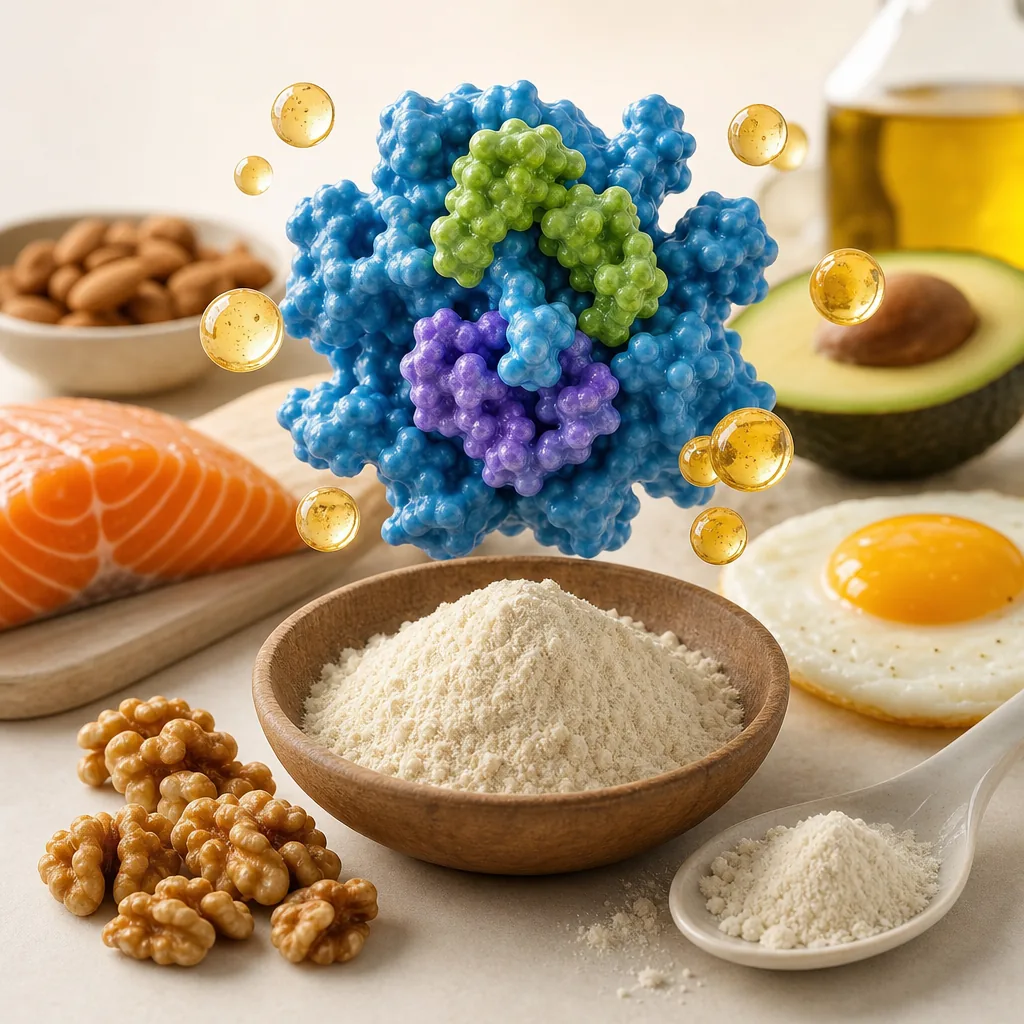
Glucomylase—more commonly spelled glucoamylase and also known as amyloglucosidase—is a carbohydrate-digesting enzyme. It catalyzes the stepwise removal of glucose units from the ends of starch and dextrins, converting them into glucose that can be absorbed in the small intestine. In supplements, it is typically produced by microbial fermentation using organisms such as Aspergillus niger, Aspergillus oryzae, or Rhizopus species. In the human body, glucoamylase-like activity is part of the intestinal brush-border enzyme complex (maltase-glucoamylase), which works alongside alpha-amylase to complete the digestion of starches.
Glucomylase is not an essential nutrient like a vitamin or mineral. The body does not require dietary glucoamylase for survival because humans synthesize their own carbohydrate-digesting enzymes. However, supplemental glucomylase is used as a food-derived or microbially produced digestive aid to help break down starch-rich meals, support comfort in some people who experience starch-related digestive symptoms, and, in certain cases, to improve tolerance of starch-based sports fuels.
Benefits of Glucomylase
-
Supports digestion of starch-rich meals
(Limited evidence)
Supplementing with glucomylase can help break down complex starches and dextrins into glucose, potentially reducing sensations of post-meal fullness, bloating, and gas in people whose symptoms are triggered by starch maldigestion. Small clinical studies of multi-enzyme formulations that include glucomylase report modest improvements in gastrointestinal comfort, but high-quality, glucomylase-only trials are limited.
-
Adjunct support for mild carbohydrate maldigestion
(Limited evidence)
Individuals with age-related reductions in digestive capacity or those with non-severe carbohydrate maldigestion may find that glucomylase helps complete starch breakdown when taken with meals. It should be viewed as a complementary aid rather than a replacement for medical evaluation or prescription pancreatic enzyme therapy when indicated.
-
May improve tolerance of starch-based sports fuels
(Preliminary evidence)
During intense exercise, some athletes experience gastrointestinal distress from concentrated starch or maltodextrin products. Glucomylase may help convert residual dextrins into absorbable glucose, potentially improving comfort and carbohydrate availability. Evidence is preliminary and often derived from formulations that combine several enzymes, so individual responses vary.
-
Helps with meal flexibility in high-starch dietary patterns
(Limited evidence)
People consuming diets centered on grains, tubers, or starch-based meal replacements may find that a targeted enzyme taken with larger or more rapidly eaten meals improves subjective tolerance. Benefits appear most likely when symptoms are specifically associated with starch digestion rather than fiber or fermentable oligosaccharides, which rely on different enzymes.
-
Complements alpha-amylase activity
(Mixed evidence)
Alpha-amylase initiates starch digestion by breaking internal bonds, producing shorter chains (dextrins). Glucomylase then removes glucose units from chain ends. In theory, providing both may produce more complete starch digestion. Some formulations combining these enzymes are associated with improved symptom scores, but results vary across studies and populations.
Types or Forms Available
-
Microbial sources (Aspergillus- or Rhizopus-derived)
: Most supplements use glucomylase produced by fermenting Aspergillus niger, Aspergillus oryzae, or Rhizopus species. These are typically vegetarian/vegan and designed to function across a broad pH range. Acid-stable variants are intended to survive stomach acidity better before acting in the small intestine.
-
Standalone glucomylase vs. multi-enzyme blends
: Standalone products target starch digestion specifically. Multi-enzyme blends pair glucomylase with alpha-amylase, proteases, lipase, lactase, alpha-galactosidase, and others to cover mixed meals. Blends may be more practical for varied diets, while single-ingredient products suit targeted use with starch-heavy meals.
-
Capsules, tablets, and powders
: Capsules and tablets standardize activity per serving and are convenient for mealtime use. Powders can be mixed into shakes or used in culinary applications but require careful measuring for consistent dosing. Some specialty products use enteric coatings to enhance delivery to the small intestine.
-
Activity units (AGU) vs. milligrams
: Quality products list activity in AGU (amyloglucosidase units) rather than just milligrams. Activity units reflect the actual enzymatic work capacity, while milligram amounts do not necessarily indicate potency.
-
Food-processing formulations
: Liquid or high-activity industrial-grade glucomylase is used in brewing and food manufacturing for starch saccharification. These are not intended as dietary supplements and should not be used for personal consumption.
How to Use Glucomylase
Glucomylase is typically used as a mealtime digestive aid to assist with starch digestion. Because product potency varies, follow the specific label directions and consider starting with a low dose to assess tolerance.
-
Common dosage range:
Supplements commonly provide glucomylase in the range of approximately 10–100 AGU per serving when used for meal support, often within multi-enzyme blends. Because activity units differ by manufacturer and formulation, use the lowest effective dose and do not exceed label instructions.
-
Best timing:
Take at the first bite of a starch-containing meal. For longer meals, some people split the dose between the start and midpoint of eating.
-
How to take it:
Swallow capsules with water alongside food. Powders can be mixed into a beverage consumed with the meal. Products that are acid-stable or enteric-coated may perform better through the stomach to the small intestine.
-
Consistency:
Many users take glucomylase only with starch-heavy meals or when they notice symptoms. Daily, around-the-clock use is typically unnecessary unless advised by a clinician for a specific reason.
Food Sources and Supplement Options
Glucomylase is not typically consumed as a nutrient from whole foods. It is primarily a microbially produced enzyme found in fermentation starters such as koji (Aspergillus oryzae) and Rhizopus cultures used for tempeh. While some traditionally fermented foods may contain amylolytic activity during production, most finished foods are cooked or pasteurized, which inactivates enzymes. As a result, meaningful quantities of active glucomylase are usually obtained through supplements rather than food.
-
Koji-fermented grains (e.g., used to make sake and miso; enzymes often inactivated in final foods)
-
Rhizopus-fermented soy (e.g., tempeh; cooking reduces active enzyme content)
-
Sourdough starters and malted grains used in baking and brewing (primarily processing aids, not dietary sources)
Supplementation may make sense for individuals who experience starch-related digestive discomfort, those experimenting with enzyme support for high-starch meals, or athletes testing tolerance of starch-based fueling strategies. Whole foods provide fiber, micronutrients, and phytonutrients that enzymes do not, so a food-first approach to overall nutrition remains important. Supplements can offer targeted, standardized activity when a specific digestive need exists.
Who May Benefit from Glucomylase?
-
People who experience bloating or gas specifically after starch-heavy meals (e.g., large portions of rice, pasta, potatoes, or grain-based dishes)
-
Older adults who notice decreased digestive comfort with complex carbohydrate meals
-
Athletes using starch- or maltodextrin-based fueling who experience gastrointestinal distress during training or racing
-
Individuals following predominantly plant-based, high-starch diets who want additional support for large or rapidly eaten meals
-
Those experimenting with multi-enzyme blends for mixed-meal digestion, where glucomylase complements alpha-amylase and other enzymes
Side Effects and Considerations
-
Glycemic impact:
Because glucomylase increases the rate at which starch is converted to glucose, it may raise or accelerate post-meal blood glucose. People with diabetes, insulin resistance, or those using continuous glucose monitoring should use caution and monitor responses.
-
Interactions with diabetes medications:
Enzymes that speed carbohydrate digestion may counteract the effects of alpha-glucosidase inhibitors (e.g., acarbose, miglitol). Discuss use with a healthcare professional if you take medications affecting carbohydrate absorption or blood sugar.
-
Gastrointestinal symptoms:
Some users may experience nausea, abdominal discomfort, diarrhea, or constipation, especially at higher doses or when first starting.
-
Allergy and sensitivity:
Rarely, individuals may react to enzymes produced by Aspergillus species. People with known mold sensitivities should exercise caution and discontinue use if adverse reactions occur.
-
Condition-specific caution:
Those with active gastrointestinal diseases (e.g., severe gastritis, ulcers, inflammatory bowel disease flares) should consult a clinician before use, as responses can be unpredictable.
-
Pregnancy, breastfeeding, and children:
Safety data are limited. Avoid use unless recommended by a qualified healthcare professional who can evaluate risks and benefits.
-
Not a therapy for celiac disease or food allergies:
Glucomylase does not digest gluten or prevent immune reactions to allergens. It should not be used to intentionally consume problematic foods.
-
Quality and labeling:
Choose products that list activity units (e.g., AGU), use good manufacturing practices, and ideally offer third-party testing. Activity, not milligrams, determines potency.
-
Dose discipline:
Do not exceed label directions. Higher doses are not necessarily better and may increase side effects without added benefit.
-
Medical oversight:
Anyone who is pregnant, breastfeeding, taking medications, or managing a medical condition should consult a healthcare professional before starting glucomylase.
Common Myths About Glucomylase
-
Myth: Glucomylase is an essential nutrient everyone should take.
Glucomylase is a digestive enzyme, not an essential vitamin or mineral. The body produces its own starch-digesting enzymes, and most people do not require supplementation.
-
Myth: Glucomylase lowers blood sugar after meals.
Glucomylase converts starch into glucose, which can increase or accelerate glucose absorption. It is not a blood sugar–lowering agent and may raise postprandial glucose in some situations.
-
Myth: Taking glucomylase lets you eat unlimited carbs without consequences.
Enzymes can aid digestion but do not eliminate the metabolic effects of large carbohydrate loads. Balanced portions, fiber, protein, and overall diet quality still matter for glycemic control and health.
-
Myth: Glucomylase can replace a medically prescribed enzyme therapy.
In conditions like pancreatic insufficiency, prescription pancreatic enzymes are the standard of care. Over-the-counter glucomylase may complement, but not replace, clinician-directed therapy.
Conclusion
Glucomylase (glucoamylase) is a microbially produced digestive enzyme that helps convert starches and dextrins into absorbable glucose. It may be useful for people who experience starch-specific digestive discomfort, for athletes experimenting with starch-based fuels, or as part of a broader multi-enzyme blend to support mixed meals. Evidence suggests potential benefits for comfort and tolerance in select scenarios, but high-quality research on glucomylase alone is limited, and individual responses vary.
Because glucomylase can accelerate glucose appearance in the bloodstream, those with diabetes or impaired glucose tolerance should be cautious and monitor their responses. Choose quality products that disclose activity units, use the lowest effective dose with starch-containing meals, and prioritize a food-first approach that emphasizes balanced portions, fiber, and mindful eating. Anyone who is pregnant, breastfeeding, taking medications, or managing a medical condition should consult a healthcare professional before using glucomylase.