What is Guarana?
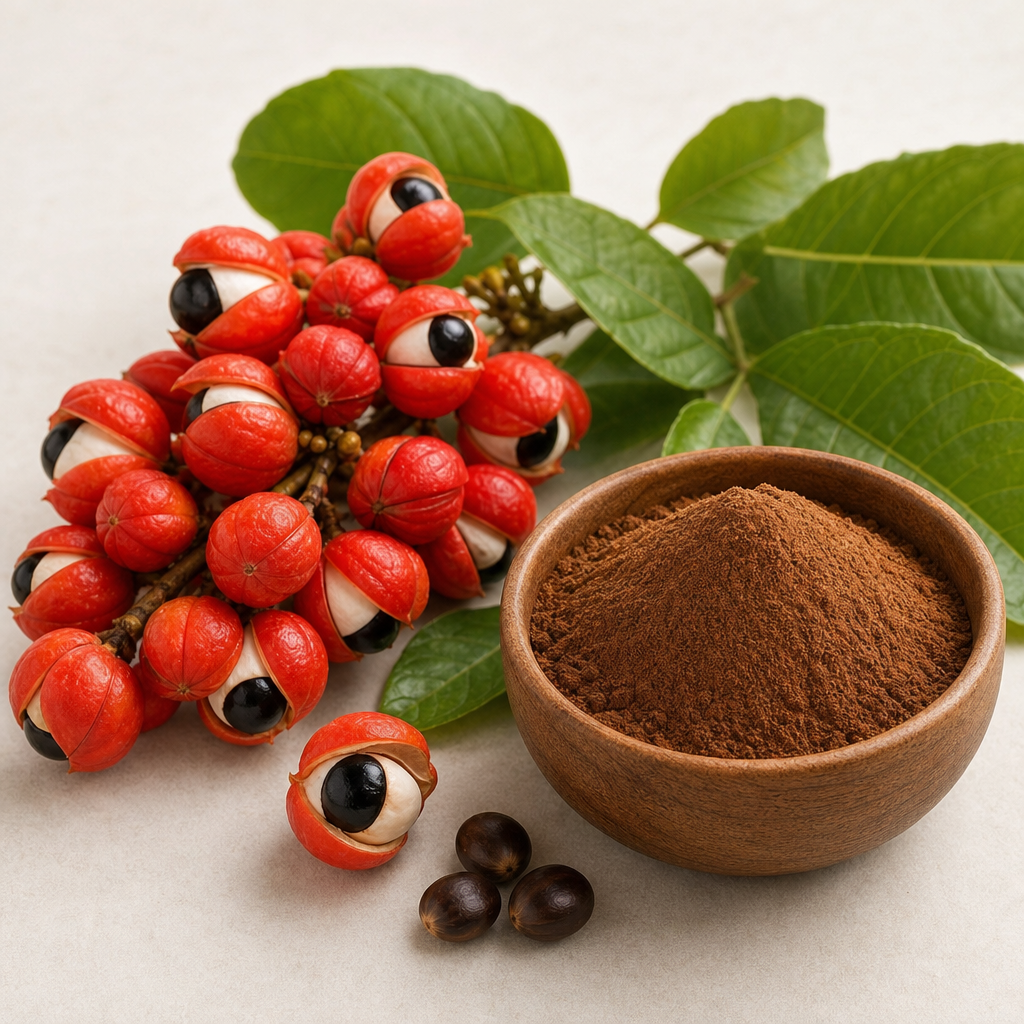
Guarana (Paullinia cupana) is a climbing plant native to the Amazon basin, especially Brazil. Its small red fruits contain seeds that are naturally rich in caffeine, theobromine, theophylline, and polyphenols. Traditionally, Indigenous communities dried and ground the seeds into a paste used for stimulating beverages and ceremonial purposes. Today, guarana appears in energy drinks, pre-workout formulas, capsules, and powders worldwide.
Guarana is a botanical ingredient and supplement derived from plant seeds; it is not an essential nutrient like a vitamin or mineral. The body does not require guarana to function, but its caffeine and other bioactives can influence alertness, perceived energy, exercise performance, and mood. Effects are largely attributed to its caffeine content—often higher by weight than coffee beans—along with supporting compounds that may modify absorption and effect profiles.
Benefits of Guarana
-
Increased alertness and reduced fatigue
(Strong evidence)
Guarana reliably improves vigilance and reduces the sensation of tiredness, primarily due to its caffeine content, which antagonizes adenosine receptors in the brain. Controlled trials with caffeine from various sources consistently show faster reaction time, improved attention, and reduced fatigue during mentally demanding tasks. Guarana’s tannins may slow caffeine release slightly for some users, offering a steadier feel, though responses vary.
-
Enhanced cognitive performance on attention and reaction tasks
(Moderate evidence)
Studies using guarana extracts in low-to-moderate doses demonstrate improvements in selective attention, reaction speed, and mental performance compared with placebo. While the majority of the effect appears caffeine-driven, some research suggests that guarana’s polyphenols may contribute subtly beyond caffeine alone. Benefits are most apparent during sleep loss, monotonous tasks, or prolonged work shifts.
-
Support for endurance exercise and perceived exertion
(Moderate evidence)
Caffeine is well-established for improving endurance performance, delaying time to exhaustion, and lowering perceived exertion. Guarana-containing pre-workout blends and isolated guarana extracts can provide comparable effects when matched for caffeine dose. Evidence in trained and recreational athletes indicates benefits for sustained effort and vigilance during long sessions, though individual sensitivity and dosing timing matter.
-
Adjunct to pain relief for some headaches
(Moderate evidence)
Caffeine can enhance the analgesic effects of common pain relievers for certain headaches. While most trials evaluate caffeine combined with medications (e.g., acetaminophen or aspirin), guarana, as a caffeine source, may offer similar adjuvant effects when total caffeine intake is appropriate. It is not a stand-alone migraine cure, and people with frequent headaches should consult a clinician for diagnosis and management.
-
Weight management and thermogenesis
(Mixed evidence)
Guarana can slightly increase metabolic rate and may reduce appetite acutely due to caffeine’s effects. Some weight-loss formulas include guarana with other stimulants or botanicals; however, results vary and long-term, clinically meaningful weight loss from guarana alone is uncertain. Diet quality, protein intake, physical activity, and sleep remain foundational.
-
Antioxidant and polyphenol support
(Preliminary evidence)
Guarana contains catechins and other polyphenols with antioxidant activity in laboratory and small human studies. These compounds may help counter oxidative stress, but translating this into specific disease prevention claims is premature. Whole-food dietary patterns rich in fruits, vegetables, legumes, and tea provide broader and more substantiated antioxidant benefits.
Types or Forms Available
-
Seed powder (roasted or raw):
Ground guarana seed used for traditional beverages or mixed into smoothies. Caffeine content can vary widely (commonly 3–6% by weight), making precise dosing less predictable.
-
Standardized extracts (capsules or tablets):
Typically standardized to a specific caffeine percentage (e.g., 10–22%) and sometimes polyphenols. This allows more consistent dosing and labeling of caffeine per serving.
-
Liquid extracts/tinctures:
Fast-absorbing forms, sometimes combined with other botanicals. Caffeine per dropper can be unclear unless the product provides verified standardization.
-
Energy drinks, shots, and powders:
Often blend guarana with synthetic caffeine, taurine, B-vitamins, and other stimulants. Total caffeine may be high; labels may list guarana within proprietary blends, obscuring true amounts.
-
Sustained-release or microencapsulated formulas:
Designed to slow caffeine release and lessen spikes. Evidence is limited, but some users perceive smoother effects and fewer jitters.
-
Combination products (e.g., pre-workouts, nootropic blends):
Pair guarana with compounds like L-theanine, rhodiola, or electrolytes. Effects and tolerability depend on total caffeine dose and the other active ingredients.
How to Use Guarana
Because effects are driven largely by caffeine, start low and titrate based on response. Consider all daily caffeine sources (coffee, tea, soda, chocolate, medications) to avoid excessive intake.
-
Common dosage range:
Many supplements provide 200–800 mg of guarana extract standardized to 10–22% caffeine (about 20–175 mg caffeine). A practical starting point is 50–100 mg caffeine equivalent, with typical single doses up to 200 mg for healthy adults. Most health authorities consider up to ~400 mg total caffeine per day from all sources reasonable for many healthy adults, though sensitivity varies.
-
Best timing:
Take 30–60 minutes before tasks needing focus or prior to endurance exercise. Avoid late afternoon or evening use to reduce sleep disruption. For long events, smaller split doses may help maintain alertness.
-
How to take it:
Swallow capsules or tablets with water. Powders can be mixed into water, smoothies, or yogurt. Take with food if you experience stomach upset; otherwise, water alone is fine.
-
Consistency:
Use as needed for specific tasks or training sessions, or daily if desired while monitoring tolerance. Periodic “caffeine breaks” (e.g., 1–2 days weekly or 1 week every 6–8 weeks) may help limit tolerance and dependence.
Food Sources and Supplement Options
Guarana is a botanical ingredient derived from the seeds of Paullinia cupana rather than a nutrient widely found across foods. In Brazil, guarana seed is used in traditional beverages and commercial soft drinks. Internationally, it appears in energy drinks, shots, bars, and dietary supplements. Whole guarana seeds and powders are less common in everyday diets outside of producing regions.
-
Natural source:
Paullinia cupana seeds (roasted or raw).
-
Beverage uses:
Brazilian guaraná sodas, herbal teas, and some energy drinks.
-
Supplement uses:
Capsules, tablets, liquid extracts, and pre-workout/nootropic blends with standardized caffeine content.
Supplementation may make sense if you prefer a non-coffee caffeine source, want standardized dosing, or need portable options for training or shift work. Whole-food beverages (coffee and tea) offer additional bioactives and may be more familiar and economical, while guarana supplements can deliver a targeted caffeine dose and different flavor profile. As always, consider total daily caffeine from all sources.
Who May Benefit from Guarana?
-
Healthy adults seeking a non-coffee source of caffeine for alertness or focus.
-
Endurance athletes or team-sport players looking for pre-event or mid-event stimulation to lower perceived exertion.
-
Shift workers, students, or individuals with occasional sleep restriction who need short-term improvements in vigilance.
-
People who prefer smaller, measured caffeine doses or sustained-release options to reduce jitters compared with large coffees.
-
Individuals using pre-workout or nootropic stacks who want a botanical caffeine source with standardized dosing.
Side Effects and Considerations
-
Stimulant-related effects:
Insomnia, nervousness, rapid heartbeat, increased blood pressure, tremor, and gastrointestinal upset can occur—especially at higher doses or in sensitive individuals. Start low and avoid late-day use.
-
Caffeine limits and special populations:
Many guidelines suggest keeping total daily caffeine at or below ~400 mg for healthy adults. People who are pregnant or breastfeeding should consult a healthcare professional and generally limit caffeine to about 200 mg/day or less. Children and adolescents should avoid guarana supplements.
-
Health conditions requiring caution:
Anxiety disorders, panic disorder, arrhythmias, uncontrolled hypertension, GERD/ulcers, glaucoma, seizure disorders, bipolar disorder, and sleep disorders may be worsened by stimulants. Discuss use with a clinician if you have any medical condition.
-
Medication interactions (CYP1A2 and others):
Drugs that slow caffeine metabolism can raise its levels and side effects (e.g., ciprofloxacin, enoxacin, fluvoxamine, cimetidine, some oral contraceptives). Caffeine can interact with clozapine, theophylline, and adenosine-based cardiac stress tests. Combining with other stimulants (e.g., ephedra, high-dose yohimbine) increases risk.
-
Tolerance, dependence, and withdrawal:
Regular use may lead to tolerance. Abrupt cessation can cause headaches, fatigue, and irritability; taper gradually if needed.
-
Iron and nutrient considerations:
Tannins in guarana and other caffeinated beverages may reduce non-heme iron absorption if taken with iron-rich meals or supplements. Separate by a few hours if iron status is a concern.
-
Surgery and medical procedures:
Stimulants can affect blood pressure and anesthesia. Stop guarana at least 24 hours (often longer) before surgery as advised by your medical team.
-
Quality and labeling:
Some products mix guarana with synthetic caffeine or include proprietary blends that obscure actual caffeine amounts. Choose third-party tested brands that disclose standardized caffeine content per serving.
-
Allergies and sensitivities:
Rare allergic reactions can occur. Discontinue use and seek care if you experience rash, swelling, or breathing difficulty.
-
Consultation:
If you are pregnant, breastfeeding, taking medications, or managing a medical condition, consult a qualified healthcare professional before using guarana.
Common Myths About Guarana
-
Myth: Guarana is caffeine-free and gentler than coffee.
Guarana seeds contain more caffeine by weight than coffee beans. Some people perceive a smoother effect, possibly due to tannins and dosing differences, but guarana is still a potent stimulant.
-
Myth: Guarana melts fat without diet or exercise.
Evidence shows only small, variable effects on metabolic rate and appetite. Sustainable weight management depends on calorie balance, protein intake, resistance training, physical activity, sleep, and stress management.
-
Myth: Natural means safe for everyone.
Despite being plant-derived, guarana can raise heart rate and blood pressure, worsen anxiety or insomnia, and interact with medications. Safety depends on dose, individual sensitivity, and context.
-
Myth: More guarana equals better performance.
Performance often follows a “sweet spot”: excessive caffeine can cause jitters, GI distress, and poorer focus or pacing. Tailor the dose to the task and your tolerance.
Conclusion
Guarana is a botanical caffeine source that can improve alertness, support attention, and aid endurance performance when used thoughtfully. It is not an essential nutrient, and its benefits are largely attributable to caffeine, with potential minor contributions from polyphenols. For many people, coffee and tea provide similar advantages with broader dietary context, while guarana supplements offer standardized dosing and formulation flexibility for training, shift work, or personal preference.
Use the lowest effective dose, account for all caffeine sources, and prioritize sleep, nutrition, and hydration as foundations. Those who are pregnant or breastfeeding, children, and people with cardiovascular, psychiatric, or gastrointestinal conditions—or anyone taking medications—should consult a healthcare professional before use. Choose reputable, third-party tested products that disclose standardized caffeine content. When integrated prudently, guarana can be a useful option for targeted cognitive or performance needs, while a food-first approach remains the best long-term strategy for overall health.