What is Hesperidin?
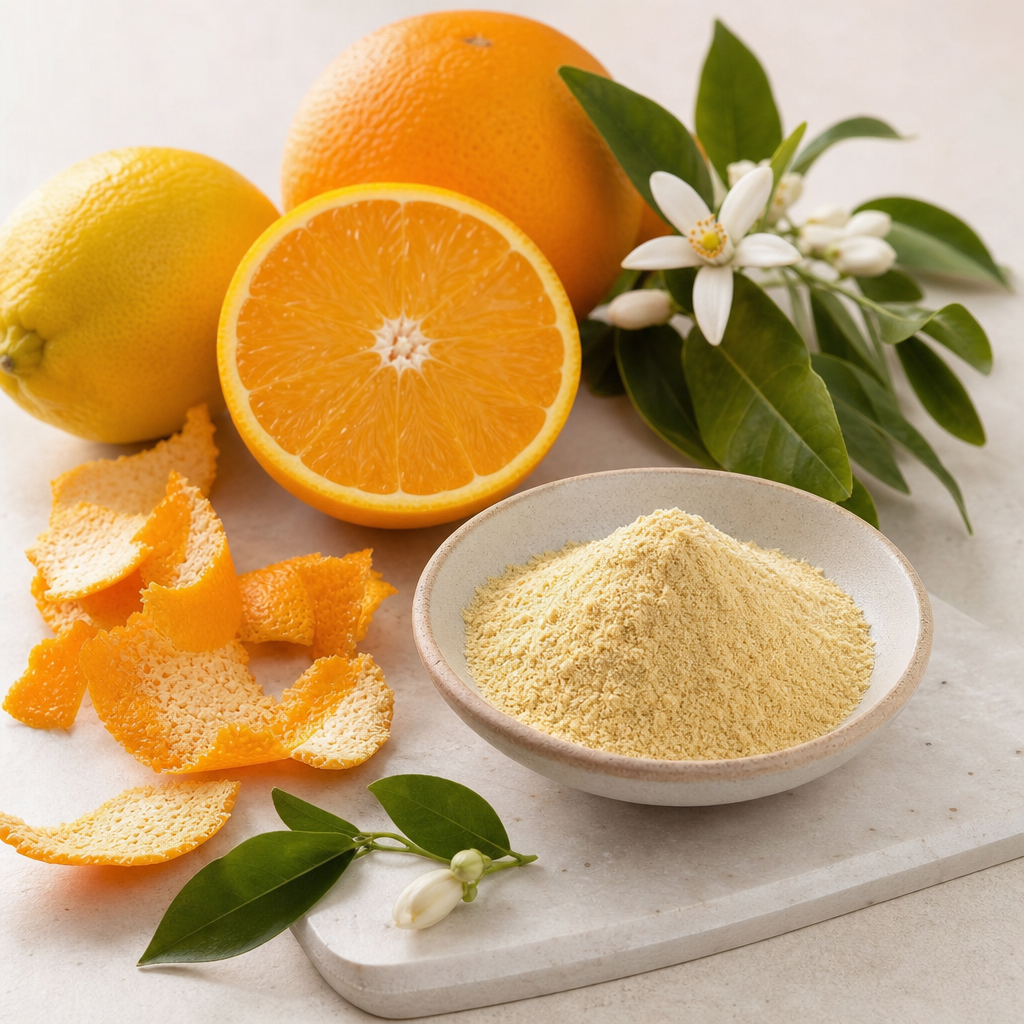
Hesperidin is a citrus bioflavonoid—a plant-derived polyphenolic compound—found primarily in the peels, pith, and membranes of sweet oranges (Citrus sinensis) and related citrus fruits. Chemically, it is a flavanone glycoside that the gut microbiota convert into its aglycone form, hesperetin, which is then absorbed and further metabolized. Because it is concentrated in the peel and inner white pith, whole citrus, zest, and certain traditional preparations (like marmalade made with peel) can provide meaningful amounts.
Hesperidin is not an essential nutrient like a vitamin or mineral. The human body does not require it to prevent a deficiency disease. However, it has been studied as a food-derived bioactive and supplement for its potential effects on vascular function, capillary integrity, inflammation, oxidative stress, and certain metabolic markers. It is available as a dietary supplement on its own, in standardized citrus extracts, and as part of combination products used for vascular health in some countries. While many findings are promising, hesperidin should be viewed as a supportive component of a balanced diet and lifestyle, not a replacement for medical care.
Benefits of Hesperidin
-
Vascular health and leg discomfort related to chronic venous insufficiency (CVI)
(Moderate evidence)
Research on citrus flavonoids suggests hesperidin can help reduce sensations of heavy, tired legs, swelling, and cramps associated with CVI. Much of the strongest clinical evidence comes from micronized purified flavonoid fraction (MPFF)—a combination largely of diosmin with a smaller proportion of hesperidin—showing improvements in venous tone and symptoms. Trials using hesperidin alone or hesperidin-methyl-chalcone also indicate benefit, though the data are less extensive than with MPFF. Individuals should work with a clinician, as medical evaluation and compression therapy are often first-line approaches.
-
Hemorrhoid symptom relief
(Moderate evidence)
Citrus bioflavonoids are commonly used to support acute hemorrhoid flares, with studies (again, many using diosmin–hesperidin combinations) showing reduced bleeding, pain, and edema over short courses. Some trials and clinical experience support hesperidin-containing regimens for faster symptom control alongside dietary fiber, hydration, and stool-softening strategies. While helpful for symptom management, these supplements do not address all underlying causes; persistent or severe symptoms require medical assessment.
-
Endothelial function and blood pressure
(Moderate evidence)
Randomized trials indicate that hesperidin can improve flow-mediated dilation (a measure of endothelial function) and produce small reductions in systolic blood pressure, especially in people with borderline or mildly elevated blood pressure or suboptimal vascular function. Improvements are typically modest and most effective alongside diet quality, weight management, activity, and sleep. Results vary by dose, baseline health, and whether hesperidin is delivered via whole foods (e.g., orange juice) or standardized supplements.
-
Capillary integrity and easy bruising
(Limited evidence)
Older clinical reports and small studies suggest citrus bioflavonoids may decrease capillary fragility and permeability, potentially reducing bruising and minor bleeding in susceptible individuals. However, modern, high-quality trials focused specifically on hesperidin are limited. If bruising is frequent or unexplained, medical evaluation is important to rule out medication effects or hematologic conditions.
-
Inflammation and oxidative stress markers
(Mixed evidence)
Some human studies show hesperidin or hesperidin-rich orange intake can lower biomarkers like C-reactive protein, adhesion molecules, or oxidative stress markers, while others find minimal or no effect. Variability in study design, health status of participants, dose, and whether hesperidin is consumed with other citrus compounds likely explains the inconsistent findings.
-
Metabolic health (lipids and glucose)
(Limited evidence)
Early trials and small meta-analyses suggest hesperidin may modestly reduce total cholesterol, LDL cholesterol, or fasting glucose in certain populations, but effects are small and not uniformly observed. Hesperidin should not replace prescribed therapies for dyslipidemia or diabetes, though it may serve as a supportive adjunct under professional guidance.
-
Exercise performance and recovery
(Preliminary evidence)
A few small, short-term studies in recreationally active adults report improvements in anaerobic performance and redox status following hesperidin supplementation. Findings are not yet consistent or robust enough to recommend broadly for athletes; more research is needed to clarify who benefits, optimal dosing, and timing relative to training.
Types or Forms Available
-
Standard hesperidin (citrus bioflavonoid extract):
Typically derived from sweet orange peel and standardized to a set percentage of hesperidin. This is the most common oral supplement form. Bioavailability depends partly on gut microbiota converting hesperidin to hesperetin.
-
Hesperidin methyl chalcone (HMC):
A modified form used in some supplements and topical products. It may have different solubility and absorption characteristics compared with standard hesperidin; clinical data are more limited but it is often included in vascular-support formulas.
-
Micronized formulations:
Mechanical micronization reduces particle size to improve dissolution and absorption. MPFF (largely diosmin with hesperidin) is a well-studied micronized blend used for venous disease in some countries; pure micronized hesperidin also exists. Product composition varies—read labels carefully.
-
Whole-food–based citrus extracts:
Some products provide a spectrum of citrus bioflavonoids (e.g., hesperidin, naringin, eriocitrin) to more closely reflect food matrices. While potentially synergistic, standardization to a precise hesperidin dose may be lower or more variable.
-
Functional foods and beverages:
Fortified juices or powders may include added hesperidin. Sugar and calorie content can be high in some beverages, so weigh overall nutrition goals when choosing these options.
How to Use Hesperidin
Hesperidin is generally used to support vascular health, complement dietary intake of citrus, or target specific short-term goals (e.g., hemorrhoid flare-ups) under guidance. Individual responses vary based on health status, gut microbiota, and the specific formulation used.
-
Common dosage range:
Typical supplemental doses fall between 250–1,000 mg per day of hesperidin, often split once or twice daily. Many clinical studies use around 500 mg daily. For combination venous formulas (e.g., MPFF), follow product-specific or clinician-directed dosing; these products are regulated as drugs in some countries.
-
Best timing:
Timing is flexible. Taking hesperidin with meals may support tolerance and absorption. If used for exercise-related goals, some prefer dosing 1–3 hours before training, though evidence here is preliminary.
-
How to take it:
Swallow capsules or tablets with water, preferably alongside food. If using powders or functional beverages, consider total sugar/calorie intake. For topical preparations with HMC, follow label directions; topical forms target cosmetic or localized concerns rather than systemic effects.
-
Consistency:
For vascular support, daily use for several weeks is typically needed to evaluate effect; benefits may accrue gradually over 4–12 weeks. For short-term symptom relief (e.g., hemorrhoids), protocols are often brief; consult a clinician for appropriate duration.
Food Sources and Supplement Options
Hesperidin occurs naturally in citrus fruits, particularly in the peel, pith, and segment membranes. Whole-food intake provides hesperidin along with vitamin C, fiber, potassium, and other bioflavonoids. Supplements can offer standardized, higher doses when a targeted approach is desired or when dietary intake is low.
-
Sweet oranges (especially the white pith and membranes)
-
Tangerines, clementines, and mandarins
-
Orange and Seville orange peel/zest; traditional marmalade made with peel
-
Lemons and limes (lower than sweet orange but still present, especially in peel)
-
Orange juice with pulp (contains hesperidin, but levels vary by processing and pulp content)
Food-first is sensible for most people because citrus fruits deliver a broader nutrient matrix. Supplements may be considered when aiming for consistent, studied doses for vascular support, when citrus intake is limited, or when specific formulas (e.g., micronized preparations) are preferred. Choose reputable brands that disclose standardization and conduct third-party testing.
Who May Benefit from Hesperidin?
-
Adults seeking additional support for leg discomfort, swelling, or heaviness related to venous insufficiency—ideally alongside clinician-directed care, compression therapy, and lifestyle changes.
-
People with occasional hemorrhoid symptoms who want short-term adjunct support in addition to fiber, hydration, and bowel habit strategies.
-
Individuals with borderline blood pressure or suboptimal endothelial function pursuing a complementary approach alongside diet and exercise.
-
Those with low citrus intake who prefer a standardized source of citrus bioflavonoids.
-
Recreational athletes experimenting with legal, food-derived bioactives for potential microcirculatory or redox benefits (evidence is still preliminary).
-
People experiencing frequent minor bruising who have already ruled out medical and medication-related causes with their clinician (evidence is limited).
Side Effects and Considerations
-
General tolerance:
Hesperidin is usually well-tolerated. Possible side effects include mild gastrointestinal upset, nausea, heartburn, or headache. Taking with food and starting at the lower end of the dosage range can help.
-
Allergies and sensitivities:
Avoid if you have a known citrus allergy. Some people with reflux may find citrus-derived products irritating; monitor symptoms.
-
Medication interactions:
Citrus bioflavonoids may have mild antiplatelet effects; use caution if you take anticoagulants or antiplatelet agents. Additive effects with antihypertensives or antidiabetic medications are possible. Hesperidin is not the same as grapefruit compounds, but theoretical interactions via drug-metabolizing enzymes or transporters cannot be fully excluded—consult a healthcare professional.
-
Bleeding and surgery:
Because of potential effects on platelet function, stop hesperidin and bioflavonoid combinations 1–2 weeks before elective surgery unless your surgeon advises otherwise.
-
Pregnancy, breastfeeding, and children:
Safety data are limited. Pregnant or breastfeeding individuals and children should use hesperidin-containing supplements only under professional guidance.
-
Liver/kidney considerations:
Hesperidin is metabolized and excreted as conjugates. People with significant hepatic or renal impairment should seek medical advice before use.
-
Quality and contamination:
Citrus peel concentrates can carry pesticide residues or variable flavonoid content. Choose products with third-party testing, clear standardization, and Good Manufacturing Practice (GMP) certification.
-
Dosing prudence:
Avoid megadoses. More is not necessarily better and may increase the risk of gastrointestinal discomfort without additional benefit.
-
Condition-specific care:
Hemorrhoids, varicose veins, or unexplained bruising warrant medical evaluation. Supplements can support but not replace diagnosis and standard therapy.
Common Myths About Hesperidin
-
Myth: Hesperidin is a vitamin you must take daily.
Hesperidin is a non-essential plant polyphenol, not a vitamin or mineral. The body does not require it to prevent a deficiency disease. It can complement a healthy diet but is not universally necessary.
-
Myth: Hesperidin cures varicose veins and hemorrhoids.
No supplement cures these conditions. Evidence supports symptom improvement—especially when hesperidin is combined with other citrus flavonoids and used alongside medical and lifestyle strategies—but underlying venous issues may persist and require comprehensive care.
-
Myth: A glass of any orange juice equals a supplement dose.
Hesperidin content varies widely by fruit variety, processing, and pulp content. Some juices provide modest amounts, while standardized supplements deliver consistent, higher doses studied in trials. Whole fruits also offer fiber and broader nutrients.
-
Myth: All hesperidin products are the same.
Forms (standard, methyl chalcone, micronized), standardization levels, and co-ingredients differ and can influence effects and tolerability. Quality varies across brands—look for third-party testing and transparent labeling.
Conclusion
Hesperidin is a citrus-derived bioflavonoid with the most support for vascular-related benefits, including improvements in venous symptoms and modest enhancements in endothelial function and blood pressure. It may also help with short-term hemorrhoid symptoms and, to a lesser extent, capillary integrity and certain metabolic markers. While promising, results are variable and strongest when hesperidin is part of a broader lifestyle plan and, in some cases, combined with other flavonoids.
Start with a food-first approach by including citrus fruits and peels (when culinary-safe) to obtain hesperidin alongside vitamin C, fiber, and other nutrients. Consider a standardized supplement if you need consistent dosing or when targeting specific goals, selecting reputable, third-party–tested products. People who are pregnant, breastfeeding, taking medications (especially anticoagulants, antihypertensives, or antidiabetics), or managing medical conditions should consult a healthcare professional before use. Avoid megadoses and evaluate benefits over several weeks, prioritizing overall diet, activity, and medical guidance for best outcomes.