What is L-Carnitine?
L-carnitine is a naturally occurring compound made in the body from the amino acids lysine and methionine, with vitamin C, vitamin B6, niacin, and iron helping as cofactors. It plays a central role in energy metabolism by transporting long-chain fatty acids into the mitochondria—the “power plants” of cells—so they can be oxidized for energy. The “L” form is the biologically active version used by human tissues; avoid the “D” form, which is inactive and can interfere with L-carnitine’s function.
Although often described as a “nutrient,” L-carnitine is not an essential nutrient in the same way vitamins and minerals are. Most healthy people synthesize adequate amounts and also obtain some from food. It’s available as a dietary supplement and, in certain medical situations, as a prescription product (levocarnitine). Interest in supplementation comes from research in exercise recovery, fertility, vascular health, cognition and fatigue in older adults, and select clinical conditions that may deplete carnitine stores.
Benefits of L-Carnitine
-
Exercise recovery and reduced muscle soreness
(Moderate evidence)
L-carnitine L-tartrate has been studied in athletes and active individuals, with several trials showing reduced markers of muscle damage (e.g., creatine kinase) and perceived soreness after intense training. Benefits are most consistent for recovery—less soreness and possibly improved readiness for subsequent sessions—rather than large gains in maximal strength or endurance.
-
Support for peripheral arterial disease (PAD) and intermittent claudication
(Moderate evidence)
Propionyl-L-carnitine has improved pain-free walking distance and overall walking performance in people with PAD in multiple controlled trials. Effects are modest but meaningful for quality of life. This application is condition-specific and should be undertaken with a healthcare professional.
-
Male fertility (sperm motility and quality)
(Moderate evidence)
Studies in men with idiopathic infertility report improvements in sperm motility, morphology, and sometimes pregnancy rates when using L-carnitine alone or combined with acetyl-L-carnitine. Benefits are not universal, but the overall trend suggests a supportive role, particularly for motility.
-
Cognitive and fatigue support in older adults
(Moderate evidence)
Acetyl-L-carnitine (ALCAR), which crosses the blood–brain barrier more readily, has shown small-to-moderate benefits for mental fatigue, attention, and age-related cognitive complaints in some trials. Findings are variable across populations and study designs, but ALCAR appears promising for selected older adults with fatigue or mild cognitive concerns.
-
Body weight and fat mass
(Mixed evidence)
Meta-analyses of overweight adults show small average weight reductions with L-carnitine compared with placebo, but effects are inconsistent and generally modest. It is not a stand-alone fat burner; any benefit is most likely when paired with calorie control and regular physical activity.
-
Blood sugar and insulin sensitivity
(Mixed evidence)
Some studies indicate modest improvements in insulin sensitivity or fasting glucose with L-carnitine or ALCAR, while others find no meaningful changes. Differences in dose, duration, and participant characteristics likely explain the mixed results.
-
Exercise performance and fat oxidation during endurance activity
(Limited evidence)
Acute doses before a workout do not reliably boost performance or fat burning. A few small, longer-term studies combining L-carnitine with carbohydrate-rich meals suggest increased muscle carnitine stores and slight endurance advantages, but replication has been limited.
-
Cardiovascular support in select conditions
(Limited evidence)
Older research in angina and post–myocardial infarction suggests symptom relief or event reductions with carnitine, but results are not definitive by modern standards. Any cardiovascular use should be directed by a clinician, particularly given evolving standards of care.
Types or Forms Available
-
L-carnitine (base)
: The standard supplemental form used for general purposes. Suitable when the goal is to support overall carnitine status or explore potential benefits for metabolism, weight management adjuncts, or general wellness.
-
L-carnitine L-tartrate (LCLT)
: Common in sports supplements. It’s well-studied for exercise recovery and tends to be quickly absorbed. Typical use is in pre/post-workout or daily recovery formulas.
-
Acetyl-L-carnitine (ALCAR)
: More brain-penetrant due to the acetyl group. Often chosen for cognitive support, mental energy, and age-related fatigue. Its effects differ somewhat from LCLT’s muscle-recovery profile.
-
Propionyl-L-carnitine (PLCAR)
: Studied in peripheral arterial disease and some vascular concerns. This form has a niche role and is usually used under medical guidance.
-
Glycine propionyl-L-carnitine (GPLC)
: A less common form sometimes included in pre-workouts for purported nitric oxide support; evidence is limited compared with LCLT or ALCAR.
-
Prescription levocarnitine
: Medical-grade products (oral solution or injection) used for diagnosed carnitine deficiency or specific clinical indications under physician supervision.
Always choose the “L-” form (levocarnitine). Avoid “D-carnitine” or unspecified blends that may contain D-isomers, as these can compete with and reduce the activity of L-carnitine.
How to Use L-Carnitine
-
Common dosage range:
For general supplementation, 500–2,000 mg per day is typical. Sports-recovery studies often use 1–3 g/day of L-carnitine or L-carnitine L-tartrate. ALCAR for cognitive/fatigue support commonly ranges from 500–2,000 mg/day. Propionyl-L-carnitine is often 1–2 g/day in clinical contexts. Start at the low end to assess tolerance. Avoid megadoses; higher intakes increase the risk of side effects without clear added benefit.
-
Best timing:
For most goals, consistency over weeks matters more than exact timing. If aiming at exercise recovery, daily use or dosing near training is reasonable. For potential muscle carnitine loading, pairing doses with a carbohydrate-containing meal may aid uptake.
-
How to take it:
Take with food or a snack to reduce gastrointestinal upset. Co-ingestion with a mixed meal—especially one containing carbohydrates—may improve tissue uptake compared with taking it on an empty stomach.
-
Consistency:
Acute, single doses rarely change performance or body composition. Several weeks of daily intake are typically needed to evaluate any effect (particularly for exercise or cognition-related goals).
Food Sources and Supplement Options
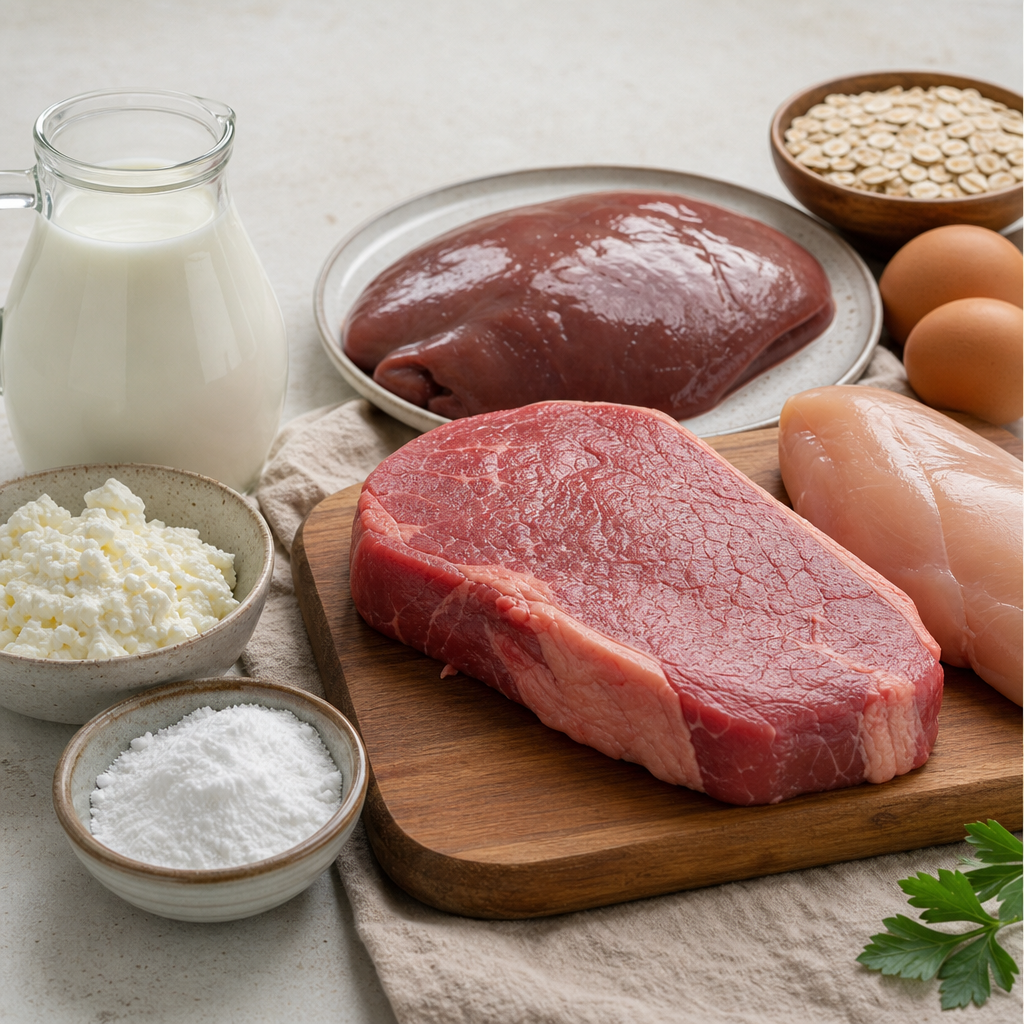
L-carnitine is naturally found in food, especially animal products. Many people meet their needs through a combination of endogenous production and diet. Supplements provide a convenient, standardized dose for targeted goals or for individuals with low intake or increased needs.
-
Beef and lamb:
Among the richest sources.
-
Pork:
Moderate amounts.
-
Fish (e.g., cod) and poultry:
Lower than red meat but still contributory.
-
Dairy:
Small-to-moderate amounts, with higher levels in full-fat products.
-
Plant foods:
Generally low; some fermented soy foods contain small amounts.
Food-first approaches offer additional nutrients (iron, B vitamins, zinc, protein, and a matrix of bioactives). Supplements can make sense when a precise dose is desired (e.g., a trial for recovery, ALCAR for cognitive support) or where intake is very low (strict vegan patterns) and a healthcare professional suggests a trial. Prescription levocarnitine is reserved for diagnosed deficiencies or medical indications.
Who May Benefit from L-Carnitine?
-
Active individuals seeking better recovery from high-volume or high-intensity training (especially considering L-carnitine L-tartrate).
-
Adults with peripheral arterial disease and walking limitations (typically propionyl-L-carnitine under medical supervision).
-
Men with idiopathic subfertility characterized by reduced sperm motility or morphology.
-
Older adults experiencing fatigue or mild cognitive complaints who wish to trial acetyl-L-carnitine.
-
People with very low dietary intake of carnitine (e.g., strict vegans) who also have goals that may benefit from carnitine support; discuss with a clinician.
-
Patients with conditions or medications associated with secondary carnitine depletion (e.g., long-term hemodialysis, certain metabolic or liver disorders, valproate therapy), only under medical care.
Side Effects and Considerations
-
Gastrointestinal upset:
Nausea, cramps, diarrhea, and appetite changes can occur, particularly at higher doses. Taking with food and starting low can help.
-
Body odor (“fishy” smell):
Some people produce more trimethylamine (TMA), leading to odor. Those with trimethylaminuria should be cautious.
-
TMAO considerations:
Carnitine is metabolized by gut microbes to TMAO, a compound associated in observational studies with cardiovascular risk. Causality is not established, and diet pattern matters. Use prudent doses, emphasize a fiber-rich, plant-forward diet, and discuss risks with a clinician if you have cardiovascular disease.
-
Seizure risk:
Rare reports suggest L-carnitine may increase seizure frequency in individuals with seizure disorders. People with epilepsy should use only under medical supervision.
-
Thyroid interactions:
L-carnitine can oppose some actions of thyroid hormones at the cellular level. Individuals with hypothyroidism or those taking levothyroxine should consult their clinician before use; carnitine has been used in hyperthyroid symptom management under medical care.
-
Kidney and liver conditions:
People with significant renal or hepatic disease should seek medical advice before use. Dialysis patients sometimes receive prescription levocarnitine; over-the-counter products should not replace medical therapy.
-
Medication interactions:
Discuss with a healthcare professional if you take anticoagulants, thyroid medication, anticonvulsants, or valproate (where carnitine may be used therapeutically). Do not start or stop carnitine meant to address a medical issue without guidance.
-
Pregnancy, breastfeeding, and children:
Evidence is limited; safety is not well-established for routine supplementation. Use only if recommended by a qualified healthcare professional.
-
Quality and form:
Choose reputable brands that specify “L-carnitine,” “L-carnitine L-tartrate,” “acetyl-L-carnitine,” or “propionyl-L-carnitine.” Avoid products containing D-carnitine or unspecified isomer blends.
-
Dosing prudence:
Intakes of 500–2,000 mg/day are commonly studied and generally well-tolerated. Higher doses raise side-effect risk without clear added benefit. If you take multiple products (e.g., pre-workout plus a separate carnitine), total the daily amount.
Common Myths About L-Carnitine
-
L-carnitine melts fat rapidly without diet or exercise.
Sustainable fat loss comes from a calorie deficit and consistent activity. Carnitine may have small, variable effects on weight when combined with diet and training, but it is not a stand-alone fat burner and will not override an energy surplus.
-
One dose before a workout dramatically boosts fat burning.
Acute doses do not reliably increase fat oxidation or performance. Muscle carnitine levels change slowly and may require weeks of consistent intake, often alongside carbohydrate-containing meals, to influence training outcomes.
-
All forms of carnitine work the same.
Different forms have different uses: LCLT is most studied for exercise recovery, ALCAR for cognition and fatigue, and PLCAR for vascular concerns. Matching the form to the goal matters.
-
More is always better.
Megadoses increase the risk of gastrointestinal side effects and unwanted metabolites without proven extra benefit. Most studies use 0.5–3 g/day depending on the form and goal.
-
Only people who eat meat have enough carnitine.
While animal foods provide most dietary carnitine, the body can synthesize it from amino acids. Some plant-based eaters may have lower stores, but many meet functional needs without supplementation; individualized assessment is best.
Conclusion
L-carnitine is a non-essential, body-made compound that helps shuttle fatty acids into mitochondria for energy. As a supplement, it shows the most consistent support for exercise recovery (L-carnitine L-tartrate), male fertility parameters, acetyl-L-carnitine for fatigue and cognitive complaints in some older adults, and propionyl-L-carnitine for walking capacity in peripheral arterial disease. Effects on weight, endurance performance, and glycemic control are generally small and variable.
Choose high-quality products, match the form to your goal, and use prudent doses with meals for several weeks before judging effects. Whole foods remain valuable for broader nutrition, while supplements can provide targeted dosing when appropriate. Anyone who is pregnant or breastfeeding, takes medications, or manages a medical condition—especially thyroid disease, seizure disorders, kidney or liver conditions—should consult a healthcare professional before using L-carnitine.