What is Maca?
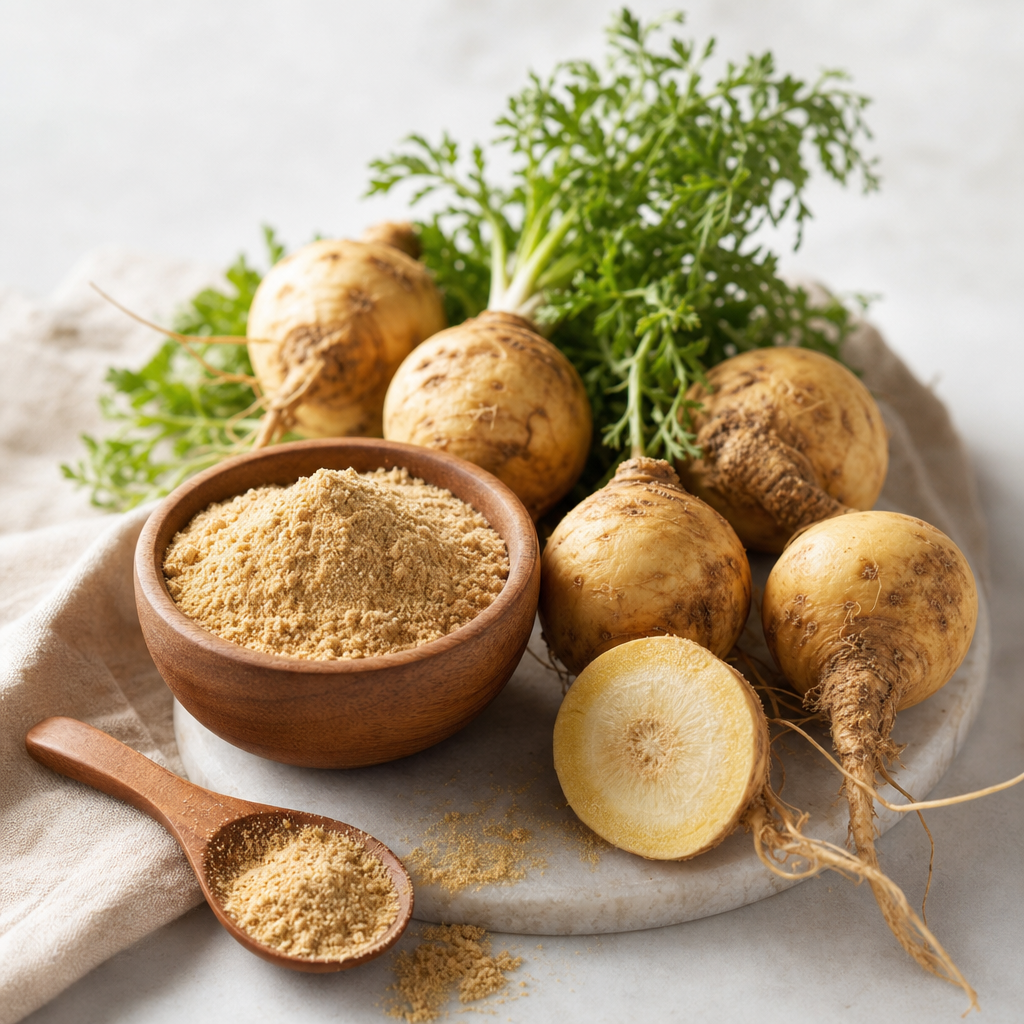
Maca (Lepidium meyenii) is a hardy cruciferous root vegetable native to the high Andes of Peru, traditionally consumed as a food and used in folk practices for vitality, fertility, and resilience to harsh environments. The dried root is often ground into a nutty, caramel-like powder and added to porridges, beverages, or baked goods. In modern wellness, maca is commonly taken as a supplement in powders, capsules, or extracts.
Maca is best described as a botanical food and supplement, not an essential nutrient like vitamins or minerals. The body does not technically require maca to function. Its potential effects are attributed to a complex mix of bioactive compounds, including macamides and macaenes (unique to maca), glucosinolates (also found in other cruciferous plants), polyphenols, and natural minerals. Research explores maca for sexual well-being, menopausal comfort, mood and perceived energy, and, to a lesser extent, physical performance. While promising areas exist, results vary by study design, maca type, dose, and individual response.
Benefits of Maca
-
Sexual desire and well-being in men and women
(Moderate evidence)
Maca has shown improvements in self-reported sexual desire and overall sexual well-being in several randomized, placebo-controlled trials, often without measurable changes in sex hormones. Effects are usually modest and may take a few weeks to appear. Responses can vary, and not all studies report benefits, but overall evidence suggests a meaningful signal for libido support in otherwise healthy adults.
-
Menopausal symptom support
(Mixed evidence)
Small clinical studies in postmenopausal women report reductions in hot flashes, night sweats, and perceived anxiety or depressive symptoms with daily maca, particularly gelatinized forms. However, findings are inconsistent across trials, study sizes are small, and different maca phenotypes (e.g., red vs. black vs. yellow) and doses complicate comparisons. Maca is not a hormone therapy and typically does not alter serum estrogen, but it may help some women with mild vasomotor or mood-related symptoms.
-
Semen quality parameters in subfertile men
(Limited evidence)
A few small studies report improvements in sperm concentration and motility after several weeks of maca. While encouraging, trials are limited, often lack robust controls, and do not establish effects on pregnancy rates. Men considering maca for fertility goals should view it as a complementary approach and consult a healthcare professional.
-
Mood and perceived energy
(Limited evidence)
Some trials, particularly in perimenopausal or postmenopausal populations, note reductions in self-reported fatigue and improvements in mood scores. Mechanisms may relate to bioactive compounds that influence stress perception rather than direct stimulation. Evidence remains limited, and not all users feel an energy or mood lift.
-
Endurance and exercise performance
(Preliminary/Mixed evidence)
Animal research and a few small human pilot studies suggest possible benefits for endurance or perceived exertion, but results are inconsistent, and well-controlled athletic performance research is sparse. At present, maca should not be relied upon for measurable performance enhancement; any benefit is likely small and individual.
Types or Forms Available
-
Raw maca powder (sun-dried, milled)
: Traditional form with a fuller spectrum of heat-sensitive compounds. Some people experience digestive discomfort from raw maca due to its starch and glucosinolate content. Flavor is malty/caramel-like.
-
Gelatinized maca powder
: Not a gelatin product—this is maca that has been heated and the starches mechanically broken down. It is typically easier to digest, has a lower microbial load, and mixes well. Many clinical studies use gelatinized maca.
-
Colored phenotypes (yellow, red, black)
: These naturally occurring varieties differ in polyphenol profiles and traditional uses. Preliminary data suggest phenotype-specific effects (e.g., red maca often studied for women’s health; black maca for semen parameters), but standardized clinical evidence is not definitive.
-
Extracts (e.g., 4:1, 10:1) and standardized formulas
: Concentrated products that may be standardized to macamides/macaenes or glucosinolate content. These allow smaller capsule sizes and potentially more consistent dosing, but standards vary by brand, and not all extracts mirror whole-root effects.
-
Capsules and tablets
: Convenient for consistent dosing and taste-masking. Often contain gelatinized powder or an extract; check the supplement facts for equivalence to whole-root grams.
-
Liquid tinctures
: Less common and may vary widely in concentration. Useful for those who prefer liquids, but dose standardization can be challenging.
How to Use Maca
Start with a conservative dose, track how you feel for several weeks, and adjust if needed. Because long-term safety data are limited, avoid excessive dosing and consider periodic breaks.
-
Common dosage range:
1.5–3 grams of maca powder daily is typical in research and practice. Some studies use up to about 5 grams daily short term. For extracts, follow label guidance; many provide the equivalent of 1–3 grams whole-root per day. Begin at the low end to assess tolerance.
-
Best timing:
Morning or early afternoon is common, especially if you notice an energizing effect. Avoid starting new doses late in the evening if you are sensitive to sleep disruption.
-
How to take it:
Mix powder into smoothies, oatmeal, yogurt, or warm drinks; the malty flavor pairs well with cocoa, cinnamon, or coffee substitutes. Capsules can be taken with water. Taking maca with food may reduce digestive discomfort.
-
Consistency:
Most studies run 6–12 weeks. Daily use for several weeks is typical before judging effects. Some individuals use cycles (e.g., 8–12 weeks on, 1–2 weeks off) due to limited long-term data.
Food Sources and Supplement Options
Maca is naturally found in the root of the plant Lepidium meyenii, traditionally cultivated at high altitude in the Peruvian Andes. It is consumed locally as a food—roasted, boiled into porridge, fermented into beverages, or ground into flour. Outside its native regions, maca is more commonly accessed as a powder, capsule, or extract.
Choosing food versus supplements depends on your goals. Whole-root powder provides a food-first approach with broader nutrient cofactors and culinary versatility, while supplements (capsules or standardized extracts) allow more targeted and consistent dosing with easier portion control. If you’re seeking a specific effect (such as libido support) and prefer precise dosing, a standardized extract or capsule format may be practical. If you want general wellness or culinary use, a gelatinized powder integrated into meals is a sensible option.
Who May Benefit from Maca?
-
Adults seeking support for sexual desire or general sexual well-being without altering hormone levels.
-
Perimenopausal or postmenopausal individuals with mild vasomotor or mood-related symptoms who prefer a non-hormonal option.
-
Men exploring complementary strategies for semen quality parameters alongside medical evaluation.
-
People who want a caffeine-free addition for perceived energy or mood support and tolerate maca’s flavor.
-
Individuals who prefer food-based powders they can blend into smoothies, oatmeal, or baking for routine use.
-
Health-conscious consumers interested in traditional Andean foods and botanical diversity within a balanced diet.
Side Effects and Considerations
-
Digestive upset:
Bloating, gas, or mild cramping can occur, especially with raw powders or higher doses. Gelatinized maca and taking with food may improve tolerance.
-
Sleep sensitivity:
Some people report an energizing effect; starting with morning dosing can help avoid interference with sleep.
-
Thyroid considerations:
Like other crucifers, maca contains glucosinolates. Individuals with thyroid disorders or iodine deficiency should use caution, prioritize cooked/gelatinized maca, ensure adequate iodine intake, and consult a healthcare professional.
-
Hormone-sensitive conditions:
Although most studies show no significant changes in serum sex hormones, people with hormone-sensitive cancers or those on hormone therapies should seek medical advice before using maca due to limited long-term safety data.
-
Pregnancy and breastfeeding:
Evidence is insufficient. Avoid supplemental maca unless a qualified healthcare professional advises otherwise.
-
Children and adolescents:
Limited safety data for concentrated supplements. Traditional food amounts may be part of cultural diets, but routine supplementation for minors is not generally recommended without professional guidance.
-
Medication interactions:
No well-documented, specific drug interactions, but theoretical concerns may apply with hormone therapies or thyroid medications. If you take prescription medicines, consult your clinician before starting maca.
-
Liver and kidney conditions:
Data are limited; individuals with hepatic or renal disease should use caution and medical supervision when considering botanical supplements.
-
Allergies and sensitivities:
Maca is in the Brassicaceae family (like broccoli and mustard). Allergic reactions are rare but possible. Discontinue if you experience rash, itching, or difficulty breathing and seek care.
-
Quality and contamination:
Source matters. Choose products tested for identity and purity, including heavy metals (e.g., lead, arsenic, cadmium), microbes, and pesticide residues. Look for reputable brands with third-party testing.
-
Surgery and procedures:
As with most supplements, consider stopping maca 1–2 weeks before elective surgery and inform your healthcare team about all products you use.
-
Dosing prudence:
More is not necessarily better. Higher doses have not been proven more effective and may increase the risk of digestive side effects.
Common Myths About Maca
-
Maca boosts testosterone or estrogen dramatically.
Most human studies do not show significant changes in circulating sex hormones at typical doses. Reported benefits for libido and menopausal comfort appear to occur without hormone spikes, suggesting non-hormonal mechanisms.
-
Maca is a stimulant like caffeine.
Maca contains no caffeine. Some users feel more energized or resilient, but the effect is not comparable to stimulants and may relate to perceived vitality rather than direct central nervous system stimulation.
-
More maca equals better results.
Evidence does not support a clear dose-response beyond common ranges. Very high intakes have not been proven more effective and may increase gastrointestinal discomfort. Start low, stay within typical ranges, and evaluate over several weeks.
-
Maca works immediately for everyone.
Some people notice changes within 1–2 weeks, but others need several weeks or may not respond. Effects are modest on average and vary by individual, product type, and consistency of use.
Conclusion
Maca is a traditional Andean root used as a food and modern supplement for sexual well-being, menopausal comfort, mood, and perceived energy. Evidence ranges from moderate to preliminary depending on the outcome, with the strongest support for libido-related benefits. It is not an essential nutrient, and effects are typically modest and individualized. Quality matters—select reputable, third-party tested products, and consider gelatinized forms for better digestibility.
If you are pregnant, breastfeeding, managing a medical condition, or taking medications, consult a healthcare professional before using maca. A food-first approach with whole-root powder can fit well into a balanced diet, while capsules or standardized extracts may help with dosing precision for specific goals. Use conservative doses, give it several weeks, and reassess whether it adds meaningful value to your routine.