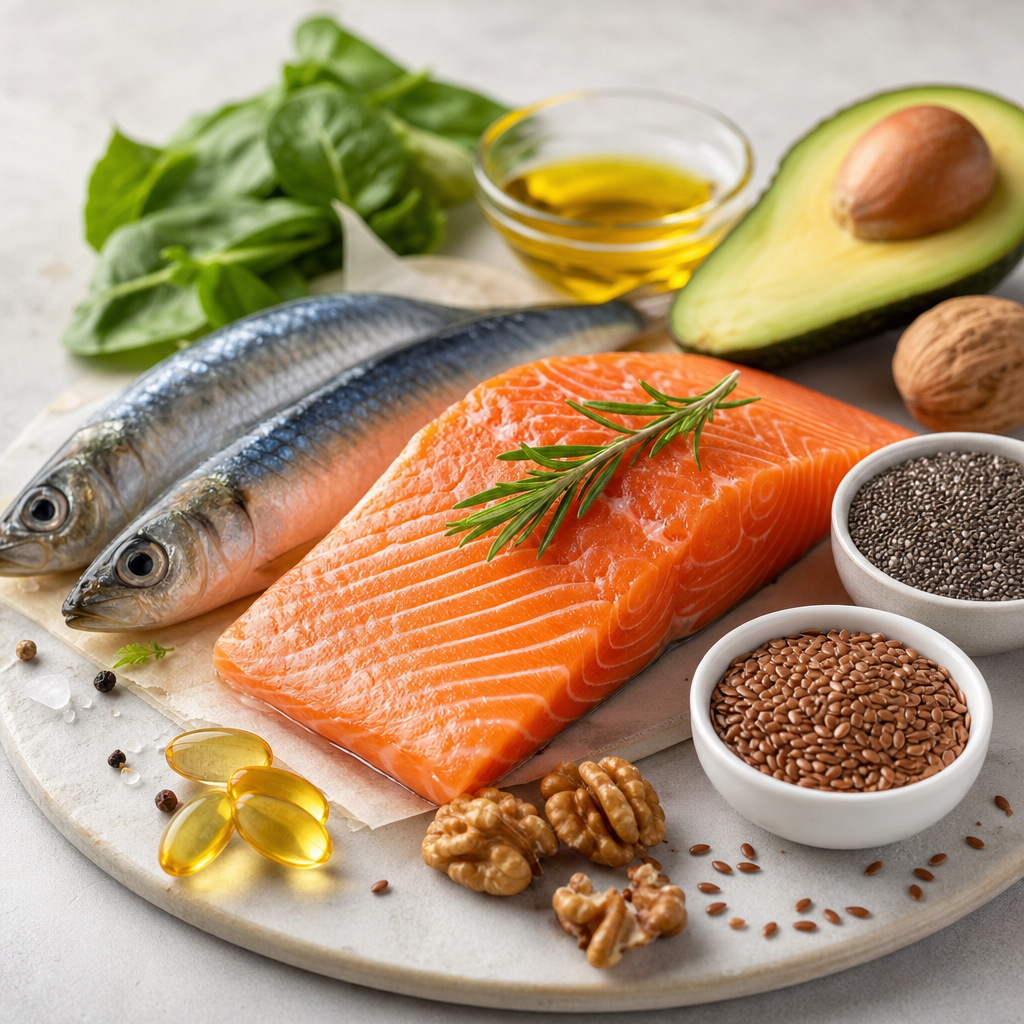
What is Omega 3?
Omega-3 fatty acids are a family of polyunsaturated fats found in certain foods and supplements. The three most discussed are alpha-linolenic acid (ALA), eicosapentaenoic acid (EPA), and docosahexaenoic acid (DHA). ALA is an essential fatty acid, meaning the body cannot make it and must obtain it from the diet. EPA and DHA can be produced in small amounts from ALA, but the conversion is inefficient, so obtaining EPA and DHA directly from foods or supplements is often recommended for targeted benefits.
Omega-3s are incorporated into cell membranes throughout the body, influencing membrane fluidity, cell signaling, gene expression, and the production of signaling molecules called eicosanoids and specialized pro-resolving mediators that help regulate inflammation. DHA is particularly concentrated in the brain and retina, while EPA is prominent in cardiovascular and immune pathways. Omega-3s occur naturally in marine foods (fatty fish, certain algae) and some plant foods (flax, chia, walnuts). They are also widely available as dietary supplements, including fish oil and algal oil.
From a nutrition standpoint, omega-3s include an essential nutrient (ALA) and physiologically important long-chain fatty acids (EPA and DHA). While ALA is required by the body, practical health outcomes linked to EPA and DHA often lead people—especially those who eat little or no fish—to consider food strategies or supplements to ensure adequate intake.
Benefits of Omega 3
-
Lowering elevated triglycerides
(Strong evidence)
EPA and DHA can meaningfully reduce fasting triglycerides, with larger effects at higher doses. Prescription-strength omega-3 formulations are approved for hypertriglyceridemia and are used under medical supervision. Reductions are typically dose-dependent, and benefits are most consistent in people with elevated baseline triglycerides.
-
Support for cardiovascular health
(Mixed evidence)
Observational studies link higher fish or omega-3 intake to lower cardiovascular risk. Clinical trials show consistent triglyceride reductions and small blood pressure benefits, but effects on heart attacks, strokes, or mortality vary by dose, formulation, and population. Some high-dose trials show benefit for high-risk patients, while others show neutral results. Overall, omega-3s may contribute to risk management as part of a broader heart-healthy plan.
-
Rheumatoid arthritis symptom relief
(Moderate evidence)
Supplemental fish oil providing EPA and DHA can modestly reduce morning stiffness, joint pain, and NSAID use in rheumatoid arthritis as an adjunct to standard care. Benefits may take several weeks to appear and are not a replacement for disease-modifying therapies.
-
Pregnancy and infant development (DHA)
(Moderate evidence)
DHA supports fetal and infant brain and eye development. Maternal DHA intake is associated with favorable visual and cognitive outcomes in infancy and may reduce risk of very preterm birth in some studies. Many prenatal guidelines encourage regular low-mercury fish intake or a dedicated DHA supplement during pregnancy and breastfeeding.
-
Mood and depression
(Mixed evidence)
Some trials suggest EPA-predominant formulations may help as an adjunct in major depressive disorder, particularly alongside standard treatments. Other studies show little to no effect, and optimal dosing and patient selection remain unsettled.
-
Dry eye and ocular surface comfort
(Limited to moderate evidence)
Several studies report symptom improvement and tear stability with omega-3 use, while others are neutral. If benefits occur, they tend to be modest and may depend on baseline diet, dose, and formulation.
-
Blood pressure and vascular function
(Moderate evidence)
EPA and DHA can produce small reductions in systolic and diastolic blood pressure, most noticeable in people with elevated blood pressure. Effects are generally modest and complement, rather than replace, established therapies and lifestyle measures.
Deficiency or Low Levels of Omega 3
-
Common signs of low levels:
True essential fatty acid deficiency (including omega-3 insufficiency) is uncommon but can present with scaly or dry rash, poor wound healing, brittle hair and nails, increased infections, growth issues in children, and, rarely, neurological or visual changes. More commonly, people have low EPA/DHA status without overt deficiency—this does not cause classic deficiency symptoms but may be relevant to long-term cardiovascular and neurovisual health.
-
Who may be at risk:
Individuals on long-term parenteral nutrition lacking adequate fats; those with severe fat-malabsorption (e.g., cystic fibrosis, pancreatic insufficiency, inflammatory bowel disease, cholestatic liver disease); people on very low-fat diets; infants on fat-poor or improperly formulated diets; and those who avoid fish entirely (including many vegans and some vegetarians) may have low EPA/DHA status. People with high metabolic needs or certain chronic illnesses can also be at risk.
-
How it is checked:
Clinicians may assess erythrocyte EPA+DHA (the “omega-3 index”), plasma phospholipid fatty acids, or, in suspected essential fatty acid deficiency, the triene:tetraene ratio (Mead acid to arachidonic acid). Dietary history and clinical context guide interpretation.
Types or Forms Available
-
ALA (alpha-linolenic acid):
A plant-based essential omega-3 found in flaxseed, chia, hemp, walnuts, and certain oils. It supports general essential fatty acid needs, but conversion to EPA and DHA is limited. ALA supplements are typically provided as oils or ground seed products.
-
EPA and DHA (marine and algal):
Found in fish oil, krill oil, and algal oil. Algal oil provides DHA (and sometimes EPA) and is suitable for vegans/vegetarians. EPA and DHA directly supply the long-chain forms most studied for heart, brain, eye, and inflammatory endpoints.
-
Chemical forms in supplements:
EPA/DHA can be delivered as ethyl esters (EE), triglycerides (TG), re-esterified triglycerides (rTG), phospholipids (common in krill oil), or free fatty acids. Absorption differences are small to modest and can be minimized by taking with a fat-containing meal. Quality and dose of EPA+DHA matter more than form for most users.
-
Fish oil vs. cod liver oil:
Fish oil focuses on EPA/DHA. Cod liver oil also contains vitamins A and D; this can be useful but requires caution to avoid excessive vitamin A, especially during pregnancy.
-
Delivery formats:
Softgels, liquids, gummies, and enteric-coated capsules. Liquids allow flexible dosing; enteric coatings can reduce “fishy burps.” Always check labels for actual EPA and DHA amounts per serving, not just total oil.
How to Use Omega 3
Choosing the right approach starts with your goals and current diet. Many people can meet needs by eating fish regularly; supplements are useful for those who avoid fish, have specific health goals, or need targeted dosages under clinical guidance.
-
Common dosage range:
For general wellness, 250–500 mg per day of combined EPA+DHA is typical. During pregnancy and lactation, 200–300 mg DHA per day is commonly recommended. For rheumatoid arthritis symptom support, studies often use about 2–3 g per day of combined EPA+DHA. For triglyceride lowering, higher doses (2–4 g/day of EPA/DHA) are used and should be supervised by a healthcare professional; prescription products are preferred for this purpose. For ALA, the Adequate Intake is about 1.6 g/day for men and 1.1 g/day for women from foods.
-
Best timing:
Take omega-3s with meals, especially those containing some fat, to enhance absorption. Splitting the dose (e.g., morning and evening) can improve tolerance.
-
How to take it:
Swallow softgels with water or use liquids mixed with food. Enteric-coated products may reduce aftertaste. Refrigerating liquids can help preserve freshness and palatability.
-
Consistency:
Omega-3s integrate into cell membranes over weeks. Daily, consistent intake—through food, supplements, or both—supports steady levels. Benefits for joints, lipids, or dry eye may require 4–12 weeks to become apparent.
Food Sources and Supplement Options
Omega-3s are found in both foods and supplements. Whole foods provide additional nutrients (like protein, selenium, iodine, and vitamin D in fish; fiber and lignans in flax), while supplements offer precise EPA/DHA dosing and are helpful when intake from foods is low or specific clinical targets are needed.
-
Marine sources (EPA/DHA):
Salmon, sardines, mackerel (Atlantic or Pacific, not king), herring, anchovies, trout, and sablefish. Canned sardines and salmon are convenient, affordable options.
-
Plant sources (ALA):
Flaxseed (ground or oil), chia seeds, walnuts, hemp seeds, canola oil, and soybean oil. Note that conversion of ALA to EPA/DHA is limited.
-
Algal sources:
Algal oil provides DHA (and sometimes EPA) without fish, suitable for vegetarians and vegans and commonly used in prenatal supplements.
Supplementation may make sense if you eat little or no fish, are pregnant or breastfeeding and limit fish due to mercury concerns, have elevated triglycerides (under medical care), or are seeking adjunct support for certain conditions like rheumatoid arthritis or dry eye. When choosing supplements, prioritize products that specify EPA and DHA amounts, use third-party testing for purity and oxidation, and provide appropriate doses without megadosing.
Who May Benefit from Omega 3?
-
People who rarely or never eat fish and want direct sources of EPA and DHA (including many vegetarians and vegans who can use algal oil).
-
Individuals with elevated triglycerides, in consultation with a clinician, especially when prescription omega-3s are indicated.
-
Pregnant and breastfeeding individuals aiming to support fetal/infant neurodevelopment with DHA while choosing low-mercury options.
-
Adults with rheumatoid arthritis seeking adjunct symptom relief alongside standard therapy.
-
People with dry eye symptoms who have not achieved relief from other measures.
-
Those with low dietary omega-3 intake who are targeting general cardiovascular and brain health as part of a broader lifestyle plan.
-
Athletes with high training loads who are exploring recovery support, recognizing that benefits vary and should not replace nutrition fundamentals.
Side Effects and Considerations
-
Gastrointestinal effects:
Possible fishy aftertaste, burping, nausea, loose stools, or reflux. Taking with meals, splitting doses, or using enteric-coated capsules can help.
-
Bleeding and surgery:
Standard doses are unlikely to cause clinically significant bleeding in most people, but high supplemental intakes, especially with anticoagulants or antiplatelet drugs, warrant caution. Discuss with your clinician and consider holding supplements before surgery if advised.
-
Atrial fibrillation risk at high doses:
Some large trials of high-dose omega-3s reported a higher incidence of atrial fibrillation. People with a history of AFib or arrhythmias should consult a cardiologist before using high-dose products.
-
Lipids and LDL-C:
While triglycerides typically fall, LDL cholesterol can rise modestly with some EPA+DHA regimens. EPA-only prescriptions may have different effects. Monitor lipids if you are using omega-3s for dyslipidemia.
-
Allergies and sensitivities:
Those with fish or shellfish allergies should avoid fish/krill oils and consider algal oil alternatives. Always review labels for allergens.
-
Quality and contamination:
Reputable fish oil and algal products are purified and typically low in contaminants like mercury. Choose third-party tested brands to limit oxidation (rancidity) and ensure purity; store oils properly.
-
Vitamin A in cod liver oil:
Cod liver oil contains vitamins A and D; excess vitamin A can be harmful, especially in pregnancy. Do not exceed label directions, and consider fish oil or algal DHA instead if extra vitamin A is not needed.
-
Medical conditions and medications:
People who are pregnant or breastfeeding, children, and those taking medications (especially blood thinners, antiplatelets, or blood pressure drugs) or managing medical conditions (bleeding disorders, arrhythmias, liver disease, diabetes, GI disorders) should consult a healthcare professional before starting supplements.
-
Dosing prudence:
Avoid megadoses. Intakes above about 2 g/day of EPA+DHA from supplements should be supervised by a clinician, especially if combined with other therapies.
Common Myths About Omega 3
-
All omega-3s are the same.
ALA (from plants) is essential but converts poorly to EPA and DHA. EPA and DHA (from fish and algae) directly support heart, brain, and eye functions studied in clinical trials. The source and form matter for specific goals.
-
More is always better.
Beyond moderate intakes, added benefits level off and potential downsides (like atrial fibrillation in some high-dose trials or interactions with medications) can appear. Use the lowest effective dose for your goal and coordinate with your clinician.
-
Fish oil supplements are full of mercury.
Quality fish oils are purified and typically contain negligible mercury. Choosing third-party tested products helps ensure low contaminants and minimal oxidation. Mercury concerns apply more to certain large predatory fish than to purified oils.
-
Flaxseed provides all the EPA/DHA you need.
Flaxseed is an excellent ALA source, but conversion to EPA/DHA is limited and variable. People who avoid fish may consider algal DHA (and sometimes EPA) to reliably raise long-chain omega-3 levels.
Conclusion
Omega-3s play important roles in cell membranes, inflammatory balance, and neurovisual function. For many, regularly eating fatty fish or using algal DHA offers a practical way to support long-term health. Supplements can be useful for those who don’t eat fish, are pregnant or breastfeeding, need adjunct support for conditions like high triglycerides or rheumatoid arthritis, or are addressing dry eye—ideally with guidance on dose and product quality.
Choose third-party tested products that state exact EPA and DHA content, avoid megadoses, and take with meals for better absorption. People who are pregnant or breastfeeding, children, or anyone taking medications or managing medical conditions should consult a healthcare professional before supplementing. A food-first approach provides broader nutrition, while supplements offer targeted dosing when dietary intake falls short or clinical needs call for it.