What is Psyllium Husk?
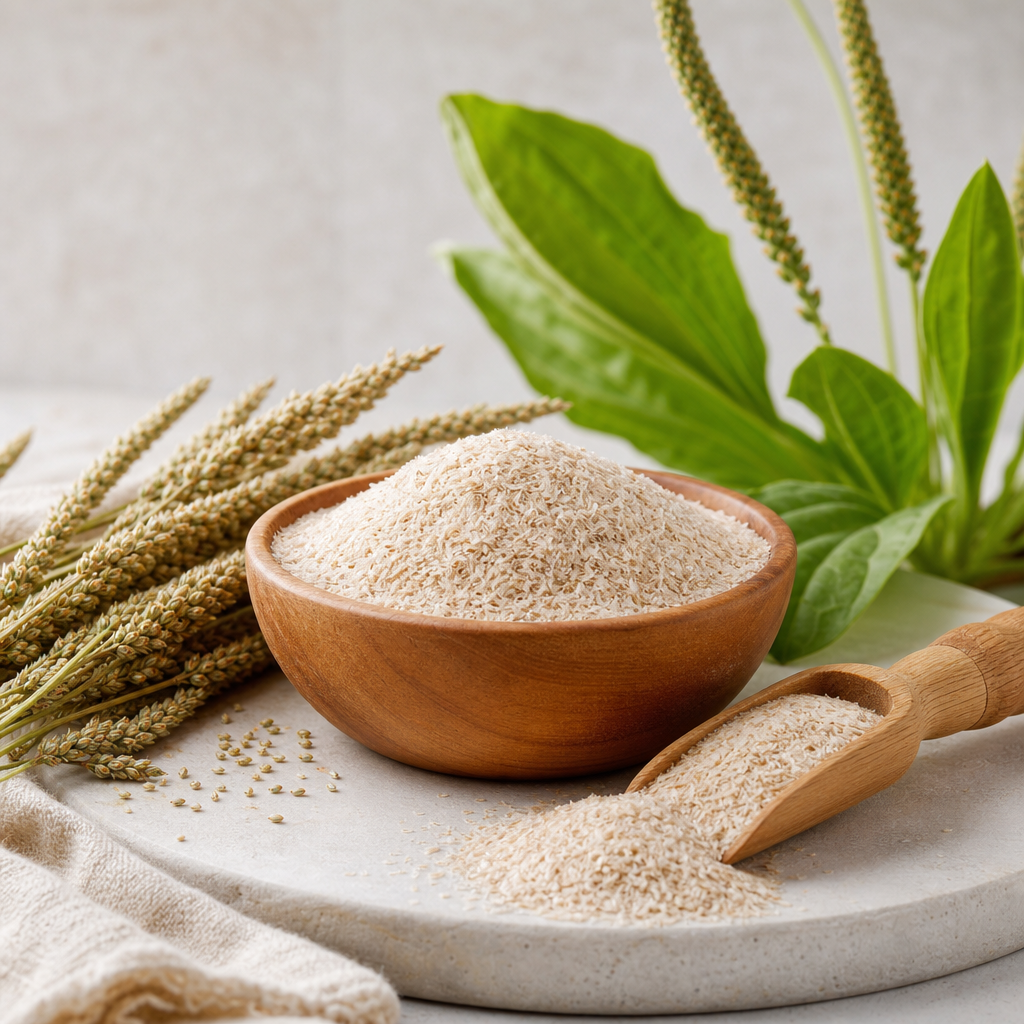
Psyllium husk is the outer coat of the seeds from Plantago ovata, a small shrub native to India and parts of the Mediterranean and Middle East. The husk is rich in soluble, gel-forming fiber that absorbs water, creating a viscous mass. This unique property makes psyllium a well-known bulk-forming fiber used in foods and supplements to support digestive regularity and other aspects of metabolic health.
Psyllium husk is not an essential nutrient like vitamins or minerals, and the body does not technically require it to function. Instead, it is a food-derived ingredient and dietary supplement classified as a soluble fiber. When consumed with adequate water, psyllium can soften hard stools, add form to loose stools, help lower LDL cholesterol, and modestly support blood sugar control and satiety. Its effects stem from physical and physiological actions in the gut—such as water retention, viscosity, delayed gastric emptying, and bile acid binding—rather than from being a required nutrient.
Benefits of Psyllium Husk
-
Improved regularity and relief from constipation
(Strong evidence)
Psyllium’s gel-forming fiber increases stool water content and bulk, promoting softer, easier-to-pass stools and more consistent bowel movements. Clinical trials show it improves stool frequency and consistency and reduces straining compared with placebo and many other fibers. It is generally considered a first-line, gentle option for functional constipation when used with adequate fluids.
-
LDL cholesterol reduction and heart health support
(Strong evidence)
Regular intake of psyllium (often around 7–10 g/day of husk, providing several grams of soluble fiber) can reduce LDL cholesterol by roughly 5–10%, particularly when combined with a heart-healthy diet. The viscous fiber binds bile acids in the intestine, increasing their excretion and prompting the liver to use more cholesterol to make new bile acids, thereby lowering circulating LDL.
-
Glycemic control in type 2 diabetes and prediabetes
(Moderate evidence)
By thickening intestinal contents and slowing carbohydrate absorption, psyllium can blunt post-meal glucose rises and modestly improve markers such as fasting glucose or A1c over time. Benefits are most consistent when psyllium is taken before or with carbohydrate-containing meals and combined with dietary and lifestyle measures. It should complement, not replace, prescribed diabetes treatment.
-
Support for loose stools and some IBS symptoms
(Moderate evidence)
Psyllium’s gel helps absorb excess water, adding form to loose stools. In irritable bowel syndrome (IBS), psyllium often improves overall symptom scores and stool form, especially in IBS with constipation or mixed patterns. Individual responses vary, so gradual titration is recommended to find a comfortable dose.
-
Increased satiety and modest weight-management support
(Limited to moderate evidence)
Psyllium can promote fullness when taken before meals, leading some people to reduce calorie intake. Trials show small average weight changes over weeks to months; effects are modest and depend on overall diet and activity. It should be viewed as an adjunct to, not a substitute for, healthy eating and exercise.
-
Small reductions in blood pressure
(Limited evidence)
Some studies report minor improvements in systolic and diastolic blood pressure, potentially from improved endothelial function and better weight and glycemic control. The average effect size is small and not universal, so psyllium should not be relied on as a primary blood pressure therapy.
-
Prebiotic effects and short-chain fatty acid production
(Mixed evidence)
Psyllium is partially fermentable and may increase beneficial short-chain fatty acids like butyrate in some people, but its fermentation profile is less consistent than fibers like inulin. It tends to cause less gas than highly fermentable fibers, which some sensitive individuals find more tolerable.
-
Support during hemorrhoids or anal fissures
(Limited evidence)
By softening stools and reducing straining, psyllium may help decrease discomfort and support healing alongside medical care. Evidence is largely pragmatic and supportive rather than definitive.
Types or Forms Available
-
Whole husk vs. ground husk (powder):
Whole husk contains larger flakes; ground husk is finer and disperses more uniformly in liquids. Both gel similarly if taken with sufficient water. Finer powders may thicken faster and feel smoother but can clump if not mixed well.
-
Capsules or tablets:
Offer convenience and taste neutrality but require many capsules to reach common fiber doses. They are best for those who cannot tolerate the texture of powders, though cost per gram of fiber is usually higher.
-
Flavored or sweetened drink mixes:
Often combined with flavorings, sugars, or non-nutritive sweeteners to improve palatability. Check labels for added sugars or sugar alcohols, which may affect blood glucose or cause GI discomfort in sensitive individuals.
-
Wafers or bars fortified with psyllium:
Provide a more food-like experience with portioned doses. These can contain added sugars or fats; read nutrition facts to align with your goals (cholesterol, glycemic control, weight management).
-
Blended fiber formulas:
Psyllium may be combined with other fibers or botanicals. Blends can change viscosity, fermentability, and GI tolerance. Choose products listing the psyllium dose per serving to compare efficacy with clinical ranges.
-
Plantago ovata vs. other Plantago species:
Most supplements use Plantago ovata (often called “blonde psyllium”). Other species exist but are less commonly used for supplements; verify the botanical source for consistency.
How to Use Psyllium Husk
Start low and increase gradually to reduce gas or bloating. Mix powder thoroughly in water and drink promptly before it gels too much. Always follow each serving with additional water unless your clinician advises otherwise. Separate psyllium from medications and supplements to reduce the chance of binding and reduced absorption.
-
Common dosage range:
Typically 3–10 g of psyllium husk per serving, 1–3 times daily. For bowel regularity, many products use about 3–5 g per dose. For LDL cholesterol support, intakes totaling roughly 7–10 g husk per day (providing several grams of soluble fiber) are common in research. Avoid very high intakes that exceed product directions.
-
Best timing:
For regularity, take at a consistent time daily (morning or evening). For glycemic control or satiety, consider taking 10–15 minutes before meals with carbohydrates. Athletes or those prone to GI upset may prefer to avoid doses immediately before intense training.
-
How to take it:
Mix powder into at least 8 oz (240 ml) of cool water or another fluid per serving; stir briskly and drink promptly, then follow with an extra glass of water. Capsules should be taken with a full glass of water. Psyllium can also be incorporated into smoothies or soft foods if fully hydrated.
-
Consistency:
Benefits for regularity, cholesterol, and glycemic control depend on consistent daily use. Occasional use may help episodic constipation or loose stools, but metabolic benefits require regular intake over weeks.
Food Sources and Supplement Options
Psyllium husk is derived from the seed coat of the Plantago ovata plant rather than from common dietary foods. While some cereals, bars, and baked goods are fortified with psyllium, it is primarily consumed as a supplement or functional ingredient. If you prefer to obtain soluble fiber from whole foods, alternatives include oats (beta-glucan), barley, legumes, chia, flax, and fruits like apples and citrus, which offer additional vitamins, minerals, and phytonutrients.
Supplementation can make sense when specific, measurable doses of viscous soluble fiber are desired—such as for LDL cholesterol reduction or structured bowel regimen—because foods alone may not reliably deliver the same gel-forming fiber type or amount. Whole foods, however, provide a broader nutrient package and dietary diversity, while supplements provide convenience and targeted dosing. Choose products with clear labeling of psyllium husk grams per serving and minimal unnecessary additives.
-
Natural source:
Plantago ovata seed husk (often labeled as psyllium husk, ispaghula husk, or “blonde psyllium”).
Who May Benefit from Psyllium Husk?
-
Adults with functional constipation or irregular bowel habits seeking a gentle, non-stimulant fiber.
-
People with mildly elevated LDL cholesterol who are implementing a heart-healthy diet and want additional soluble fiber support.
-
Individuals with type 2 diabetes or prediabetes aiming to smooth post-meal glucose responses alongside standard care.
-
Those with IBS—particularly constipation-predominant or mixed types—who tolerate soluble fibers better than insoluble fibers.
-
People on low-fiber dietary patterns (e.g., low produce intake, low-carb/keto) who struggle to meet fiber needs from foods.
-
Individuals managing weight who benefit from increased satiety before meals.
-
Older adults who often have lower habitual fiber intake and slower GI motility.
-
People with hemorrhoids or a history of anal fissures needing softer stools to reduce straining.
-
Athletes needing to boost fiber on rest days while avoiding GI discomfort near training sessions.
Side Effects and Considerations
-
Hydration is essential:
Taking psyllium without adequate fluid can cause choking or intestinal blockage. Always take with a full glass of water and follow product instructions. If chest pain, vomiting, or difficulty swallowing/breathing occurs after taking psyllium, seek medical care.
-
GI symptoms:
Gas, bloating, or cramping can occur, especially when starting or increasing the dose. Begin with small amounts and titrate slowly. Psyllium is generally low-FODMAP and often better tolerated than highly fermentable fibers.
-
Medication interactions:
Fiber can reduce absorption of certain drugs (e.g., levothyroxine, carbamazepine, lithium, digoxin) and some supplements (iron, zinc, magnesium). Separate psyllium from medications by at least 2–4 hours. People using diabetes medications should monitor for additive glucose-lowering effects.
-
Allergies and hypersensitivity:
Rare allergic reactions (including occupational asthma or anaphylaxis) have been reported. Discontinue and seek medical care if you experience rash, wheezing, hives, or swelling.
-
Contraindications and cautions:
Avoid psyllium with known GI obstruction, fecal impaction, severe motility disorders, or significant esophageal/intestinal strictures. Those with difficulty swallowing should not use dry products or capsules without medical guidance.
-
Product quality and additives:
Choose reputable brands tested for purity. Some flavored mixes contain added sugars, sodium, or sugar alcohols; select options aligned with your health goals. Sugar-free products using aspartame may contain phenylalanine; people with phenylketonuria (PKU) should avoid these.
-
Pregnancy, breastfeeding, and children:
Bulk-forming fibers are generally considered low risk, but dosing and hydration are important. Pregnant or breastfeeding individuals and caregivers of children should consult a healthcare professional before use.
-
Timing around exercise:
Large pre-exercise doses can cause fullness or GI discomfort. Trial smaller doses away from intense training sessions.
-
Dental or swallowing issues:
For those with dysphagia or after certain oral surgeries, use carefully prepared, fully hydrated forms under clinical guidance.
-
Medical conditions and monitoring:
People with chronic kidney, liver, or GI diseases, or those on complex medication regimens, should discuss psyllium use with a clinician. Routine monitoring of lipids or glucose can help assess whether psyllium is contributing to goals.
Common Myths About Psyllium Husk
-
Myth: Psyllium is a stimulant laxative and can be habit-forming.
Psyllium is a bulk-forming, soluble fiber that works by absorbing water and forming a soft gel. It does not stimulate intestinal contractions like stimulant laxatives and is not considered habit-forming when used as directed with adequate fluids.
-
Myth: All fibers work the same way.
Different fibers vary in viscosity, fermentability, and solubility. Psyllium is highly viscous and gel-forming, which is why it tends to improve stool consistency and can lower LDL cholesterol. Other fibers (e.g., wheat bran, inulin) have different GI and metabolic effects.
-
Myth: You can take psyllium without water.
Psyllium must be taken with sufficient liquid to expand safely. Skimping on water increases the risk of choking or blockage and reduces effectiveness. Proper mixing and an extra glass of water afterward are essential.
-
Myth: Psyllium “detoxes” the body.
Psyllium supports bowel regularity and can modestly improve metabolic markers, but it does not “detox” the body. The liver and kidneys handle detoxification; fiber mainly assists normal elimination and gut function.
-
Myth: More is always better.
Very high intakes can cause discomfort and interfere with medication absorption. Effective doses are modest and should match product guidance and personal tolerance.
Conclusion
Psyllium husk is a food-derived, gel-forming soluble fiber with well-established benefits for digestive regularity and LDL cholesterol, and supportive evidence for post-meal glucose control and stool normalization in IBS. It is not an essential nutrient, but it can be a practical, low-risk tool when taken consistently with adequate water and integrated into a broader diet and lifestyle plan. Choose quality products with clear labeling, minimal unnecessary additives, and dosing aligned with your goals.
People with medical conditions, those taking medications, and individuals who are pregnant, breastfeeding, or considering psyllium for children should consult a healthcare professional before use. For many, a food-first approach emphasizing fiber-rich whole foods is a strong foundation; psyllium supplements can provide targeted, measurable soluble fiber when diet alone is insufficient or when specific outcomes like LDL reduction or bowel regularity are prioritized.