What is Red Yeast Rice?
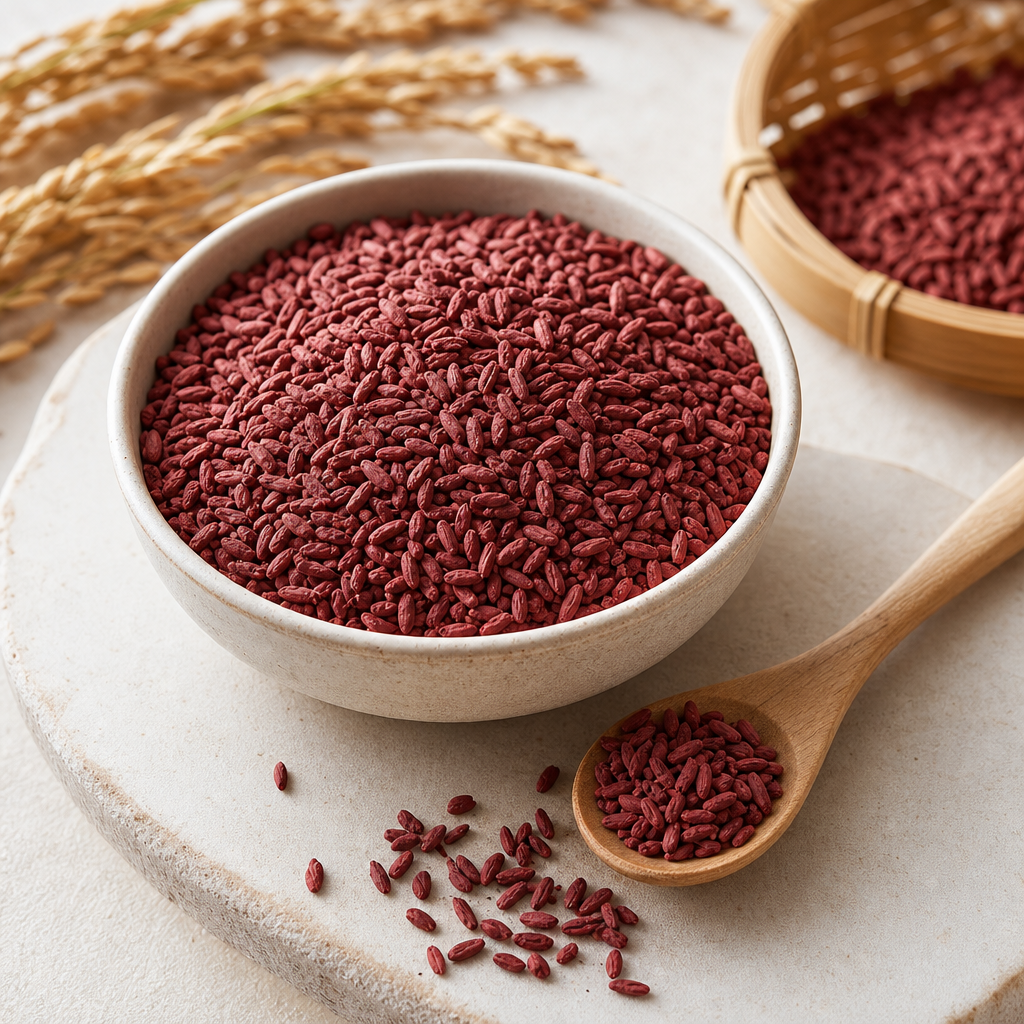
Red yeast rice (RYR) is a traditional East Asian fermented food made by culturing rice with Monascus species of yeast, most commonly Monascus purpureus. The fermentation produces a family of compounds called monacolins, pigments that give the rice its deep red color, and other bioactives. Among the monacolins, monacolin K is chemically identical to lovastatin, a prescription statin medication used to lower cholesterol. Because of this, certain standardized RYR extracts can have statin-like effects on blood lipids.
RYR is best described as a food-derived ingredient and dietary supplement rather than an essential nutrient. The human body does not require RYR for normal function in the same way it requires vitamins or minerals. In culinary settings, RYR is used to color and flavor dishes, rice wines, and condiments. In supplement form, some products are standardized to deliver specific amounts of monacolins, though in many countries—such as the United States—the amount of monacolin K in supplements can be highly variable due to regulatory constraints. This variability makes product quality and professional guidance especially important.
Benefits of Red Yeast Rice
-
Lowering LDL (“bad”) cholesterol and non-HDL cholesterol
(Strong evidence)
RYR extracts that deliver clinically meaningful amounts of monacolins, particularly monacolin K, consistently reduce LDL cholesterol in controlled trials, often to a degree comparable to low-dose statins. Typical reductions range from about 15–30%, depending on the dose and standardization. Real-world effectiveness depends heavily on product quality and the actual monacolin content.
-
Reducing risk of cardiovascular events with a specific extract
(Moderate evidence)
A large randomized trial in China using a particular standardized RYR extract in people with prior heart attack showed fewer cardiovascular events compared with placebo. While encouraging, this finding is most applicable to that exact extract and population; results may not generalize to all RYR products, which can differ in monacolin content and purity.
-
Lowering triglycerides (modest effect)
(Moderate evidence)
Across clinical studies, RYR can produce small-to-moderate decreases in triglycerides. The magnitude of change is typically less than that observed for LDL cholesterol and may be more pronounced when combined with diet and lifestyle improvements.
-
Small increases in HDL (“good”) cholesterol
(Limited evidence)
Some trials report slight rises in HDL cholesterol with RYR, but the effect is generally small and not consistently observed. Diet and exercise remain the primary strategies for meaningful HDL improvement.
-
Potential alternative for some people who cannot tolerate statins
(Mixed evidence)
RYR is sometimes used by individuals who experienced muscle aches or other side effects with prescription statins. Some tolerate RYR better, while others experience similar issues since monacolin K is chemically a statin. Because products vary and risks overlap with statins, supervision by a clinician is important.
-
Markers of inflammation (e.g., hs-CRP)
(Limited evidence)
Several studies suggest small reductions in inflammatory markers with RYR, but findings are not uniform and may reflect the lipid-lowering effect rather than a direct anti-inflammatory action.
Types or Forms Available
-
Culinary red yeast rice (whole fermented rice):
Sold as a cooking ingredient (hong qu/angkak). Monacolin content is highly variable and often low; it is used mainly for color and flavor rather than consistent lipid effects.
-
Standardized extracts (capsules or tablets):
In some markets, products are standardized to deliver specific amounts of monacolins (commonly targeting monacolin K around a few milligrams per day). In the United States, products may not legally contain drug-like amounts of monacolin K, so labels often omit monacolin content or contain very low or variable amounts.
-
Traditional Chinese medicine extract formulations:
Certain named extracts (e.g., those used in large Chinese trials) are produced under defined standards with demonstrated clinical outcomes. These specific formulations are not always available internationally.
-
Combination formulas:
RYR is frequently combined with ingredients such as berberine, plant sterols, artichoke, policosanol, or CoQ10. Combinations may provide complementary mechanisms but make it difficult to attribute benefits or side effects to a single component.
-
“Citrinin-free” labeled products:
Some manufacturers test and label products as citrinin-free. Citrinin is a nephrotoxic byproduct of Monascus fermentation; choosing products tested for citrinin can improve safety.
-
Delivery formats:
Capsules and tablets are most common; powders exist but make precise dosing and standardization more difficult.
How to Use Red Yeast Rice
Work with a healthcare professional to determine whether RYR is appropriate, especially if you have cardiovascular risk factors or take medications. Because the active component can act like a statin, periodic lab monitoring (lipid panel, liver enzymes, and sometimes creatine kinase) is prudent, particularly during the first months of use or when changing products or doses.
-
Common dosage range:
Clinical studies often used 1,200–2,400 mg per day of a standardized extract, typically providing a modest dose of monacolin K. Product potency varies widely; do not exceed label directions. Higher, drug-like doses raise the risk of side effects and should not be used without medical supervision.
-
Best timing:
Evening or with the largest meal is common, since cholesterol synthesis in the liver is more active at night. Consistency in timing supports steady exposure.
-
How to take it:
Take with food and water to reduce gastrointestinal upset. Avoid grapefruit and grapefruit juice, which can raise monacolin K levels by affecting metabolism.
-
Consistency:
Daily use is typically needed to maintain lipid effects. Recheck lipids after 6–8 weeks to evaluate response and safety, and reassess periodically thereafter.
Food Sources and Supplement Options
RYR is both a traditional food and a supplement. As a food, it is used to color and flavor dishes in Chinese and Southeast Asian cuisines. Culinary products may contain minimal or unpredictable monacolin levels and should not be relied upon for lipid management. Supplements are commonly used when a targeted, consistent intake of monacolins is desired—though actual content varies by product and jurisdiction.
-
Culinary red yeast rice (hong qu/angkak) used in rice dishes
-
Red rice vinegar and certain rice wines
-
Red fermented bean curd (fermented tofu) and some cured meats colored with RYR
Food-first strategies remain foundational for lipid health (e.g., high-fiber foods, plant sterols/stanols, nuts, legumes, fish rich in omega-3s, and a Mediterranean-style pattern). Supplements may make sense when lifestyle measures are in place yet LDL remains above target, or when a clinician recommends RYR as part of a broader plan. Choose high-quality products tested for citrinin and label accuracy; third-party certifications (such as USP or NSF) can add assurance.
Who May Benefit from Red Yeast Rice?
-
Adults with borderline-high or moderately elevated LDL cholesterol who have optimized diet, weight, and activity but still need additional LDL reduction, and who are not currently on prescription statins
-
Individuals who previously experienced side effects with standard statins and, under medical supervision, wish to try a lower-intensity, food-derived approach
-
People following heart-healthy eating patterns who prefer a nonprescription adjunct for lipid management, acknowledging that product quality and response can vary
-
Some adults at low-to-moderate cardiovascular risk seeking modest triglyceride reduction as part of a comprehensive lifestyle plan
-
Post–heart attack patients in regions where a specific, clinically studied RYR extract is prescribed—always under physician care
Side Effects and Considerations
-
Statin-like side effects:
Because monacolin K is chemically identical to lovastatin, RYR can cause muscle aches, weakness, and, rarely, serious muscle injury (rhabdomyolysis), as well as elevated liver enzymes. Seek medical attention for unexplained muscle pain, dark urine, or profound fatigue.
-
Medication interactions:
Do not combine RYR with prescription statins or fibrates (e.g., gemfibrozil) due to increased myopathy risk. Use caution with niacin. RYR can interact with CYP3A4 inhibitors (e.g., certain macrolide antibiotics, azole antifungals, HIV protease inhibitors) and with cyclosporine, potentially increasing toxicity.
-
Grapefruit and alcohol:
Avoid grapefruit products, which can raise monacolin levels. Limit alcohol intake to reduce liver stress.
-
Liver and kidney concerns:
People with active liver disease, unexplained elevated liver enzymes, or significant kidney disease should avoid RYR. Citrinin contamination in poorly made products poses a kidney risk.
-
Quality variability and contamination:
Monacolin content can differ widely across brands, and some products have tested positive for citrinin. Choose reputable, third-party tested products that specify citrinin-free status.
-
Pregnancy, breastfeeding, and children:
Avoid use during pregnancy and breastfeeding and in individuals under 18 unless directed by a clinician. Safety is not established, and potential fetal risks are a concern.
-
Surgical and medical procedures:
Inform your healthcare team before surgery or new prescriptions. Consider pausing RYR 1–2 weeks before elective procedures, as advised by your clinician.
-
Allergies and sensitivities:
Those with yeast or mold allergies should use caution. Gastrointestinal upset, headache, dizziness, or rash can occur.
-
CoQ10 depletion:
Statins may lower coenzyme Q10 levels, and RYR might have a similar effect. Some people consider a modest CoQ10 supplement, but discuss this with a healthcare professional.
-
Monitoring:
Baseline and periodic lipid panels and liver enzymes are recommended; creatine kinase may be checked if muscle symptoms occur. Stop use and seek evaluation if adverse symptoms appear.
-
Medical oversight:
People who are pregnant, breastfeeding, taking medications, or managing a medical condition should consult a healthcare professional before using RYR.
Common Myths About Red Yeast Rice
-
“It’s natural, so it’s automatically safe.”
Natural does not mean risk-free. Monacolin K in RYR is identical to a prescription statin and can cause similar side effects and interactions. Safety depends on dose, product quality, and individual health status.
-
“All RYR supplements are the same.”
Products vary widely in monacolin content and purity. Some contain little active compound; others may be adulterated or contaminated with citrinin. Effects and safety cannot be assumed across brands.
-
“RYR can replace a heart-healthy lifestyle.”
Supplements are not substitutes for diet, exercise, weight management, and smoking cessation. RYR works best as part of a comprehensive approach, not as a stand-alone fix.
-
“RYR is a loophole to get a statin without medical oversight.”
Using drug-like doses without supervision raises the risk of side effects and interactions, and some jurisdictions regulate monacolin content accordingly. Medical guidance and lab monitoring are important.
-
“Culinary red yeast rice provides the same benefits as supplements.”
Traditional food forms are not standardized and often contain minimal monacolins. Culinary RYR should not be relied upon for consistent lipid-lowering effects.
Conclusion
Red yeast rice is a food-derived supplement that can meaningfully lower LDL cholesterol when standardized to deliver active monacolins, and a specific extract has been linked with fewer cardiovascular events in post–heart attack patients. Its usefulness depends on product quality, appropriate dosing, and careful monitoring—ideally under the guidance of a healthcare professional. Because the active constituent behaves like a statin, risks and interactions overlap with prescription therapies.
For most people, a food-first strategy remains the foundation for lipid and heart health, with supplements considered when lifestyle efforts are in place yet additional support is needed. If RYR is chosen, select a reputable, citrinin-tested product, use conservative dosing, and monitor labs. Individuals who are pregnant or breastfeeding, taking medications, or managing medical conditions should seek medical advice before use.