What is Royal Jelly?
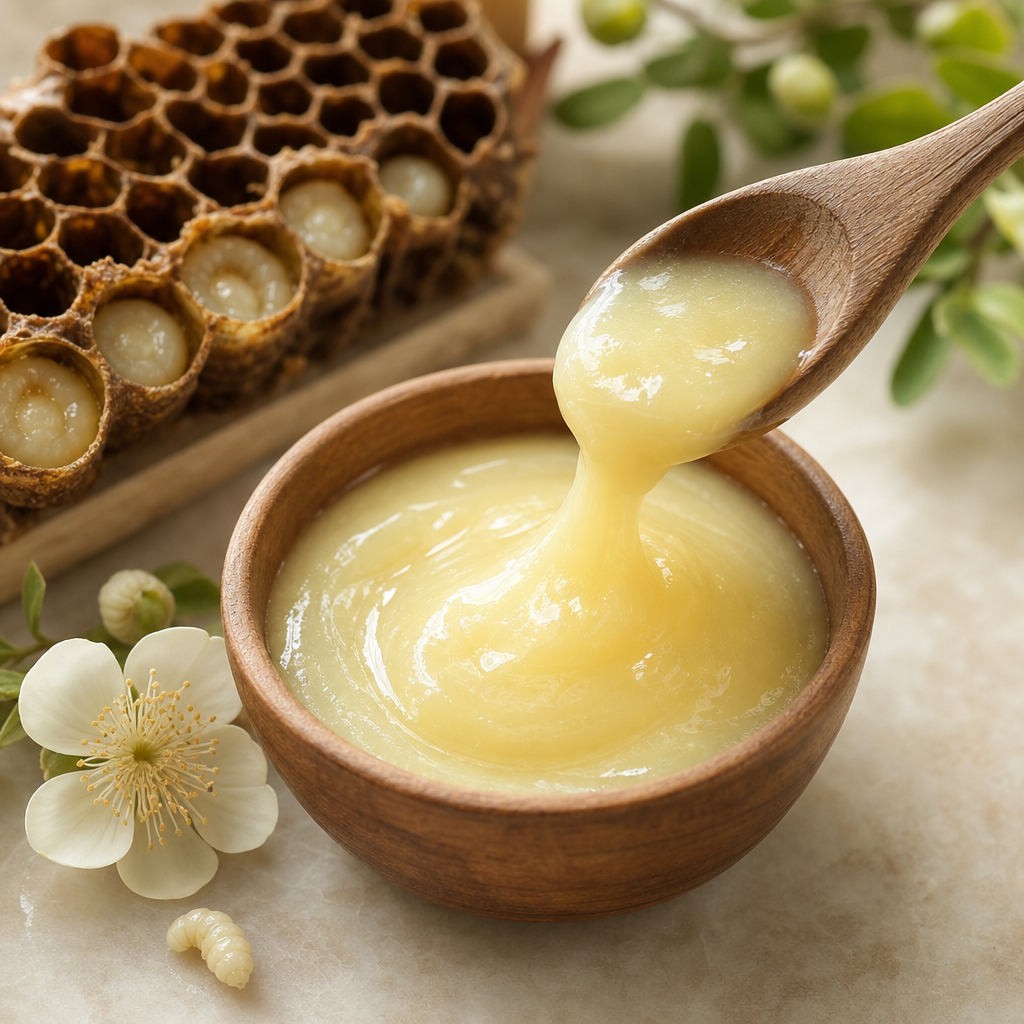
Royal jelly is a creamy, nutrient-dense secretion produced by worker honeybees to feed all larvae in their first days of life and exclusively the queen bee throughout her lifespan. It contains water, proteins, carbohydrates, lipids (notably 10-hydroxy-2-decenoic acid, or 10-HDA), vitamins in small amounts, minerals, and a range of bioactive peptides and polyphenols. In human wellness, royal jelly is best described as a food-derived ingredient and dietary supplement rather than an essential nutrient or a conventional herb. It is not required by the human body in the same way that vitamins, minerals, essential amino acids, or essential fatty acids are.
Because of its role in the hive—particularly its link to the queen bee’s growth and longevity—royal jelly has long been explored for potential benefits related to skin health, energy, immune function, and healthy aging. Modern research has investigated effects on lipids, glucose regulation, menopausal comfort, wound healing, and eye surface hydration. Findings vary by study design, dose, and product quality, and while some results are encouraging, many outcomes remain uncertain. As with most bee-derived products, responses can be highly individual, and safety—especially for those with allergies—requires careful attention.
Benefits of Royal Jelly
-
Menopausal comfort (hot flashes, mood, and quality of life)
(Mixed evidence)
Several small human trials suggest royal jelly may help reduce vasomotor symptoms (such as hot flashes) and support mood and well-being in peri- and postmenopausal individuals. Proposed mechanisms include weak estrogenic-like activity of certain fatty acids and peptides and potential antioxidant effects. However, study sizes are modest, formulations and doses vary, and some trials show little to no effect, so consistency and magnitude of benefit are not firmly established.
-
Cholesterol and glucose markers
(Mixed evidence)
Research has explored effects on total cholesterol, LDL-C, HDL-C, triglycerides, and fasting blood glucose. Some studies report small, favorable shifts—such as modest reductions in LDL-C or fasting glucose—while others find no meaningful change. Differences in product standardization, background diet, and health status make it difficult to predict who will benefit. Royal jelly should not replace prescribed therapies for dyslipidemia or diabetes.
-
Skin hydration and wound healing (topical and/or oral)
(Preliminary evidence)
Laboratory and animal work, alongside limited human data, indicate royal jelly may promote keratinocyte migration, collagen support, and improved hydration, potentially aiding minor wound healing and cosmetic skin moisture. Most evidence comes from small studies or topical preparations with multiple ingredients, so it is unclear how much benefit is attributable to royal jelly alone, and results may not generalize to deeper or infected wounds.
-
Dry eye symptoms
(Limited evidence)
Early clinical studies suggest oral royal jelly may increase tear secretion and improve subjective dryness in some individuals, possibly via effects on lacrimal gland function and oxidative balance. Trials remain small, products differ in 10-HDA content, and long-term outcomes are not well documented. More robust, standardized studies are needed before routine use can be recommended.
-
Immune and inflammatory balance
(Preliminary evidence)
Royal jelly contains proteins (major royal jelly proteins) and fatty acids (like 10-HDA) that appear to influence inflammatory signaling in lab settings. Limited human data suggest possible changes in certain immune or oxidative stress markers after supplementation. Clinical relevance, optimal dosing, and durability of effects are not yet clear.
-
Fertility and reproductive health
(Preliminary evidence)
Animal research and small pilot studies have examined potential effects on ovarian function, sperm quality, or sexual well-being. Human evidence is sparse and inconsistent, and any hormonal activity appears weak and context-dependent. Those with hormone-sensitive conditions should be cautious and consult a healthcare professional before use.
Types or Forms Available
-
Fresh or refrigerated royal jelly:
A semi-solid, perishable substance requiring cold storage. It is often marketed as “raw” and may contain a broad spectrum of native components. Potency can degrade with heat and time, and composition varies by hive, season, and processing.
-
Freeze-dried (lyophilized) powder:
Water is removed at low temperatures to preserve bioactives, then the powder is encapsulated or tableted. Products may list a fresh-to-dry equivalency (for example, 300 mg freeze-dried approximating 1,000 mg fresh). Many quality supplements standardize to a certain percentage of 10-HDA, a marker commonly used to assess authenticity and potency.
-
Liquid ampoules or tinctures (often blended with honey or propolis):
Convenient for those who dislike capsules. Blended products can improve taste and palatability but make it harder to determine royal jelly’s standalone dose or effect.
-
Softgels, capsules, or tablets:
Offer precise, labeled dosing and easier daily use. Look for third-party testing and stated 10-HDA content to improve consistency between batches.
-
Topical creams and ointments:
Used for cosmetic skin hydration or minor skin support. These usually combine royal jelly with other moisturizing or barrier-supporting ingredients, which can confound attribution of effects.
How to Use Royal Jelly
Royal jelly does not have a universally accepted dosing standard, and products vary in strength and quality. Start with a low dose from a reputable, tested brand, and increase only if well tolerated. Because bee products can trigger allergic reactions—even severe ones—people with a history of bee, honey, or pollen allergies should avoid royal jelly unless cleared by a healthcare professional.
-
Common dosage range:
For oral use, many supplements provide about 300–1,000 mg per day of freeze-dried royal jelly (roughly equivalent to 1–3 g fresh), though some products use up to 2,000 mg freeze-dried. For fresh royal jelly, typical daily amounts range from about 1–5 g. Topical use follows product directions. Avoid high or “mega” doses, as safety data are limited and the risk of adverse reactions may rise with dose.
-
Best timing:
Timing is flexible. Some prefer morning use for routine; others split the dose (morning and early afternoon). If sensitive to stomach upset, take with a small meal.
-
How to take it:
Capsules and tablets can be taken with water. Fresh or liquid forms are often taken sublingually or mixed with a small amount of food. Topical preparations should be patch-tested on a small area first to check for sensitivity.
-
Consistency:
Daily use for several weeks is commonly suggested in studies. Consider an initial 4–8 week trial while monitoring how you feel. If no benefit is noticed, discontinuation is reasonable.
Food Sources and Supplement Options
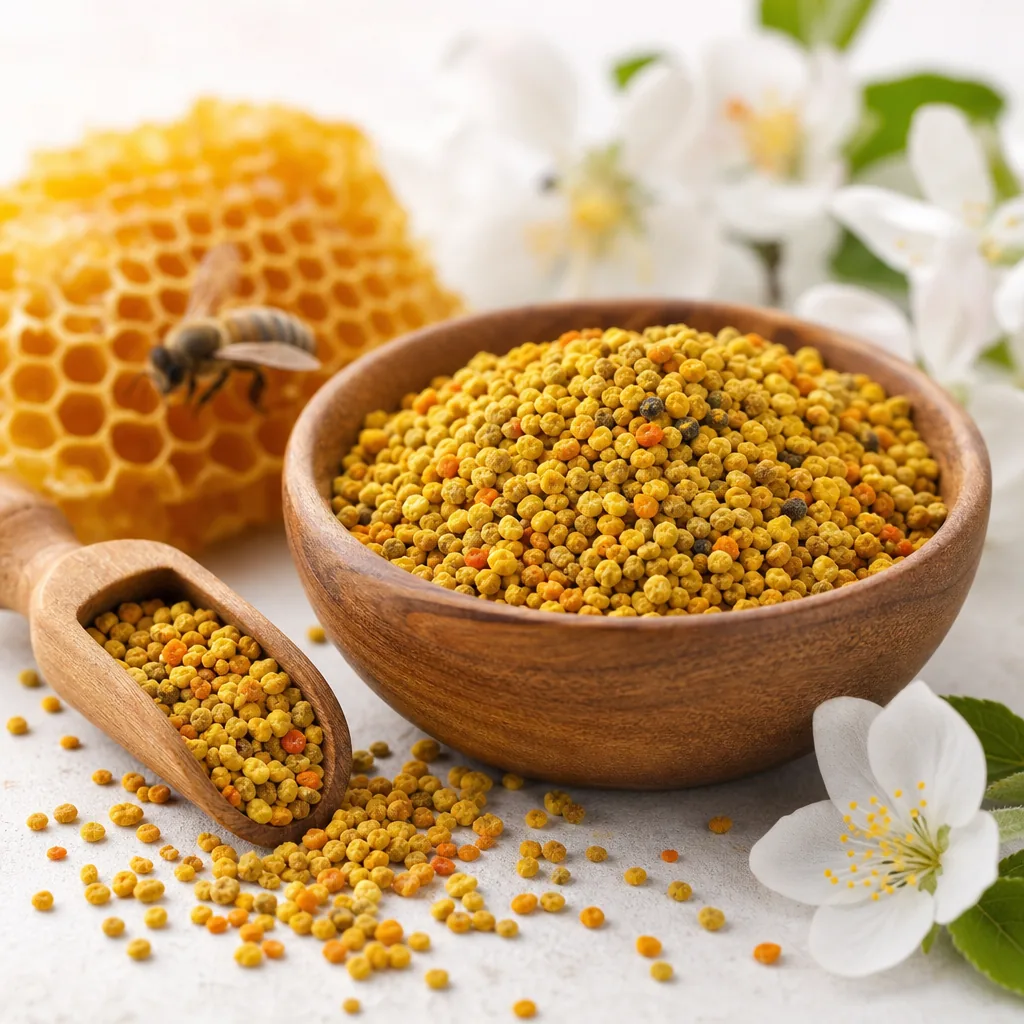
Royal jelly is produced exclusively by honeybees within the hive and is not present in meaningful amounts in everyday foods. While honey, propolis, and bee pollen are also bee-derived, they are chemically distinct from royal jelly. As a result, most people encounter royal jelly as a dietary supplement or in topical cosmetic products rather than through diet.
Supplementation may make sense for those who wish to experiment with a standardized product for specific wellness goals, such as menopausal comfort, skin hydration support, or mild lipid and glucose support under professional guidance. Whole foods remain foundational for overall health because they provide fiber, macronutrients, and a broad spectrum of vitamins, minerals, and phytonutrients. Supplements, when chosen carefully, can offer more targeted dosing and measurable amounts of specific bioactives like 10-HDA.
Who May Benefit from Royal Jelly?
-
Peri- or postmenopausal adults interested in non-pharmacologic strategies for comfort, after discussing options with a clinician.
-
Adults seeking adjunct support for skin hydration or appearance, especially in combination with a well-formulated moisturizer and sun protection.
-
People with mild, lifestyle-managed cholesterol or fasting glucose concerns who want to trial a standardized product alongside diet, exercise, and medical guidance.
-
Individuals with persistent dry eye sensations looking to test additional supportive measures recommended by their eye-care professional.
-
Wellness enthusiasts curious about bee-derived products who do not have allergies or asthma and who can source high-quality, tested supplements.
Side Effects and Considerations
-
Allergic reactions can be serious:
Royal jelly has been associated with anaphylaxis, asthma exacerbations, hives, and throat or facial swelling, especially in people allergic to bees, honey, pollen, or who have atopic conditions. Discontinue immediately if any allergic symptoms occur and seek emergency care for breathing difficulty, swelling, or severe reactions.
-
Respiratory sensitivity:
Individuals with asthma or chronic respiratory disease have reported wheezing or bronchospasm with royal jelly. Avoid use unless your clinician agrees it is safe.
-
Gastrointestinal upset:
Some users experience stomach discomfort, nausea, or diarrhea. Taking with a small meal may help, or consider a lower dose or stopping use.
-
Potential hormonal activity:
Certain components of royal jelly exhibit weak estrogen-like effects in lab models. People with hormone-sensitive conditions (e.g., estrogen receptor–positive cancers, endometriosis) or those on hormone therapy should consult their healthcare professional before use.
-
Blood sugar and blood pressure considerations:
Because some studies note small shifts in glucose or blood pressure, those on antihypertensives, antidiabetics, or with hypotension or hypoglycemia should monitor closely and consult a clinician to avoid unwanted additive effects.
-
Medication interactions:
Robust interaction data are limited. Out of caution, discuss use if you take anticoagulants/antiplatelets, antihypertensives, antidiabetics, immunomodulators, or hormone therapies. Stop use at least 1–2 weeks before scheduled surgery unless otherwise directed.
-
Pregnancy, breastfeeding, and children:
Safety data are insufficient. Due to allergy risk and limited research, it is prudent to avoid royal jelly during pregnancy and breastfeeding and in young children unless specifically recommended by a clinician.
-
Liver/kidney concerns:
Data on high-dose or long-term effects in hepatic or renal impairment are lacking. Use cautiously or avoid in these settings unless monitored by a healthcare professional.
-
Product quality and contamination:
Bee products can contain pesticide residues, heavy metals, or antibiotic residues if sourcing is poor. Choose brands with third-party testing and transparent 10-HDA standardization. Store as directed to preserve potency.
-
Not a replacement for medical care:
Royal jelly should not substitute for prescribed treatments for menopausal symptoms, dyslipidemia, diabetes, dry eye disease, or skin conditions. Use as a complement to evidence-based care and lifestyle changes.
Common Myths About Royal Jelly
-
Myth: Royal jelly guarantees longevity and vitality because the queen bee lives longer.
The queen’s lifespan and fertility are the product of complex bee biology, genetics, and continuous feeding with royal jelly within the hive’s unique environment. Human physiology is fundamentally different, and current research does not show that royal jelly replicates the queen bee’s longevity effects in people.
-
Myth: Royal jelly is the same as honey or propolis.
These are distinct bee products with different compositions and uses. Honey is a carbohydrate-rich food; propolis is a resinous substance bees use to seal and protect the hive; royal jelly is a protein- and lipid-containing secretion with unique fatty acids like 10-HDA. Benefits, dosing, and safety profiles are not interchangeable.
-
Myth: Royal jelly is a proven fertility enhancer.
Evidence in humans is limited and inconsistent. While certain animal or pilot studies suggest potential effects, robust clinical trials demonstrating clear improvements in fertility outcomes are lacking. Anyone considering royal jelly for reproductive goals should do so only with professional guidance.
-
Myth: More royal jelly equals better results.
Higher doses have not been reliably linked to better outcomes and may increase the chance of side effects, including allergic reactions. Starting low, monitoring response, and using quality, standardized products is safer and more sensible than megadosing.
Conclusion
Royal jelly is a bee-derived supplement that may offer modest support for menopausal comfort, skin hydration, dry eye symptoms, and select metabolic markers in some individuals. Evidence varies by outcome, and research quality and product standardization differ widely. It is not an essential nutrient, and it should be viewed as an optional adjunct to core lifestyle measures—balanced nutrition, regular physical activity, sleep, and stress management—rather than a standalone solution.
Those with allergies, asthma, hormone-sensitive conditions, or who are pregnant, breastfeeding, taking medications, or managing medical conditions should consult a healthcare professional before trying royal jelly. If you choose to experiment, prioritize products with third-party testing and stated 10-HDA content, start with conservative doses, and reassess after several weeks. A food-first approach remains foundational for health, while a carefully sourced supplement can provide targeted dosing for those who wish to explore potential benefits under appropriate guidance.