What is Saw Palmetto?
Saw palmetto (Serenoa repens) is a small palm native to the southeastern United States. The ripe, dark berries of the plant are used to produce supplements that contain a mixture of fatty acids and plant sterols believed to influence hormone metabolism and inflammation. In modern wellness, saw palmetto is most often discussed for men’s urinary health and male-pattern hair loss, although its overall evidence base is mixed and varies by outcome.
From a nutrition standpoint, saw palmetto is a botanical supplement, not an essential nutrient. Unlike vitamins and minerals, the body does not require saw palmetto to function. Its extracts are concentrated preparations of plant compounds—particularly lauric, oleic, and myristic acids along with beta-sitosterol—that may modulate 5-alpha-reductase activity (the enzyme that converts testosterone to dihydrotestosterone, DHT) and exhibit anti-inflammatory actions in prostate tissue. Because it is an herb/extract rather than an essential nutrient, its use is optional and should be individualized based on goals, tolerance, and medical guidance.
Benefits of Saw Palmetto
-
Urinary symptom relief in benign prostatic hyperplasia (BPH)
(Mixed evidence)
Research on saw palmetto for lower urinary tract symptoms (LUTS) related to BPH shows inconsistent results. Some trials—often using lipidosterolic extracts standardized to fatty acids—report modest improvements in symptom scores (such as urgency, frequency, and nocturia) and quality of life, while others find little to no difference from placebo. Extract type, dose, and study duration appear to influence outcomes, which may explain the variability.
-
Urinary flow measures (flow rate and residual volume)
(Mixed evidence)
Studies measuring objective parameters like peak urinary flow and post-void residual volume show variable findings. Certain standardized extracts demonstrate small improvements in flow metrics for some men with mild to moderate BPH, whereas other well-controlled trials do not confirm these effects. Any benefit, when present, tends to be modest rather than dramatic.
-
Support for androgenetic alopecia (male-pattern hair loss)
(Limited evidence)
Small studies and pilot trials suggest saw palmetto may slightly improve hair density or reduce hair shedding in some individuals, possibly by dampening DHT activity at the follicle level. Effects are generally mild, take months to assess, and are not consistently reproduced across studies. It is not a substitute for established therapies but may serve as an adjunct for those who cannot tolerate or prefer not to use medications.
-
Adjunctive support in chronic prostatitis/chronic pelvic pain syndrome (CP/CPPS)
(Limited evidence)
Preliminary research—often in combination with other botanicals like pygeum or nettle—suggests potential improvements in pain and urinary symptoms in men with CP/CPPS. Data are limited, heterogeneous, and frequently involve multi-ingredient formulas, making it difficult to isolate the specific effect of saw palmetto.
-
Anti-inflammatory and antioxidant activity
(Preliminary evidence)
Laboratory and early clinical work indicates that saw palmetto’s fatty acids and sterols may modulate inflammatory pathways and oxidative stress in prostate tissue. While mechanistic data are plausible, translation to consistent, clinically meaningful outcomes is not firmly established.
Types or Forms Available
-
Lipidosterolic extract (LSESr), hexanic extraction
: The most researched form. Typically standardized to about 80–95% fatty acids and sterols. Often provided in softgels. This form is used in many clinical trials and is favored for consistency and bioactive content.
-
Supercritical CO2 extract
: Uses carbon dioxide under pressure to extract lipids without traditional solvents. Also standardized to high fatty acid content. Considered a clean extraction method with good stability, though head-to-head evidence versus hexanic extracts is limited.
-
Ethanolic or ethanolic/aqueous extracts
: Alcohol-based extraction can yield slightly different phytochemical profiles. Some products are well standardized, but clinical evidence is less uniform compared with hexanic LSESr.
-
Whole berry powder, tea, or tincture
: Less concentrated than standardized extracts and more variable in composition. These forms are not the ones typically used in research on urinary symptoms and may be less reliable for targeted outcomes.
-
Combination formulas
: Saw palmetto is frequently paired with other botanicals (e.g., pygeum, stinging nettle) or isolated sterols (e.g., beta-sitosterol). These may offer complementary mechanisms but make it harder to attribute benefits or side effects to one ingredient.
How to Use Saw Palmetto
Individual needs vary. Consider discussing use with a clinician—especially to confirm the cause of urinary symptoms and to rule out more serious conditions—before starting.
-
Common dosage range:
320 mg per day of a standardized lipidosterolic extract (approximately 80–95% fatty acids/sterols) is the most common regimen, taken as 160 mg twice daily or 320 mg once daily. Higher doses have not consistently shown greater benefits and may increase the chance of side effects. Always follow the product label.
-
Best timing:
Timing is flexible. Many people take it with breakfast and/or dinner. Splitting the dose (e.g., 160 mg twice daily) may improve tolerability for some users.
-
How to take it:
Take with food and a glass of water to reduce the risk of stomach upset. Softgels or oil-based capsules may enhance absorption of fatty acids.
-
Consistency:
Daily use is typically needed. Allow at least 8–12 weeks to gauge effects on urinary symptoms or hair outcomes, with reassessment around 3–6 months. Discontinue and seek medical advice if symptoms worsen.
Food Sources and Supplement Options
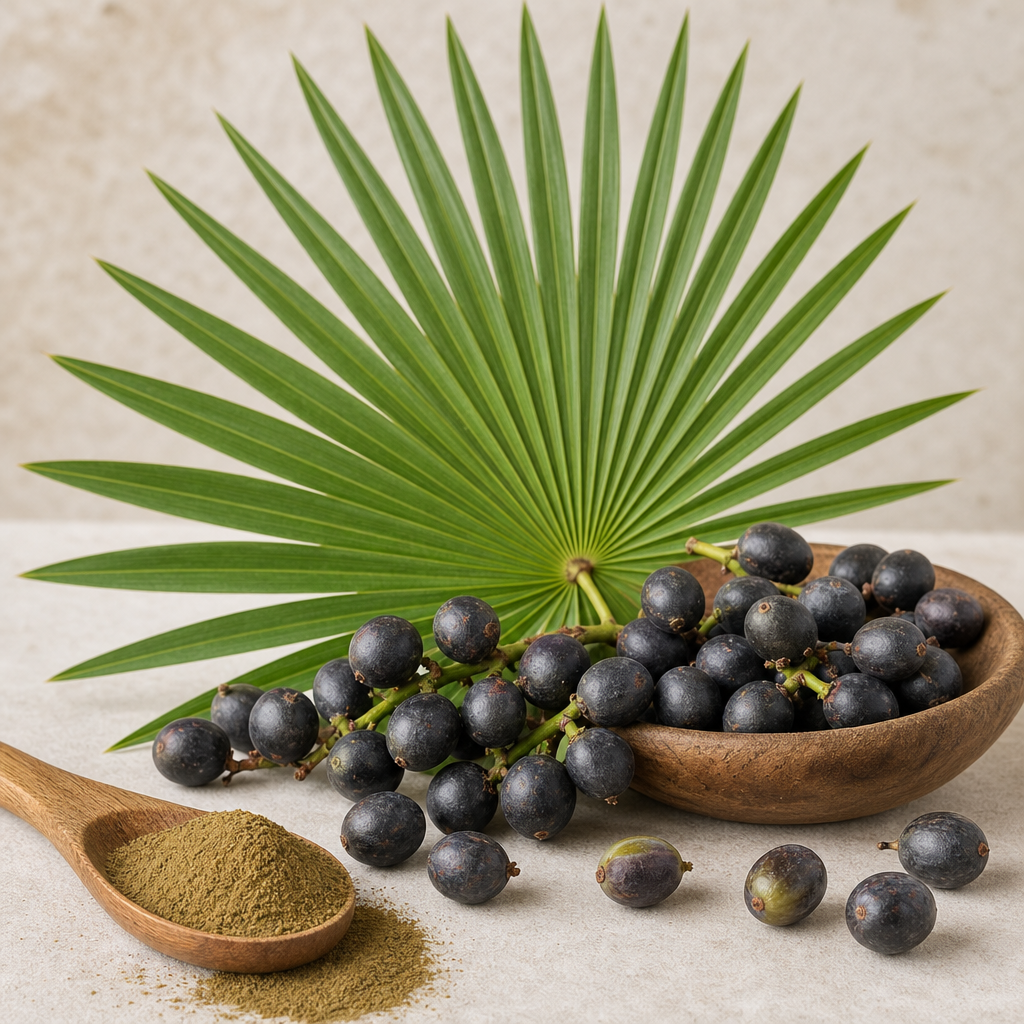
Saw palmetto is a botanical derived from the berries of the Serenoa repens palm. It is not commonly consumed as a food in modern diets, and meaningful intakes of the active fatty acids/sterols are most reliably achieved through standardized supplements. Historically, the berries were eaten by Indigenous peoples and early settlers, but they have a strong taste and are not a practical dietary source today.
-
Saw palmetto berries (Serenoa repens) are the natural source used to produce extracts found in supplements.
Supplements may make sense for adults who have been medically evaluated for urinary symptoms and want to trial a botanical approach under guidance, or for individuals exploring adjunct support for early hair thinning. Whole foods remain foundational for overall health by providing fiber, vitamins, minerals, and diverse phytonutrients; supplements are best reserved for targeted dosing when a specific outcome is desired and after discussing appropriateness and safety with a healthcare professional.
Who May Benefit from Saw Palmetto?
-
Adult men with mild to moderate lower urinary tract symptoms related to BPH who prefer to explore a non-prescription botanical option after medical evaluation.
-
Individuals who cannot tolerate or do not respond to standard BPH medications and want to consider an adjunct botanical approach under clinician supervision.
-
Adults with early-stage male-pattern hair thinning who are seeking a complementary strategy alongside lifestyle measures and/or other therapies, recognizing modest expectations.
-
Men with chronic prostatitis/chronic pelvic pain syndrome who are trying a multimodal plan directed by a urologist, potentially including botanicals.
-
People who value a trial of a standardized, third-party tested extract as part of a short-term, monitored experiment with defined stop/go criteria.
Side Effects and Considerations
-
Gastrointestinal upset
: Nausea, abdominal discomfort, diarrhea, or constipation can occur. Taking with food often improves tolerance.
-
Headache and dizziness
: Generally mild and transient, but discontinue and seek care if persistent.
-
Bleeding risk
: There are case reports of increased bleeding. Use caution with anticoagulants or antiplatelet medications (e.g., warfarin, apixaban, clopidogrel) and with other supplements that affect clotting (e.g., ginkgo, high-dose fish oil, garlic). Stop use at least 2 weeks before surgery unless otherwise directed by your surgeon.
-
Hormone-related considerations
: Because saw palmetto may influence androgen pathways, individuals with hormone-sensitive conditions (e.g., certain prostate or breast conditions) should consult a specialist before use. It may interact with hormone therapies or oral contraceptives.
-
Pregnancy, breastfeeding, and children
: Not recommended due to potential hormonal effects and insufficient safety data. Avoid use unless specifically directed by a qualified clinician.
-
Liver or pancreas concerns
: Rare reports of liver injury and pancreatitis exist. People with existing liver disease or unexplained abdominal pain should exercise caution and seek medical advice before use.
-
Drug interactions
: Potential interactions with anticoagulants/antiplatelets, hormone therapies, and 5-alpha-reductase inhibitors (e.g., finasteride, dutasteride). Combining with medications for BPH should be supervised to avoid masking symptoms or duplicative effects.
-
PSA and diagnosis
: Some studies suggest saw palmetto does not meaningfully change PSA levels, but urinary symptoms can stem from conditions that require medical treatment. Do not self-treat urinary issues without evaluation to rule out infection, strictures, or cancer.
-
Allergies
: Individuals sensitive to plants in the Arecaceae (palm) family should use caution. Discontinue if rash, itching, or swelling occurs.
-
Quality and adulteration
: Choose products standardized to fatty acids and sterols, preferably with third-party testing (e.g., NSF, USP, Informed Choice) to reduce the risk of adulteration, contamination, or mislabeled potency.
-
Duration and monitoring
: Long-term safety beyond about one to two years is not well established. Reassess periodically with a healthcare professional, especially if symptoms change.
People who are pregnant or breastfeeding, taking medications, or managing a medical condition should consult a healthcare professional before using saw palmetto. Avoid megadoses and follow product directions.
Common Myths About Saw Palmetto
-
“Saw palmetto works as well as prescription drugs for BPH.”
While some users report symptom relief, large, rigorous trials have not consistently shown equivalence to standard medications such as alpha-blockers or 5-alpha-reductase inhibitors. Any benefits are generally modest. Those with significant symptoms should discuss medical therapies and monitoring with a clinician.
-
“It will reliably regrow hair.”
Evidence for hair regrowth is limited to small studies with modest effects. It may support a broader regimen, but it does not match the consistency of established treatments. Managing expectations and tracking objective changes over months is important.
-
“Natural means risk-free.”
Botanicals can interact with medications, affect bleeding, or influence hormones. Quality and potency vary widely among products. Choosing vetted brands and discussing use with a healthcare professional helps reduce risks.
-
“More is better.”
Doses above common clinical ranges have not been shown to produce better outcomes and may increase side effects. Using a standardized extract at evidence-based amounts is a safer, smarter approach than escalating the dose.
Conclusion
Saw palmetto is a non-essential botanical supplement derived from Serenoa repens berries, most often used for men’s urinary symptoms related to BPH and, to a lesser extent, as adjunct support for hair thinning. Evidence for urinary outcomes and hair health is variable; some people experience modest improvements, while others notice little change. When used, standardized lipidosterolic extracts at typical doses (around 320 mg/day) and consistent daily intake for several weeks are common practice.
Because urinary symptoms can signal conditions that require medical care, evaluation by a healthcare professional is essential before and during use. Those who are pregnant or breastfeeding, taking medications, or managing medical conditions should seek medical advice; individuals with bleeding risks, hormone-sensitive conditions, or liver concerns need particular caution. If you choose to try saw palmetto, prioritize high-quality, third-party tested products and set clear goals and timelines. A food-first strategy remains foundational for overall health, while supplements like saw palmetto can offer targeted, optional support for select individuals under appropriate guidance.