What is Theobromine?
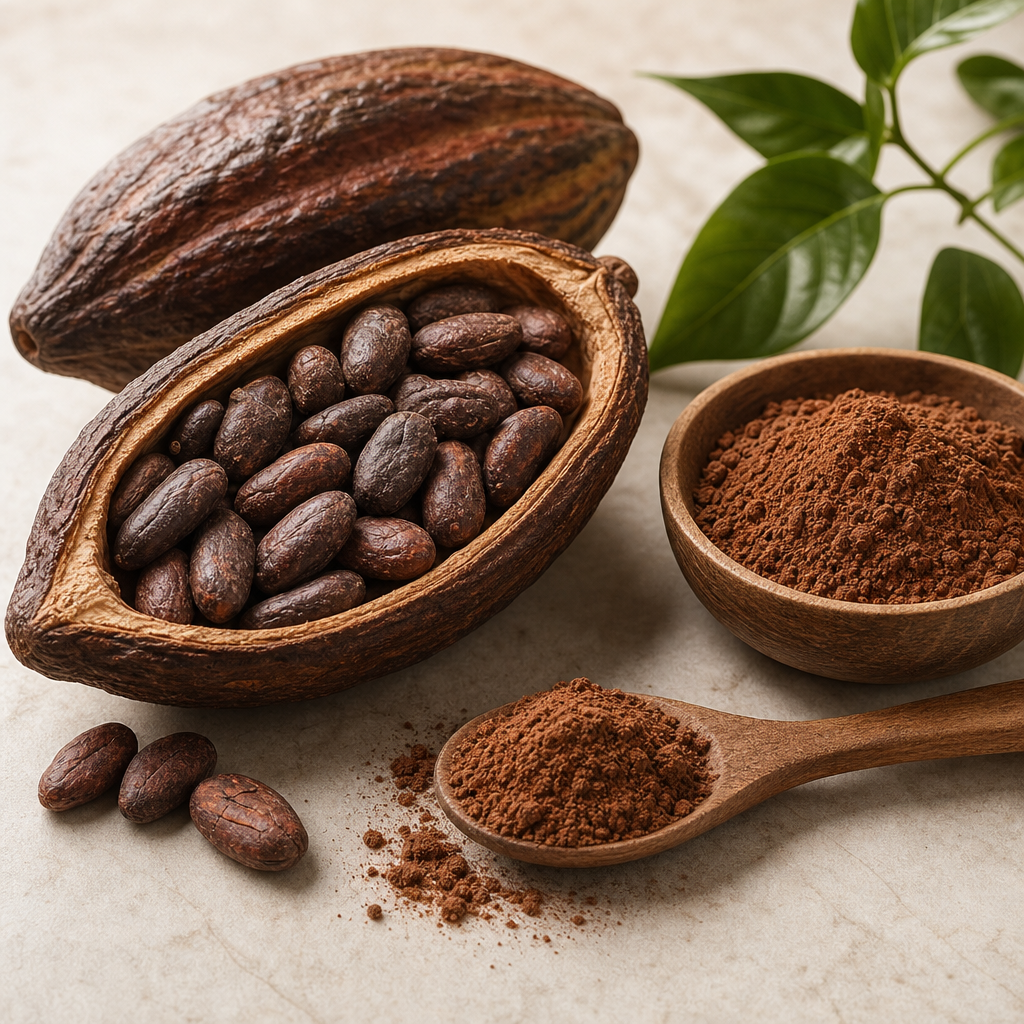
Theobromine is a naturally occurring methylxanthine compound found primarily in cacao (the beans used to make cocoa and chocolate). It is also present in smaller amounts in tea leaves, yerba mate, guarana, and kola nut. Chemically related to caffeine and theophylline, theobromine exerts mild stimulant effects, gentle vasodilation, and a light diuretic action. In foods, it often appears alongside other bioactives such as cocoa flavanols and small amounts of caffeine, which can contribute to overall effects.
Theobromine is not an essential nutrient—your body does not require it in the way it needs vitamins, minerals, or essential fatty acids. Instead, it is a plant-derived bioactive compound that can influence alertness, mood, cardiovascular function, and fluid balance to a modest degree. People encounter it most often through dark chocolate or cocoa products; it is also available as a standalone supplement or as part of blended formulations.
Benefits of Theobromine
-
Gentle mental alertness and mood support
(Moderate evidence)
Theobromine is a milder central nervous system stimulant than caffeine. Human studies suggest it can enhance subjective alertness and mood, particularly when consumed as part of cocoa or dark chocolate. Compared with caffeine, theobromine tends to produce less jitteriness and less impact on sleep latency at comparable stimulant doses, though individual responses vary. Much of the cognitive and mood impact in chocolate also involves cocoa flavanols, so effects from isolated theobromine may be subtler.
-
Circulation and cardiovascular markers
(Mixed evidence)
As a vasodilator and smooth muscle relaxant, theobromine may influence blood vessel tone and heart rate. Some trials have reported improvements in certain lipid markers (for example, modest increases in HDL cholesterol) when theobromine is administered, while other studies show neutral effects or small increases in heart rate without meaningful changes in blood pressure. Because many cardiovascular benefits of cocoa are attributed to flavanols rather than theobromine alone, results with isolated theobromine are inconsistent.
-
Cough suppression and airway effects
(Limited evidence)
Early human studies indicate that theobromine can inhibit sensory nerve activation involved in cough reflex and may reduce cough frequency in experimental models. Its bronchodilatory activity is weaker than theophylline and it is not a standard medical therapy for asthma or chronic cough. Findings are promising but not definitive; more rigorous, longer trials are needed before recommending theobromine for respiratory conditions.
-
Mild diuretic effect
(Moderate evidence)
Theobromine can increase urine output by acting on the kidneys and through adenosine receptor antagonism, similar to other methylxanthines. The effect is generally mild and may be noticeable at supplemental doses or after consumption of theobromine-rich cocoa. While this may help with transient fluid retention, it can also contribute to dehydration if total fluid intake is low.
-
Oral health and enamel support
(Limited evidence)
In vitro and small clinical studies have explored theobromine-containing cocoa extracts for potential anti-cariogenic effects and enamel surface benefits, possibly by influencing hydroxyapatite crystallization and bacterial activity. These findings are preliminary. Standard dental hygiene, fluoride use as recommended, and regular dental care remain the cornerstones of oral health.
-
Exercise tolerance and perceived exertion
(Preliminary evidence)
Some exploratory research suggests methylxanthines may modestly reduce perceived exertion or improve endurance-related alertness. Theobromine appears less potent than caffeine for performance outcomes, and results are variable. Individuals who are caffeine-sensitive sometimes prefer theobromine for a gentler effect, but robust performance benefits have not been consistently demonstrated.
Types or Forms Available
-
Cocoa and dark chocolate (food forms):
Naturally occurring theobromine in cacao nibs, natural cocoa powder, and dark chocolate. Levels vary widely by bean variety, processing, and product. Darker, higher-cocoa-percentage chocolate typically contains more theobromine than milk chocolate.
-
Cocoa extract standardized for theobromine:
Supplements or functional foods that provide a defined theobromine content (for example, a set milligram amount per serving). Some extracts also standardize for cocoa flavanols, which have separate cardiovascular effects.
-
Purified theobromine capsules or tablets:
Deliver a precise dose without sugars or fats present in chocolate. Often included in stimulant or nootropic blends with caffeine, L-theanine, or other botanicals.
-
Beverage sources:
Tea (black, oolong, some green teas), yerba mate, guarana, and kola nut naturally contain theobromine alongside caffeine and other methylxanthines. Potency and stimulant profile differ by plant, preparation, and serving size.
-
Sustained-release or combination formulas:
Some products pair theobromine with caffeine in controlled-release matrices aiming for smoother energy with fewer peaks. Evidence for superiority over simple dosing is limited.
How to Use Theobromine
Practical use depends on whether you obtain theobromine from foods or supplements. Food-first approaches provide additional beneficial compounds (like cocoa flavanols) but also introduce calories, sugar, and fat, depending on the product. Supplements allow more precise, lower-calorie dosing.
-
Common dosage range:
Many standalone supplements provide about 100–300 mg per serving, taken once or twice daily. Intakes substantially higher than this increase the likelihood of side effects and are not generally advisable. From foods, a typical serving of dark chocolate can range roughly from 100–300 mg theobromine depending on cocoa percentage and brand.
-
Best timing:
Morning or early afternoon is preferred to minimize sleep disruption. Avoid taking it within 6–8 hours of bedtime if you are sensitive to stimulants.
-
How to take it:
Capsules or tablets can be taken with water; taking with a small snack may reduce nausea in sensitive individuals. If using cocoa or tea, be mindful of added sugars and overall caffeine intake from accompanying ingredients.
-
Consistency:
Some people use theobromine occasionally for a subtle energy lift or as part of a cocoa routine, while others take it daily. If using daily, consider periodic breaks to assess ongoing need and tolerance.
Food Sources and Supplement Options
Theobromine is naturally present in several plant foods, with cacao being the richest common source. It is also available as a supplement on its own or as part of cocoa extracts.
-
Cacao and cocoa products:
Cacao nibs, natural cocoa powder, and dark chocolate (higher cocoa percentages generally provide more theobromine).
-
Tea:
Black and oolong teas typically contain small amounts; some green teas contain trace to small amounts.
-
Yerba mate:
Contains a mix of methylxanthines, including theobromine and caffeine.
-
Guarana and kola nut:
Often used in energy products; they contain varying proportions of theobromine and caffeine.
Supplements may make sense if you want predictable dosing without the calories, sugar, or fat that come with chocolate, or if you’re sensitive to caffeine but want a milder methylxanthine profile. Whole-food sources offer additional nutrients and phytonutrients (such as cocoa flavanols), while supplements provide targeted amounts and easier tracking of total stimulant intake.
Who May Benefit from Theobromine?
-
People who are sensitive to caffeine but still want a mild boost in alertness and mood.
-
Individuals who enjoy cocoa for general wellness and prefer to limit caffeine intake.
-
Students, knowledge workers, or shift workers seeking subtle focus support without pronounced jitteriness.
-
Endurance athletes or recreational exercisers experimenting with gentler stimulant strategies when caffeine is not well tolerated.
-
People aiming to obtain the potential benefits of cocoa while minimizing sugar and fat by using standardized extracts or capsules.
Side Effects and Considerations
-
Stimulant-like effects:
Insomnia, restlessness, rapid heartbeat, or anxiety can occur—especially at higher intakes or when combined with other stimulants (caffeine, energy products). Start low to assess tolerance.
-
Gastrointestinal concerns:
Theobromine can relax the lower esophageal sphincter, potentially worsening reflux or heartburn in susceptible individuals. Chocolate can also be a trigger for some people with GERD.
-
Cardiovascular conditions:
Those with arrhythmias, uncontrolled hypertension, or heart disease should be cautious, as methylxanthines can affect heart rate and vascular tone. Seek medical guidance before use.
-
Nervous system and mental health:
Individuals with anxiety disorders or panic susceptibility may experience exacerbation of symptoms with stimulant intake, even mild ones.
-
Kidney and hydration:
As a mild diuretic, theobromine may increase urination. Maintain adequate fluid intake, and use caution in kidney disease or when on medications that affect fluid/electrolyte balance.
-
Medication interactions:
Theobromine is metabolized in the liver; drugs that alter methylxanthine metabolism (for example, strong CYP1A2 inhibitors such as fluvoxamine or ciprofloxacin) may theoretically increase effects. Combining with other stimulants (including caffeine, theophylline, or decongestants) can be additive.
-
Pregnancy, breastfeeding, and children:
Data specific to theobromine are limited. As with caffeine, moderate overall methylxanthine intake is prudent. Pregnant or breastfeeding individuals and children should consult a healthcare professional before use and avoid high doses.
-
Headaches and migraines:
Chocolate can trigger headaches in some people; whether this is due to theobromine, caffeine, or other compounds varies by individual.
-
Quality considerations:
Cocoa-based products can contain variable levels of theobromine and may carry contaminants such as cadmium or lead depending on sourcing and processing. Choose reputable brands that provide third-party testing or transparent quality reports.
-
Allergies and sensitivities:
Cocoa or other botanicals containing theobromine can trigger allergic reactions in sensitive individuals; discontinue and seek care if adverse reactions occur.
-
Surgery:
Because of stimulant potential, discontinuing supplemental theobromine 24–48 hours before elective surgery is often recommended. Follow your surgical team’s instructions.
-
Pets:
Theobromine is toxic to dogs and many other animals. Keep chocolate and all theobromine-containing products out of reach of pets.
-
Medical guidance:
If you are pregnant, breastfeeding, taking medications, or managing a medical condition, consult a qualified healthcare professional before using theobromine-containing supplements.
Common Myths About Theobromine
-
“Theobromine is the same as caffeine.”
While both are methylxanthines, theobromine is generally less potent on the central nervous system and more active as a vasodilator and mild diuretic. People often report fewer jitters and less sleep disruption compared with equivalent stimulant doses of caffeine, but individual responses vary.
-
“All the health benefits of dark chocolate come from theobromine.”
Many cardiovascular and cognitive benefits associated with cocoa are linked to cocoa flavanols and other polyphenols, not theobromine alone. Theobromine may contribute to the overall effect, but it is only one component of a complex food matrix.
-
“Theobromine reliably lowers blood pressure.”
Evidence is inconsistent. Some studies show neutral effects or small changes in heart rate without a clear reduction in blood pressure. Benefits seen with cocoa flavanols should not be attributed automatically to theobromine.
-
“Chocolate is safe for pets because it’s natural.”
Theobromine is hazardous to dogs and certain other animals. Even small amounts of dark chocolate can cause serious toxicity. Keep all theobromine-containing products away from pets.
Conclusion
Theobromine is a plant-derived methylxanthine most abundant in cacao. It can provide a gentle lift in alertness and mood, minor diuretic effects, and potential support for certain cardiovascular markers, though findings are variable and often confounded by other cocoa constituents. For most people, a food-first approach—such as modest portions of high-cocoa dark chocolate or natural cocoa—offers additional polyphenols and a more balanced nutrient profile. Supplements can be useful for those who want precise dosing without added sugars or fats, or for individuals who are sensitive to caffeine but still want a mild stimulant effect.
Use theobromine thoughtfully: start with low doses, avoid late-day use if you are sleep-sensitive, and consider your total stimulant intake from all sources. People with heart conditions, anxiety, GERD, kidney issues, or those who are pregnant or breastfeeding should consult a healthcare professional before using theobromine, and anyone taking medications should review potential interactions. Choose high-quality products with transparent testing, and remember that theobromine is only one part of the broader dietary picture—consistent healthy habits matter most.