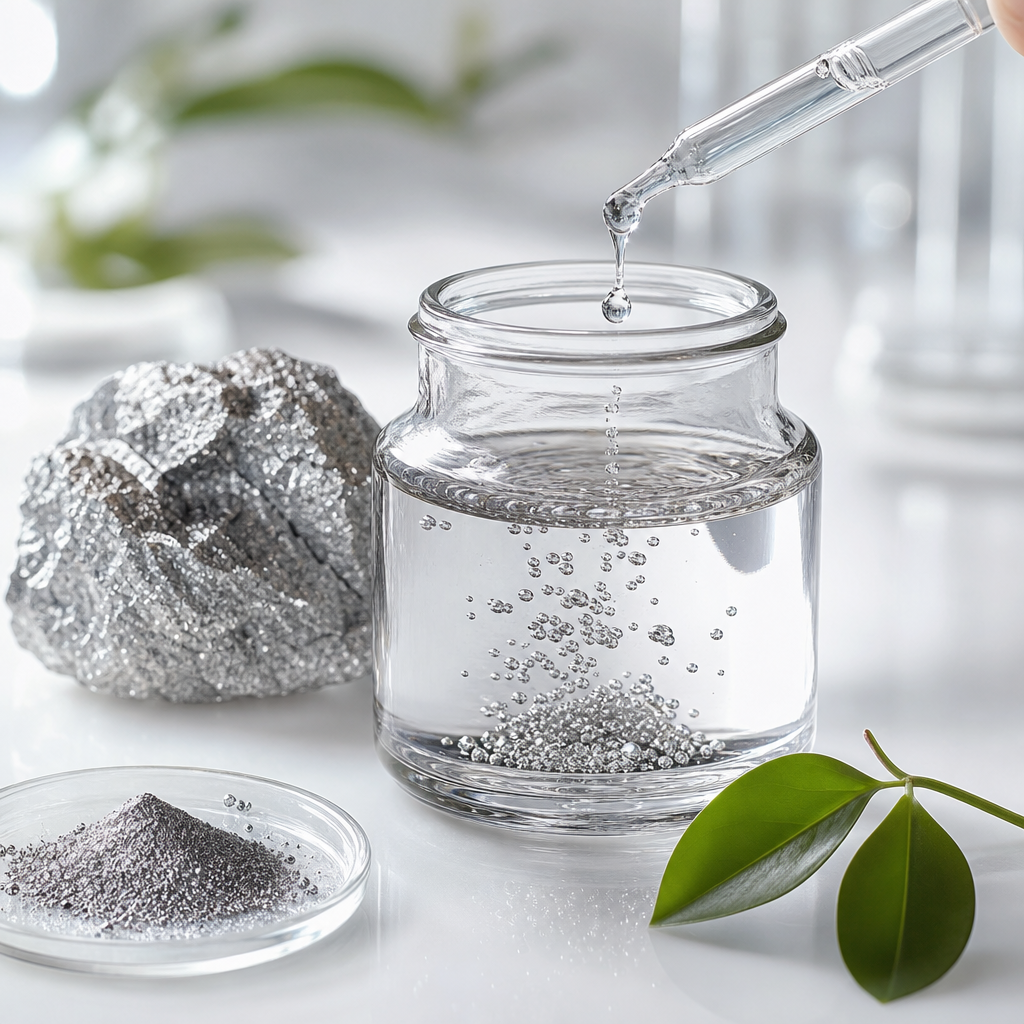
What is Colloidal Silver?
Colloidal silver is a suspension of extremely small particles of elemental silver dispersed in liquid, typically water. Products sold under this name can vary widely: some contain mostly silver ions dissolved in water (often labeled “ionic silver”), some contain microscopic metallic particles (“true colloids” or “nanosilver”), and others are silver bound to a protein (“mild silver protein”). Colloidal silver is marketed as a dietary supplement and topical spray or gel, though its composition, particle size, and concentration can differ significantly between brands.
Silver has a long history of use as an antimicrobial surface treatment and, in medicine, as part of certain topical wound-care products (for example, silver-impregnated dressings or prescription creams like silver sulfadiazine). However, colloidal silver is not an essential nutrient. The human body does not require silver for health the way it requires vitamins, essential fatty acids, or essential minerals such as iron or zinc. Ingested silver can accumulate in tissues over time and does not play a known beneficial physiological role inside the body.
Benefits of Colloidal Silver
-
Antimicrobial activity in laboratory settings
(Preliminary evidence)
In test-tube and petri-dish studies, silver particles and ions can damage bacterial cell walls, disrupt enzymes, and interfere with microbial DNA. This has led to interest in silver for controlling microbes on surfaces or in materials. However, lab conditions differ greatly from the human body, where proteins, salts, and other molecules can bind silver and reduce its activity. Translating laboratory effects into safe, effective human health outcomes—especially with oral ingestion—has not been demonstrated in rigorous clinical trials.
-
Adjunctive role in wound care when delivered via medical-grade devices or dressings
(Mixed evidence)
Healthcare settings sometimes use silver-impregnated dressings to help reduce bacterial burden in wounds or burns. Some reviews suggest silver dressings may help control odor or decrease surface contamination, while effects on time-to-healing are inconsistent and depend on wound type and overall care. These uses involve regulated, medical-grade products with controlled silver release, not over-the-counter oral colloidal silver solutions.
-
Topical skin applications
(Limited evidence)
Over-the-counter silver-containing gels or sprays are marketed for minor skin irritations. Small or low-quality studies and case reports suggest potential reduction in superficial microbial load, but standardized, high-quality trials are lacking. Quality varies widely between consumer products, and misuse or prolonged application can still lead to unwanted silver accumulation in skin. Topical use should not replace evidence-based wound care, and medical guidance is advisable for non-healing or infected wounds.
-
Biofilm disruption in vitro
(Preliminary evidence)
Biofilms—protective layers formed by microbes—can make infections harder to treat. Some laboratory research suggests that nanosilver may weaken biofilms or enhance antibiotic activity in controlled settings. While mechanistically interesting, human clinical data are scarce, and safe, effective protocols for real-world infections have not been established.
-
Antimicrobial roles in materials, devices, and water systems (non-ingested use)
(Moderate evidence)
Silver has recognized value in certain non-ingested applications, such as antimicrobial coatings for medical devices or components in water filtration systems. These uses are engineered to limit human exposure while targeting microbial growth on surfaces or within devices. This should not be conflated with drinking colloidal silver; ingestion is not required—and not recommended by major health authorities—for these antimicrobial benefits.
Types or Forms Available
-
Ionic silver solutions
Contain mostly silver ions (Ag+) dissolved in water, often produced via electrolysis. These are sometimes mislabeled as colloids. Ionic solutions can readily react with chloride and proteins in the body, potentially reducing antimicrobial activity and increasing the likelihood of forming inert complexes.
-
True colloidal or “nanosilver” suspensions
Comprise metallic silver particles suspended in water, often described by particle size (e.g., 10–100 nm) and concentration (parts per million, ppm). Particle size, shape, and coating influence behavior and bioavailability. Even with better-defined particles, consistent clinical benefits from ingestion have not been established.
-
Protein-stabilized silver (“mild silver protein”)
Silver bound to proteins to stabilize particles in suspension. These products may have higher ppm values and darker color but are not inherently safer or more effective. Protein carriers can complicate how silver behaves biologically and may increase the risk of tissue deposition with improper or prolonged use.
-
Topical gels, creams, and sprays
Non-prescription products containing colloidal or ionic silver marketed for skin application. Formulas and concentrations vary widely. These are distinct from prescription topical agents such as silver sulfadiazine, which is a different compound with separate safety and efficacy data.
-
Silver-impregnated dressings and medical devices
Regulated products intended for professional or clinical use. They release controlled amounts of silver to reduce bioburden in specific contexts. These are not dietary supplements and should be used under appropriate supervision.
How to Use Colloidal Silver
Major health authorities do not recommend oral or systemic use of colloidal silver. There is no established safe or effective daily intake, and chronic use can lead to accumulation in the body. If you are considering any form of silver-containing product, discuss it with a qualified healthcare professional—especially for wounds, persistent infections, or if you take medications.
-
Common dosage range:
There is no recognized therapeutic oral dosage. Commercial products are often labeled by concentration (e.g., 10–50 ppm), but ppm is not a substitute for proven dosing or efficacy. For topical over-the-counter gels or sprays, follow the manufacturer’s directions and seek medical advice for use beyond a few days or on broken skin.
-
Best timing:
No evidence-based timing guidelines exist. If a clinician has advised short-term topical use, timing typically follows wound-care or hygiene routines rather than meal timing.
-
How to take it:
Internal ingestion is not advised. For topical products, apply as directed to clean, intact skin, avoiding mucous membranes and deep or complex wounds unless a clinician directs otherwise. Do not use as eye drops or nebulize/inhaled forms due to potential tissue irritation and safety risks.
-
Consistency:
Silver should not be used chronically for “maintenance” or daily wellness. If used at all, it should be short-term, targeted, and ideally guided by a healthcare professional. Stop use if discoloration, irritation, or other adverse effects occur.
People who are pregnant or breastfeeding, children, and individuals taking medications or managing medical conditions should consult a healthcare professional before using any silver-containing product. Avoid self-treating infections—seek medical care.
Food Sources and Supplement Options
Silver is not a nutrient and is not purposefully consumed through foods. Trace amounts may be present in the environment, but there are no meaningful dietary “sources,” recommended intakes, or benefits from ingesting silver. Colloidal silver is primarily available as a supplement or topical consumer product, and certain medical devices incorporate silver for antimicrobial purposes.
Because silver does not serve an essential role in human nutrition, a food-first approach does not apply in the same way it does for vitamins and minerals. If someone is considering colloidal silver, it is generally due to perceived antimicrobial benefits rather than nutritional need. In contrast, whole foods provide fibers, phytonutrients, vitamins, and minerals with well-established health roles, whereas silver supplements do not provide such benefits. When antimicrobial action is needed, evidence-based medical care or engineered solutions (e.g., properly designed dressings, approved devices, or validated water-treatment systems) make more sense than ingesting colloidal silver.
Who May Benefit from Colloidal Silver?
-
Patients under professional wound care may benefit from clinician-selected, silver-impregnated dressings in specific circumstances. This does not imply benefit from oral colloidal silver.
-
People seeking antimicrobial protection for gear or surfaces may opt for devices or materials that incorporate silver in a controlled, non-ingested way. Again, this is about engineered products, not dietary use.
-
Individuals exploring over-the-counter topical gels for short-term, minor skin applications may consider a silver-containing product with caution, ideally after checking with a healthcare professional and following label directions.
Side Effects and Considerations
-
Argyria and skin/eye discoloration:
Chronic or high exposure to silver can cause irreversible bluish-gray discoloration of the skin (argyria) or eyes (argyrosis). Cases have occurred even with consumer products taken as labeled for prolonged periods.
-
Organ accumulation and toxicity:
Silver can deposit in skin, liver, spleen, and other tissues. Reports describe kidney and liver effects after sustained intake. Individuals with kidney or liver disease should avoid colloidal silver.
-
Medication interactions:
Silver may bind or reduce absorption of certain drugs, including antibiotics such as tetracyclines and quinolones, thyroid medication (levothyroxine), and penicillamine. Separate any topical use from oral medications on the skin area and avoid ingestion. Always inform your clinician about supplement use.
-
Allergic or irritant reactions:
Topical silver products can cause local irritation, dermatitis, or hypersensitivity. Discontinue use if redness, itching, or rash develops.
-
Respiratory and eye risks:
Inhaling sprays or nebulized silver can irritate airways; ocular use can damage eye tissues. Do not inhale or use in the eyes unless a clinician prescribes a specific, regulated product.
-
Quality and contamination concerns:
Product labels may not accurately reflect particle size, ionic vs. particulate content, or ppm. Some products have been found to contain contaminants or variable silver levels, increasing safety risks.
-
Photosensitivity and cosmetic effects:
Sun exposure may accentuate discoloration in individuals who accumulate silver in skin. Any persistent grayish tint is usually permanent.
-
Special populations:
Avoid use during pregnancy or breastfeeding, and in infants or children, due to insufficient safety data and the risk of accumulation. People with autoimmune conditions, chronic illnesses, or implanted medical devices should consult a clinician before using any silver-containing product.
-
Surgery and medical procedures:
Inform your surgical team about any supplement use. While silver is not a blood thinner, interactions with wound healing and antimicrobial strategies may be relevant.
Common Myths About Colloidal Silver
-
“Colloidal silver is an essential mineral your body needs.”
Silver is not an essential nutrient. There is no recommended dietary allowance, no recognized deficiency state, and no physiologic requirement for silver in humans. Ingested silver accumulates without providing proven nutritional benefit.
-
“It’s a natural cure-all for infections, viruses, and chronic diseases.”
While silver can inhibit microbes in laboratory conditions, high-quality clinical trials do not support oral colloidal silver as a cure for infections or systemic diseases. Evidence-based treatments and vaccines remain the standard of care. Relying on silver in place of appropriate medical care can delay effective treatment.
-
“Argyria only happens with extreme overdoses or poor-quality products.”
Case reports document permanent skin discoloration after prolonged use of consumer-grade colloidal silver, including products taken at label-directed amounts. Risk depends on total cumulative exposure, product composition, and individual factors—not solely on blatant overdosing.
-
“Colloidal silver is safer and more effective than antibiotics.”
Antibiotics have known risks but are supported by extensive clinical evidence and regulatory oversight. Oral colloidal silver lacks proven systemic efficacy and carries meaningful risks, including irreversible discoloration and tissue accumulation.
Conclusion
Colloidal silver is a non-essential, non-nutritive product with antimicrobial properties demonstrated primarily in laboratory and surface applications. In healthcare, carefully engineered silver dressings or devices may have a role under professional guidance, but this does not validate ingesting colloidal silver. For general wellness, infection prevention, or immune support, oral use is not supported by robust human evidence and carries real safety concerns.
If you are considering any silver-containing product, prioritize regulated, medical-grade options for specific, short-term topical uses and involve a qualified healthcare professional—especially if you are pregnant, breastfeeding, taking medications, caring for children, or managing a medical condition. Choose quality products from reputable manufacturers, avoid chronic or high-exposure use, and remember that food-first strategies apply to true nutrients, not to silver. When antimicrobial action is needed, rely on evidence-based medical care and appropriately designed devices rather than ingesting colloidal silver.