What is Damiana?
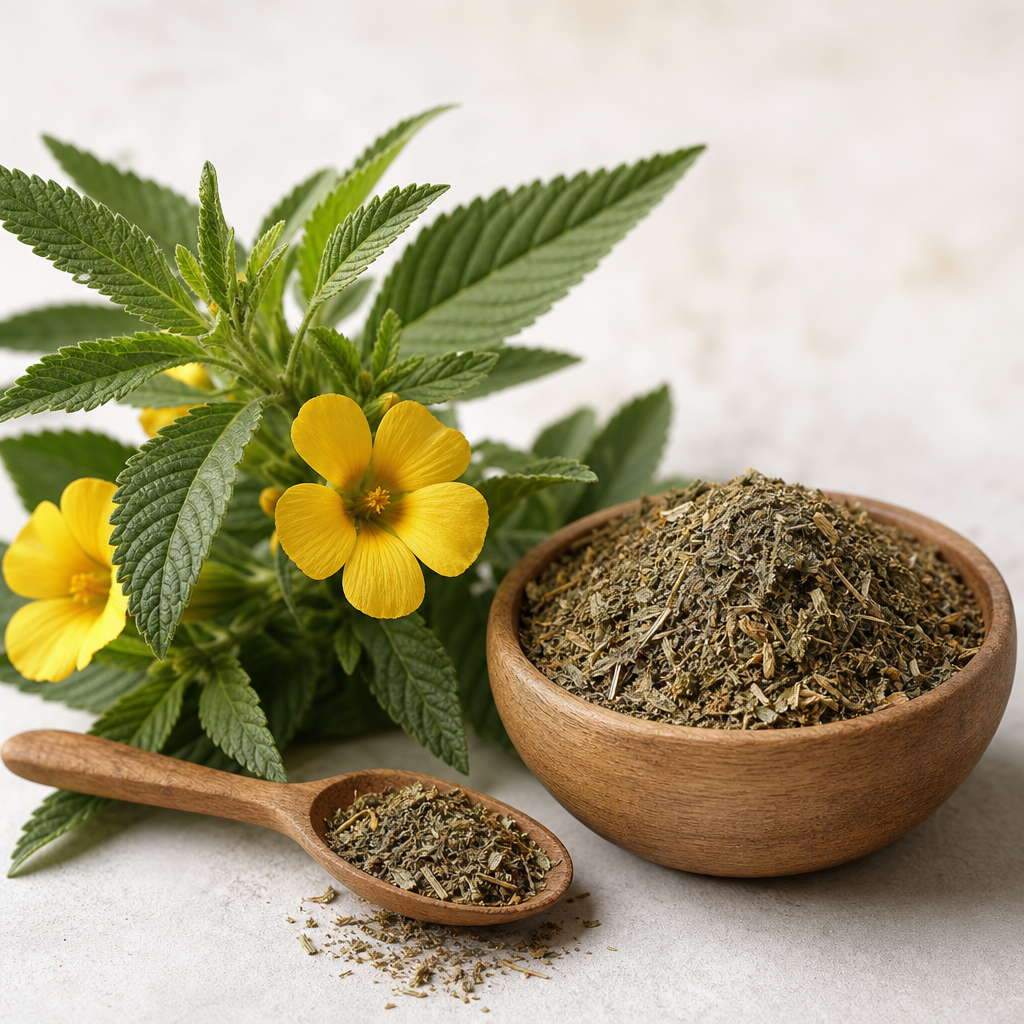
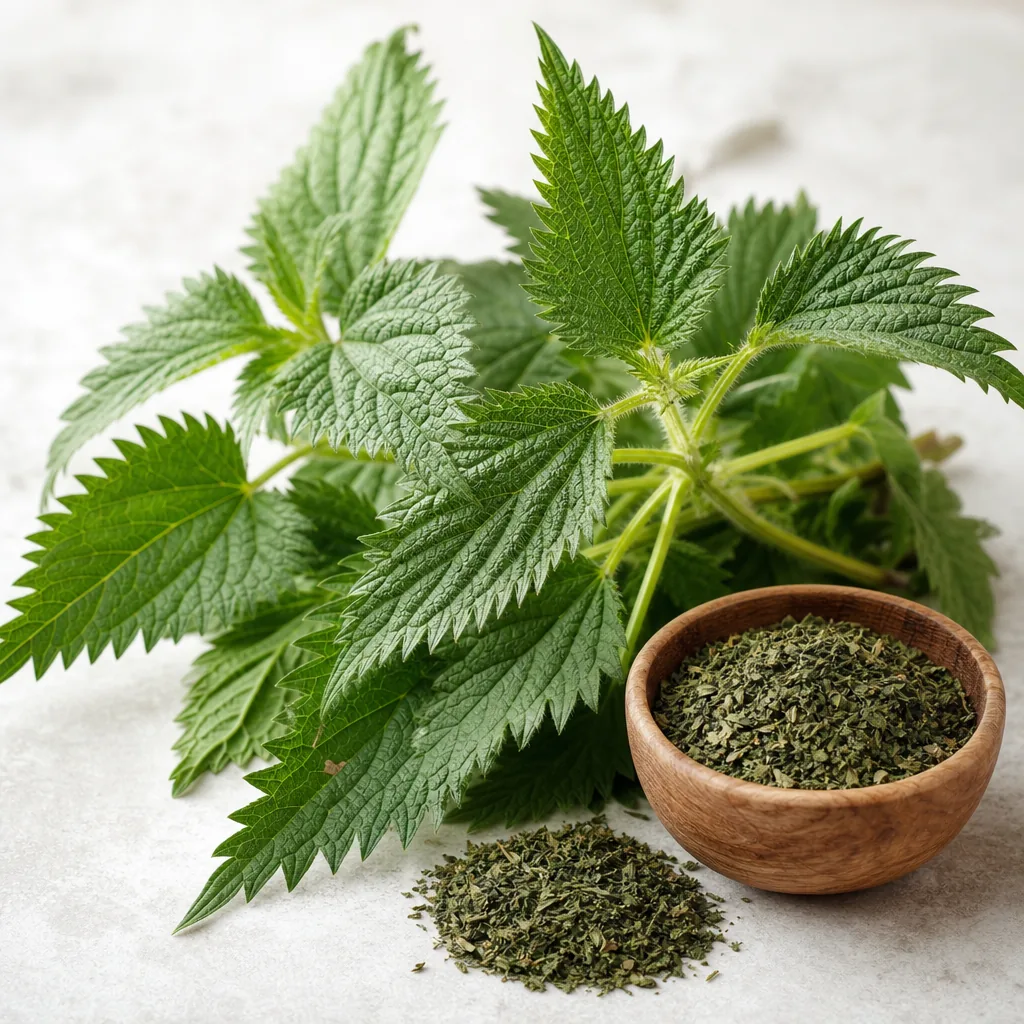
Damiana (Turnera diffusa, also known as Turnera aphrodisiaca) is a small aromatic shrub native to Mexico, the Caribbean, and parts of Central and South America. The dried leaves and sometimes the stems are used in traditional herbal medicine, most commonly as a tea, tincture, or capsule. Historically, Indigenous and Latin American cultures have used damiana as a general tonic for mood, digestion, and sexual wellness.
Damiana is a botanical herb, not an essential nutrient. It contains a variety of plant compounds, including flavonoids (such as apigenin), terpenes, and small amounts of volatile oils. As a non-essential herbal ingredient, the body does not require damiana in the way it requires vitamins, minerals, essential fatty acids, or essential amino acids. Modern wellness products typically offer damiana as a supplement or in herbal tea blends rather than as a food.
In contemporary health contexts, damiana is most often explored for its possible effects on libido, mood, digestive comfort, and appetite regulation. Research in humans remains limited, and many claims derive from traditional use or small studies, sometimes with damiana combined alongside other herbs. As with many botanicals, quality of the raw material and extract standardization can vary by brand.
Benefits of Damiana
-
Sexual wellness and libido support
(Limited evidence)
Some small studies and a long history of traditional use suggest damiana may support sexual desire and arousal. Select human trials find improvements in sexual function when damiana is included in multi-ingredient formulas, but isolating damiana’s specific contribution is difficult. Animal and preliminary laboratory work propose mechanisms related to relaxation and mood effects. Overall, the evidence for damiana alone is limited and not definitive.
-
Mood support and mild stress relief
(Preliminary evidence)
Damiana has been used traditionally as a calming, uplifting herb. Preclinical studies suggest potential anxiolytic-like effects, possibly linked to its flavonoid content. However, robust human trials are scarce. People sometimes report a subtle sense of relaxation, but expectations should remain modest and individualized responses can vary.
-
Appetite regulation and weight-management support (in combinations)
(Mixed evidence)
A few small human studies of multi-herb blends that include damiana (often with yerba mate and guarana) report reduced appetite, slower gastric emptying, or modest weight changes. Because these studies use combinations, the specific role of damiana is uncertain, and not all trials are consistent. If any benefit exists, it likely depends on the full formula, lifestyle factors, and adherence.
-
Digestive comfort
(Preliminary evidence)
Traditional use includes support for occasional digestive discomfort and mild constipation. The bitter and aromatic constituents may gently stimulate digestion in some individuals. Rigorous clinical data are limited, so damiana should not replace medical evaluation for ongoing gastrointestinal symptoms.
-
Urinary tract support
(Limited evidence)
Damiana contains compounds that, in laboratory models, may have mild antimicrobial or urinary-soothing actions. Human clinical evidence is limited, and damiana should not be used in place of appropriate medical care for urinary tract infections. At best, it may serve as a short-term adjunct for comfort under professional guidance.
-
Menopausal or menstrual symptom support
(Preliminary evidence)
Some traditional and small-scale reports suggest damiana may ease certain menstrual or menopausal complaints, possibly via mood and relaxation pathways. Confirmatory human research is lacking, and responses are variable. Individuals with hormone-sensitive conditions should be cautious due to limited data on hormonal activity.
Types or Forms Available
-
Dried leaf (loose or tea bags)
: The most traditional form. Typically prepared as an infusion. Flavor is slightly bitter and aromatic. Potency varies with source and steeping time.
-
Capsules or tablets (powdered leaf)
: Provide a convenient way to take a consistent dose of the whole herb. Label potency can vary; look for products that clearly state the amount of dried herb per serving.
-
Standardized extracts
: Concentrated forms (for example, 4:1 or 10:1 extracts) intended to deliver more consistent levels of active constituents. Some products may reference standardization to total flavonoids; verification by third-party testing is helpful, as uniform standards for damiana are not universal.
-
Liquid extracts/tinctures
: Hydro-alcoholic extracts (for example, 1:5 in 40–60% alcohol). Useful for dose flexibility and quick administration. Taste is notably bitter; can be diluted in water or tea.
-
Combination formulas
: Damiana often appears with other botanicals (e.g., yerba mate, guarana for appetite; ginseng, ginkgo, L-arginine for sexual wellness). Effects may come from the full blend rather than damiana alone.
How to Use Damiana
Because evidence is modest and individual responses vary, start with a low dose and evaluate your response over a few weeks. Choose reputable products that disclose species (Turnera diffusa), part used (leaf), and extraction details.
-
Common dosage range:
Dried leaf tea: 1–2 grams steeped in 200–250 mL hot water for 5–10 minutes, up to 2–3 times daily. Capsules of powdered leaf: commonly 500–1,000 mg once or twice daily. Standardized extracts: often 200–400 mg once or twice daily depending on extract ratio (e.g., 4:1). Tincture: around 2–3 mL up to 2–3 times daily. Avoid high or “megadose” use, as safety data are limited.
-
Best timing:
Timing is flexible. For potential relaxation or libido support, some people take it 30–60 minutes before desired effect. For general support, split doses with meals. Consistency over several weeks may help gauge benefit.
-
How to take it:
Take capsules or extracts with water, ideally with food to reduce gastrointestinal upset. Teas can be consumed between meals if the bitter taste is strong, or with a small snack if sensitivity occurs.
-
Consistency:
Consider a trial of 2–4 weeks, then reassess. Because long-term data are limited, many users adopt periodic breaks (for example, 1–2 weeks off after 6–8 weeks). Occasional use around specific needs (e.g., before intimacy) is also common.
Food Sources and Supplement Options
Damiana is a botanical herb and is not a nutrient naturally found in common foods. It is obtained from the leaves of the Turnera diffusa plant, typically consumed as a tea, tincture, or capsule. Because there are no conventional “food sources” of damiana, individuals interested in its effects generally rely on herbal preparations or supplements.
Supplementation may make sense for those seeking a targeted trial for sexual wellness, relaxation, or appetite support when dietary strategies alone are insufficient. Whole foods remain foundational for overall health—providing fiber, vitamins, minerals, and phytonutrients—while a damiana supplement offers a more precise and consistent intake of the herb’s constituents. As with all botanicals, product quality, correct species identification, and third-party testing for purity and contaminants are important.
Who May Benefit from Damiana?
-
Adults interested in a cautious, short-term herbal trial for sexual wellness or libido support, ideally alongside broader lifestyle strategies (sleep, stress management, communication, and medical evaluation when appropriate).
-
Individuals seeking a gentle, traditional herbal option for relaxation or mild, situational stress support, recognizing that responses vary and evidence is limited.
-
People exploring multi-herb blends for appetite control as part of a structured weight-management plan, acknowledging that benefits are uncertain and depend on the full formula and behavior change.
-
Those who enjoy herbal teas and wish to diversify their routine with a bitter-aromatic botanical used historically as a tonic.
-
Individuals who cannot tolerate caffeine but want an aromatic herbal option that is naturally caffeine-free.
Side Effects and Considerations
-
General tolerance:
Damiana is usually well tolerated in small to moderate amounts, but may cause gastrointestinal upset, nausea, or loose stools in some people—especially at higher doses or when taken on an empty stomach.
-
Pregnancy and breastfeeding:
Avoid use. Traditional sources describe damiana as an emmenagogue (may stimulate menstrual flow), and safety data in pregnancy and lactation are lacking.
-
Hormone-sensitive conditions:
Limited laboratory data suggest possible weak estrogenic activity. Individuals with hormone-sensitive conditions (such as certain breast, uterine, or ovarian cancers, endometriosis, or uterine fibroids) should avoid damiana unless a healthcare professional advises otherwise.
-
Liver and kidney considerations:
Because botanical constituents are metabolized and excreted through the liver and kidneys, people with hepatic or renal disorders should use caution and seek medical advice before using damiana.
-
Medication interactions:
Formal interaction studies are sparse. Use caution if you take sedatives, anti-anxiety agents, or medications that require careful dosing and monitoring. Consult a pharmacist or clinician to screen for potential interactions.
-
Surgery:
Stop damiana at least 1–2 weeks before planned surgery due to limited data on effects with anesthesia or bleeding risk.
-
Allergies and sensitivities:
Individuals with known sensitivities to botanicals should start with very small amounts to monitor tolerance. Discontinue if rash, itching, or breathing difficulties occur.
-
Quality and adulteration:
Choose products that specify Turnera diffusa leaf, avoid unverified blends, and prioritize third-party tested brands to reduce risk of contamination (pesticides, heavy metals) or misidentification.
-
Children and adolescents:
Safety is not established. Avoid use in minors unless directed by a qualified clinician.
-
Medical conditions:
Anyone who is pregnant, breastfeeding, taking medications, or managing a medical condition should consult a healthcare professional before using damiana.
Common Myths About Damiana
-
Damiana is a proven aphrodisiac for everyone.
Evidence in humans is limited and often involves multi-herb formulas, making it hard to attribute effects to damiana alone. Individual responses vary, and lifestyle and relationship factors play major roles in sexual wellness.
-
Natural means completely safe and side effect–free.
“Natural” does not guarantee safety or suitability for all. Damiana can cause digestive upset, may be inappropriate for hormone-sensitive conditions, and lacks robust long-term safety data—especially in pregnancy, breastfeeding, and in people with medical conditions.
-
If a little helps, a lot will help more.
Higher doses increase the risk of side effects without ensuring better results. With limited clinical evidence, conservative dosing, close monitoring, and periodic breaks are prudent.
-
Damiana can cure urinary tract infections.
While some lab findings suggest mild antimicrobial actions, damiana has not been shown to cure UTIs in humans. Prompt medical evaluation and evidence-based treatment are important to prevent complications.
Conclusion
Damiana is a traditional herb used for sexual wellness, mood, and digestive comfort. Modern research is modest, and some potential benefits appear mainly in multi-ingredient formulas. For interested adults, a short, cautious trial using a reputable product may help assess personal response, ideally alongside foundational lifestyle practices. Quality matters—look for Turnera diffusa leaf preparations from brands that conduct identity, purity, and potency testing.
Because damiana is not an essential nutrient and long-term safety data are limited, it makes sense to prioritize a food-first approach for overall health and reserve damiana for targeted, time-limited goals. Individuals who are pregnant, breastfeeding, taking medications, or managing medical conditions should consult a healthcare professional before use. If you choose to supplement, start low, monitor your response, and discontinue if adverse effects occur.