What is Ginger root?
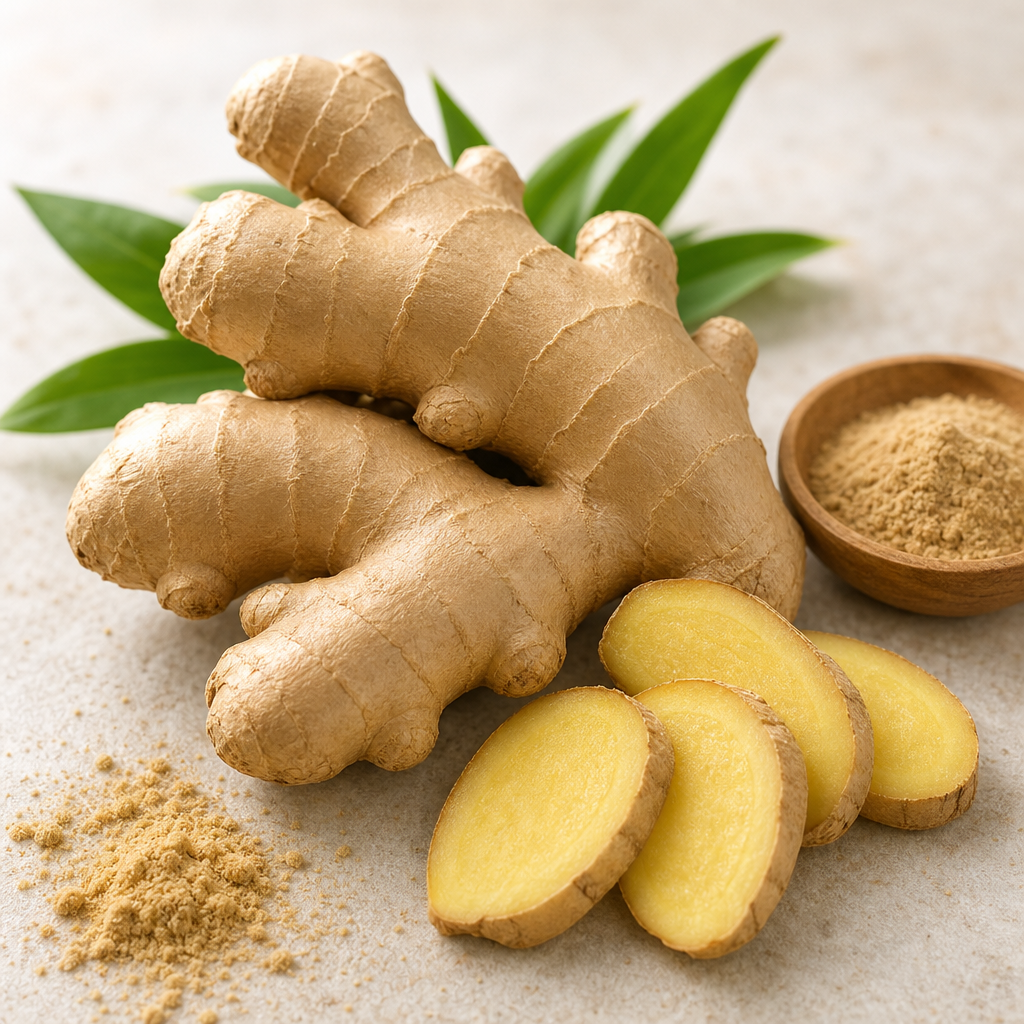
Ginger root is the knobby underground stem (rhizome) of Zingiber officinale, a flowering plant in the Zingiberaceae family. Used for thousands of years in Asian, Middle Eastern, and African cuisines and traditional medicine systems, ginger is prized for its warm, spicy flavor and distinct aroma. Its key bioactive compounds include gingerols, shogaols, and related phenolics that contribute to its taste and many of its physiological effects.
Ginger is best categorized as a culinary spice and botanical herb that can also be used as a supplement. It is not an essential nutrient like a vitamin, mineral, or essential fatty acid—your body does not require ginger to function. However, ginger’s bioactive compounds may support digestive comfort, help manage certain types of nausea, and offer mild anti-inflammatory and analgesic effects in specific contexts.
Benefits of Ginger root
-
Pregnancy-related nausea and vomiting
(Moderate evidence)
Several randomized trials and meta-analyses suggest ginger can modestly reduce nausea and vomiting in early pregnancy when used short-term at typical intakes around 500–1,000 mg/day of dried ginger or standardized extract. Benefits appear greatest for nausea intensity and frequency rather than complete symptom resolution. Dosing and duration should be discussed with a prenatal care provider, and high doses should be avoided.
-
Postoperative nausea and vomiting (PONV)
(Moderate evidence)
Oral ginger given before anesthesia (often about 1 g) has been shown in multiple studies to lower the risk or severity of nausea after surgery and may reduce the need for rescue antiemetics. Results vary by surgical type, anesthesia regimen, and timing, so ginger is best viewed as a supportive option alongside standard medical care rather than a stand-alone treatment.
-
Motion sickness and general nausea
(Mixed evidence)
Some trials report that ginger reduces motion-induced nausea and improves gastric rhythm stability, while others show little difference versus placebo or standard medications. Individual responses differ, but taking ginger 30–60 minutes before travel may help some people, especially for milder symptoms or when medication side effects are a concern.
-
Functional dyspepsia and digestive comfort
(Moderate evidence)
Ginger can stimulate gastric motility and antral contractions, helping food move through the stomach more efficiently. Clinical studies report improvements in fullness, bloating, and upper abdominal discomfort in some individuals with functional dyspepsia, particularly when ginger is paired with a meal or taken prior to a symptom-triggering meal.
-
Primary dysmenorrhea (menstrual pain)
(Moderate evidence)
Randomized trials indicate ginger can reduce menstrual pain intensity compared with placebo, and in some studies it performs similarly to over-the-counter NSAIDs for mild-to-moderate symptoms. Benefits are most evident when started at the onset of menses and continued for the first 2–3 days. Ginger does not address underlying causes of severe pelvic pain and is not a substitute for medical evaluation.
-
Osteoarthritis-related pain and stiffness
(Mixed evidence)
Standardized ginger extracts have shown small-to-moderate reductions in knee osteoarthritis pain and disability in some trials, though other studies find minimal benefit. If benefits occur, they may take several weeks. Responses vary by extract type, dose, and individual factors, and ginger is generally considered an adjunct to—rather than a replacement for—core arthritis therapies.
-
Glycemic control and metabolic markers
(Limited evidence)
Small trials in people with type 2 diabetes have reported modest improvements in fasting glucose, HbA1c, triglycerides, or inflammatory markers with daily ginger (often 1.6–3 g dried powder) over 8–12 weeks. Findings are inconsistent and not all outcomes improve. Ginger should not replace prescribed diabetes therapies; discuss use with a clinician to minimize hypoglycemia risk.
-
Exercise-related muscle soreness
(Preliminary evidence)
Early research suggests daily ginger may slightly reduce delayed-onset muscle soreness after unaccustomed exercise, potentially through anti-inflammatory and analgesic pathways. Effects are generally small and may be more noticeable in people new to a specific activity or training phase.
Types or Forms Available
-
Fresh root (rhizome):
Common in cooking, smoothies, and infusions. Grating, slicing, or juicing releases aromatic compounds. Heat converts some gingerols to shogaols, slightly changing flavor and potential effects.
-
Dried powder:
Convenient for recipes and teas; more concentrated than fresh by weight. Quality can vary; look for reputable brands to reduce the risk of adulteration with fillers.
-
Standardized capsules/tablets:
Often standardized to gingerols and shogaols (for example, 5–10%). This allows more consistent dosing for targeted uses like nausea or dysmenorrhea.
-
CO₂ extracts and tinctures:
Concentrated liquid extracts that capture volatile and nonvolatile components. Potency varies by extraction method; follow label directions and use from trusted manufacturers.
-
Teas, chews, and lozenges:
Useful for mild nausea or motion sickness, and for those who prefer gentler delivery. Doses are typically lower and less precise than capsules.
-
Pickled or crystallized ginger:
Culinary forms with added vinegar or sugar. Flavorful but less suitable for precise supplementation due to added ingredients and variable potency.
-
Essential oil (aromatherapy):
Highly concentrated volatile oil intended for inhalation or topical dilution. Not the same as dietary ginger and generally not recommended for oral ingestion.
How to Use Ginger root
Ginger can be used as a food, beverage ingredient, or supplement. Culinary use suits general digestive comfort and flavor, while standardized supplements allow more predictable dosing for specific goals like nausea or menstrual discomfort.
-
Common dosage range:
For nausea (including pregnancy-related), many studies use 500–1,000 mg/day of dried ginger or standardized extract in divided doses. For dyspepsia or general digestive support, 1–2 g/day of dried ginger with meals is common. For menstrual pain or osteoarthritis, trials often use 1–2 g/day of standardized extract, sometimes split into two doses. Avoid high doses; without clinician guidance, do not exceed about 3–4 g/day of total ginger from all sources, and in pregnancy stay at or below 1 g/day unless directed by a healthcare professional.
-
Best timing:
For nausea, take 30–60 minutes before triggers (e.g., travel) or in the morning for pregnancy-related symptoms. For digestive support, take with meals. For menstrual or joint pain, consistent daily use during symptomatic days or for several weeks may be needed.
-
How to take it:
Take capsules with water and preferably with food to reduce heartburn. Fresh or powdered ginger can be added to meals, teas, or smoothies. Teas and chews are practical when swallowing capsules is difficult.
-
Consistency:
Ginger can be used occasionally for acute situations (motion sickness, brief nausea). For ongoing goals (dyspepsia, menstrual pain, joint comfort), steady daily intake over days to weeks is more likely to reveal benefit.
Food Sources and Supplement Options
Ginger is naturally found as the rhizome of the Zingiber officinale plant and is widely consumed as a culinary spice and beverage ingredient. Supplements provide standardized amounts of active compounds for targeted use when consistent dosing is desired.
-
Fresh ginger root (grated, sliced, or juiced in cooking, soups, stir-fries, and smoothies)
-
Dried ground ginger (for baking, curries, spice blends, and teas)
-
Ginger tea or infusion (fresh slices or tea bags)
-
Pickled ginger (commonly served with sushi)
-
Crystallized/candied ginger (sweetened; not ideal for frequent use due to added sugar)
Supplements may be useful when:
- You need predictable dosing for nausea, dysmenorrhea, or postoperative support.
- You dislike the taste of ginger but want its potential benefits.
- You want a portable option for travel-related nausea.
Whole-food forms provide aromatic compounds and polyphenols along with culinary enjoyment, while supplements can deliver consistent, targeted amounts of gingerols and shogaols. Choose high-quality products from reputable brands that provide standardization details and third-party testing.
Who May Benefit from Ginger root?
-
Individuals experiencing mild-to-moderate pregnancy-related nausea (after discussing dose and duration with a prenatal provider)
-
People prone to motion sickness who want a non-drowsy, over-the-counter option
-
Those with functional dyspepsia or post-meal fullness who prefer food-first strategies
-
Individuals with mild menstrual cramps seeking a non-NSAID adjunct
-
Adults with knee osteoarthritis looking for complementary support alongside core therapies
-
Athletes or exercisers seeking a small, adjunctive reduction in muscle soreness
-
People who cook frequently and enjoy ginger’s flavor while pursuing digestive comfort
Side Effects and Considerations
-
Gastrointestinal effects:
Heartburn, stomach upset, gas, or loose stools can occur, especially at higher doses or on an empty stomach. Taking ginger with food and splitting doses may help.
-
Bleeding risk and surgery:
Ginger may have mild antiplatelet effects. People using anticoagulants or antiplatelets (e.g., warfarin, DOACs, aspirin, clopidogrel) or high-dose NSAIDs should consult a clinician. Consider pausing ginger 1–2 weeks before surgery or major dental procedures unless advised otherwise.
-
Pregnancy and breastfeeding:
Culinary amounts are generally considered compatible with pregnancy. For supplements, short-term intakes around 500–1,000 mg/day are commonly studied for nausea, but individualized medical guidance is essential. Data in breastfeeding are limited; consult a healthcare professional.
-
Diabetes and blood sugar medications:
Ginger may modestly lower glucose; monitor for hypoglycemia if using insulin or oral hypoglycemics, and discuss with your care team.
-
Gallstones and biliary issues:
Ginger can stimulate bile flow; people with gallstones or biliary colic should use caution and seek medical advice.
-
Allergies and sensitivities:
Rarely, allergic reactions occur. Discontinue if you experience rash, itching, swelling, or breathing difficulties.
-
Children and older adults:
Safety data are more limited in children; use food amounts unless a pediatric clinician advises otherwise. Older adults on multiple medications should review potential interactions.
-
Liver and kidney health:
Ginger is generally well tolerated, but high-potency extracts have not been extensively studied in advanced liver or kidney disease. Seek clinician guidance if you have chronic organ conditions.
-
Quality and adulteration:
Some spice powders may be adulterated or contaminated with heavy metals or fillers. Choose products with third-party testing and clear standardization (e.g., to gingerols/shogaols).
-
Drug replacements:
Ginger is not a substitute for prescribed antiemetics, analgesics, or disease-modifying therapies. Use it as a complement under professional guidance.
Common Myths About Ginger root
-
“Ginger can cure all types of inflammation.”
While ginger has anti-inflammatory properties in laboratory and some clinical settings, effects are modest and condition-specific. It may help with certain symptoms (e.g., mild osteoarthritis pain) but does not “cure” inflammatory diseases.
-
“Ginger is a natural blood thinner that’s unsafe for everyone.”
Ginger may have mild antiplatelet effects, but most healthy adults tolerate typical culinary or supplemental amounts. The main concern is for people on anticoagulants/antiplatelets, those with bleeding disorders, or before surgery—groups that should consult a clinician.
-
“More ginger is always better.”
Higher doses can increase side effects like heartburn and may raise interaction risks. Many studied benefits occur at modest intakes around 0.5–2 g/day; megadoses are not recommended.
-
“Ginger can replace prescription antiemetics or pain medications.”
Ginger may reduce mild symptoms for some people, but it does not reliably match the potency of prescription drugs, especially in severe cases or complex conditions (e.g., chemotherapy-induced nausea). It’s best used as an adjunct.
Conclusion
Ginger root is a versatile culinary spice and botanical with evidence supporting its use for pregnancy-related nausea, postoperative nausea, functional dyspepsia, menstrual discomfort, and, for some individuals, osteoarthritis symptoms. Benefits tend to be modest and context-dependent, and standardized supplements can provide more predictable dosing when needed. A food-first approach works well for general digestive comfort and day-to-day enjoyment, while supplements may be appropriate for short-term, targeted goals.
Choose quality products with clear standardization and third-party testing, use conservative doses, and pay attention to timing with meals. People who are pregnant or breastfeeding, taking medications (especially anticoagulants or diabetes drugs), or managing medical conditions should consult a healthcare professional before using ginger supplements. With thoughtful use, ginger can be a helpful, low-risk addition to a broader wellness and nutrition plan.