What is Manuka Honey?
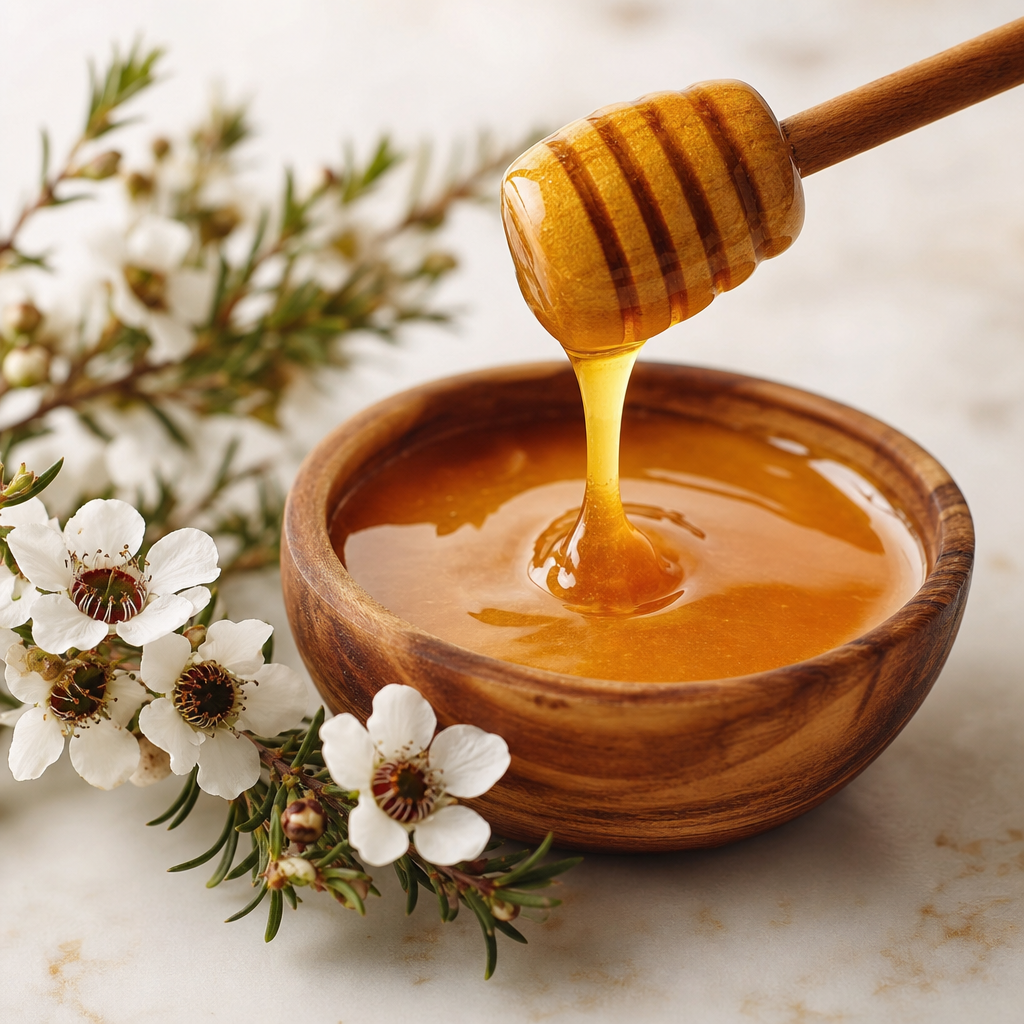
Manuka honey is a distinctive type of honey produced by bees that pollinate the Manuka tree (Leptospermum scoparium), a shrub native to New Zealand and parts of Australia. Its unique properties are linked to naturally occurring compounds, especially methylglyoxal (MGO), which forms from dihydroxyacetone (DHA) found in the nectar. Because of this chemistry, Manuka honey is valued not only as a sweetener and food but also for topical applications and wellness uses.
Manuka honey is a food-derived ingredient and can also be found as a supplement or in medical-grade wound care products. It is not an essential nutrient; the body does not require Manuka honey the way it requires vitamins, minerals, essential fatty acids, or amino acids. However, within a balanced diet and when used appropriately—especially topically—it may offer practical benefits supported by varying levels of scientific evidence.
Benefits of Manuka Honey
-
Topical wound healing and infection control
(Strong evidence)
Manuka honey has well-documented antimicrobial activity, attributed mainly to MGO and other factors like low pH and high osmolarity. Medical-grade Manuka honey dressings are used in clinical settings for minor burns, surgical wounds, pressure ulcers, and diabetic foot ulcers under professional supervision. Evidence supports its ability to maintain a moist wound environment, help reduce bacterial burden (including some antibiotic-resistant species), and support debridement and healing when used as part of a comprehensive wound care plan.
-
Sore throat and cough relief
(Moderate evidence)
Honey can soothe the throat and reduce cough frequency and severity, likely through demulcent effects and antimicrobial activity. Studies in children over one year and adults show honey can be as effective as or better than some over-the-counter options for nighttime cough and throat irritation. Manuka honey is often chosen for its characteristic potency, though much of the clinical cough evidence is on honey generally rather than Manuka specifically.
-
Oral health support (plaque and gingivitis)
(Moderate evidence)
Small clinical trials and pilot studies suggest that Manuka honey lozenges or chewable formats may reduce plaque accumulation and markers of gingival inflammation compared with controls. Proposed mechanisms include antibacterial effects against oral pathogens and reduced adherence of bacteria. The evidence base is growing but still limited in size and duration; benefits appear modest and are best paired with standard oral hygiene.
-
Antimicrobial activity against problematic bacteria
(Mixed evidence)
In vitro and laboratory studies show that Manuka honey can inhibit a range of bacteria, including Staphylococcus aureus and some resistant strains. Translating these effects to systemic infections through ingestion is not established. Clinically, the most reliable antimicrobial benefits occur with topical or local application (for example, wound dressings or oral lozenges) rather than systemic effects from eating honey.
-
Skin care adjunct (acne-prone or irritated skin)
(Limited evidence)
Manuka honey–containing cleansers, masks, and spot treatments are used anecdotally for acne-prone or irritated skin, with small studies suggesting improvements in bacteria load and local inflammation. Results are variable and product-dependent. It may be a helpful adjunct for mild concerns, but consistent, high-quality clinical research is limited.
-
Digestive comfort and H. pylori–related concerns
(Preliminary evidence)
Laboratory findings indicate that Manuka honey can inhibit Helicobacter pylori and other gut pathogens in vitro. Limited human data and small pilot studies have not established clear efficacy for eradication or symptom control, especially compared with standard medical therapy. Manuka honey may offer soothing effects for some individuals, but it should not replace evidence-based treatment for ulcers or infections.
Types or Forms Available
-
Monofloral Manuka honey (UMF/MGO rated)
: Typically sourced primarily from Manuka nectar and tested for markers like methylglyoxal (MGO), Unique Manuka Factor (UMF), leptosperin, and DHA. Higher UMF/MGO numbers indicate greater activity related to these markers. Monofloral products are often more potent and pricier.
-
Multifloral Manuka blends
: Contain Manuka honey mixed with nectar from other plants. They are usually less expensive and may have lower MGO/UMF activity. Suitable as table honey while still offering some Manuka characteristics.
-
Medical-grade Manuka honey
: Sterile, pharmaceutical-quality honey (often gamma-irradiated) formulated for wound care. Available as gels, impregnated dressings, or tubes. Intended for clinical or guided home use; not the same as regular table honey.
-
Lozenges and throat sprays
: Provide localized coating and exposure for the mouth and throat. Some include additional botanicals (e.g., propolis, menthol, or echinacea). Activity varies by MGO content and formulation.
-
Powders and capsules
: Dehydrated Manuka honey for convenience. Potency depends on MGO content and manufacturing process; these may be used when travel-friendly or measured dosing is desired.
-
Raw, creamed, or pasteurized formats
: Creamed Manuka is stirred for a smooth texture; raw products are minimally processed and may crystallize; pasteurized options have been heated for consistency. Processing affects texture more than activity, but excessive heat can reduce some bioactive compounds.
How to Use Manuka Honey
Manuka honey can be used as a food, a targeted wellness product, or a topical aid. Choose the format that matches your goal (for example, medical-grade for wound care, lozenges for throat support, or monofloral honey for culinary use with potential added functional properties).
-
Common dosage range:
For general culinary or throat-soothing use, 1–2 teaspoons (about 5–10 g) once or twice daily is typical. For lozenges, follow label directions (often 1 lozenge every 2–4 hours as needed, not exceeding the daily maximum). For topical wound care, use medical-grade Manuka honey and apply a thin layer to a sterile dressing as directed on the product or by a clinician. Avoid high intakes to minimize excess sugar and calories.
-
Best timing:
Timing is flexible. For throat support, many prefer between meals or before bed to maximize coating. For general use, any time of day is acceptable. Consistency matters more than strict timing.
-
How to take it:
Eat off the spoon, dissolve in warm (not hot) water or tea, spread on food, or use lozenges/sprays for localized throat relief. Avoid very hot liquids to preserve heat-sensitive components. For wounds, use only sterile, medical-grade products per directions.
-
Consistency:
Daily use is optional and goal-dependent. Occasional use may suffice for transient throat irritation, while longer-term, low-dose use may be chosen for culinary enjoyment or ongoing oral/throat comfort. For skin and wound applications, follow a structured regimen and reassess regularly.
Food Sources and Supplement Options
Manuka honey is naturally found as a food—specifically, honey from Manuka blossoms. It also appears in supplement-like formats such as lozenges, sprays, powders, and medical-grade dressings. Whole-food Manuka honey offers flavor, quick energy, and bioactive compounds; supplemental formats can provide more targeted delivery (for example, to the throat) or sterile conditions for wound care.
-
Monofloral Manuka honey:
Jars labeled with UMF or MGO ratings, typically from New Zealand or parts of Australia.
-
Multifloral Manuka honey blends:
Honey containing a portion of Manuka nectar, often more affordable and used as table honey.
-
Honeycomb with Manuka honey:
Edible comb and raw honey, offering a traditional format with wax and trace bee compounds.
Supplementation may make sense if you want localized throat/oral exposure (lozenges or sprays), need a travel-friendly option (powders/capsules), or require sterile, medical-grade honey for wound care prescribed by a professional. Whole-food honey provides additional naturally occurring compounds and culinary versatility, while targeted products may deliver consistent dosing or application where needed.
Who May Benefit from Manuka Honey?
-
Adults seeking a soothing option for occasional sore throat or nighttime cough (especially in dry environments or during seasonal changes).
-
Individuals with minor cuts, abrasions, or superficial burns who have access to medical-grade Manuka honey and guidance for proper wound care.
-
People interested in supporting oral hygiene with adjunctive measures such as Manuka lozenges, in addition to brushing and flossing.
-
Those who enjoy honey as part of a balanced diet and prefer Manuka’s flavor and potential functional properties.
-
Athletes needing quick carbohydrates before, during, or after training who tolerate honey well, keeping overall sugar intake in check.
-
Older adults or caregivers managing fragile skin or minor skin tears under clinical guidance, where medical-grade honey dressings may be considered.
Side Effects and Considerations
-
Allergies:
Avoid if you are allergic to honey, bee products, or components of Manuka honey. Discontinue use if you experience itching, rash, swelling, or breathing difficulty.
-
Infant safety:
Do not give any honey (including Manuka) to infants under 12 months due to the risk of infant botulism from Clostridium botulinum spores.
-
Blood sugar and calories:
Honey is a concentrated source of sugars and calories. People with diabetes, insulin resistance, or those monitoring carbohydrate intake should use small amounts and monitor blood glucose.
-
Topical use and wound care:
Use only medical-grade, sterilized Manuka honey for wounds. Do not apply regular table honey to open wounds. Seek professional guidance for deep, heavily infected, or non-healing wounds.
-
Medication considerations:
There are no widely recognized direct drug interactions, but those on diabetes medications or following strict carbohydrate-controlled plans should account for honey’s sugar content. If you use topical antibiotics or wound dressings, coordinate with a clinician before adding honey.
-
Pregnancy and breastfeeding:
Honey is generally considered safe as a food for healthy adults, but comprehensive clinical data specific to Manuka honey are limited. If you are pregnant or breastfeeding, consult a healthcare professional before using Manuka honey medicinally or in large amounts.
-
Dental health:
Like all sugars, frequent exposure can contribute to dental caries. Rinse with water after use or take with meals, and maintain routine dental hygiene.
-
Quality and authenticity:
Choose reputable brands with UMF or MGO ratings and batch testing. Counterfeiting and mislabeling have been reported; look for third-party verification and country-of-origin transparency.
-
Heat sensitivity:
Excessive heat can degrade some bioactive compounds. Add Manuka honey to warm—not boiling—liquids if you wish to preserve activity.
-
Medical conditions:
If you have chronic wounds, compromised immunity, or complex health conditions, consult a healthcare professional before using Manuka honey therapeutically.
Common Myths About Manuka Honey
-
Myth: Manuka honey cures all infections, including “superbugs,” when eaten.
Evidence-based view: Manuka honey shows strong antimicrobial effects in lab settings and in topical wound care, but ingesting it has not been proven to cure systemic infections. For serious infections, rely on medical evaluation and evidence-based treatments; Manuka honey may serve as a supportive measure in specific, localized contexts.
-
Myth: All Manuka honey is the same; ratings like UMF and MGO are just marketing.
Evidence-based view: UMF and MGO ratings reflect quantifiable markers linked to antimicrobial activity. While not the sole determinants of benefit, these metrics help differentiate potency and authenticity. Reputable certifications reduce the risk of adulteration and help match products to intended uses.
-
Myth: Manuka honey is “diabetes-friendly” or sugar-free.
Evidence-based view: Manuka honey is still honey—it contains sugars and calories and can raise blood glucose. Some people may tolerate honey differently than refined sugar, but it is not sugar-free and should be used cautiously by those managing blood sugar.
-
Myth: The higher the MGO/UMF, the better for everyone.
Evidence-based view: Higher ratings indicate stronger activity but also come with higher cost and a stronger taste. For general culinary use, moderate ratings or multifloral blends may be sufficient. Very high ratings are often reserved for targeted applications like topical care or lozenges.
-
Myth: Table Manuka honey is safe to put on any wound.
Evidence-based view: Only medical-grade, sterilized Manuka honey is appropriate for wound care. Regular jarred honey is not sterile and should not be applied to open wounds.
Conclusion
Manuka honey is a unique, food-derived product with credible topical benefits for wound care and practical uses for soothing sore throats and supporting oral comfort. As a food, it provides quick energy and a distinctive flavor profile. The strongest evidence supports its use in medical-grade, sterile formats for wound management, while everyday culinary or lozenge use may offer modest, situational benefits.
If you are pregnant, breastfeeding, taking medications, or managing a medical condition—especially diabetes or chronic wounds—consult a healthcare professional before using Manuka honey therapeutically. Prioritize quality products with verified UMF/MGO ratings and clear sourcing. For most people, a food-first approach using small amounts of Manuka honey as part of a balanced diet makes sense, reserving higher-potency or medical-grade forms for targeted needs under professional guidance.