What is Selenium?
Selenium is an essential trace mineral that the body needs in very small amounts to support critical processes. It is naturally present in soil and water, taken up by plants, and then moves through the food chain into animal foods. Selenium’s biological effects are carried out through selenoproteins—specialized proteins that contain the amino acid selenocysteine. Key selenoproteins include glutathione peroxidases and thioredoxin reductases (important for antioxidant defense), iodothyronine deiodinases (which activate and deactivate thyroid hormones), and selenoprotein P (involved in selenium transport and antioxidant protection).
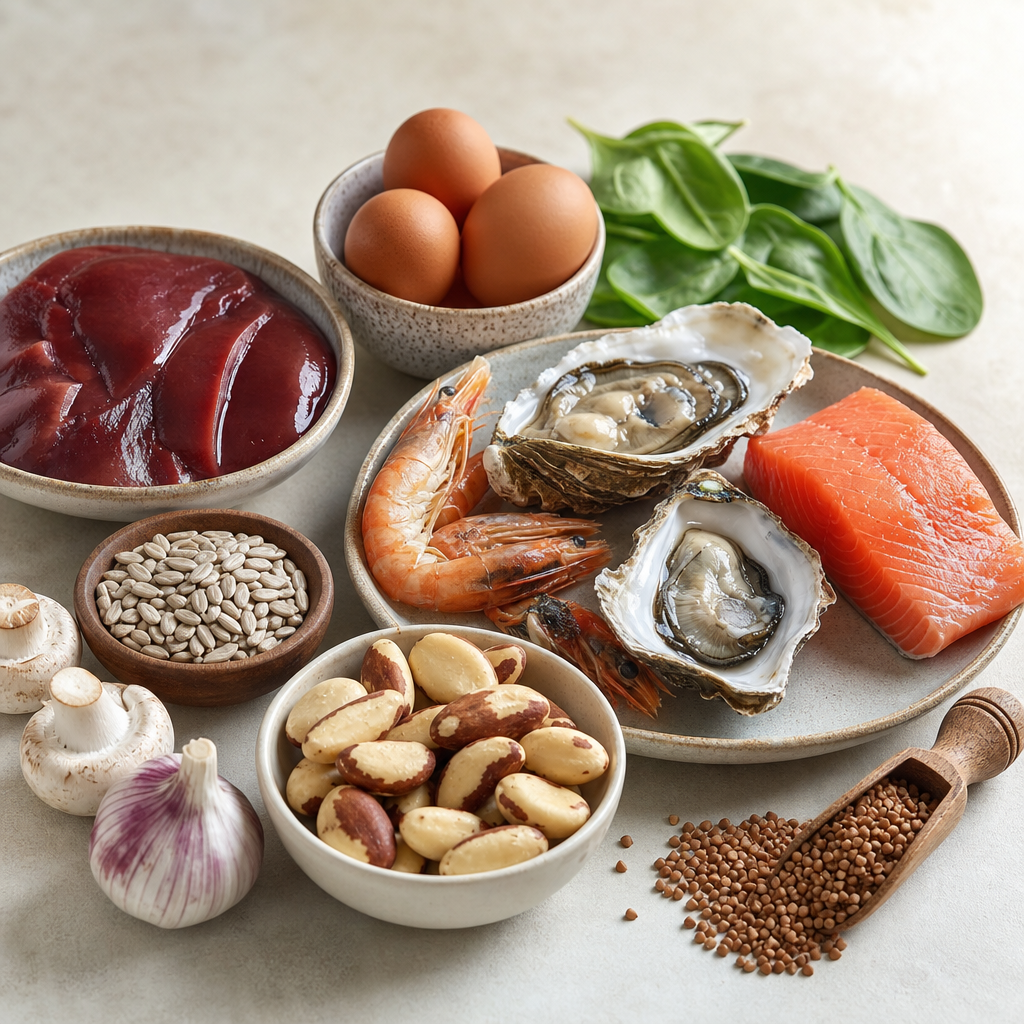
Because selenium availability in food depends on the selenium content of the soil in which plants grow or animals graze, levels can vary widely by region. Rich sources include seafood, organ meats, and Brazil nuts, while cereal and grain content depends on local soils. Selenium can also be provided as a dietary supplement. In the context of nutrition, selenium is an essential nutrient, not an herb or botanical extract. It is commonly used as a supplement to ensure adequate intake when diet or geography may not reliably meet needs.
Benefits of Selenium
-
Supports thyroid hormone metabolism
(Moderate evidence)
Selenium is required for iodothyronine deiodinases, the enzymes that convert thyroxine (T4) into the active hormone triiodothyronine (T3). Adequate selenium helps maintain healthy thyroid hormone balance and may reduce thyroid-specific oxidative stress. In people with autoimmune thyroid disease, some studies report modest improvements in antibody levels and well-being with adequate selenium intake, though results are not uniform and supplementation is not a replacement for medical therapy.
-
Antioxidant defense via selenoproteins
(Strong evidence)
Selenium is integral to glutathione peroxidases and thioredoxin reductases, enzymes that help neutralize reactive oxygen species and protect cell membranes and DNA. Correcting low selenium status reliably raises selenoprotein activity, which supports the body’s endogenous antioxidant network. While this contributes to overall cellular protection, improvements in clinical outcomes vary by population, baseline status, and health condition.
-
Male reproductive health and sperm quality
(Moderate evidence)
Selenium participates in sperm structure and mitochondrial function. Clinical trials—often using selenium alone or combined with other antioxidants—have shown improvements in sperm motility and morphology in some men with subfertility, particularly when baseline selenium status is low. Not all studies find benefits, and effects on live birth rates are less certain.
-
Immune function and resilience
(Limited evidence)
Adequate selenium supports normal immune cell signaling and helps control oxidative stress during immune responses. Observational and small interventional studies suggest that restoring low selenium may improve certain immune markers and responses to stressors. However, evidence for broad infection prevention or faster recovery in well-nourished individuals is limited.
-
Cardiometabolic markers
(Mixed evidence)
Low selenium is associated with higher oxidative stress, inflammation, and adverse lipid changes, and some studies link adequate selenium status with more favorable cardiometabolic profiles. That said, supplementation trials have produced mixed results. In some cases, higher selenium intake is linked to neutral or even unfavorable outcomes, underscoring the importance of avoiding excess.
-
Cancer risk modulation
(Mixed evidence)
Early studies suggested that selenium—particularly as selenized yeast—might reduce risk for certain cancers in populations with low baseline status. Later large trials using different forms and populations did not confirm broad preventive benefits and, in some cases, suggested potential risks at higher doses. Presently, selenium should not be used specifically for cancer prevention in the general population.
Deficiency or Low Levels of Selenium
-
Common signs of low levels:
Increased oxidative stress, fatigue, muscle weakness, impaired immune responses, and in severe or prolonged deficiency, heart muscle dysfunction (historically described as Keshan disease) or joint and bone issues (Kashin–Beck disease). Low selenium may also worsen thyroid dysfunction by limiting conversion of T4 to T3 and increasing thyroid oxidative stress.
-
Who may be at risk:
People living in regions with selenium-poor soils; those with restricted diets low in seafood, meat, or grains from selenium-replete areas; individuals with gastrointestinal disorders affecting absorption (such as celiac disease, inflammatory bowel disease), status post bariatric surgery, or long-term parenteral nutrition without adequate selenium. People on dialysis and individuals with severe chronic illness may also be at higher risk.
-
How it is checked:
Selenium status can be assessed by serum or plasma selenium, selenoprotein P, and in some settings by glutathione peroxidase activity. Toenail selenium can reflect longer-term intake. Interpretation should consider regional intake patterns and clinical context, as single measurements may not capture functional selenium status perfectly.
Types or Forms Available
-
L-selenomethionine (organic form):
A common supplement form with good absorption. It can be nonspecifically incorporated into body proteins in place of methionine, creating a selenium reserve that is released over time. This can help maintain status but also means intake from multiple sources should be monitored to avoid excess.
-
Selenized yeast (high-selenium yeast):
A food-like supplement containing various organic selenium forms (primarily selenomethionine, with smaller amounts of methylselenocysteine and others). Concentrations and composition vary by product quality and standardization. Historically used in some trials; effects may differ from isolated compounds.
-
Sodium selenite or sodium selenate (inorganic forms):
Well-absorbed but handled differently by the body than organic forms. They do not accumulate in proteins to the same extent. Some formulations are used clinically, including in parenteral nutrition.
-
Methylselenocysteine:
An organic form that can yield methylselenol, a metabolite studied for potential anticancer mechanisms in preclinical research. Human outcome data are limited, so it is not clearly superior for general use.
-
Food forms:
Brazil nuts, seafood, organ meats, and eggs provide selenium with a natural mix of nutrients. Brazil nuts, in particular, can be very high and variable in selenium content, so routine large intakes are not advised.
How to Use Selenium
Most people can meet their needs through food. Supplements are primarily used when diet is insufficient, status is low, or a clinician recommends them for specific reasons.
-
Common dosage range:
For adults, the Recommended Dietary Allowance is about 55 mcg per day. Typical supplement ranges are 50–100 mcg per day to complement diet when needed. Some products provide 150–200 mcg per day, but this higher range should be used cautiously and generally only under guidance if dietary intake is low. Do not exceed the tolerable upper intake level of 400 mcg per day from all sources.
-
Best timing:
Timing is not critical. Selenium can be taken at any time of day; consistency is more important than timing.
-
How to take it:
Take with water and, if desired, with a meal to minimize any stomach upset. If using inorganic forms such as selenite, avoid combining with very high-dose vitamin C at the same moment, as it may reduce selenite; in practical terms this is rarely a major issue with typical diets.
-
Consistency:
Daily intake is generally preferred to maintain steady status, especially if your baseline intake is low. Short-term loading or megadoses are not recommended.
Food Sources and Supplement Options
Selenium is naturally found in many foods, though amounts vary by region. Whole foods provide a spectrum of nutrients that work together, while supplements can deliver predictable doses when diet is inconsistent or needs are increased. For most people, a food-first approach is best; supplements can be helpful when intake is uncertain, low, or when a healthcare professional identifies a need.
-
Brazil nuts (very high but highly variable; a single nut can meet or exceed daily needs in some cases)
-
Seafood (tuna, sardines, salmon, cod, shrimp)
-
Organ meats (liver, kidney) and meats (turkey, beef, chicken, pork)
-
Eggs and dairy products
-
Whole grains and legumes, depending on soil selenium levels
Supplementation may make sense for people living in low-selenium regions, those with limited intake of selenium-rich foods, or individuals with absorption issues. Choose reputable products that clearly list the selenium form and dose. Remember that whole foods add protein, healthy fats, and other micronutrients, while supplements provide targeted dosing but lack the broader nutritional matrix of foods.
Who May Benefit from Selenium?
-
People with low dietary intake due to limited seafood, meat, or grain consumption, especially in low-selenium regions
-
Individuals with gastrointestinal disorders, post-bariatric surgery, or on long-term parenteral nutrition where deficiency risk is higher
-
Those with thyroid concerns and low selenium status, as part of comprehensive medical care
-
Men with subfertility and low antioxidant status, under clinician guidance
-
Older adults with limited or monotonous diets that may not consistently provide selenium
-
People on dialysis or with certain chronic conditions, evaluated and dosed by healthcare professionals
Side Effects and Considerations
-
Risk of excess (selenosis):
Chronically high intake can cause garlic-like breath odor, metallic taste, gastrointestinal upset, brittle hair and nails, hair loss, skin rash, irritability, and, in severe cases, neurologic symptoms. Do not exceed the tolerable upper intake level of 400 mcg per day from food plus supplements.
-
Variable content in Brazil nuts:
Brazil nuts can contain very high amounts of selenium. Regularly eating several nuts daily may exceed safe levels. Many people do well limiting intake to one nut on days they choose to eat them, balancing with other dietary sources.
-
Potential impact on blood sugar:
Some research links long-term high-dose supplementation to a small increase in risk of type 2 diabetes. People with prediabetes or diabetes should avoid high doses and discuss supplementation with a clinician.
-
Thyroid balance:
Both low and excessive selenium can affect thyroid function. If you have thyroid disease, avoid self-prescribing high doses and coordinate with your healthcare provider.
-
Medication and therapy interactions:
Antioxidant supplements may theoretically interact with certain chemotherapy or radiation protocols. If you are undergoing cancer treatment, use selenium only under oncology guidance.
-
Kidney and liver considerations:
Chronic kidney disease and dialysis alter selenium handling; dosing should be individualized and medically supervised. Severe liver disease may also affect metabolism.
-
Pregnancy, breastfeeding, and children:
Selenium is important during pregnancy and lactation, but avoid high-dose supplements. Stay within prenatal recommendations and pediatric age-appropriate limits. Consult a healthcare professional before use.
-
Allergies and sensitivities:
People sensitive to yeast should be cautious with selenized yeast products. Choose non-yeast forms if needed.
-
Quality and labeling:
Select third-party tested products that clearly state the selenium form and exact microgram amount to avoid under- or overdosing, especially if your diet already includes high-selenium foods.
-
Pre-surgery caution:
As with many supplements, consider pausing nonessential selenium supplements 1–2 weeks before elective surgery unless directed otherwise by your surgeon.
Common Myths About Selenium
-
Selenium supplements prevent cancer for everyone.
Large, well-conducted trials have not shown broad cancer prevention from selenium in generally well-nourished populations, and some suggest potential risks at higher doses. Selenium should not be taken solely for cancer prevention without medical guidance.
-
More selenium is always better.
Selenium follows a U-shaped curve: deficiency is harmful, but excess can also cause problems. Staying near the recommended intake and below the upper limit is the safest approach.
-
Brazil nuts are a safe daily snack regardless of amount.
Brazil nuts can be extremely high in selenium depending on growing conditions. Regularly eating several each day may exceed safe intake. Moderate, occasional use is wiser.
-
Selenium cures thyroid disease.
Adequate selenium supports thyroid hormone metabolism and may modestly influence some autoimmune markers, but it does not cure thyroid conditions and does not replace prescribed medications or iodine sufficiency.
Conclusion
Selenium is an essential trace mineral that supports antioxidant defenses and thyroid hormone metabolism, among other roles. Most people can meet their needs with a balanced diet that includes seafood, meats, eggs, dairy, grains, and occasional Brazil nuts. Supplements can be helpful for individuals with low intake, malabsorption, or specific clinical needs, but doses should remain conservative and total daily intake should stay well below the upper limit.
If you are pregnant or breastfeeding, take medications, or manage a medical condition—especially thyroid or metabolic disorders—consult a healthcare professional before using selenium supplements. Prioritize high-quality, clearly labeled products, and consider a food-first approach when possible, using supplements to fill genuine gaps rather than to pursue high, potentially risky intakes.